







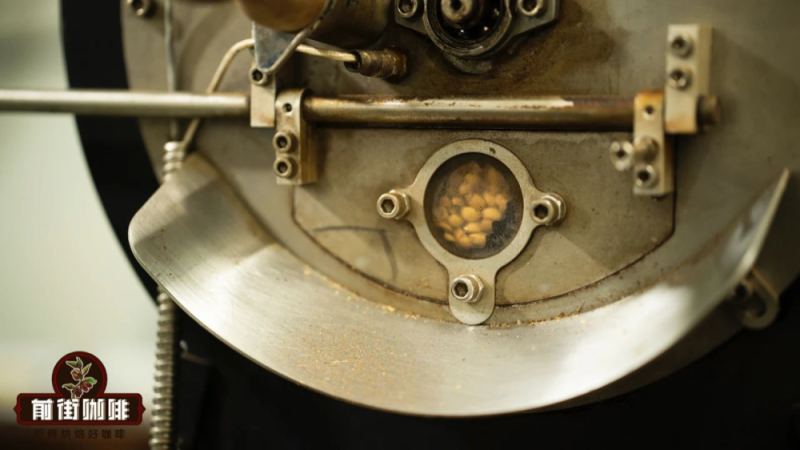
How does the roasting process shape coffee flavor?
Roast level decides the flavor direction of a coffee. The same green beans taste different at each stage, and the roasting process runs from charging and dehydration through first crack to second crack. Light, medium and medium-dark roasts each show distinct aromas in the cup, and the Agtron color value offers a measurable way to describe them.
In practice, a roaster preheats to roughly 180-200°C before charging. Around five minutes the beans yellow and turn from grassy to toasty, then first crack arrives as internal moisture breaks the cell walls. Sun-dried Yirgacheffe examples in the article give yellowing point, first crack temperature, development time and drop temperature for three roast levels.
Roasting is the key step that determines the direction of coffee flavor; the same green beans will present completely different aromas and tastes under different roast levels. Starting from the roasting practice of Front Street Coffee, this article systematically sorts out the complete roasting process of coffee beans from charging, dehydration, first crack to second crack, explains the specific flavor performance of light, medium, and medium-dark roast levels in cupping, and introduces the Agtron color value as a scientific criterion. Taking sun-dried Yirgacheffe as an example, it provides the yellowing point, first crack temperature, development time, and drop temperature data for three roast levels, and also lists Front Street Coffee's representative bean list for each roast level, including Blue Mountain No. 1, the Mandheling series, etc., to help enthusiasts establish a corresponding understanding between roast level and flavor.
Many of coffee's flavor characteristics are brought out during the roasting stage. Once the roast level changes, the final flavor direction will also differ accordingly. In this article, Front Street Coffee will talk about what flavors and tastes coffee beans display under different roast levels.
The roasting process of coffee beans
Coffee bean roasting generally goes through the following stages:
Charging: Before charging the beans, the roaster needs to be preheated so that the boiler temperature becomes stable. Usually, once it is preheated to the range of 180-200°C, the beans can be dropped in.
Dehydration stage: After charging, the beans begin to absorb heat, and the boiler temperature falls back to around 100°C. About 1-2 minutes after charging, the boiler temperature drops to its lowest point and then rises again; this point is called the turning point.
At about 5 minutes, the surface color of the beans turns yellow, and the original grassy scent changes into a toast-like aroma; this is the yellowing point. Heat is absorbed by the beans and transferred to the inside, and the fiber structure changes accordingly and expands. At this stage, the temperature is in a state of steady and continuous rise.
First crack: As the coffee beans continue to absorb heat, the pressure generated by internal moisture evaporation breaks through the cell walls, producing a "crackling" popping sound; at this time the beans are in an exothermic state. Usually, hearing 1-2 cracking sounds marks the beginning of first crack. Then comes a dense "crackle" sound, which is the dense phase of first crack. Finally, the cracking sounds taper off sparsely, marking the end of first crack. First crack from beginning to end generally falls within the 9-12 minute range, and the development duration of first crack directly affects the flavor direction of the coffee.
Second crack: After first crack ends, the beans return from an exothermic state to an endothermic state. When the coffee beans absorb enough heat, the lignified fibers of the cell walls break, once again producing a "crackling" sound, and the oils inside the beans overflow onto the surface along the fiber cracks, giving the bean surface a glossy sheen. The sound of second crack is relatively weaker than that of first crack.
Drop: The beans can be dropped at any point between first crack and second crack; the only difference is the roast level. After dropping, they must be cooled immediately to quickly stop the high-temperature pyrolysis reaction and lock in the flavor; otherwise, the residual heat inside the beans will continue to act, burning off aromatic substances and giving the coffee a smoky and burnt-bitter feel. The drum temperature at drop is usually above 180°C.
How to distinguish roast levels
As mentioned above, coffee beans can be dropped at any point from first crack to second crack, and different drop times mean different roast levels. Taking Front Street Coffee's coffee beans as an example, roast levels are divided into light roast, medium roast, and medium-dark roast.
Taking the sun-dried Yirgacheffe bean as an example, Front Street Coffee separately conducted a comparison of light roast, medium roast, and medium-dark roast.
Light roast: yellowing point 5'00'', first crack begins at 8'30'', temperature 185.8°C, develops for 1'30'' after first crack and is dropped, drop temperature 196.3°C.
Medium roast: yellowing point 5'00'', first crack begins at 8'32'', temperature 186.9°C, develops for 2'30'' after first crack and is dropped, drop temperature 197°C.
Medium-dark roast: yellowing point 5'20'', first crack begins at 8'42'', temperature 185.4°C, develops for 3'30'' after first crack and is dropped, drop temperature 198°C.
Cupping these three coffees of different roast levels
[Light roast] The wet aroma has notes of berries, cream, and citrus; when sipped, there are flavors of blueberry, citrus, berries, tropical fruit, and cream.
[Medium roast] The wet aroma is spice, berries, and fermented aroma; when sipped, there are peach, plum, lemon, cream, almond, and floral notes.
[Medium-dark roast] The wet aroma has notes of spice, smoke, and cocoa; when sipped, there are flavors of nuts, dark chocolate, cream, and herbs.
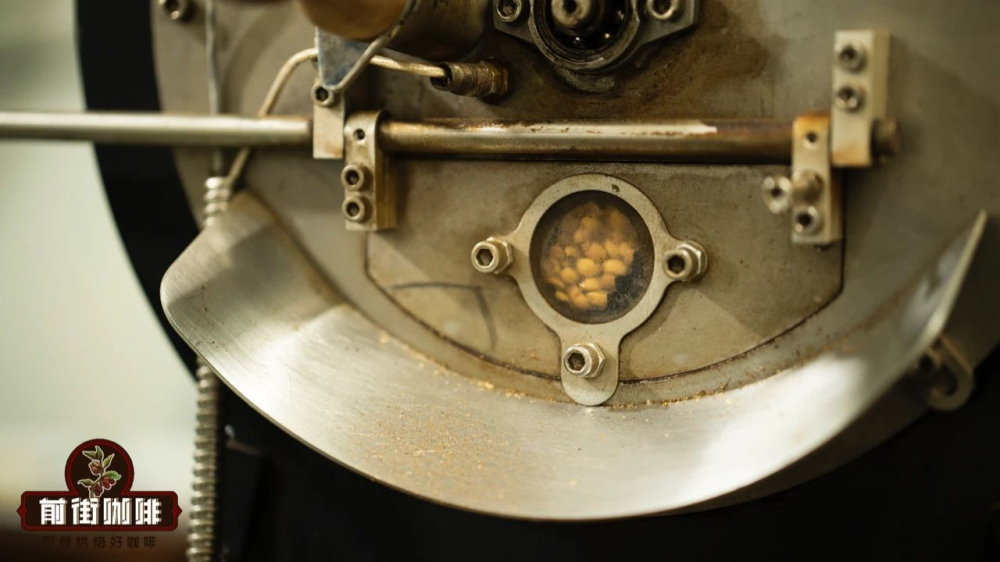
It can thus be seen that coffee roasted lighter has more prominent acidity and fruity character; as the roast level deepens, acidity gradually weakens and sweetness slowly emerges. At the medium roast stage, dark fruit as well as chocolate and brown sugar notes appear in the flavor; after entering dark roast, the flavors brought by caramelization are very distinct, with nuts, cocoa, cream, and other tastes taking the leading role.
So is there a scientific way to define roast level? The answer is yes, and that is to judge the roast degree by color value:
Light roast: Agtron color value #95: Light Roast Drop time: when the dense phase of first crack is about to end
Agtron color value #85: Cinnamon Roast Drop time: around the end of first crack
Medium roast: Agtron color value #75: Medium Roast Drop time: after first crack ends
Agtron color value #65: High Roast Drop time: the quiet period between first crack and second crack
Medium-dark roast: Agtron color value #55: City Roast Drop time: the start of second crack
Agtron color value #45: Full City Roast Drop time: before the dense phase of second crack
Dark roast: Agtron color value #35: French Roast Drop time: during the dense phase of second crack
Agtron color value #25: Itatian Roast Drop time: when oils begin to seep onto the bean surface
So what are Front Street Coffee's representative coffees corresponding to these roast levels?
Light roast: represented by various African beans and bright, acidic American beans, such as Front Street Ethiopia Gutingding, Front Street Kenya Little Tomato, Front Street Costa Rica Strawberry Candy, and other coffees, generally showing lively fruity and floral notes.
Medium roast: mainly Front Street Brazil Red Bourbon coffee beans, Front Street Jamaica Blue Mountain No. 1 coffee beans, Front Street Papua New Guinea Bird of Paradise coffee beans, and Hawaii Kona coffee beans. Their performance is very good balance.
Medium-dark roast: mainly Front Street Indonesia's Mandheling coffee series, such as Front Street PWN Golden Mandheling coffee, Tiger Mandheling coffee, and Aged Mandheling coffee. Their performance is extremely full-bodied, with nutty, cocoa, and herbal notes.
For more specialty coffee knowledge, please follow: Front Street Coffee
The above content is compiled by CoffeeHunters, a coffee news website.


