







How Did Brazil Become the Leading Arabica Coffee Producer?
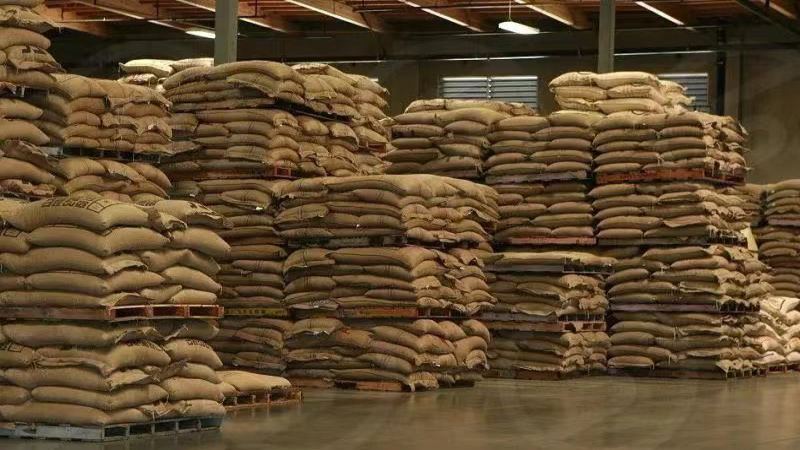
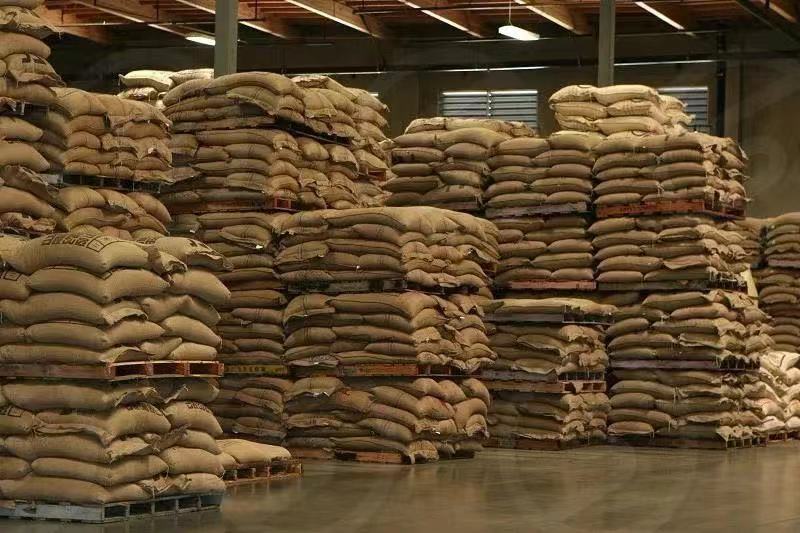
Brazil is the leading producer of arabica coffee, supplying roughly 30% of global output each year, so its harvest conditions move international coffee futures prices. A bumper crop sends large volumes to the U.S. ICE exchange for testing and warehousing; when exchange Arabica inventories swell, prices across the market tend to fall, and the reverse happens when the harvest is poor.
Coffee cultivation in Brazil dates to the 1720s, when Francisco de Melo Palheta brought seeds from French Guiana. Early plantings served domestic demand, and the habit spread further when Washington urged coffee over tea during the American War of Independence. Brazilian coffee is known for a rich, balanced body with nutty and chocolate notes, and Cerrado and Queen's Farm beans show that profile in the cup.
Brazil is the world's number one producer of Arabica coffee, accounting for about 30% of global output each year, and its harvest conditions directly influence the direction of international coffee futures prices. Brazilian coffee is known for its rich, balanced body and nutty-chocolate notes. Although it is not as refined and bright as Central American beans, it has won the favor of many enthusiasts with its high cost-performance and solid flavor. This article will systematically review the history of coffee cultivation in Brazil, the distribution of major producing regions, the characteristics of the two main varieties Red Bourbon and Yellow Bourbon, and the pulped natural processing method developed to suit the local climate. It also includes Front Street Coffee's in-store extraction parameters and flavor descriptions of two beans, Cerrado and Queen's Farm, to help readers fully understand the appeal of Brazilian coffee.
Professional coffee knowledge exchange. For more coffee bean information, please follow Coffee Workshop (WeChat public account: cafe_style).
For more specialty coffee beans, please add the private WeChat of Front Street Coffee: qjcoffeex.
As the world's number one producer of Arabica coffee, Brazil contributes about 30% of total global output each year, and the harvest conditions of its coffee beans also directly affect the trends of international coffee futures. If Brazil has a bumper harvest year, large quantities of beans will be shipped to the U.S. ICE exchange for testing and warehousing; once the exchange's Arabica inventories become abundant, the prices of all Arabica coffees on the market will decline accordingly, and vice versa they will rise.
Why did Brazil become a major producer of Arabica coffee?
The history of coffee cultivation in Brazil can be traced back to the 1720s. At that time, a Portuguese captain born in Brazil, Francisco de Melo Palheta, managed to win the favor of the wife of the governor of Cayenne, the capital of French Guiana, and thereby successfully introduced coffee seeds from French Guiana into Brazil, allowing coffee to take root and multiply in this land.
At first, coffee was not cultivated on a large scale in Brazil and mainly met domestic consumption needs. Later, when the American War of Independence broke out, Washington advocated replacing the previous habit of drinking tea with coffee, and the United States' demand for coffee imports surged, which also greatly promoted the expansion of Brazil's coffee cultivation industry. As the economic benefits brought by coffee cultivation became increasingly significant, it gradually became an important export agricultural product of Brazil, and by around 1850 it accounted for nearly half of the country's total exports.
Brazil's geographical conditions are quite unique. Almost the entire country lies within the tropical zone, which provides an extremely favorable environment for coffee cultivation. The country is mainly characterized by low-altitude flat terrain, with clear boundaries between the four seasons, and coffee cherries ripen relatively concentratedly, which greatly facilitates uniform harvesting.
But everything has two sides. Compared with other producing regions in Central and South America, Brazil's altitude is lower and its terrain is relatively flat, making it difficult to form unique microclimates. For this reason, Brazilian coffee beans are not as hard in texture as Central American beans, and their flavor also lacks that refined brightness and rich layering, with most being dominated by chocolate and nutty notes. But this has not hindered people's preference for Brazilian coffee.
Flavor characteristics of Brazilian coffee beans
Front Street Coffee believes that the reason Brazilian coffee beans are widely popular lies, on the one hand, in their outstanding cost-performance, and on the other hand, in the fact that although their flavor is not complex, they have a rich, solid body and a flavor base dominated by nuts, giving a strong association with nut pie when drunk. Whether used as a single-origin bean for direct brewing or as the main axis of a blend, it performs quite competently and is a coffee that combines richness and balance.
Main growing regions of Brazilian coffee beans
According to Front Street Coffee, the main producing regions of Brazilian coffee beans currently include Minas Gerais, Sao Paulo, Bahia, and Espirito Santo. These four states contribute 90% of the country's output. Among them, Mogiana in Sao Paulo State is the most famous, but the highest-altitude producing region is not Mogiana, but Cerrado and South Minas in Minas Gerais State.
Front Street Coffee currently has two Brazilian coffee beans on sale. One is the Yellow Bourbon coffee bean from Queen's Farm in Mogiana, Sao Paulo, and the other is the Red Bourbon coffee bean from the Cerrado producing region in Minas Gerais.
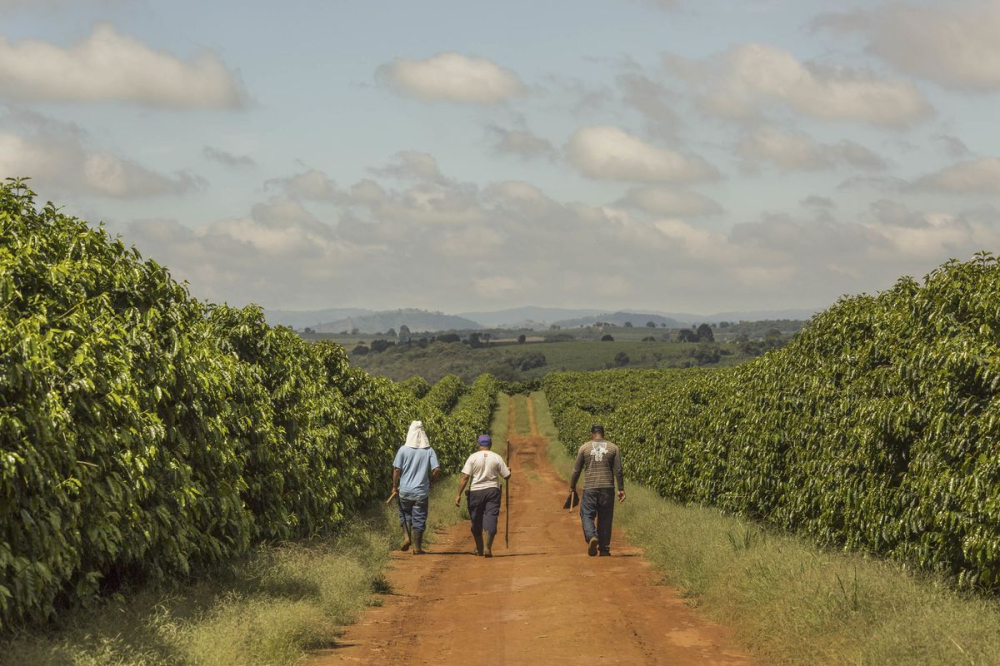
The Mogiana area is very close to South Minas, and coffee trees are planted among shrubs, grasslands, and other vegetation. Many growing families are distributed here. Some follow the traditional management model of large farms, while others adopt small-scale modern operations. The integration of modern technology and mountain coffee-growing culture has produced high-quality green coffee beans.
Brazilian Queen's Farm coffee is located in the Mogiana region at an altitude of 1,400 to 1,950 meters, covering an area of 280 hectares, of which 200 hectares are planted with the Yellow Bourbon variety. Superior geographical conditions and a pleasant climate make this an ideal producing area for specialty coffee.
The Cerrado occupies 22% of Brazil's total area of savanna and extends deep into Brazil's interior. The Cerrado coffee producing region referred to by Front Street Coffee does not mean the entire Cerrado savanna, but specifically the coffee-growing area above 1,000 meters in altitude in the central-western part of Minas Province. This area is the essence of the Cerrado savanna. Its high altitude and fertile soil are what allow it to nurture specialty coffee beans that are sweet, rich, and highly clean.
Varietal characteristics of Brazilian coffee beans
"Red Bourbon Variety"
Bourbon is a secondary variety produced by a mutation of Typica, and together with Typica it belongs to the oldest existing coffee varieties. Its fruit is bright red when ripe. Compared with Typica, Bourbon has broader leaves and denser growth. Although its yield is higher than Typica, its harvesting cycle is also two years, so it still belongs to a relatively low-yielding variety. Through cupping, Front Street Coffee found that Red Bourbon coffee has an excellent mouthfeel, with an acidity similar to red wine and a sweet aftertaste.
"Yellow Bourbon Variety"
Yellow Bourbon is also a genetic mutation of Bourbon. Bourbon has always been regarded as one of the finest coffees for its high yield and good quality, and Yellow Bourbon is a Bourbon mutation unique to Sao Paulo State, Brazil. After ripening, its fruit does not turn red like Red Bourbon, but becomes orange-yellow, hence the name. Because Yellow Bourbon is mostly grown at higher altitudes, its flavor performs excellently. After cupping, Front Street Coffee found that it usually has nutty and chocolate flavors, with balanced and gentle acidity, slight bitterness, and cleanliness, making it bright and refreshing overall.
What is the pulped natural processing method?
Friends familiar with Front Street's daily beans surely know that most of Front Street's daily bean series use washed processing, because washing requires removing the pulp and mucilage layer before fermentation, resulting in a cleaner coffee flavor. Front Street also mentioned in previous articles that coffee flavor is usually closely related to variety, growing climate environment, and processing method, and Brazil's green bean processing method is precisely derived from local climatic characteristics.
Brazil has a dry climate, which in theory is very suitable for the traditional natural method, but Brazilian coffee has extremely large single-lot yields. Extensive natural drying can easily cause coffee to pick up negative flavors such as dirt, while the washed method is also relatively costly. So Brazilians adapted to local conditions and invented a processing method between natural and washed—the pulped natural method (also called the semi-washed method). The specific practice is: after harvesting, remove the skin and pulp of the ripe coffee fruit. Because the skin of unripe green fruit is not easy to peel off, this step can also screen out defective beans again, keeping the maturity of the coffee fruit consistent. Finally, the parchment beans are spread flat on the drying yard to dry, and once the moisture content is appropriate, they can be hulled and bagged. Front Street believes that this processing method takes less time than traditional natural processing and also saves a large amount of water compared with traditional washing.
How should Brazilian coffee be brewed?
No matter what method is used to extract coffee, using freshly roasted coffee beans is crucial, because only freshly roasted beans can show the best aroma and flavor layering. All coffee beans sold by Front Street Coffee are shipped within 5 days after roasting is completed, guaranteeing 100% fresh grinding.
In order to highlight the rich body of Brazilian coffee beans, Front Street Coffee roasts them all to a medium-dark level. The longer the roasting time, the looser the structure of the coffee beans becomes, and the faster coffee substances are released. Therefore, Front Street Coffee suggests adjusting the grind coarser when brewing and not using too high a water temperature, in order to reduce extraction in the later stage and reduce bitterness.
Front Street Coffee in-store extraction parameters
Dripper: KONO
Dose: 15g
Water temperature: 89℃
Grind size: medium grind, 75% passing through a No. 20 standard sieve
Water-to-coffee ratio: 1:15
First bloom with 30 grams of water for 30 seconds, then pour in a small stream in circles until 125 grams for a split, and when the water level drops and is about to expose the coffee bed, continue pouring until 225 grams and stop. When the water level drops again and is about to expose the coffee bed, remove the dripper. (Start timing at the beginning of blooming.) The Kono dripper takes slightly longer to extract, with a total extraction time of 2'10''. If a V60 dripper is used instead, the total extraction time is 2'00''.
Flavor of Brazilian Cerrado coffee beans: obvious sweetness on entry, accompanied by a light lemon aroma, rich nutty flavor, and a pronounced dark chocolate note in the finish, with an overall rounded impression.
Flavor of Brazilian Queen's Farm coffee beans: balanced mouthfeel, highlighting the sweetness of cane sugar within an almond-cocoa main tone, making it a coffee with good body and ample sweetness.
The above content is compiled by CoffeeHunters, a coffee news website.


