







How did coffee cultivation take root in Brazil?
Brazil has led the world in coffee production and export volume for decades, and its coffee reaches the cup with nutty and cocoa notes and a full mouthfeel. Coffee cultivation there began in the 1720s, when a Portuguese captain, Francisco de Melo Palheta, brought coffee seeds into the country from French Guiana, and the crop spread north to south.
Plantings expanded toward São Paulo and Paraná, but Paraná sits at a higher latitude, where frequent winter frosts caused serious losses for farmers. The article also compares Red Bourbon and Yellow Bourbon, the semi-washed process, and pour-over parameters for reproducing a balanced Brazilian cup at home.
As the world's champion in both coffee production and export volume, Brazil's coffee beans with nutty and cocoa flavors are deeply favored by enthusiasts. From the perspective of Front Street Coffee, this article systematically reviews Brazil's 300-year coffee cultivation history and the distribution of major producing regions, deeply analyzes the flavor differences between the two major varieties Red Bourbon and Yellow Bourbon, and provides detailed product information on Front Street Brazil Red Bourbon and Queen's Farm Yellow Bourbon as well as the unique aspects of the semi-washed processing method. At the end of the article, the complete pour-over extraction parameters and brewing techniques for Front Street Brazil coffee beans are attached, helping pour-over enthusiasts stably reproduce a cup of rich and balanced Brazilian coffee at home.
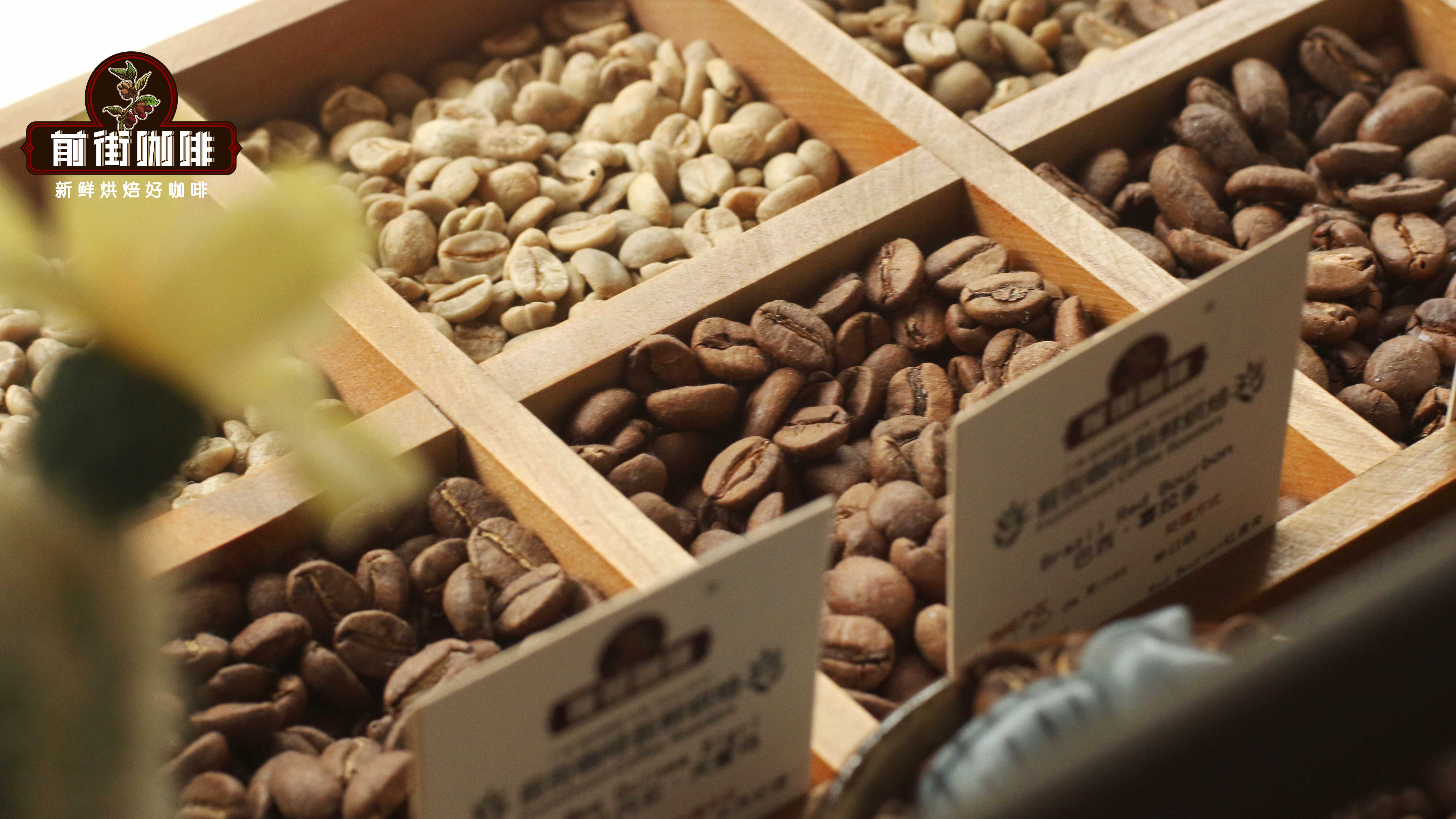
Brazilian coffee beans have established a solid reputation among global coffee consumers thanks to their pure nutty and cocoa notes and full mouthfeel. At the same time, Brazil firmly holds the top position in world coffee production and export volume, and its highly mechanized processing system also makes the flavor profile of the country's coffee beans relatively concentrated. The Front Street Brazil Queen's Farm Yellow Bourbon coffee beans and Front Street Brazil Cerrado Red Bourbon coffee beans introduced in Front Street Coffee stores are exactly two representatives that showcase the typical style of Brazilian coffee. In the following article, Front Street Coffee will systematically explain the flavor characteristics of Front Street Brazil coffee beans and share the corresponding pour-over parameters for pour-over enthusiasts to reference.
History of Coffee Cultivation in Brazil
According to Front Street Coffee, the origin of Brazilian coffee can be traced back to the 1720s, when a Portuguese captain named Francisco de Melo Palheta introduced coffee seeds into Brazil from French Guiana, and the way he obtained the seeds was quite legendary—he won the favor of the wife of the governor of Cayenne, the capital of French Guiana. After that, coffee quickly took root in Brazil, and the cultivation area gradually expanded from the north to São Paulo in the southeast and Paraná in the south. However, Paraná is at a relatively high latitude, and frequent winter frosts brought considerable losses to local coffee farmers.
Between 1970 and 1980, Brazilian farmers began expanding cultivation to the warmer Minas and Bahia regions in the northern part of São Paulo. These areas have no worry of winter frost, and today Minas has developed into one of Brazil's core regions for specialty coffee.
Before 1990, the Brazilian government exercised strict control over the coffee industry, deeply intervening through administrative means on the one hand and implementing price protection policies on the other, long enforcing minimum price guarantees for farmers, which resulted in severe overproduction of coffee.
Since the opening of the free market in 1990, the functions of the former "Brazilian Coffee Authority" (IBC) were taken over by the National Economic Association, a non-investment administrative institution. The association pursued a policy of non-interference, allowing producers and exporters to conduct trade negotiations directly. Exporters' business activities are constrained by government legislation, and compliant exporters must register and file records. Continuing from three hundred years ago to the present, coffee has become one of Brazil's most important economic pillars, and Brazil remains firmly the world's largest coffee-producing country.
Brazilian Coffee Bean Producing Regions
Front Street Coffee has mentioned many times in previous articles that the flavor direction of a coffee bean depends on the growing conditions of the producing region, the coffee variety, and the processing method, because coffee beans are essentially agricultural products, and their natural quality is inevitably affected by these three major factors.
According to Front Street Coffee, the main producing regions of Brazilian coffee beans currently include Minas Gerais, Sao Paulo, Bahia, and Espirito Santo, and these four producing regions together contribute 90% of Brazil's national output. Among them, Mogiana in São Paulo is the most well-known, but the highest-altitude producing region is not Mogiana, but Cerrado and Sul de Minas in Minas Gerais. Below, Front Street Coffee introduces the characteristics of these three most famous Brazilian producing regions separately.
Sul de Minas:
At an altitude of 700 to 1200 meters, the terrain is mainly hilly, and it is the earliest coffee production area in Brazil. Due to rising labor costs, mechanical harvesting is now mostly used, and it is also the earliest area of coffee commercialization, with many large exporters setting up bases here. The Bahia producing region in northern Brazil mainly produces washed Brazilian beans, while the Espirito Santo producing region near the coast is the main export location for Brazil's Robusta variety.
Cerrado:
Cerrado occupies 22% of Brazil's total land area and is a vast savanna reaching deep inland; Cerrado means "closed place" in Portuguese. The Cerrado savanna begins in Mato Grosso in southwestern Brazil, crosses the central-west of Minas, and extends north to western Bahia. The Cerrado coffee producing region referred to by Front Street is not the entire Cerrado savanna, but is limited to the coffee cultivation areas above 1000 meters in the central-west of Minas; only this range can be called the Cerrado coffee producing region. This area is the essence of the Cerrado savanna, with high altitude and fertile soil, and only thus can it nurture specialty coffee beans that are sweet, mellow, and highly clean.
Mogiana:
This region is very close to southern Minas. Coffee trees are planted among shrubs, grasses, and other vegetation. Many farming families are distributed in this area; some adopt the traditional large-farm operation model, while others adopt small-scale modern operations. The integration of modern technology with mountain coffee cultivation culture has produced the highest-quality green coffee beans. The two Front Street Brazil coffee beans currently sold in Front Street Coffee stores are exactly the Red Bourbon coffee beans from the Cerrado producing region and the Yellow Bourbon coffee beans from Mogiana, so what are the characteristics of each of these two varieties?
Brazilian Coffee Bean Varieties
Red Bourbon
According to Front Street Coffee, Bourbon is a secondary variety produced by a mutation of Typica, and together with Typica it belongs to the oldest existing coffee varieties. When the fruit ripens, it turns bright red. Compared with Typica, Bourbon has broader leaves and denser growth. Although its yield is higher than Typica, its harvest cycle is also two years, and it is likewise a lower-yielding variety, yet it has excellent taste, with an acidity similar to red wine and a sweet, lingering finish.
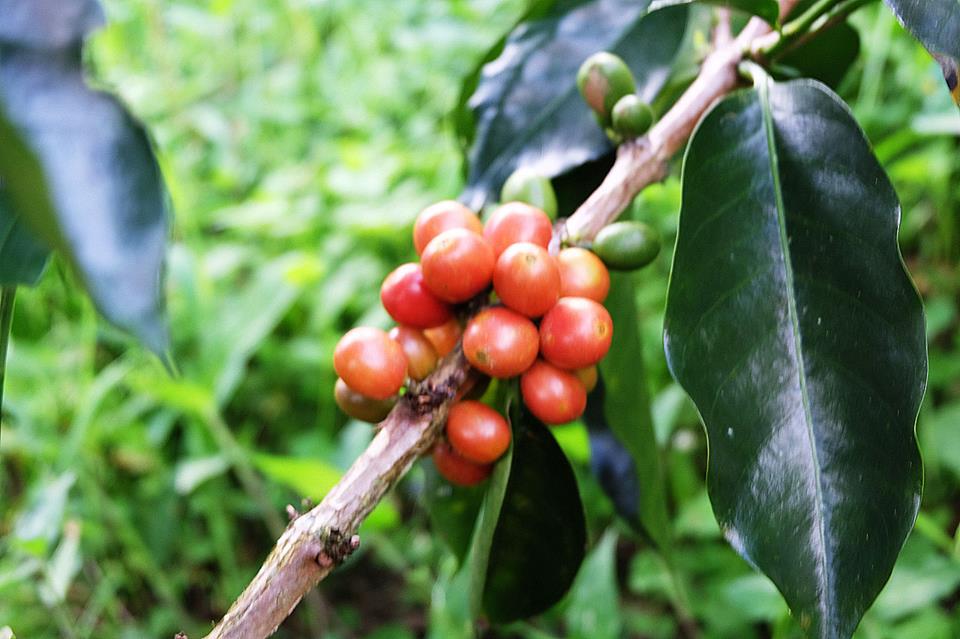
Generally speaking, Bourbon is a branch of the Arabica species, usually bearing red fruit, called Red Bourbon, and there are also Yellow Bourbon and Pink Bourbon. After the Red Bourbon coffee tree flowers and bears fruit, the color change process of the fruit is: green > turning slightly yellow > turning slightly orange > turning mature red > then turning riper dark red, hence the name Red Bourbon. Its flavor shows relatively good aroma, bright acidity, and even a red-wine-like charm when drinking. According to Front Street Coffee, Red Bourbon is also currently the most widely planted variety in Brazil's coffee producing regions.
Yellow Bourbon
As mentioned above, Yellow Bourbon is likewise a genetic mutation of Bourbon. Bourbon has long been regarded as outstanding among coffees due to its high yield and good quality. Yellow Bourbon is a Bourbon variant unique to São Paulo, Brazil. After the coffee fruit ripens, it does not turn red like Red Bourbon, but instead turns orange-yellow, hence the name Yellow Bourbon. Because Yellow Bourbon is mostly planted in very high-altitude areas, its flavor performance is extremely outstanding.
According to conclusions drawn by Front Street Coffee through cupping, Yellow Bourbon coffee beans grown in high-altitude areas perform extremely well in flavor. The coffees that swept the top three awards in Brazil's Cup of Excellence competition for two consecutive years were almost all Yellow Bourbon coffee beans, which also made it popular in the specialty coffee world. The flavor of Front Street Brazil Yellow Bourbon usually presents nutty and chocolate notes, with balanced and smooth acidity, a faint and clean bitterness, and an overall bright and refreshing character.
Next, Front Street Coffee introduces the basic information of these two Front Street Brazil coffee beans.
Front Street Coffee: Brazil Red Bourbon Coffee Beans
Country: Brazil Producing Region: Sul de Minas Altitude: 1000m Variety: Red Bourbon Processing Method: Semi-washed Flavor: Nuts, Chocolate, Cream, Peanut, Caramel
Front Street Coffee: Brazil Queen's Farm Yellow Bourbon Coffee Beans
Country: Brazil Producing Region: São Paulo (Queen's Farm) Altitude: 1400-1950m Variety: Yellow Bourbon Processing Method: Semi-washed / Natural Flavor: Nuts, Cream, Peanut, Fermented Fruit, Cane Sugar
From the above, it can be seen that both Front Street Brazil coffee beans use the semi-washed method to process the coffee fruit, so what exactly is special about semi-washed coffee beans?
Semi-Washed Coffee Processing Method
The semi-washed processing method is one of Brazil's unique coffee processing methods. Based on the relatively dry local climate conditions, Brazil originally created the semi-washed method with regional characteristics to process green coffee beans. Semi-washed processing can control the degree of fermentation of the mucilage-bearing beans after pulping and removal of the fruit flesh. This processing method does not go through the "tank fermentation and clean-water rinsing" steps of tank processing, omitting the fermentation step, and the flavor of the coffee beans is therefore completely different.
The above is the relevant popular science compiled by Front Street Coffee about the characteristics of Brazilian coffee. So how are Brazilian coffee beans suitable to be drunk? As Front Street Coffee mentioned above, the flavor characteristics of Front Street Brazil coffee beans are relatively balanced, mellow, and with nutty and cocoa notes, so they are very suitable whether as espresso blend beans or pour-over coffee beans. However, according to Front Street Coffee, most coffee enthusiasts like to use Front Street Brazil coffee beans to make pour-over coffee, because pour-over coffee allows one to taste the layering of a coffee bean's flavor, and the coffee flavor will change as the temperature drops. Next, Front Street Coffee will share how to brew Front Street Brazil coffee beans by pour-over.
Pour-Over Brewing Parameters for Front Street Brazil Coffee Beans
Taking the two Front Street Brazil coffee beans mentioned above as examples, both coffee beans use medium roasting and belong to the same producing region, so the coffee flavors will not differ especially greatly; therefore, the pour-over parameters used by Front Street Coffee are the same.
Dripper: KONO Dose: 15g Water Temperature: 88°C Grind Size: Medium grind, 75% passing through a No. 20 standard sieve Water-to-Coffee Ratio: 1:15
Brewing Technique: Staged extraction.
Use 30 grams of water for a 30-second bloom, pour in a small stream in a circular motion until 125 grams for the stage break, and when the water level is about to expose the coffee bed, continue pouring until 225 grams and stop pouring. When the water level is about to expose the coffee bed, remove the dripper. (Timing starts at the beginning of the bloom.) The V60 dripper extraction time is 2'00", while the Kono dripper extraction time is slightly longer, at 2'10".
Flavor of Front Street Brazil Cerrado Coffee Beans: There is an obvious sweetness on the palate, accompanied by a faint lemon aroma, containing rich nutty flavor, with an obvious dark chocolate note in the finish, and an overall relatively rounded impression.
Flavor of Front Street Brazil Queen's Farm Coffee Beans: The mouthfeel is balanced. In the main tone of almond and cocoa, the sweetness of cane sugar stands out. It is a coffee with good body and abundant sweetness.
For more specialty coffee beans, please add the private WeChat of Front Street Coffee. WeChat ID: kaixinguoguo0925
The above content is compiled by CoffeeHunters, a coffee news website.


