







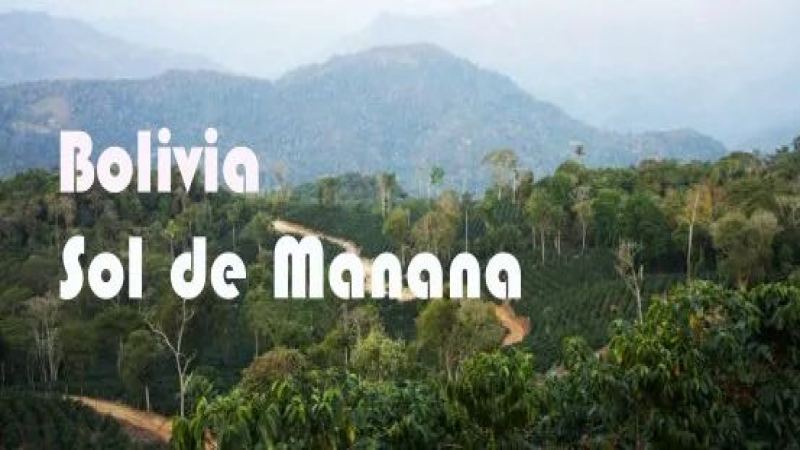
Can Bolivia return as one of the coffee bean producing countries?
Bolivia is a landlocked South American nation with a coffee history dating to 1880, when large estates north of La Paz controlled most production. Output has stayed low despite strong growing conditions. The Sol de Mañana project, led by the Rodriguez family, works to reverse the decline and support quality-focused farming.
Competition with coca farming pulls labor away, since coca is harvested year-round and pays more, while clearing rainforest for it causes soil erosion and leaves land barren. A weak central institution has added to the drop in production. Washed Caturra from Sol de Mañana shows what the country can still deliver, though it sits far from coffee bean producing countries by volume.
In a recent cupping session, we had the privilege of tasting two rare coffees from Bolivia — washed Caturra from the Sol de Mañana project. Though this landlocked South American nation has faced many challenges, it has nurtured a distinctive specialty flavor. This article will take you back through the turbulent history of Bolivian coffee, explore how the Rodriguez family reversed the industry's decline through the Sol de Mañana project, and share Front Street Coffee's single-origin recommendation for this unique region. Whether you are a seasoned enthusiast or a curious explorer, you will feel the resilience and sweetness this land imparts to its coffee.
Introduction
Recently during a cupping session, I tasted two coffees from Bolivia, both from the "Sol de Mañana" project, of the Caturra variety, washed processed. Today's article will introduce you to Bolivia and this meaningful Sol de Mañana project.
Bolivia
Bolivia is one of the less economically developed countries in Latin America. It is a landlocked nation, bordered by Brazil and Colombia.
Bolivia's coffee-growing history dates back to 1880, when production was almost entirely controlled by large estate owners north of La Paz. In 1991, the government promoted a plan to involve indigenous people in coffee cultivation, but quality was not placed at the forefront.
Bolivia's coffee history is intriguing — it has the potential to become a major coffee-exporting nation, yet production has always remained low. Its growing conditions are exceptional, but the difficulties it faces are equally severe, ultimately giving rise to an extraordinarily rich agricultural history on this remarkably challenging land.
What Is the Sol de Mañana Project?
Why Was the Sol de Mañana Project Launched?
In recent years, Bolivia's coffee production has been steadily declining, driven by multiple factors.
First, coffee cultivation competes with the local coca industry.
Coca harvesting requires less labor, can be done year-round, and offers farmers higher profits. But in the long run, coca cultivation has dealt a devastating blow to the land and communities.
Untouched rainforest is often illegally cleared to grow coca, and the lack of shade trees leads to severe soil erosion. Coca growers overuse fungicides to boost yields, and over time the soil becomes barren and the land is gradually abandoned.
Second, the lack of a central institution to support and promote coffee production also threatens the vitality of Bolivia's coffee trade.
Unlike other coffee-producing countries such as Guatemala and Brazil, Bolivian coffee producers cannot obtain support from the government or national agricultural institutions.
To make matters worse, in 2013 there was a massive outbreak of leaf rust (a fungus that attacks coffee leaves, preventing the trees from photosynthesizing).
In that year alone, Bolivia lost nearly 50% of its coffee production.
These factors combined caused Bolivia's coffee production to plummet by 70% over the past decade, reducing it to a minor coffee-producing country.
To prevent these wonderful flavors from disappearing, the Rodriguez family — one of the main forces behind Bolivian specialty coffee — began helping coffee farmers improve quality and thereby increase profits, and thus the Sol de Mañana project was born.
The Rodriguez family provides thorough technical guidance in variety selection, cultivation, and harvesting, and has established large processing facilities to help smallholders complete processing, along with supporting sales and export services. This has greatly boosted smallholders' motivation and income, and with concrete action they have safeguarded Bolivia's rapidly declining specialty coffee industry.
How Does the Sol de Mañana Project Work?
The Rodriguez family visits all Sol de Mañana project members every month, providing personalized technical assistance and agricultural advice — even the simplest suggestion can make a big difference.
As farmers' production capacity continues to improve, the Rodriguez family emphasizes to them that they should continue focusing on quality rather than quantity. They also teach farmers to take good care of their resources and make full use of them to maximize yields.
The Rodriguez family also partners with top agronomists year-round to hold workshops. These workshops allow farmers to meet one another, share experiences, and discuss ways to solve the problems they encounter.
What Are the Results of the Sol de Mañana Project?
2017 was the first harvest of the Sol de Mañana project, and the Rodriguez family was very pleased with the results. Coffee production doubled, reaching about 20 bags per hectare, and project membership expanded from the initial 10 to 50.
The Sol de Mañana project requires the Rodriguez family to invest substantial money, time, and resources. But they sincerely believe in the potential of Bolivian coffee, and they truly care about and support farmers in realizing that potential and improving their lives.
Front Street Coffee Recommendation
Front Street Coffee has also taken note of the outstanding performance of Bolivia's Sol de Mañana project and specially recommends this washed Caturra. It presents a complex flavor of citrus, brown sugar, and almond, with bright acidity and a smooth mouthfeel — an excellent choice for experiencing Bolivian specialty coffee.
The above content is compiled by CoffeeHunters, a coffee news website.


