







Where Did the Geisha Coffee Variety Come From and How Is It Graded?
Geisha, also spelled Gesha, is a coffee variety first found in 1931 in Ethiopia's Geisha forest. It moved to Kenya, then Uganda and Tanzania in 1936, Costa Rica in 1953, and Panama in 1970. It drew little notice until Hacienda La Esmeralda separated it from other varieties in 2003 and won the BOP competition in 2004.
Panama geisha coffee from Hacienda La Esmeralda is divided into Red Label, Green Label, and Blue Label, each tied to different altitudes, plots, and cupping scores, with wide price gaps between them. Grown high, Geisha shows distinct floral aromas and delicate fruity acidity. Roasting stays light to protect those aromatics, and pour-over with a medium grind and moderate temperature keeps the cup clean.
Geisha coffee is now a hot variety eagerly chosen by competitors in major competitions. Where exactly did it come from, and why can it present stunning floral aromas and fruity acidity? Panama's Hacienda La Esmeralda divides Geisha into three grades: Red Label, Green Label, and Blue Label, each corresponding to different altitudes, plots, and cupping performance, with very significant price differences as well. This article will start from the discovery history of Geisha, sort out Hacienda La Esmeralda's grading system, and share Front Street Coffee's roasting curves and pour-over brewing parameters for the three grades of Geisha, helping coffee lovers fully understand the flavor characteristics and brewing key points of this legendary variety.
Looking at today's major coffee competitions, eight or nine out of ten beans in the contestants' cups are Geisha. Why can this variety frequently stand on the highest podium? By what standards is it internally graded? With these questions in mind, Front Street Coffee cupped several Geisha beans before and after, trying to summarize some patterns for reference.
What exactly is Geisha?
Geisha is the name of a coffee variety, written in English as "Geisha/Gesha." Because the spelling is the same as the Japanese word "Geisha," some people also call it Geisha bean. Front Street Coffee has always believed that variety plays a key role in the overall flavor direction of a cup of coffee, just as apples include green apples and Red Delicious. Geisha grown at higher altitudes often can show distinct floral aromas and delicate, elegant fruity acidity, and it is precisely this pleasing flavor that made it quickly become popular worldwide.
Where is Geisha's place of origin?
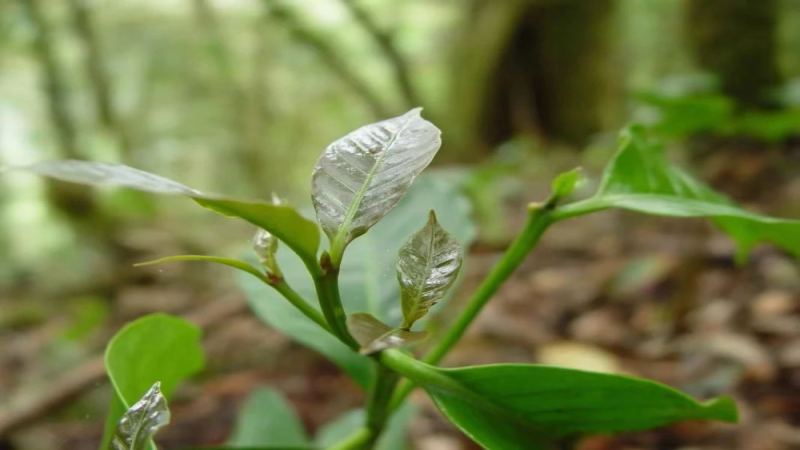
In 1931, people first discovered this variety in the Geisha forest of Ethiopia. After that, it was sent to a coffee research institution in Kenya, introduced to Uganda and Tanzania in 1936, entered Costa Rica in 1953, and settled in Panama in 1970. Early Geisha did not attract much attention until Panama's Hacienda La Esmeralda separated it from other varieties in 2003 and won the BOP competition championship in 2004, only then did Geisha truly enter the public eye.
Hacienda La Esmeralda
When mentioning Panama Geisha, Hacienda La Esmeralda is an unavoidable name. In 1964, American banker Rudolph Peterson retired and moved to Panama, buying Hacienda La Esmeralda in Boquete, initially focusing mainly on dairy farming. Later, his son Price gave up his career as a doctor to help his father manage the farm, introduced the Caturra and Catuai coffee varieties in 1987, and built a washed processing plant in 1994, from then on having its own coffee processing capacity.
At present, Hacienda La Esmeralda mainly has three farms planting Geisha: El Velo, Caas Verdes, and Jaramillo. In 1996, the estate bought the nearby Jaramillo, which had superior geographical conditions and excellent original coffee flavor; El Velo was acquired by Hacienda La Esmeralda in 2012. Front Street Coffee believes that Hacienda La Esmeralda's successive acquisitions of high-quality, higher-altitude farms were extremely original decisions at the time, and precisely because of this, it has been able to firmly occupy a place in the coffee industry.
Among them, Jaramillo farm is one of the planting sites of Panama Geisha. Due to its scarce yield, the former owner initially used it only as a windbreak tree, and only after it was acquired was its extraordinary flavor discovered. Front Street Coffee feels that this is precisely the most fascinating thing about Geisha—the harsher the growing environment, the more outstanding the flavor expression. Although Hacienda La Esmeralda discovered coffee beans with excellent flavor from the beginning, in order to achieve precision, they cupped different areas within the farm separately, and then designated planting plots according to altitude.
After participating in the Panama Green Bean Competition BOP in 2004 and winning the championship, this bean performed astonishingly all the way. Later, after expert identification, it was confirmed to belong to the Ethiopian Geisha variety. After that, the Peterson family devoted most of its energy to infrastructure construction to support excellent lot separation and fine processing.
Hacienda La Esmeralda Geisha grading: Red Label, Green Label, Blue Label
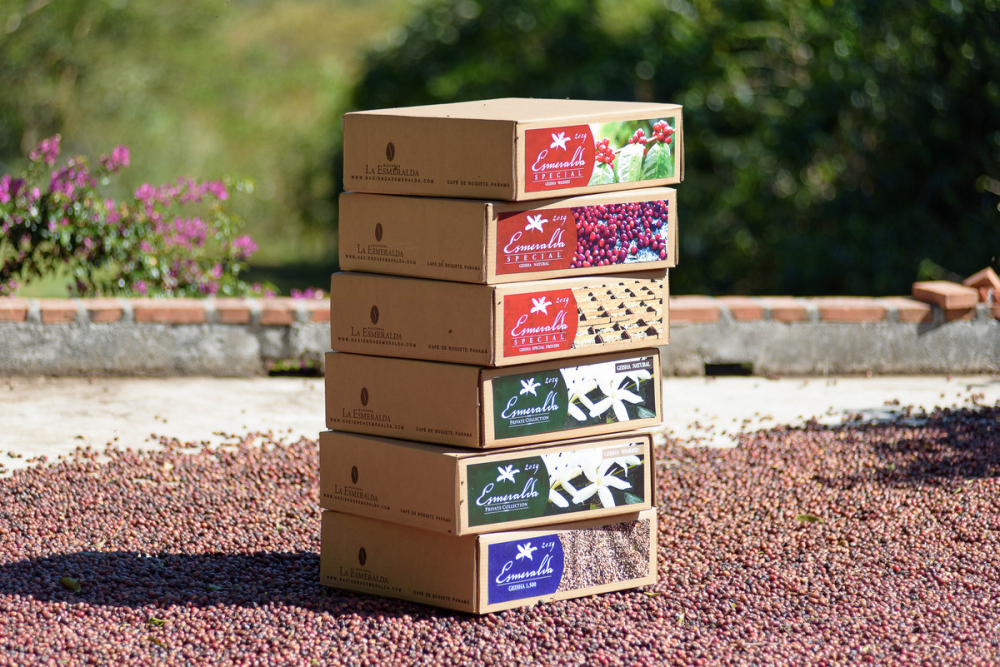
Hacienda La Esmeralda's marketing strategy differs from other estates. Based on cupping performance, planted variety, and plot location, it divides its products into five major brands. Among them, the Geisha variety occupies three: Esmeralda Special, Private Collection, and Geisha1500; the Catuai variety occupies two: Diamond Mountain grows and Palmyra.
Esmeralda Special
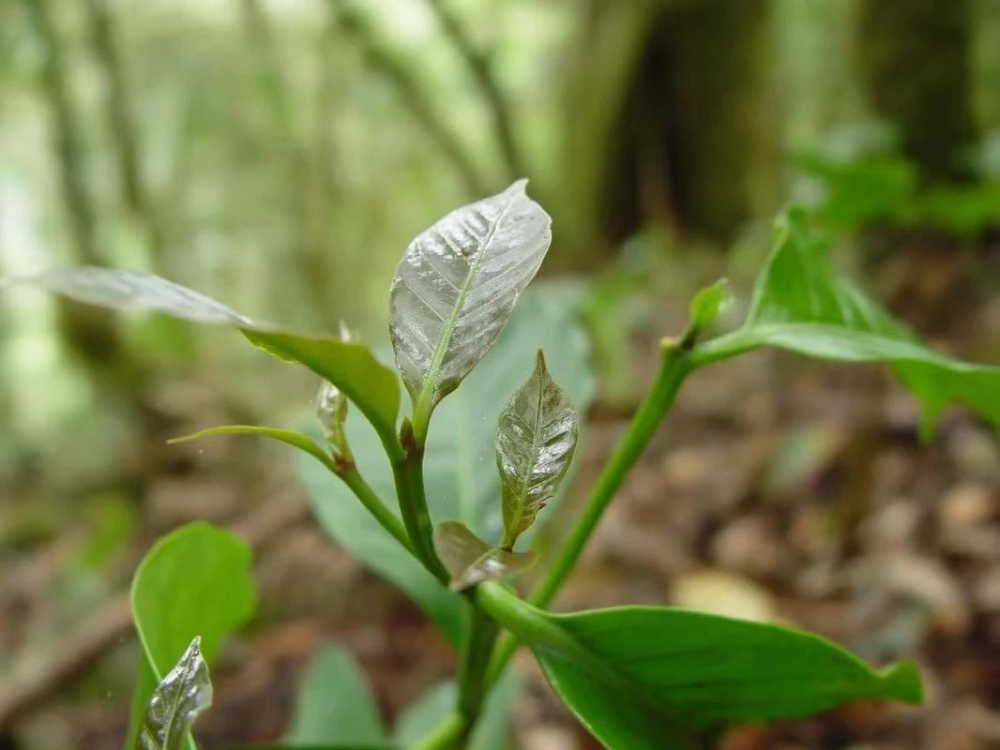
The Geisha produced under Esmeralda Special is what everyone often calls Red Label. It uses Geisha beans grown at an altitude of 1600-1800 meters, and the cupping score must reach above 90 points. It comes from the Jaramillo and Caas Verdess production areas. Hacienda La Esmeralda holds its own independent auction, and only Geisha lots from demarcated plots used for auction count as auction Red Label. However, there are also non-auction Red Labels on the market; in fact, they are Geisha selected from the same plots but not participating in the auction and flowing into the market. The variety quality is consistent, and the difference is mainly reflected in the selling price.
This grade of Geisha uses natural or washed processing methods, and the flavor carries special and bright floral aromas and citrus aromas.
Private Collection
Private Collection is commonly known as Green Label. It is not an independent competition lot, but a Geisha variety that does not participate in auctions after planting yet still has excellent quality. It uses Geisha beans grown at an altitude of 1600-1800 meters, and is a blend of micro-lots from different plots such as Jaramillo and Caas Verdess.
Because it uses a blended-bean model and does not make detailed plot notations, sometimes Green Label Geisha and Red Label Geisha have a very high flavor similarity, but the next production may also differ. Although Green Label Geisha is lower in grade than Red Label, it still carries the classic flavors of Geisha: floral aroma, fruity aroma, citrus acidity, and a thick, juicy mouthfeel. In recent years, Green Label Geisha has also offered both washed and natural processed versions.
It is well known that the higher the altitude, the richer the changes in coffee aroma. Geisha also has another peculiarity: the more extreme the growing environment, the better the flavor expression. Anyone who knows the history of this variety knows that Geisha was discovered in a windbreak forest back then precisely because of its peculiar flavor. This characteristic is also reflected in Front Street Coffee's selection cupping. Front Street Coffee uses different grinding degrees for different beans to ensure that all tested samples reach a 70% pass rate on the Chinese standard sieve. For Green Label and Red Label to reach this pass rate, the grinder needs to be adjusted to a smaller setting than for other lower-altitude beans, and the same applies to some other high-altitude beans.
Geisha1500
Blue Label Geisha uses Geisha beans grown at an altitude of 1400-1500 meters, and is a blend of beans from three different plots: Jaramillo, Caas Verdess, and El Velo. The flavor shows weak floral aroma, fruity acidity, and sweetness, and the mouthfeel is not thick enough. Blue Label Geisha was originally only washed processed, and in 2020 a natural processed version was added.
Among these levels at Hacienda La Esmeralda, Red Label and Green Label belong to beans from the same altitude. The difference is that Red Label specifies plots, while Green Label is a mixed harvest, and the price difference between the two is very large. Therefore, Front Street Coffee's view is that Green Label is more cost-effective.
Front Street Coffee roasting suggestions
When Front Street Coffee roasts these three different grades of Panama Geisha coffee beans, the main idea is to highlight Geisha's rich floral aroma and bright, changeable fruity acidity, so a light roast approach is adopted. However, Front Street also takes into account that each grade has a different growing environment and has made corresponding adjustments in roasting details.
Front Street Panama Hacienda La Esmeralda Red Label Geisha
Charge at a drum temperature of 150°C, gas setting 120, damper opened to 3; turning point at 1'36", when the drum temperature is 140°C open the damper to 4, gas unchanged; when the drum temperature is 147.6°C the bean surface turns yellow, the grassy smell completely disappears, entering the dehydration stage; when the drum temperature reaches 150°C, adjust the gas to 100, damper unchanged;
At 7'38", ugly wrinkles and dark spots appear on the bean surface, and the toast smell clearly turns into coffee aroma, which can be defined as the prelude to first crack. At this time, listen clearly to the sound of the first crack point. At 8'10" first crack begins, open the damper to 4, develop for 1'28 after first crack, and drop at 189.5°C.
Front Street Panama Hacienda La Esmeralda Green Label Geisha
Charge at a drum temperature of 160°C, gas setting 110, damper opened to 3; turning point at 1'28", when the drum temperature is 140°C open the damper to 3.5, gas unchanged; when the drum temperature is 153.3°C the bean surface turns yellow, the grassy smell completely disappears, entering the dehydration stage; when the drum temperature reaches 161°C, adjust the gas to 90, damper unchanged;
At 6'54", ugly wrinkles and dark spots appear on the bean surface, and the toast smell clearly turns into coffee aroma, which can be defined as the prelude to first crack. At this time, listen clearly to the sound of the first crack point. At 7'50" first crack begins, open the damper to 4, develop for 1'20 after first crack, and drop at 192.5°C.
Front Street Coffee Panama Hacienda La Esmeralda Blue Label Geisha
Charge at a drum temperature of 180°C, gas setting 130, damper opened to 3; turning point at 1'32", when the drum temperature is 104°C open the damper to 4, gas unchanged; when the drum temperature is 151.6°C the bean surface turns yellow, the grassy smell completely disappears, entering the dehydration stage.
At 7'56", ugly wrinkles and dark spots appear on the bean surface, and the toast smell clearly turns into coffee aroma, which can be defined as the prelude to first crack. At this time, listen clearly to the sound of the first crack point. At 8'30" first crack begins, open the damper to 5, develop for 1'28 after first crack, and drop at 190°C.
Front Street Coffee brewing suggestions
Front Street suggests using freshly roasted coffee beans for brewing, as this allows you to experience the coffee's rich flavors to the greatest extent. The coffee beans shipped by Front Street Coffee are all within 5 days of roasting time, because Front Street deeply understands that the freshness of coffee beans has a great impact on flavor. Front Street's roasting purpose is "freshly roasted good coffee," so that every customer who places an order receives the freshest coffee when they get it. The resting period of coffee is about 4-7 days, so when customers receive it, it is exactly at its best flavor.
Front Street Coffee suggests using the following brewing parameters: Hario V60 dripper, 90°C water temperature, 15 grams of coffee powder, 1:15 coffee-to-water ratio, and medium-fine grinding (80% pass rate on Chinese standard No. 20 sieve).
Front Street takes into consideration that these Front Street Panama Geisha coffee beans are all light roasts. The dissolution rate of coffee substances in light-roasted beans is lower than in dark-roasted beans, so in order to ensure sufficient extraction of Geisha flavors, a higher water temperature is used for brewing, and a finer grind is also chosen.
Brewing method
Front Street Coffee uses staged extraction, also called three-stage brewing: use 30 grams of water for blooming for 30 seconds, pour in a small stream in circles until 125 grams for the stage break, and when the water level is about to expose the coffee bed, continue pouring until 225 grams and stop pouring. When the water level is about to expose the coffee bed, remove the dripper. The extraction time is 2'00" starting from the beginning of blooming.
Geisha coffee flavor description
Front Street Panama Hacienda La Esmeralda Red Label Geisha: bright rose and citrus aromas, brown rice, berries, apricot, composite fruits, honey, a thick juicy mouthfeel, rich flavor layers, and obvious sweetness.
Front Street Panama Hacienda La Esmeralda Green Label Geisha: rich jasmine floral aroma, high sweetness, citrus, berries, juicy mouthfeel, cream, green tea, orange peel, cantaloupe, overall rich flavor layers, with a lasting finish of floral aroma and citrus.
Front Street Panama Hacienda La Esmeralda Blue Label Geisha: floral aroma, soft acidity of lemon and grapefruit on the entry, honey sweetness in the middle, oolong tea tea-like sensation and brown sugar sweetness in the finish, with a relatively clean and bright mouthfeel.
For professional coffee knowledge exchange and more coffee bean information, please follow Coffee Workshop (WeChat public account cafe_style)
For more specialty coffee beans, please add the private WeChat Front Street Coffee, WeChat ID: kaixinguoguo0925
The above content is compiled by CoffeeHunters, a coffee news website.


