








How Does Pacamara Elephant Bean Coffee Differ by Region?
Pacamara is a hybrid created in El Salvador in 1958 by crossing Pacas, a Bourbon variant, with the Maragogype elephant bean. It took the large size and bright acidity from Maragogype and the aroma and sweetness from Pacas. Beans are big and oval, about 1.03 cm long, almost always above 17 screen, with over 90% above 18.
Flavor shifts by origin. Guatemala coffee beans taste tends toward brighter acidity with cocoa and spice notes, Nicaraguan lots lean softer and sweeter, and Salvadoran Pacamara shows full sweetness with layered aromatics. Brewing rewards a coarser grind than usual because of the bean size, with a 1:15 ratio and water near 90C in a V60.
Pacamara is a hybrid variety born in El Salvador in 1958, created by crossing the Bourbon variant Pacas with the Maragogype elephant bean, combining a large bean size, bright acidity, and full sweetness. This article will review the breeding history and physical characteristics of this variety, compare the flavor differences of Pacamara from three producing regions—Guatemala, Nicaragua, and El Salvador—and share Front Street Coffee's V60 brewing parameters and flavor performance, helping coffee enthusiasts gain a comprehensive understanding of this star bean variety that has frequently appeared in cupping competitions in recent years.
Pacamara, an emerging variety that has attracted frequent attention in international cupping competitions in recent years, was first cultivated in El Salvador in 1958. It is a mixed-heritage variety that inherited its large size and abundant acidity from Maragogype, and its aroma and sweetness from Pacas, a Bourbon variant, ultimately forming excellent characteristics of unique flavor, outstanding acidity, full sweetness, and robust bean size.
In 1958, the Salvadoran Coffee Research Institute conducted crossbreeding experiments among multiple varieties in order to obtain more desirable hybrid variants. One group of experiments stood out in particular: crossing Pacas (a Bourbon variant from El Salvador) with Maragogipe, and obtaining a new variety in the fourth generation. After evaluation and selection, this new variety was named by taking the first four letters of each of its "parents'" names, thus giving rise to the name Pacamara.
Physical Characteristics of Pacamara Coffee Beans
The Pacamara plant is medium-tall, with short internodal distances, large wavy dark green leaves, and new leaves that appear green or brown. The trunk is hard and thick, and the branches are broad and sturdy. It has more lateral branches than Typica, and similar to Pacas, the fresh fruit has a small protrusion at the position of the flower disc. The coffee beans are very large and oval-shaped, approximately 1.03 cm in length, 0.71 cm in width, and 0.37 cm in thickness.
Depending on altitude, the bean size of Pacamara is approximately 70% of the size of Maragogype
Overall, the bean size of Pacamara is almost always above 17 mesh, with over 90% above 18 mesh.
Pacamara coffee beans exhibit different flavor profiles in different producing countries:
Guatemala (Pacamara): caramelly, honey, vanilla, floral, peach, hazelnut, jasmine
Nicaragua (Pacamara): chocolate, caramelly, orange, maple syrup, honey, raspberry, cinnamon, apricot
El Salvador (Pacamara): orange, vanilla, lemon, chocolate, apricot, lemonade, lime, floral
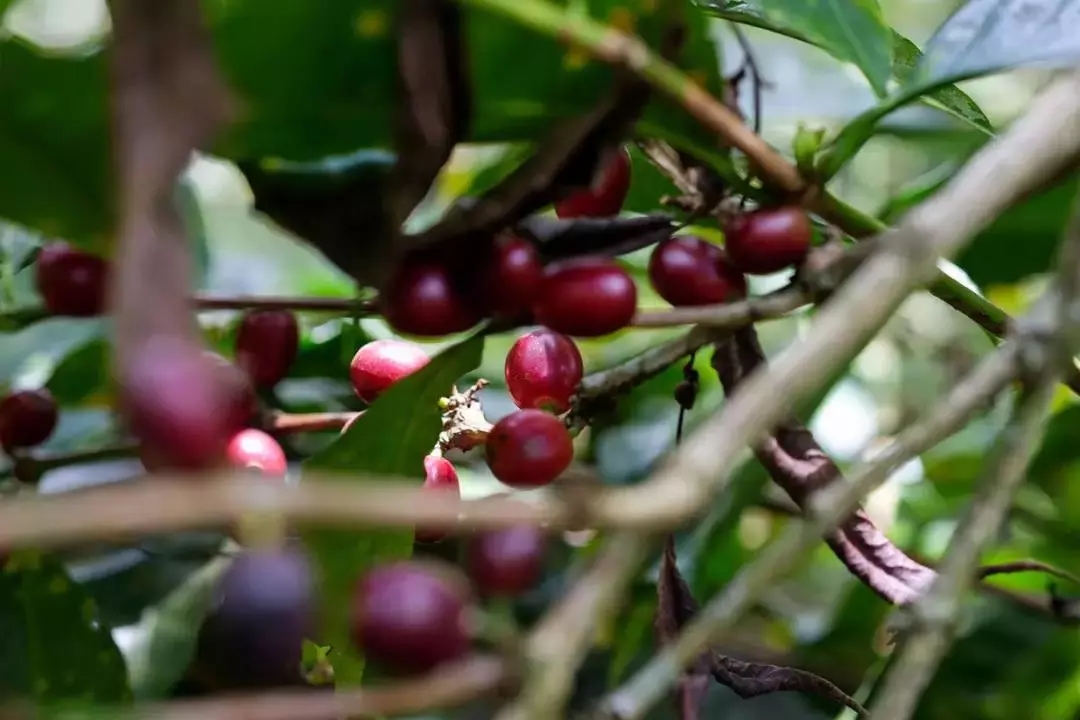
If you have gotten your hands on some Pacamara, at the very least you can expect these:
Although this variety exhibits characteristics common to other coffee varieties grown at altitudes of 1,100–1,200 meters, some characteristics are enhanced: the aroma is more intense, the floral flavor is better, and if grown at higher altitudes it would surely be even more prominent; cleanliness is also enhanced, with grassy and unclean notes disappearing.
The floral aroma and flavor are the greatest characteristics of Pacamara, and there are also other characteristics, such as chocolate and fruity notes (apricot, peach, berries, green apple, etc.). The aftertaste is very long and persistent, carrying some nutty and spicy tonalities, usually a creamy, high-bodied feel with cinnamon.
[Front Street Coffee Brewing Recommendations]
The ribs of the V60 dripper are distributed in a curved pattern from top to bottom, with varying lengths. During brewing, the airflow is relatively smooth and the flow rate is relatively fast, so when brewing with the V60 dripper, I pair it with pulse pouring: first, to slow down the flow rate of the water, and second, to increase the extraction yield, which to a certain extent can reduce under-extraction caused by a fast flow rate.
Parameters: grind size fine granulated sugar (58% passing through a Chinese standard No. 20 sieve), 15g coffee dose, 90℃ water temperature, 1:15 coffee-to-water ratio
Method: Bloom with 27g of water for 30 seconds, pour to 128g in stages, and when the water level drops and is about to expose the coffee bed, continue pouring to 227g and stop; when the water level drops and is about to expose the coffee bed, remove the dripper. (Timing starts at the beginning of the bloom.) The extraction time is 1 minute 50 seconds.
Flavor: It smells of fresh fruity acidity; on the palate there is the acidity of green grapes, lemon, and grapefruit; from the middle section, aromas of nuts and biscuits emerge; the finish has a green tea tea-like quality, and the aftertaste has a macadamia nut and creamy sensation. The flavor layers are relatively rich.
The above content is compiled by CoffeeHunters, a coffee news website.


