







Yirgacheffe Coffee: Price, Flavor, and Brewing
Yirgacheffe coffee comes from a small Ethiopian town where high altitude and steady moisture create conditions that many growers consider ideal. The region sits between 1,700 and 2,200 meters, which slows cherry maturation and helps concentrate sweetness. Natural processed lots, like the Aricha Red Cherry, often show bright citrus, berry, and honey notes. Priced around 88 yuan for 227 grams, a 15-gram cup costs roughly 6 yuan, making it an accessible option for daily brewing.
When evaluating green coffee bean quality, look at screen size, defect count, and moisture consistency. Yirgacheffe natural lots usually grade well, but roast profile matters; a light-medium roast preserves floral and fruit character without sourness. Brew with water between 90 and 93 degrees Celsius, a 1:15 ratio, and a medium-fine grind. These parameters help you decide whether the coffee meets your taste and budget.
As the birthplace of coffee, Ethiopia has given rise to countless stunning coffee flavors, and the Yirgacheffe region, with its fresh and distinctive floral-fruity profile, has become one of the most recognizable names in the specialty coffee world. This article focuses on the Yirgacheffe Aricha natural Red Cherry coffee beans sold by Front Street Coffee, analyzing them one by one from terroir, the background of Operation Cherry Red, green bean grading, roasting curves, to actual brewing parameters. These beans are priced at 88 yuan/227g; calculated at 15 grams per cup, the cost per cup is only about 6 yuan, making the value for money quite outstanding. If you are wondering whether Yirgacheffe is worth buying, or want to find a more suitable brewing method, this article will provide detailed reference.
For professional coffee knowledge exchange and more coffee bean information, please follow Coffee Workshop (WeChat public account: cafe_style)
For more specialty coffee beans, please add the private WeChat of Front Street Coffee (FrontStreet Coffee), WeChat ID: qjcoffeex
As the birthplace of coffee, Ethiopia produces a large number of exceptionally high-quality coffee beans. These beans are affordable, offer excellent value for money, and have unique, refreshing, and pleasant flavors, making them highly favored by many coffee shops and brands. Coffee beans from Ethiopia's Yirgacheffe region, in particular, have accumulated a large and loyal following.
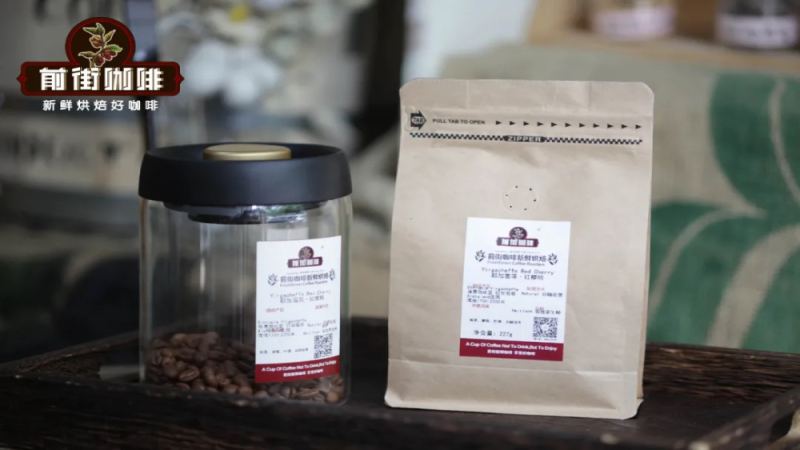
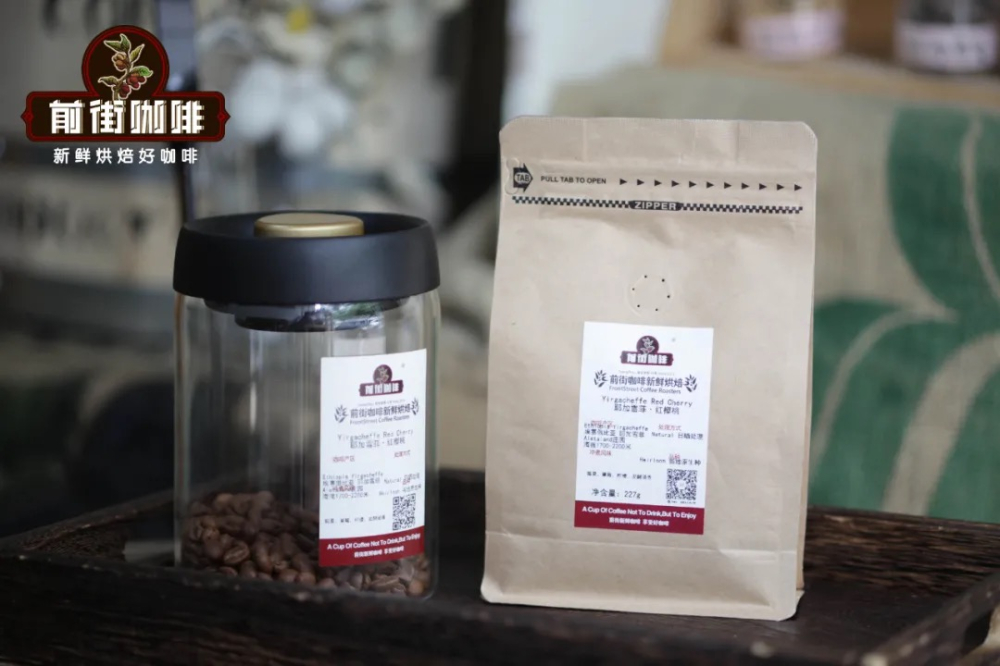
Front Street Coffee (FrontStreet Coffee) currently sells 4 coffee beans from the Yirgacheffe region, among which the Red Cherry natural coffee beans from the Yirgacheffe Aricha processing station are especially popular. These beans are currently priced at 88 yuan/227g, offering quite impressive value for money. Calculated at 15 grams of coffee beans per cup, one bag can make about 15 cups, working out to only about 6 yuan per cup.
Ethiopia Yirgacheffe Natural Red Cherry Coffee Beans
Region: Yirgacheffe, Ethiopia
Processing Station: Aricha Processing Station
Growing Altitude: 1700-2200m
Processing Method: Natural
Variety: Ethiopian Heirloom
Flavor: Bright citrus-like acidity, berries, strawberry sweet-tartness, honey sweetness, slight fruity fermentation aroma.
01 | Region Introduction
Unique Geographical Environment
Yirgacheffe is a small town in Ethiopia, at an altitude between 1700 and 2100 meters, ranking among the highest coffee-growing regions in the world and serving as a calling card for Ethiopian specialty coffee. Lake Turkana, Lake Abaya, and Lake Chamo provide abundant moisture to this land. In the rift valley area represented by the Misty Valley, fog lingers year-round, the climate is spring-like throughout the four seasons, gentle breezes blow, and coolness and humidity coexist. Thousands of coffee trees grow vigorously here, creating Yirgacheffe's unique terroir character in which floral and fruity notes intertwine in an elusive way.
The Historical Origins of Yirgacheffe Coffee
In the earliest days, Yirgacheffe's coffee trees were planted by monks from European monasteries (somewhat reminiscent of Belgian monks growing wheat to brew beer), and only later were they handed over to farmers or cooperatives to manage. Coffee trees were scattered casually in forests, fields, and household backyards. When the harvest season arrived, the Ethiopian coffee trading company would go to the town to purchase harvested coffee beans from farmers, and finally auction and export them under the Yirgacheffe coffee brand.
About Operation Cherry Red
When Operation Cherry Red is mentioned, many people have heard of the name. But when it comes to clearly explaining exactly what kind of project Operation Cherry Red is, perhaps only a few can do so.
In order to help Ethiopian coffee farmers earn more ideal incomes and improve local living conditions, in 2007 the Dutch trader Trabocca and farmers in the producing areas jointly launched the OPERATION CHERRY RED PROJECT, namely Operation Cherry Red. Its purpose is very pure: to incentivize farmers to improve coffee bean quality. Every harvest season in the producing areas, Trabocca delineates microclimate zones and formulates harvesting plans, requiring hand-picking of 100% ripe red coffee cherries, with output controlled at about 1,500 kg to 3,000 kg.
In 2008, Operation Cherry Red invested 5,000 USD to purchase new raised drying beds. In 2009, it spent another 8,000 USD to add new raised drying beds and shade nets. In 2010, it invested 9,000 USD to buy a generator, and in 2011 invested another 10,000 USD to improve some local coffee transport roads, making coffee transport more convenient and efficient. Trabocca also provides interest-free loans for purchasing new coffee cherry pulpers and coffee bean sorting machines. To facilitate supplier purchasing, in 2012 it invested another 14,000 USD to build a high-quality Addis Ababa coffee cupping laboratory.
Through financial loan support, new hardware equipment, and knowledge and technology in production and processing, Trabocca assists farmers in raising production standards, and promises that as long as the actual output quality meets cupping standards in the cupping rooms in Addis Ababa, Ethiopia, and Amsterdam, the Netherlands, it will purchase at a premium price. The passing score set by Trabocca is 88 points.
After processing at origin, the coffee beans of Operation Cherry Red are immediately sealed in plastic inner bags (GrainPro bags for separate packaging or vacuum boxes for separate packaging), then transported to Djibouti to await shipping. Through real-time monitoring, safe transport, and timely and appropriate handling, it strives for perfection in quality. Roasters are also able to buy high-quality coffee beans because of Operation Cherry Red; Ethiopia's coffee quality has thereby improved, prices are better, and Trabocca can return profits to farmers, then continuously improve and keep raising quality.
02 | Processing Method
This naturally processed coffee has slightly larger beans and slightly lower density and moisture content. Every coffee from this processing station can be regarded as a high-quality finely processed coffee, with characteristics superior to other coffees. Regardless of which processing method is used, the coffee beans here can be considered the best coffee in the Yirga area.
After the processing station selects usable coffee cherries, the coffee cherries with the whole pulp and skin completely retained are placed on raised beds for natural drying. It is precisely this raised-bed drying method, which requires a large amount of manual labor, that isolates them from contact with the ground and avoids earthy off-flavors during sun drying, thereby creating an exceptionally clean fruit flavor. After more than two weeks of sun drying, the dark brown coffee fruits are professionally stored to await the maturation of the overall flavor. Only before shipment does the processing station remove the coffee beans from the coffee cherries, so one can imagine the sweetness.
03 | Green Bean Analysis
Regarding the grading of Yirgacheffe coffee: According to different green coffee bean processing methods, Yirgacheffe coffee can be divided into two major categories:
Category A is the washed processing method, with grade standards set by the Specialty Coffee Association of America (SCAA), divided into Gr-1 and Gr-2. The smaller the Arabic numeral, the higher the grade. G1 Yirgacheffe has a distinctive style, and the flavor of citrus and floral notes integrated into the coffee liquid is a deliciousness no one can resist;
Category B is naturally processed green coffee beans, with grades divided into Gr-1, Gr-3, Gr-4, and Gr-5. Likewise, the highest grade G1 natural Yirgacheffe coffee has a rich fruity aroma. Opening a bag of freshly roasted G1 natural Yirgacheffe coffee can overturn everyone's original understanding of coffee. Only those who have tasted the highest-grade natural Yirgacheffe coffee will believe that coffee is a fruit.
Exported in ordinary jute bags, with Trabocca printed and dyed on the bags.
The variety of Yirgacheffe coffee itself is a local heirloom, a small-bean type, relatively round in appearance, with a very small bean body, mostly between 14-15 screen sizes.
Yirgacheffe Cherry Red Grade 1 green beans are yellow-green in color, the typical color of natural coffee, with uniform, plump beans and few defective beans.
04 | Roasting Analysis
Beans with such a splendid flavor are of course not suitable for medium-dark roasting. Therefore, this Yirgacheffe coffee is best roasted using a light, slow roasting method to best express its mellow and sweet character and rich floral-fruity aroma. Yirgacheffe coffee beans are relatively small, and their moisture content means they also absorb a relatively large amount of heat during roasting, while the Maillard reaction process is also relatively fast.
In the first roast, I used a relatively high bean-drop temperature. Before the coffee beans dehydrated and turned yellow, I used 160 heat power to ensure there was enough heat to continue to first crack and develop directly to second crack, confirming the curve development. In the second, third, and fourth roasts, the same bean-drop temperature of 200 and the same heat power were used, gradually reducing the heat power as needed during roasting.
This batch is a fast-roasted light roast:
Cupping: Roast one: strawberry, raspberry, vanilla, honeydew, juicy
Roast profile 2: strawberry, raspberry, vanilla, honey, fruit juice
Roast two: manguo, black brin , , citrus juicy
Roast profile 3: mango, black plum, blueberry, citrus juice
Roast three : citrus juicy , cream
Roast profile 3: citrus juice, cream
Roaster: Yangjia 600g semi-direct fire
Using fast-roast mode, drop beans into the drum when the roaster temperature reaches 200°C, set airflow to 3.5, adjust heat power to 160°C after 1 minute, keep airflow unchanged, adjust heat power once at 148°C, lower to 130°C, roast until 5'03", at 151°C, the bean surface turns yellow, the grassy smell completely disappears, dehydration is complete, adjust heat power to 105°C, open airflow to 4;
At the 8th minute, ugly wrinkles and dark streaks appear on the bean surface, and the toast aroma clearly turns into coffee aroma, which can be defined as the prelude to first crack. At this time, you must listen clearly for the sound of the first crack point. First crack begins at 9'07. Reduce heat power to 70°C, open airflow fully (adjust heat power very carefully, not so low that there is no cracking sound), and drop at 194°C.
Front Street Coffee (FrontStreet Coffee) has noticed that the dry aroma of Yirgacheffe coffee gives off an intense fruity scent, with a heavy dried-fruit note and aromas of strawberry, mango, and apricot jam. The wet aroma is like sweet syrup, like thick apricot pulp, wrapped in rustic honey or chocolate. On the palate it is not strong, with medium body, and the acidity is not obvious, yet it is lively and bright, like fruity black tea.
04 | Brewing Analysis
As for the brewing method, pour-over and siphon are the best. When grinding the beans, you can already smell the striking natural fruity aroma, with obvious sweetness. Gentle and elegant, sweet and lovely. Yirgacheffe coffee exudes an extremely complex aroma and displays an exceptionally outstanding mouthfeel, making it hard to describe.
First brewing: V60 dripper, 15g grounds, water temperature 90°C, medium-fine grind (85% passing rate with China No. 20 standard sieve), water-to-coffee ratio 1:15.
Use 30g of water for a 30-second bloom, then pour in a small stream in circles until 125g for a split pour. When the water level drops and is about to expose the coffee bed, continue pouring until 225g and stop. When the water level drops and is about to expose the coffee bed, remove the dripper. (Timing starts at the beginning of the bloom.) Extraction time is 2'00".
Mouthfeel: obvious strawberry acidity, astringent finish, some off-flavors
Second brewing (revised): V60 dripper, 15g grounds, water temperature 86°C, medium-fine grind (78% passing rate with China No. 20 standard sieve),
Water-to-coffee ratio 1:15
Mouthfeel: smooth, the flavor is much fuller, with layers, and the sweet fermented berry note is enhanced
The wet aroma of the output has a fermented berry and fruit wine note that makes it hard to believe this is Yirgacheffe coffee, but personally I do not much like this wet aroma. However, from the extremely smooth entry to the delicate body, and the surge of ripe fruit sweet-tartness, it is truly stunning. The sweetness surpasses any Yirgacheffe I have drunk before. The finish is also quite good. It truly deserves to be called a fruit bomb; after drinking, you can basically be assured that the sweetness will remain in your mouth for half an hour.
Yirgacheffe Coffee Brand Recommendations:
Under Yirgacheffe coffee there are villages, micro-regions, cooperatives, and processing stations of various sizes. In most parts of Ethiopia, coffee farmers still live very difficult lives and do not have enough capacity to build household processing workshops, so many processing stations appear, centrally purchasing coffee cherries from surrounding small farmers, processing them, and then selling them to green bean traders. Therefore, the quality of Yirgacheffe coffee is inevitably uneven. If you want to find an excellent-quality Yirgacheffe coffee and do not have a sharp eye, it is still advisable to choose brands with high credibility.
The above content is compiled by CoffeeHunters, a coffee news website.


