







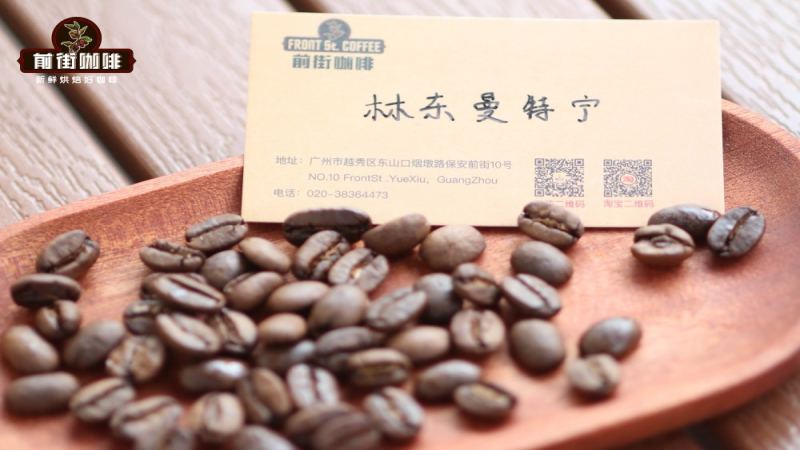
What makes Golden Mandheling coffee different?
Golden Mandheling is a Sumatra-grown Indonesian specialty coffee known for a full body, clean cup and the wet-hulling process used in the region. Front Street Coffee offers it as an everyday staple with a cleaner mouthfeel, purer flavor and higher body than regular Mandheling. The producing areas sit on Sumatra, which gives Indonesia its earliest harvest season, running from November to March.
The profile is neither astringent nor sour, with body and bitterness fully expressed, a hallmark of Asian coffee. The article also covers the PWN company history, the relationship between Ateng and Catimor, and the Gayo Mountain region in Aceh, plus pour-over parameters and a flavor description. Golden Mandheling rewards a slower, more careful brew that keeps the heavy body intact.
Golden Mandheling is a standout among Indonesian specialty coffees, produced on the island of Sumatra and renowned for its full-bodied, clean taste and unique wet-hulling process. This article provides a comprehensive analysis of this representative Asian coffee, covering its varietal origins, the history of PWN Company, the relationship between Ateng and Catimor, the Gayo Mountain producing region in Aceh, and Front Street Coffee's pour-over parameters and flavor description. Whether you are just getting acquainted with Indonesian coffee or want to deepen your understanding of what makes Golden Mandheling unique, you will find practical information and tasting references here.
Front Street Mandheling Coffee As one of Front Street's everyday staple beans, this coffee has been chosen as a typical representative of Indonesian coffee and is also the starting point for many people's introduction to Asian coffee—its status speaks for itself, and its flavor is highly distinctive. In Front Street's product line, Front Street Golden Mandheling Coffee has always been a very popular specialty single-origin. Some have remarked that after drinking Front Street Golden Mandheling, the taste lingers in memory for a whole day, which speaks to its profound finish. Compared to regular Front Street Mandheling, Front Street Golden Mandheling Coffee has a cleaner mouthfeel, purer flavor, and higher body. If Front Street Mandheling Coffee is the representative of Indonesian specialty coffee, then Front Street Golden Mandheling Coffee can be called the cream of the crop among Indonesian specialty coffees.
Introduction to Sumatra Coffee
Front Street Mandheling Coffee is almost synonymous with Indonesian coffee, with its main producing regions concentrated on the island of Sumatra. Sumatra is the largest island in Indonesia and ranks sixth in the world by island area, located in the northwestern part of Indonesia. Thanks to this geographical position, Sumatra has Indonesia's earliest coffee harvest season—from November to March of the following year.
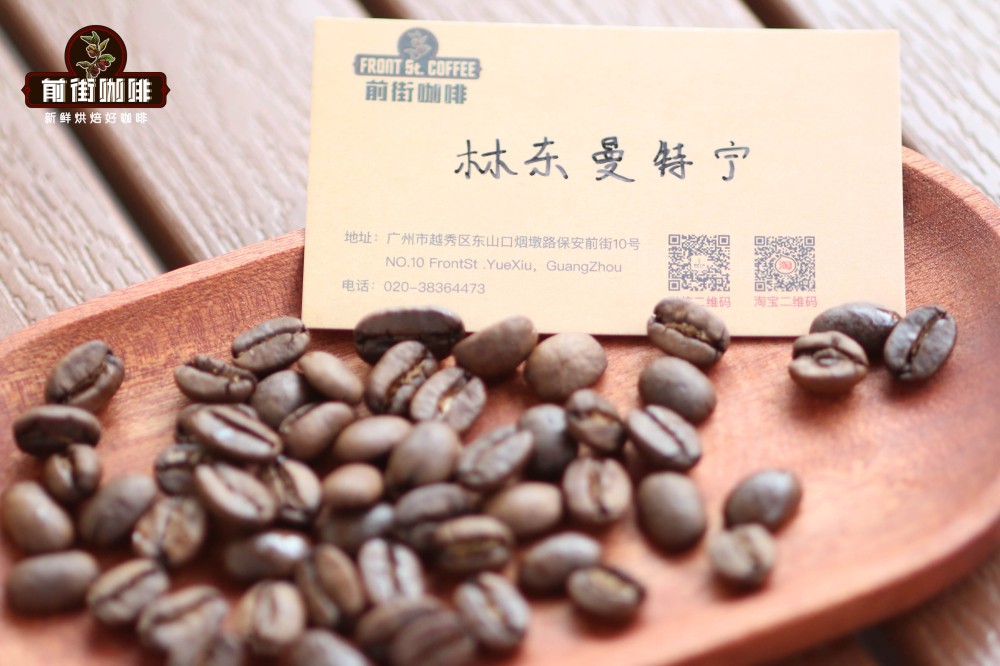
Before Blue Mountain coffee rose to fame, Mandheling coffee was once considered the fullest-bodied coffee in the world. It possesses intense body and a rich, lively dynamism, neither astringent nor sour, with both body and bitterness fully expressed, carrying distinct characteristics of Asian coffee. Of course, among first-time tasters, some exclude it from their preferences because they are unaccustomed to that herbal note; but others fall in love with this flavor from the very first sip, finding it long-lasting on the finish, exuding a masculine character, and worth savoring. Front Street has previously observed that consumers who enjoy Front Street Mandheling Coffee are predominantly male, but nowadays more and more female friends have also come to love the taste of Front Street Mandheling.
The most celebrated origins of Asian coffee are the islands of the Malay Archipelago: Sumatra, Java, and Kalimantan. Among them, Sumatra Mandheling coffee from the Indonesian island of Sumatra is the most well-known, with two famous grade names—Sumatra Mandheling DP Grade 1 and Aged Sumatra Mandheling. Sumatra Mandheling DP Grade 1 has a long, lingering aftertaste with a wild, mountain fragrance—that distinctive earthy scent of the primeval forest.
Front Street Golden Mandheling Coffee
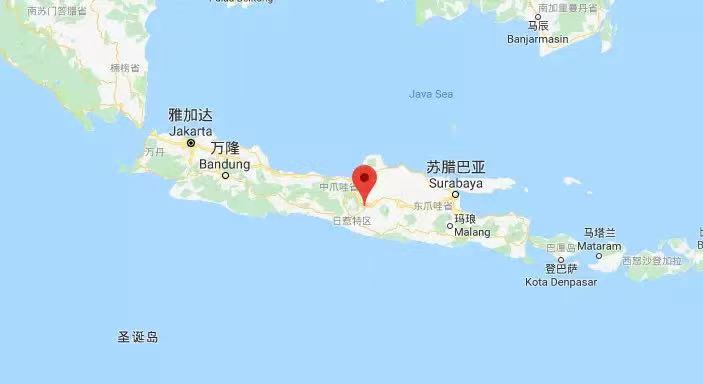
As Front Street mentioned earlier, if Front Street Mandheling Coffee is Indonesia's specialty coffee, then Front Street Golden Mandheling Coffee is the specialty coffee among Indonesia's specialty coffees. Why do we say this? Let's continue. Sumatra, Indonesia is the primary producing region for Indonesian specialty Arabica coffee beans. What we commonly refer to as Front Street Mandheling Coffee is Arabica coffee beans produced in the area around Lake Toba in north-central Sumatra (at elevations of 900 to 1,200 meters) and the area near Aceh at the northernmost tip of Sumatra (at elevations of 900 to 1,600 meters). The suitable elevation combined with a tropical rainforest climate keeps the island's average temperature between 25 and 28 degrees Celsius, with evenly distributed seasons and no pronounced dry period, providing quite ideal growing conditions for coffee trees.
Since Front Street Golden Mandheling Coffee is the cream of the crop among Indonesian specialty coffees, it must have significant and unique qualities. Of course, although it tastes better than regular Mandheling, this is not a grade concept but rather a byword for quality assurance—a trademark registered by the Indonesian company N.V. Pawani Medan (abbreviated as PWN). The company was founded in 1957 and engages in the export of Indonesian products such as coffee, rubber, cinnamon, cloves, and patchouli oil. It was the first Indonesian enterprise to export coffee from North Sumatra and the first company to make the name "Mandheling Coffee" known in Japan. Since 1977, the company has focused on exporting premium coffee beans, including Sumatra Arabica Coffee Mandheling Grade 1 and Robusta Coffee AP-I Grade 2, with main export destinations being Japan, Taiwan, and the United States, of which Japan and Taiwan account for over 95% of exports. In Japan and Taiwan, "PWN" has become synonymous with "quality assurance."
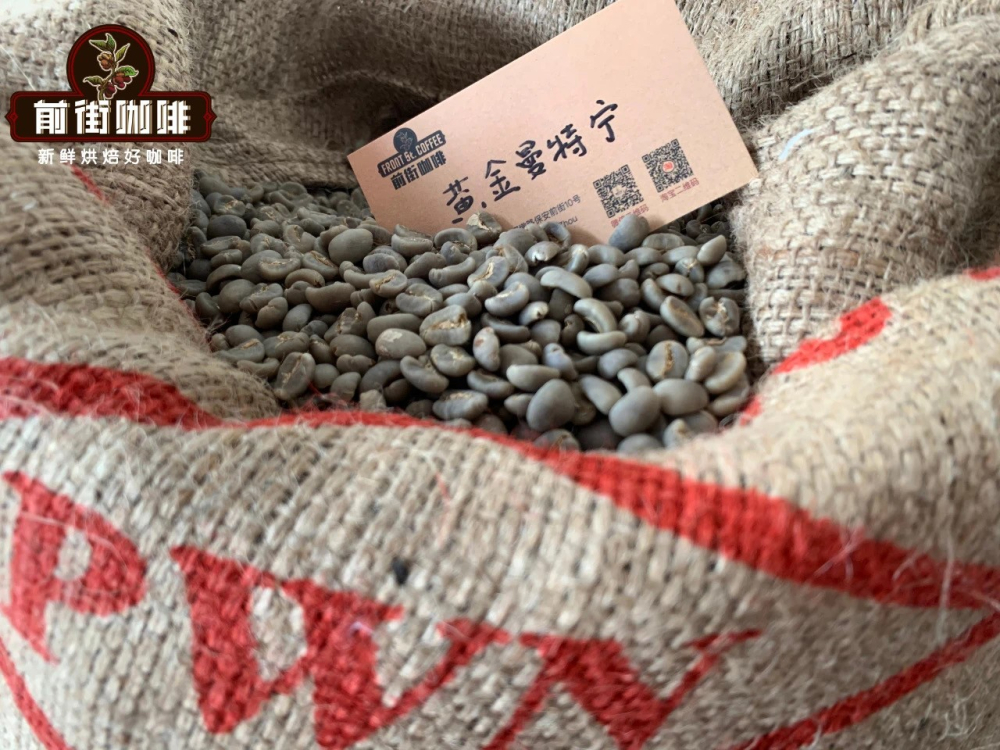
The Front Street Golden Mandheling Coffee beans currently sold by Front Street Coffee (FrontStreet Coffee) come precisely from PWN Company's Golden Mandheling coffee beans. After harvesting and drying, PWN's Front Street Golden Mandheling coffee beans undergo at least three rounds of purely manual sorting to ensure the beans meet a screen size of 18 or above, with fewer than 3 defective beans (based on a 300-gram green bean sample), qualifying as the highest grade G1. PWN's Golden Mandheling has a darker green color and a neatly uniform flat bean shape.
Golden Mandheling Coffee Variety
Front Street Coffee's (FrontStreet Coffee) new-crop Golden Mandheling comes from Gayo Mountain in Aceh, North Sumatra, and the variety is Ateng. Ateng is a hybrid between Arabica and Robusta, widely cultivated in Sumatra and other small Indonesian islands. Ateng is simply the local name for Catimor coffee. Front Street Golden Mandheling has even stricter quality requirements: first, the coffee beans must reach screen size 19 with plump and uniform beans, then they undergo one round of machine sorting and three rounds of manual hand sorting to control the defect rate of green beans.
Ateng is simply the local name for Catimor coffee. Catimor was created in 1959 when the Portuguese crossed the Brazilian Bourbon mutation Caturra, which had been moved to East Timor, with Timor, which carries Robusta lineage. It has extremely strong disease resistance, with a yield three times that of Typica. During the leaf rust crisis, the Indonesian government not only introduced Robusta (whose flavor differs greatly from Arabica) but also brought Timor to East Timor, hoping to replace Typica. Later, expert investigations revealed that a batch of Timor seeds introduced by the Indonesian government in 1980 had been mixed with some Catimor seeds. This batch of seeds was planted in Aceh, northern Sumatra, and the area where Catimor was first identified in Indonesia was Central Aceh. Therefore, locals also call Catimor "Ateng," taken from Aceh Tengah (Central Aceh).
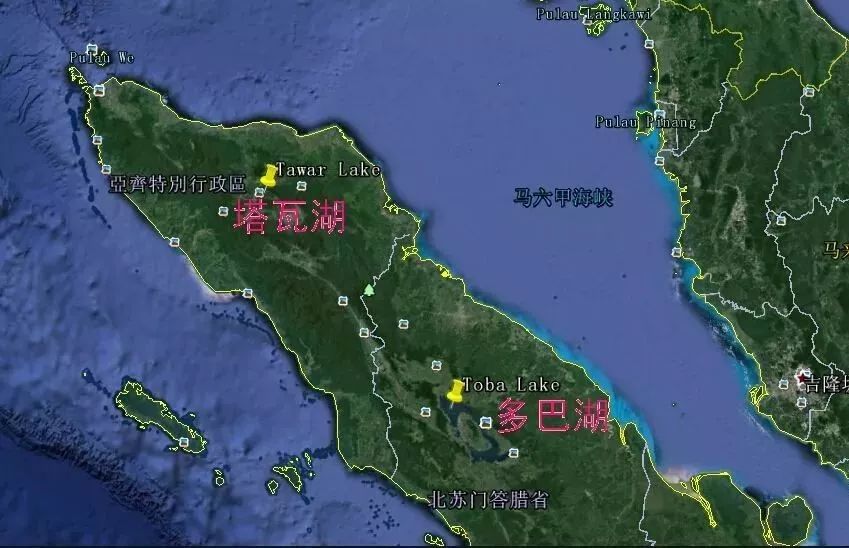
Gayo Mountain in Aceh is located at the northernmost corner of Sumatra. Coffee cultivation on Gayo Mountain is mainly distributed in the town of Takegon and the hillside areas beside Lake Tawar, with production areas at an average elevation of 1,100 to 1,600 meters. The coffee quality in this region has always been excellent, but due to earlier political instability, coffee was difficult to export. In recent years, as the situation has stabilized, Aceh's coffee-growing industry has developed, and its quality now surpasses that of the Lintong region.
Front Street Golden Mandheling Coffee Processing Method:
Front Street has previously mentioned that in addition to variety and local climate and environment, the processing method also plays an important role in the formation of coffee flavor. Processing methods are usually chosen based on local conditions; of course, with the development of specialty coffee, methods such as honey processing and anaerobic processing have since emerged, but they are all evolutions built upon the basic washed and natural processing methods. Front Street Mandheling Coffee uses the wet-hulling process: because Indonesia is perennially hot and humid with scarce water resources, local coffee farmers developed a way to more efficiently dry coffee beans while conserving water, enabling them to strip and dry the beans more effectively—the wet-hulling method, also known as Wet Hulling, which is also the standard processing method for Front Street Mandheling coffee beans. The wet-hulling process is characterized by staged, rapid drying and drying after removing the parchment. Mr. Han Huaizong once described it as: "This is also a rare processing method in the world, which inadvertently created Mandheling's distinctive low-acid, thick, and earthy flavor." Golden Mandheling coffee also uses the wet-hulling process.
Front Street believes that Front Street Golden Mandheling, as a unique specialty coffee exclusive to Indonesia, has plump beans after careful selection, offers a rich aroma when brewed, and has a more intense, rounded, and mellow mouthfeel compared to regular Front Street Mandheling, with a slight sweetness on the finish.
So how do you brew this Front Street Golden Mandheling coffee bean as pour-over?
Front Street has previously shared in past articles the relationship between coffee bean roasting and pour-over brewing. Light-roasted and dark-roasted coffee beans differ in the water temperature and dripper used. Front Street Golden Mandheling Coffee is a dark-roasted bean, so the water temperature should not be too high, and a Kono dripper should be chosen. The lower water temperature is to avoid extracting too many unwanted flavors—Front Street Coffee (FrontStreet Coffee) has already released more aromatic compounds during the dark roasting process, and continuing to extract at light-roast water temperatures would easily lead to over-extraction. Front Street Coffee (FrontStreet Coffee) chooses the Kono dripper because the V60 dripper has a faster flow rate and tends to under-extract at low water temperatures, whereas the Kono dripper has fewer ribs positioned at the lower end, and the filter paper fits tightly against the dripper, which restricts airflow, extends the contact time between water and coffee grounds, allows the coffee grounds to be fully extracted, and enhances the full-bodied mouthfeel—making it suitable for brewing medium-dark roasted coffee beans like Front Street Golden Mandheling.
Front Street's brewing parameters for Front Street Golden Mandheling Coffee:
Water temperature: 88°C, coffee dose: 15 grams, coffee-to-water ratio: 1:15, grind size: medium-fine (75% passing through a No. 20 sieve).
Use staged extraction. First, bloom with water at twice the coffee dose, i.e., 30 grams of water for 30 seconds. The purpose of blooming is to allow the coffee grounds to release internal carbon dioxide gas, thereby making the subsequent extraction more stable. Pour in a slow circular motion until reaching 125 grams, then pause; continue pouring until 225 grams and stop. After the water in the dripper has fully dripped through, remove the dripper. Timing starts from the beginning of pouring, with a total extraction time of 2 minutes 00 seconds. Then swirl the entire cup of coffee to mix evenly before pouring into a cup to taste.
[Front Street PWN Golden Mandheling Coffee Flavor]: The coffee has a complex, multi-layered profile overall—full-bodied and clean, with intense nutty and caramel aromas accompanied by chocolate notes, a long-lasting finish, and high balance.
Front Street Coffee (FrontStreet Coffee) Brewing Recommendations
Of course, when it comes to coffee brewing, Front Street has always believed that the freshness of coffee beans is of paramount importance. The coffee beans shipped by Front Street Coffee (FrontStreet Coffee) are all within 5 days of the roast date, because Front Street deeply understands that freshness greatly affects flavor. Front Street's roasting philosophy is "freshly roasted good coffee," so that every customer who places an order receives the freshest product when they get their coffee. The resting period for coffee is about 4 to 7 days, so by the time customers receive it, the flavor is at its best.
Of course, some customers need Front Street to grind the coffee for them, and that is no problem either, but Front Street needs to remind you: once coffee beans are pre-ground, there is no need for further resting, because the pressure from carbon dioxide inside the packaging during shipping also rounds out the coffee's flavor, so you can brew a cup immediately upon receiving the ground coffee. However, ground coffee needs to be brewed as soon as possible, because it oxidizes quickly upon contact with air—that is to say, the coffee's flavor will dissipate faster and the taste will not be as good. Therefore, Front Street recommends buying whole beans and grinding fresh for each brew, so you can better enjoy the coffee's flavor.
Front Street Mandheling Coffee is one of Front Street's staple beans and the best representative of Indonesian coffee. Although Front Street Golden Mandheling Coffee has a superior mouthfeel to Front Street Mandheling Coffee, Front Street believes that if you want to try Indonesian coffee, you might as well first taste Front Street Mandheling Coffee and then Front Street Golden Mandheling Coffee, so you will have a more intuitive judgment. Of course, Front Street also offers Ethiopian coffee with floral and fruity acidity, Brazilian coffee with nutty and caramel notes, and more—over fifty varieties of staple and single-origin coffees from different producing regions, each expressing the culture of its respective coffee-growing area.
For professional coffee knowledge exchange and more coffee bean information, please follow Coffee Workshop (WeChat public account: cafe_style)
For more specialty coffee beans, please add the private WeChat of Front Street Coffee (FrontStreet Coffee), WeChat ID: qjcoffeex
The above content is compiled by CoffeeHunters, a coffee news website.


