







Why are Panama geisha coffee beans so expensive?
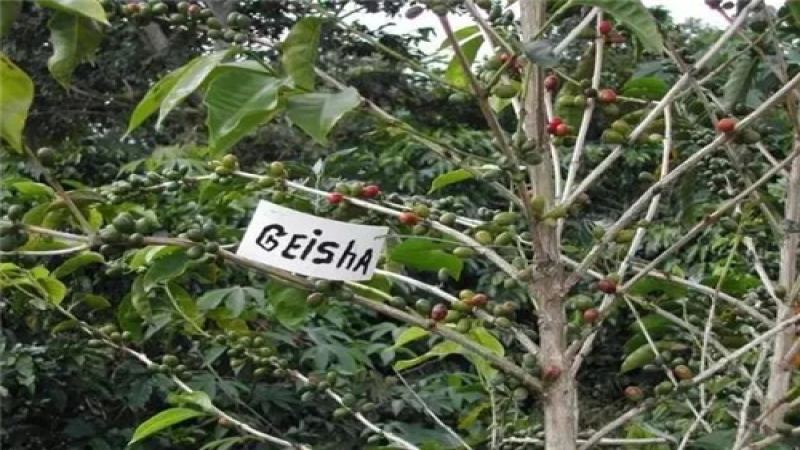
Panama geisha coffee beans belong to the Geisha (Gesha) variety, traced back to Gori Gesha forest on Gesha Mountain in southwestern Ethiopia before arriving at Hacienda La Esmeralda in Panama. The high price comes from limited output, strict harvesting and processing standards, and a distinctive cup: clean, delicate, with berry and floral notes that broke the idea that coffee must be dark and heavy.
Geisha is a variety within Arabica, the species that makes up roughly seventy percent of the global market, and most Arabica subspecies descend from Ethiopian Typica and Yemeni Bourbon. Hacienda La Esmeralda sorts lots into Red, Green, and Blue Labels, each with its own flavor profile and price level. Front Street roasts Geisha for V60 brewing and also lists everyday beans for value.
Geisha coffee beans are hailed as one of the most expensive coffee varieties in the world, yet many people are unclear about what variety it actually belongs to, where it originates, and why its price remains so high. This article will systematically outline the varietal origins of Geisha, from Gesha Mountain in Ethiopia to its introduction at Hacienda La Esmeralda in Panama, analyze the classification logic and flavor differences of the Red Label, Green Label, and Blue Label lots, and take an in-depth look at the four major reasons why Panamanian Geisha coffee beans are so expensive. At the same time, the article also retains Front Street Coffee's roasting approach for Geisha, V60 brewing parameters, and recommendations for high-value everyday beans, providing coffee lovers with a complete reference from understanding to hands-on practice.
In today's global coffee consumption, the Arabica species accounts for about seventy percent of the market. In other words, the vast majority of coffee beans we choose from the market belong to Arabica. This species usually appears as specialty coffee, with flavor performance superior to Robusta. Within Arabica, a large number of subspecies can be further subdivided. Most of these subspecies originated from the ancient Typica of Ethiopia and Bourbon of Yemen, and gradually mutated and derived after being transplanted to Central and South America or Asia. The number of varieties is so vast that it is difficult to list them one by one.
What Exactly Is Geisha
Geisha is a coffee variety, written in English as "Geisha/Gesha." In Japanese, the pronunciation of "geisha" also happens to be "Geisha." To avoid confusion with the Japanese word, the industry prefers to call this variety "Gesha." However, when people today mention "Geisha/Gesha," they usually mean the famous Panamanian Geisha coffee.
The Difference Between Geisha and Geisha Coffee
Geisha coffee beans can be called the crown jewel of Panamanian coffee and are also one of the most expensive coffee beans in the world. When it comes to the distribution of Geisha coffee-producing regions, it mainly includes Panama, Ethiopia, Costa Rica, Colombia, Guatemala, and other places. Panamanian Geisha coffee beans belong to the Geisha variety, and their source can be traced back to a forest called Gori Gesha in Gesha Mountain in southwestern Ethiopia. In other words, "Geisha" is both a variety name and a place name. It is precisely because it originated in Gesha Village in Ethiopia that it was given the name "Geisha." Ethiopian Geisha coffee can be divided into three branches: Gori Gesha (GG), Illubabor Forest 1974 (IF), and Gesha 1931 (G31). But it should be noted that the Geisha coffee beans currently grown in Ethiopia's Gesha Village do not have a very close genetic relationship with the Panamanian Geisha coffee beans we are familiar with. Among them, the first two Geisha coffee beans are genetically completely different from Panamanian Geisha coffee.
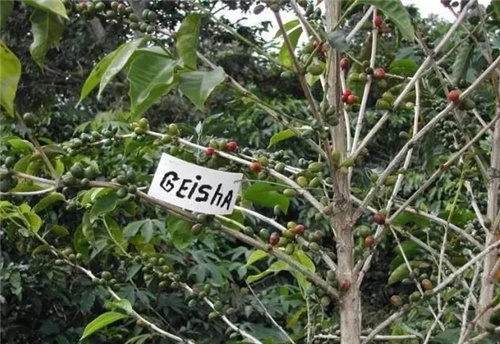
Although Geisha coffee rose to fame because of Hacienda La Esmeralda, Geisha produced by other estates is also of excellent quality. The Geisha coffee that Front Street Coffee has sourced includes not only Panamanian origins, but also Geisha from Colombia, Costa Rica, and Ethiopia itself. In order to give more coffee lovers the opportunity to appreciate the flavor of Geisha coffee, Front Street Coffee has deliberately included Geisha coffee from the Boquete region of Panama in its lineup of everyday beans.
Panama Hacienda La Esmeralda
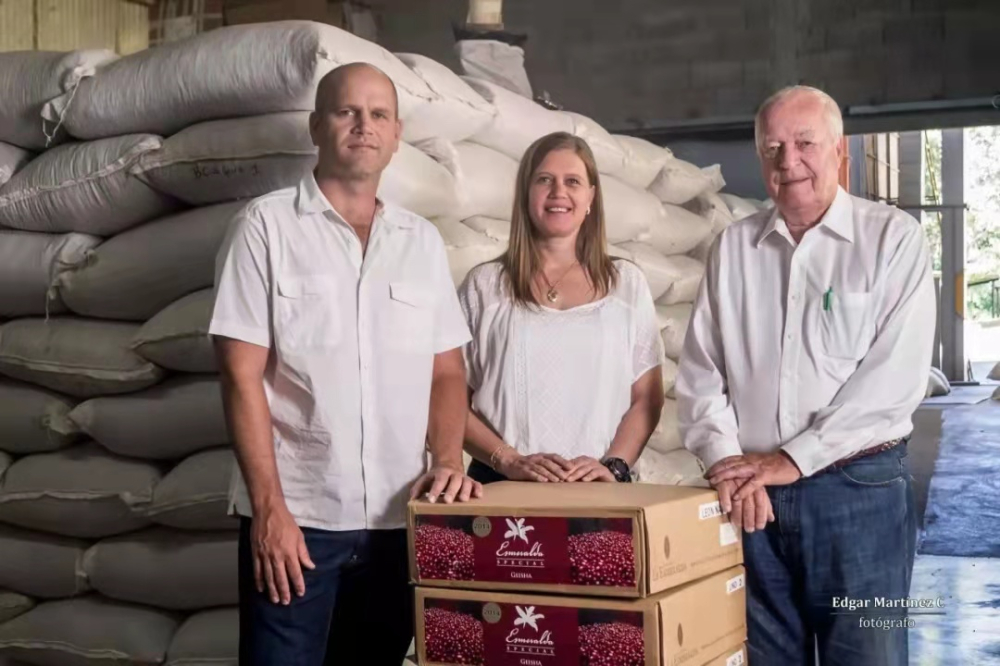
When talking about Geisha coffee, Panama Hacienda La Esmeralda is an unavoidable name. Hacienda La Esmeralda is both the discoverer of Geisha's flavor and the promoter that brought Geisha coffee to the world. The estate has finely divided the planting plots for Geisha coffee beans and classified Geisha into three lots according to planting altitude.
Red Label [Auction Lot] What we often call Red Label is the Geisha produced by Esmeralda Special. It uses Geisha beans grown at an altitude of 1,600 to 1,800 meters, with a cupping score above 90, from the Jaramillo and Cañas Verdes production areas. In flavor, it features jasmine, fruit, and bergamot characteristics. Red Label Geisha is further divided into auction Geisha and non-auction Geisha.
Green Label [Reserve Lot] Private Collection, which is what we often call Green Label, is not an independent competition lot, but a Geisha variety that does not participate in auctions yet still has excellent quality. It uses micro-lot blended beans grown at an altitude of 1,600 to 1,800 meters from different plots such as Jaramillo and Cañas Verdes.
Someone asked Front Street Coffee: What is the difference between Green Label and Red Label? Front Street Coffee's view is: although the grade of Green Label Geisha coffee beans is not as high as Red Label, their cleanliness is outstanding, and the overall style leans toward jasmine tea with relatively high acidity; while naturally processed Green Label Geisha has good sweetness and pleasant acidity, easily reminiscent of passion fruit and floral tea. Green Label lots of Geisha are likewise available in washed or natural processing.
Blue Label [Selection Lot] Blue Label is grown at an altitude of 1,400 to 1,500 meters and blends Geisha coffee beans from three different plots: Jaramillo, Cañas Verdes, and El Velo.
However, starting in 2021, Hacienda La Esmeralda adjusted its grading of Geisha coffee. Beginning with the 2021 harvest season, Hacienda La Esmeralda officially discontinued the Blue Label lot (Geisha 1500).
The Price of Geisha
Geisha was introduced to Panama in 1960 and initially did not attract much attention. After enduring nearly half a century, Panama Geisha Hacienda La Esmeralda separated it from other varieties in 2003, made its first mark in the BOP competition, and ultimately won the BOP championship in 2004, officially bringing the Geisha variety into public view. In the following years, Geisha took first prize in the Best of Panama cupping competition in 2005, 2006, and 2007 in one go. It was precisely the emergence of the "Best of Panama" and Panama Geisha Hacienda La Esmeralda that completely reversed people's underestimation of Panamanian coffee beans. This cupping competition attracted global attention. In addition to the appeal of the coffee itself, it naturally also featured astonishing sky-high prices. Geisha from some small farms attracted the attention of coffee fans worldwide with its unique floral aroma. Panamanian coffee beans have a strong floral aroma and clean fruit notes, with cup quality far exceeding other coffees, amazing flavor, and consistently stable quality.
Small farms in the Boquete production area of Chiriquí Province did indeed produce extraordinary coffee cherries. But harvesting Geisha coffee cherries is an extremely challenging task and requires pickers to treat them meticulously. In order to obtain high-quality Geisha coffee, selecting the ripest coffee cherries is crucial, which also means pickers must have a certain amount of experience to be up to the task. Every qualified Geisha coffee cherry is a fully ripe fruit carefully hand-selected by pickers. Unripe Geisha coffee cherries have not yet reached their specific flavor, so they cannot be picked; unqualified coffee cherries are discarded. Geisha coffee cherries also take several years to fully mature, which is also why extra care is needed during picking. Every harvest season, the farm hires local N'gbe Indians and employs them according to the most reasonable wage standards under Central American labor laws.
There are four main reasons why Panamanian Geisha coffee beans are so expensive:
First, it has been selected by the Specialty Coffee Association (SCA) as the best coffee. The SCA is an international coffee lovers' organization covering all areas of the specialty coffee industry: growers/farmers, producers, roasters, manufacturers, importers/exporters, and retailers.
Second, it is relatively rare. Panama has only a few Geisha producers. Because Panama's growing conditions cannot be replicated outside Panama, Panamanian Geisha coffee cannot be reproduced in other regions or countries. In addition, climate change and the threat of coffee leaf rust make Geisha's survival even more difficult.
Third, demand is increasing while supply is decreasing. Especially in Asia (such as China), demand for Geisha coffee has grown particularly rapidly, which has also driven its price steadily higher.
Fourth, the auction method also effectively drives up the price of the coffee. Because supply is limited, only the highest bidder can obtain it.
Panamanian Geisha Coffee Bean Recommendations
As mentioned earlier, the price of Panamanian Geisha coffee beans is now rising steadily. Does that worry you? So how much does a cup of Geisha coffee cost? The Panama Hacienda La Esmeralda Green Label Geisha roasted by FrontStreet Coffee is fully guaranteed in both brand and quality. More importantly, its value for money is extremely high: each pack is 100 grams and costs only 168 yuan. Calculated at 15 grams of coffee beans per cup, one pack can make 6 cups of coffee, costing only about 28 yuan per cup, which is truly a conscientious recommendation compared with the hundred-yuan-plus per cup prices charged by cafes. The washed Boquete Geisha coffee from Panama's Boquete region is 98 yuan/100 grams, one of Front Street Coffee's everyday beans and also a representative of Panamanian Geisha coffee.
Front Street Coffee's Recommendations for Roasting Geisha Coffee Beans:
The flavor of Geisha coffee is famous worldwide for its rich floral aroma and complex fruit notes. Front Street Coffee's roaster hopes to retain more of Geisha's high-quality acidity, so a medium-light roast is chosen (slight adjustments will be made for different lots). Under this roast level, the high hardness of high-altitude beans is not changed much, so brewing requires a certain increase in extraction rate to present a fuller flavor hierarchy. Here, a higher water temperature and a finer grind size are used to stimulate more aromatic substances.
Front Street Coffee's Brewing Parameters for Geisha Coffee:
Front Street Coffee's daily service mostly uses the V60 dripper, because the 60-degree angle design and the spiral rib design allow you to fully extract the essence of Geisha coffee by controlling the water flow and the number of pours, while the large outlet design avoids over-extraction. The V60 dripper body has guide ribs connecting the top and bottom and a large central hole, which speeds up the flow rate of water falling, while the spiral-shaped exhaust groove design lengthens the water flow path, increasing the contact time between coffee grounds and hot water. Each stream of water converges along the grooves toward the center of the dripper, concentrating the pressure on the coffee grounds and producing coffee with a richer sense of layering.
Dripper: V60, water temperature: 91-92°C, dose: 15g, water ratio: 1:15, grind size: fine sugar size (80% passing a No. 20 sieve).
[Flavor Characteristics of Esmeralda Red Label Geisha Coffee] It has bright rose and citrus aromas, brown rice, berries, apricots, complex fruits, honey, a thick juicy body, rich flavor layers, and pronounced sweetness.
[Flavor Characteristics of Esmeralda Green Label Geisha Coffee] On entry, it has a rich jasmine aroma and high sweetness, with citrus, berries, juiciness, cream, green tea, orange peel, and cantaloupe. The overall flavor is richly layered, with a lasting finish of floral and citrus notes.
[Flavor Characteristics of Panama Washed Boquete Geisha Coffee ]: It has clear acidity reminiscent of citrus, lemon, and bergamot, a creamy smooth mouthfeel when swallowed, and a sweet finish of green tea and honey.
Front Street Coffee's Brewing Suggestions:
Regarding coffee brewing, Front Street Coffee has always believed that the freshness of coffee beans has a great relationship with coffee flavor. Therefore, the coffee beans shipped by FrontStreet Coffee are all within 5 days of the roasting date. Front Street Coffee's roasting philosophy is "freshly roasted good coffee," so that every customer who places an order receives the freshest coffee. Coffee beans need about 4-7 days of resting, so when customers receive them, they are at their best flavor.
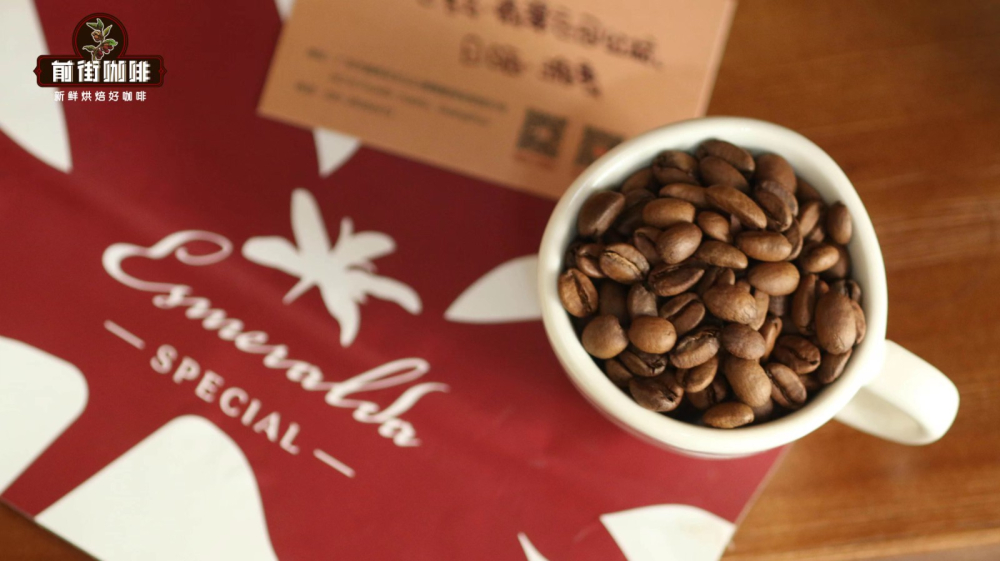
For friends who need ground coffee, Front Street Coffee kindly reminds you: once coffee beans have been ground in advance, they no longer need to be rested, because during transportation, the pressure generated by carbon dioxide inside the package can also make the coffee flavor rounder, so you can brew a cup immediately after receiving the ground coffee. However, ground coffee needs to be brewed promptly, because after ground coffee contacts air, it oxidizes relatively quickly. In other words, the coffee flavor dissipates relatively quickly, and the coffee will not taste as good. Therefore, Front Street Coffee recommends buying whole beans and grinding fresh for each brew, so you can better taste the flavor of the coffee.
For professional coffee knowledge exchange and more coffee bean information, please follow Coffee Workshop (WeChat public account: cafe_style)
For more specialty coffee beans, please add the private WeChat of Front Street Coffee (FrontStreet Coffee), WeChat ID: qjcoffeex
The above content is compiled by CoffeeHunters, a coffee news website.


