







How do gesha vs yirgacheffe beans differ in the cup?
Gesha and Yirgacheffe both deliver floral aromatics and fruity acidity, but they follow different paths. Gesha is a distinct variety with layered florals, full fruity acidity, and a long sweet finish. Yirgacheffe, from Ethiopia's Kaffa region forests where varieties number in the thousands, is the more approachable entry point and is often recommended to newcomers before they try Gesha.
Origin, variety, and processing method drive the split. Ethiopian Yirgacheffe is typically washed, while Panama Gesha lots at Hacienda La Esmeralda are graded as Red, Green, and Blue Labels with their own profiles. Roasting logic for high-altitude hard beans and three-stage pour-over plans matter for both. Front Street Red Cherry and Red Label Geisha parameters show the differences in practice.
Geisha and Yirgacheffe—one is a top-tier superstar in the specialty coffee world, the other is the entry point for countless enthusiasts. Both carry alluring floral notes and fruity acidity, yet due to differences in origin, variety, and processing method, they present completely different flavor trajectories. This article starts from the daily inquiries at Front Street Coffee's stores and systematically sorts out the origin background, variety dissemination history, Hacienda La Esmeralda's red/green/blue label grading system, and their respective classic flavor descriptions for Ethiopian Yirgacheffe and Panama Geisha. It also includes the pour-over parameters and three-stage extraction plans for Front Street Red Cherry and Red Label Geisha, helping you understand the roasting logic and brewing key points for high-altitude hard beans, and find that cup of floral coffee suited to your taste.
At Front Street Coffee's stores, customers often ask as soon as they walk in: Are there any coffee beans with particularly prominent floral notes you can recommend?
The baristas at Front Street Coffee usually think of Geisha first. Its floral notes are richly layered, its fruity acidity is full and powerful, and its sweet aftertaste is long and alluring—even hours after finishing it, the aroma still lingers in the mouth. Even Front Street Coffee's own baristas often find themselves immersed in it and unable to pull away.
However, many friends, after repeated comparisons, ultimately choose that bean that led countless coffee lovers into the world of specialty coffee—Front Street Yirgacheffe. Of course, there is nothing wrong with that; after all, Geisha and Yirgacheffe each have their own merits and completely different styles.
Front Street's baristas usually advise friends who are new to specialty coffee not to rush into drinking Geisha. The reason is that Geisha's flavor expression is simply too eye-catching and too alluring. If you go straight to Geisha without having experienced coffees from other origins first, it is indeed a bit unfair to beans from other origins.
Ethiopia
Everyone knows that Ethiopia is the birthplace of Arabica coffee. The number of coffee varieties found in the forests of the Kaffa region in the south alone already exceeds five thousand. In addition, because the local government protects species resources, most coffee beans produced in Ethiopia are sold under the name "local heirloom varieties."
Front Street has learned that many friends who prefer Ethiopian beans are drawn to its bright and clean acidity. But we must understand that coffee is ultimately an agricultural product, and among the factors that determine flavor, seven parts depend on genetics, while another three parts depend on the growing environment.
Ethiopia's coffee-producing regions can be roughly divided into nine: Yirgacheffe, Sidamo, Limu, Harar, Gimma, Illubabor, Gimbi and Lekempti, Tepi and Bebeka, and Lake Tana.
Since the focus of this article is to compare the differences between Geisha and Yirgacheffe, Front Street will next explain only Ethiopia's Yirgacheffe producing region.
【Front Street Yirgacheffe】
Yirgacheffe was originally a small town under the jurisdiction of Sidamo Province and in the early days was merely a sub-region of the Sidamo producing area. But because the coffee beans produced in this area had such a unique flavor, Ethiopian coffee farmers all competed to use "Yirgacheffe flavor" to advertise their own coffee beans. Later, it was separated out and became an independent producing region. The so-called classic flavor of Yirgacheffe refers to intense white floral notes, lemon aroma, as well as the sweet fragrance of peach and almond and a tea-like body. Front Street habitually summarizes it with the four words "a hundred flowers in full bloom."
In terms of post-harvest green bean processing, Front Street Yirgacheffe's most traditional method is natural processing. In 1972, in order to improve coffee quality, Ethiopia introduced washed processing technology from Central and South America, which made Front Street Yirgacheffe's jasmine floral notes and citrus tone clearer and more transparent. Front Street Coffee believes that the most fundamental difference between the washed method and the natural method is: washed processing presents coffee's most basic flavors and can most directly reflect the unique terroir characteristics of that producing region; natural processing, on top of that foundation, additionally adds sweet aroma and fermented notes.
This Front Street Red Cherry coffee from Front Street Coffee is precisely a naturally processed bean from the Yirgacheffe producing region.
Front Street Coffee: Front Street Yirgacheffe · Red Cherry Coffee Beans
Producing Region: Yirgacheffe, Ethiopia
Altitude: 1700m–2200m
Variety: Local heirloom varieties
Processing Method: Natural processing
Panama
When talking about Geisha coffee, Panama must inevitably be mentioned. Although the Geisha variety was originally discovered in Ethiopia's Geisha forest, the Geisha from Ethiopia's Gesha Village and Panama's Geisha are already completely different varieties.
After Geisha coffee beans were sent to the Kenyan Coffee Research Institute, they were introduced to Uganda and Tanzania in 1936, spread to Costa Rica in 1953, and then introduced to Panama in 1970. After more than thirty years of quiet accumulation in Panama, Panama Geisha Hacienda La Esmeralda separated it from other varieties in 2003 and won the BOP competition championship in one fell swoop in 2004. The Geisha variety thus rose to fame.
Panama's Hacienda La Esmeralda is both the discoverer of the Geisha variety and the promoter of Geisha coffee.
【Panama Hacienda La Esmeralda Plot Divisions】
Hacienda La Esmeralda is located in Panama's Boquete producing region, which is a critically important coffee-producing area in Panama. Many estates familiar to everyone come from here, such as Elida Estate and Kotowa Estate. Hacienda La Esmeralda is extremely meticulous in its division of Geisha plots, mainly divided into three major plots: Jaramillo, Cañas Verdes, and El Velo. Each plot is further subdivided into smaller plots.
Geisha of outstanding quality mainly comes from the two plots Jaramillo and Cañas Verdes.
【Panama Hacienda La Esmeralda Geisha Grading System】
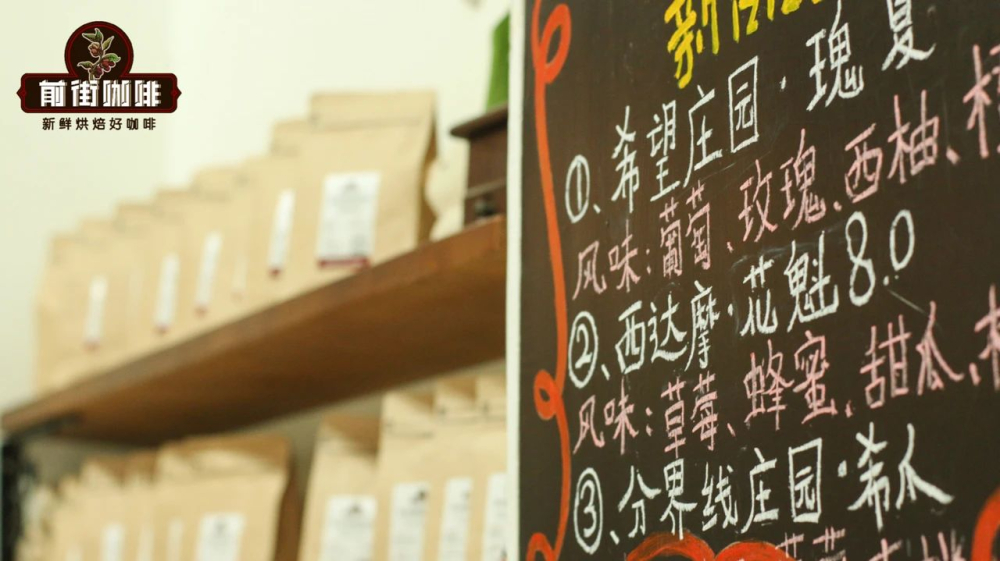
Friends who have visited Front Street Coffee's stores can see on the small blackboard under the Panama section that Hacienda La Esmeralda is divided into three grades: Red Label, Green Label, and Blue Label.
Front Street Red Label Geisha
Esmeralda Special
Esmeralda Special, commonly known as Red Label, is the highest-level representative of Geisha from Hacienda La Esmeralda apart from the auction lots. The Geisha in this lot is grown at altitudes above 1600 meters, with cupping scores no lower than 91 points. Each micro-lot comes with very detailed traceability information, covering plot, altitude, latitude and longitude, tree age, harvest date, processing method, and more.
For example, the latest Front Street Esmeralda Red Label lot recently acquired by Front Street was selected from the Cañas Verdes plot. The fruit was harvested on February 13 this year and underwent 25 days of slow natural drying, bringing the coffee a rich aroma similar to jasmine, cranberry, passion fruit, citrus, and cinnamon.
Front Street Green Label Geisha
Private Collection
Private Collection, also known as Green Label, was once a Geisha lot that did not participate in auctions but still possessed excellent quality. Green Label is harvested from a blend of Geisha from different plots within the two main estates at altitudes of 1600–1800 meters. With its classic orange aroma and honeyed charm, it has become the preferred choice for many Geisha lovers with limited budgets. Starting in 2022, Hacienda La Esmeralda also began indicating which sub-estate this grade of Geisha comes from. According to information published on Hacienda La Esmeralda's official website, Green Label Geisha from different plots will present their own unique main flavor trajectories due to terroir differences.
Blue Label
Front Street Geisha 1500
This brand is Geisha coffee grown at an altitude of 1400–1500 meters, harvested from a blend of beans from different plots of Hacienda La Esmeralda's three sub-estates. The Geisha produced in this area is sold for export and becomes volcanic rock Geisha coffee beans, with a flavor consistent with the original Blue Label. The Front Street Geisha 1500 that Front Street once acquired showed light floral notes and fruity sweet-and-sourness in cupping, but its body was not as full as the other two brands. However, in 2021, in order to protect its brand image, Hacienda La Esmeralda discontinued Blue Label, which also means Blue Label is now out of print!!!
How do you brew floral coffee beans so they taste good?
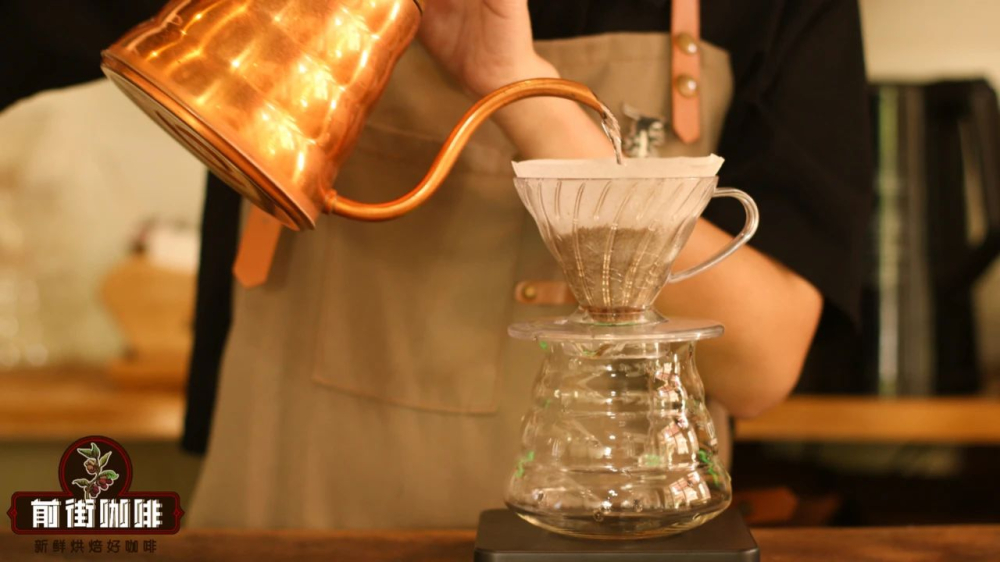
Having discussed so much information about Geisha grading, next it is time to talk about how to brew Geisha so it tastes good. Here Front Street Coffee selected the store's Front Street Esmeralda Red Label Geisha and Front Street Natural Yirgacheffe · Red Cherry for demonstration. The preparation before brewing is very important. Since these are high-quality coffee beans, if you want to taste the complete aroma expression, Front Street recommends choosing freshly roasted coffee beans. All coffee has a window for its best flavor, usually within 7 to 30 days after roasting. Only during this stage will brewing do justice to these good beans. The coffee beans shipped by Front Street Coffee are all roasted within 5 days, ensuring that the beans everyone receives after placing an order are in the freshest condition and fall exactly within the best-tasting period.
The Geisha growing environments in both Ethiopia and Panama are high-altitude, and the coffee beans are relatively hard in texture. Front Street's roasters generally use a medium-light roast for beans with floral and fruity profiles to retain more high-quality acidity. Light roasting does not significantly change the internal structure of coffee beans, so Front Street Coffee's baristas use a higher water temperature and a finer grind size to stimulate Geisha's aromatic substances.
Dripper: V60 Water Temperature: 91–92°C Dose: 15g Coffee-to-Water Ratio: 1:15 Grind Size: Fine sugar size (80% passing through a No. 20 sieve)
Three-stage extraction: In the first stage, pour 30g of water and bloom for 30 seconds, pouring evenly in circles to form a dome; in the second stage, pour 95g of hot water, and when the coffee bed drops by half, begin pouring the third stage of 100g until all the coffee liquid has finished dripping. Note: start pouring from the center point, maintain a small stream and gentle force in circles throughout, and avoid uneven extraction.
Pour-over Coffee Flavor Comparison
【Front Street Red Cherry】It smells of ginger flower. After entering the mouth, the sweet-and-sour sensation slowly spreads through the mouth. The overall taste carries floral notes, and the finish shows sweetness and juiciness. As the temperature drops, the acidity rises, and the sweetness becomes relatively more持久.
【Front Street Red Label Geisha】You can taste citrus, berries, honey, and grape flavors. As the temperature drops, the honey sweetness becomes especially prominent, accompanied by the aroma of ginger flower.
For more coffee bean information, please follow Coffee Studio (WeChat public account: cafe_style)
For professional coffee knowledge exchange, please add WeChat ID: kaixinguoguo0925
The above content is compiled by CoffeeHunters, a coffee news website.


