







What is coffee blending and why mix different beans?
Coffee blending is the craft of combining beans so their strengths cover each other's gaps, not just tossing different lots together. There are two routes: pre-roast blending, where green coffee beans are mixed by ratio or target flavor before roasting, and post-roast blending, where already roasted beans are combined. Blended coffee beans fall into Italian-style and single-origin categories.
The goal is balance and complementarity. If one bean gives weak crema under espresso extraction, another can fill that role, and Robusta is often added for body and crema. Front Street's four Italian-style blends use the post-roast method. Ratio control matters, and the difference between SOE coffee and blended coffee comes down to whether one origin or several are used.
Coffee blending is not simply mixing different beans together, but rather a craft that emphasizes complementarity and balance. Based on the practical experience of Front Street Coffee, this article systematically sorts out the two basic forms of blended beans—pre-roast blending and post-roast blending—analyzes the core purpose of blending, and through examples of Front Street’s four Italian-style blended beans, explains how to use the characteristics of coffee beans from different origins and varieties to achieve the ideal flavor. The article also discusses the role of Robusta beans in blending, the principles for grasping blending ratios, and the difference between SOE coffee and blended coffee, helping coffee enthusiasts build a complete understanding of blended coffee.
For more specialty coffee knowledge, please follow the WeChat public account: FrontStreet Coffee
Among the guests who visit Front Street, everyone’s preferred coffee flavor is different. Some people are fond of rich, milky milk coffee, while others prefer pour-over and enjoy the unique regional flavors brought by a single origin; there are also some guests who are full of curiosity about blended beans, and Front Street often receives inquiries about blending recipes. Therefore, today Front Street will talk with everyone about the topic of blended coffee.
Blended beans can be divided into two major categories: Italian-style blended beans and single-origin blended beans. Front Street currently has four distinctive Front Street Italian-style blended beans on its list. From the perspective of operational methods, there are two paths for blending: one is to first mix green coffee beans according to a set ratio or target flavor before roasting, and then send them uniformly into the roaster to complete roasting, which the industry usually calls “pre-roast blending”; the other is to directly mix already roasted coffee beans, and this method is called “post-roast blending.” The four Front Street Italian-style blended coffees listed by Front Street use the post-roast blending process.
Perhaps some guests may wonder: why mix different coffee beans together? Wouldn’t that make a mess? That is not the case. In Front Street’s understanding, every bean has both strengths and shortcomings. For example, if a certain bean does not perform ideally in terms of crema when extracted with an espresso machine, then beans with rich crema can be introduced to make up for it; another example is that if the espresso made from a certain bean is too prominent in acidity, bitterness, or sweetness, complementary beans can also be found to pair with it, thereby obtaining the desired coffee flavor. Isn’t that a wonderful thing?
Take the specialty Italian-style blend on Front Street’s bean list as an example. It uses Colombian coffee beans and Brazilian coffee beans, mixed at a ratio of 3:7. The signature nutty and chocolate tones of Colombian coffee, combined with the rich peanut and creamy flavors of Brazilian coffee, make this Italian-style blend very balanced overall, with rich crema and an extremely high level of smoothness on the palate. It has a fresh aroma while also retaining the slight bitterness characteristic of American beans. It is deeply favored by Front Street’s guests and is also very suitable for daily output in coffee shops.
Usually, baristas try to combine multiple beans to achieve the flavor effect they are pursuing, and Robusta coffee beans are also used among them. Everyone does not need to be prejudiced against this coffee just because the recipe contains Robusta beans; this combination can sometimes produce unexpected surprises. For example, many baristas like to use Yunnan coffee beans for blending, because the variety grown in Yunnan is Catimor, and Catimor itself is a hybrid of Arabica and Robusta, naturally carrying Robusta genes and possessing the elements required by traditional Italian coffee. In addition, using Robusta coffee beans can also effectively control blending costs, so many baristas add Robusta beans to their recipes.
Among the Front Street commercial Italian-style blended coffee beans launched by Front Street, 10% Robusta is added, then blended with 30% Colombian washed coffee beans and 60% Brazilian semi-washed coffee beans, presenting flavor characteristics of nuts, cocoa, and caramel, and can meet the needs of daily shop output.
In addition, the Front Street basic Italian-style blended coffee on Front Street’s bean list is made by blending Yunnan coffee and Brazilian coffee at a ratio of 3:7. This Italian-style blend has soft fruit acidity and caramel sweetness, and is suitable for shop owners and home users who prioritize cost and do not have very high flavor requirements.
It is not easy to make an excellent blended coffee. It greatly tests the barista’s familiarity with the flavors of coffee beans. Specifically, every origin, every estate, which processing method is used, and to what degree it is roasted—these are all essential foundational knowledge.
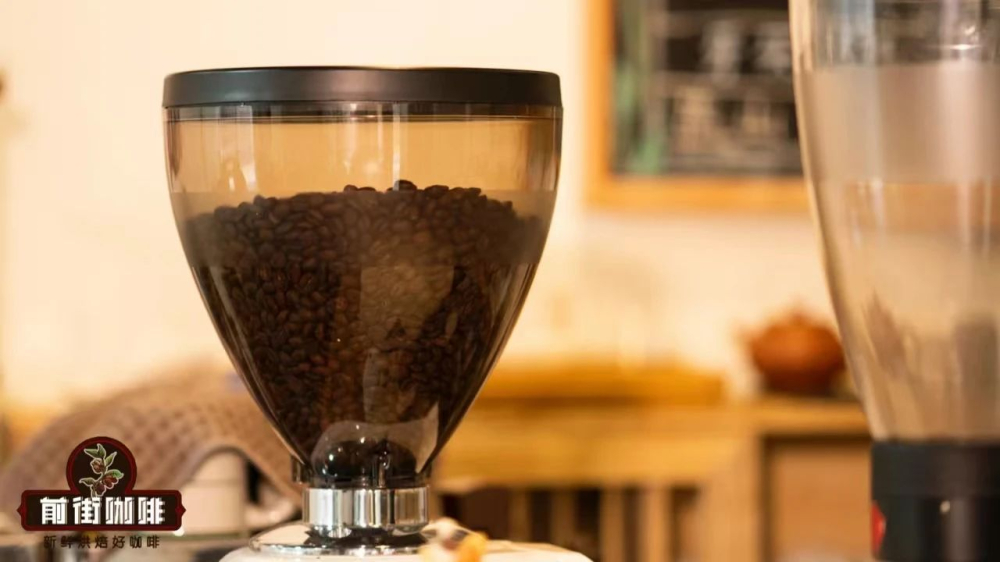
Therefore, when blending, a 1:1 ratio is generally not used. First, it is necessary to determine which of the coffee beans participating in the blend has the most prominent flavor, whether that prominent flavor is suitable, and how to weaken the overly prominent part. At the same time, when selecting beans, factors such as the hardness, moisture content, and roasting degree of each bean must also be considered. These all require careful consideration and repeated experimentation by the barista before finally obtaining a satisfying cup of Italian coffee.
At present, when making Italian-style blended coffee drinks, Front Street Coffee (FrontStreet Coffee) stores use the house-roasted Front Street Sunflower Warm Sun Italian-style blend. This blend uses Front Street Honduras Sherry and Front Street Ethiopia Yirgacheffe Natural Red Cherry. After repeated adjustments by Front Street Coffee (FrontStreet Coffee) baristas, the ideal blending ratio of 7:3 was finally determined. The resulting Italian coffee has obvious fruit acidity, accompanied by berry-flavored aroma and wine aroma, and a comfortable sweet aftertaste.
Espresso can also be used to make single-origin coffee. If single-origin coffee beans are used, the resulting coffee can be abbreviated as SOE coffee. Coffee made this way allows you to taste the most basic flavor of the producing region.
In Front Street’s view, the characteristic of Italian-style blended coffee lies in its ability to amplify the advantages of a certain coffee bean while masking its shortcomings, allowing every coffee bean to be fully utilized. Why not do it? Of course, it is not that the more types of beans in the blend, the better the flavor. The more types of coffee beans, the more complex the factors that need to be considered, and it is difficult to take every detail into account, while the flavor will also become chaotic. So Front Street believes that using two to six kinds of coffee beans for blending is a relatively suitable range.

Blended beans can make use of the complementary relationship among different coffee beans. If blended properly, the flavor of this blended bean will integrate the strengths of each bean, extracting an extremely balanced taste and exceptionally aromatic, rich crema. But improper blending will amplify certain characteristics of the beans, especially lightly roasted beans, presenting a strong aroma and a stimulating sour and sweet taste. Front Street has found that many coffee shops like to use Yirgacheffe for blended coffee. The extracted floral aroma is very prominent, and the taste is also somewhat sour, which is very suitable for enthusiasts who love acidity. So, if you are interested in blending, you are welcome to come to Front Street Coffee (FrontStreet Coffee) often to exchange coffee insights.
For more specialty coffee beans, please add the private WeChat Front Street Coffee (FrontStreet Coffee), WeChat ID: kaixinguoguo0925
The above content is compiled by CoffeeHunters, a coffee news website.


