







Where did coffee originate, and how did drip bags arrive?
The drip coffee bag was invented in Japan, not Europe or America. In 1990, Yamanaka Sangyo transplanted the tea bag concept to coffee and filed a patent, but the early design tipped over during brewing and never reached the market. In 1998, Daiki Sangyo extended the tabs outward, creating the stable form used today.
The format spread because it matches the same convenience that shaped how people ask where did coffee originate and how it travels across cultures. A drip bag needs only hot water and a mug, delivering single-origin character without equipment. Front Street Coffee's line includes Golden Mandheling, a dark-roasted Sumatran option with low acidity and a full body.
Drip coffee bags, combining convenience with quality, have become the top choice for many people to enjoy black coffee daily. Where exactly did this filter-bag coffee packet originate? How did it evolve from an uncommercialized patent into a beverage craze across East Asia? This article traces the invention of drip coffee bags, analyzes the shifts in consumer demand behind their market growth, and explains brewing key points in detail, helping readers easily master making a good cup of coffee. It also introduces Front Street Coffee's high-value drip coffee products and the flavor characteristics of Golden Mandheling.
Many people find it hard to brew coffee due to the complicated process, making it difficult to enjoy a satisfying black coffee anytime. The invention of drip coffee bags solved this problem perfectly. Today, Front Street Coffee shares how to easily get a delicious cup of black coffee.
The Invention of Drip Coffee Bags
In China, buying drip coffee bags (also called filter-bag coffee) is not difficult—they are sold on e-commerce platforms, in supermarkets, and in most coffee shops, and brewing a drip bag yourself has become commonplace. But do you know which country first invented the drip coffee bag? The answer is not the mature coffee-consuming markets of Europe and America, but Japan, not far from China.
When it comes to Japanese coffee, most people think of pour-over. Pour-over is indeed very popular in Japan, yet Japan's young office workers, with their extremely fast-paced lives, don't have time to wait for a cup of pour-over coffee.
With drip coffee bags, all you need is hot water and a suitably sized mug to enjoy a good cup of coffee anytime, anywhere.
Thus, in 1990, Japan's Yamanaka Sangyo Co., Ltd. transplanted the concept of tea bags to coffee, invented the drip coffee bag, and applied for a patent. However, the drip bag designed by Yamanaka Sangyo lacked sufficient load-bearing capacity and tended to tip over during brewing, so it failed to reach the market successfully. It wasn't until 1998, when Daiki Sangyo improved the original design by extending the "ears" outward, that today's common drip coffee bag came into being.
The Market for Drip Coffee Bags
The English name for drip coffee bag is "drip coffee bag." It has the advantages of instant coffee—fast, convenient, and requiring no brewing equipment—while also letting people experience the fun of pour-over. Because it combines the strengths of both instant coffee and pour-over coffee, the drip coffee bag expanded rapidly in the East Asian market. In 2011, global drip coffee bag sales reached 1.4 billion packets, equivalent to about 11,200 metric tons, with 94% of sales coming from Japan. Starbucks Japan also launched drip coffee bags specifically for this market. Although total global sales of drip coffee bags are not yet large and the market size is relatively limited, the growth rate is very fast.
In the past, in China's brewed coffee market, instant coffee once held a share as high as 70%, while drip coffee accounted for only 10%. However, in recent years, food safety incidents have made consumers increasingly worried, and with the rise of specialty coffee culture, coffee consumers no longer treat coffee merely as a pick-me-up tool. Drip coffee bags offer both quality and convenience, perfectly meeting this demand. Therefore, in 2017, China's drip coffee growth rate reached 30%.
Drip Coffee Bags and Freshly Ground Coffee
As drip coffee bag packaging technology continues to upgrade, it can now completely block out external oxygen. So as long as the drip coffee beans themselves are of excellent quality and consumed within the best-tasting period, there will basically be no noticeable difference between drip coffee and freshly ground pour-over coffee.
The biggest advantage of brewing drip coffee is that a professional barista has already set most of the brewing variables for you. You don't need to choose beans, worry about the water-to-coffee ratio or grind size, or prepare brewing equipment or possess expert-level skills. All you need is hot water and a suitably sized mug to enjoy good coffee anytime, anywhere.
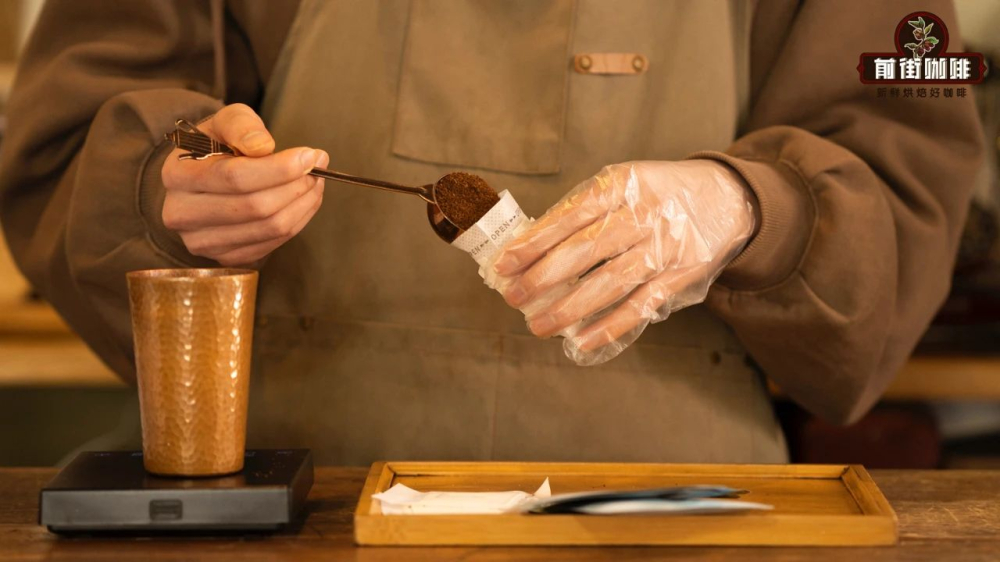
1. First, the net weight of the coffee grounds in a drip coffee bag is clearly labeled (usually 10 grams). This saves the trouble of a grinder and an electronic scale.
2. Next, figure out the water amount and temperature. As with pour-over coffee, use a ratio of 1:15 to 1:16, so the brewed coffee liquid should reach 140 to 150 milliliters. Choose a water temperature of around 90°C. If you have a thermometer or temperature-controlled kettle, use it first; if not, you can roughly judge the temperature. Generally, after the kettle comes to a boil, turn off the heat source, open the lid, and wait 2 to 3 minutes—the water temperature will drop to around 90°C (at a room temperature of 28°C).
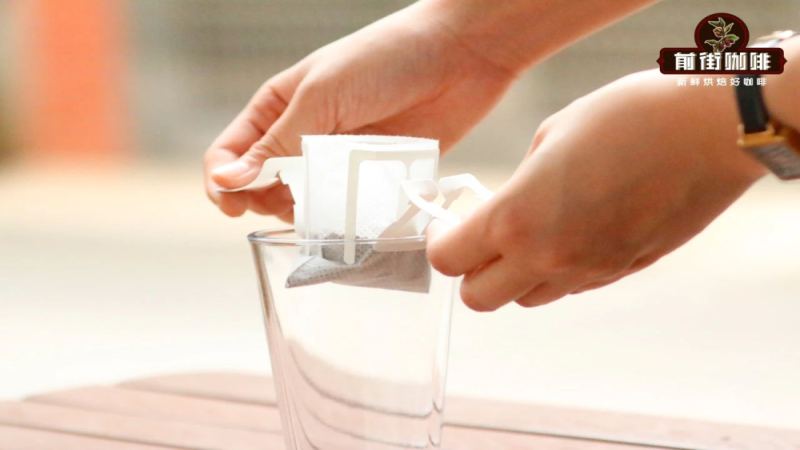
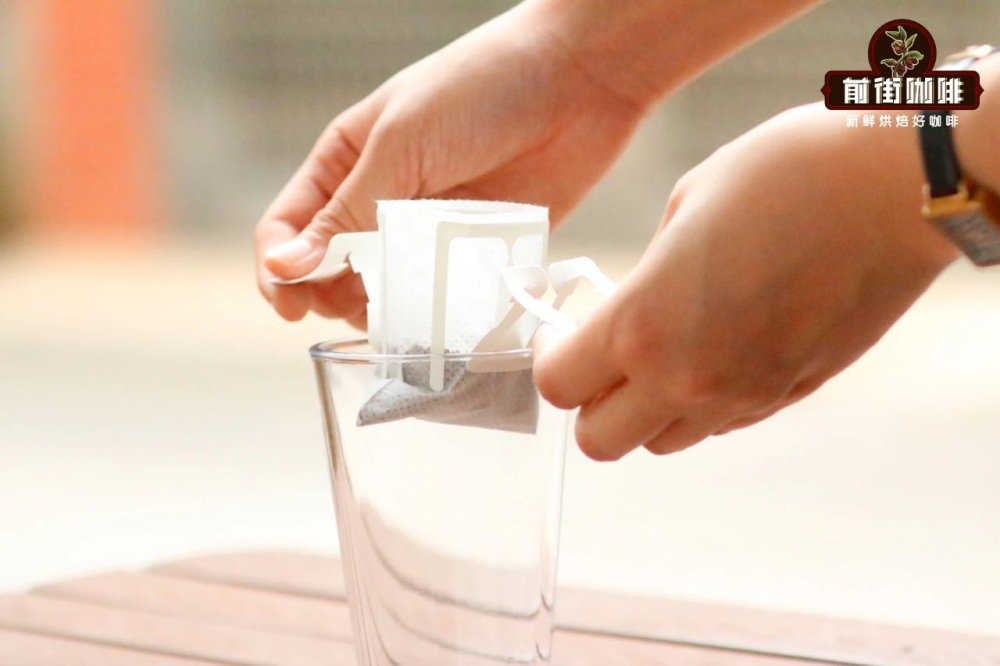
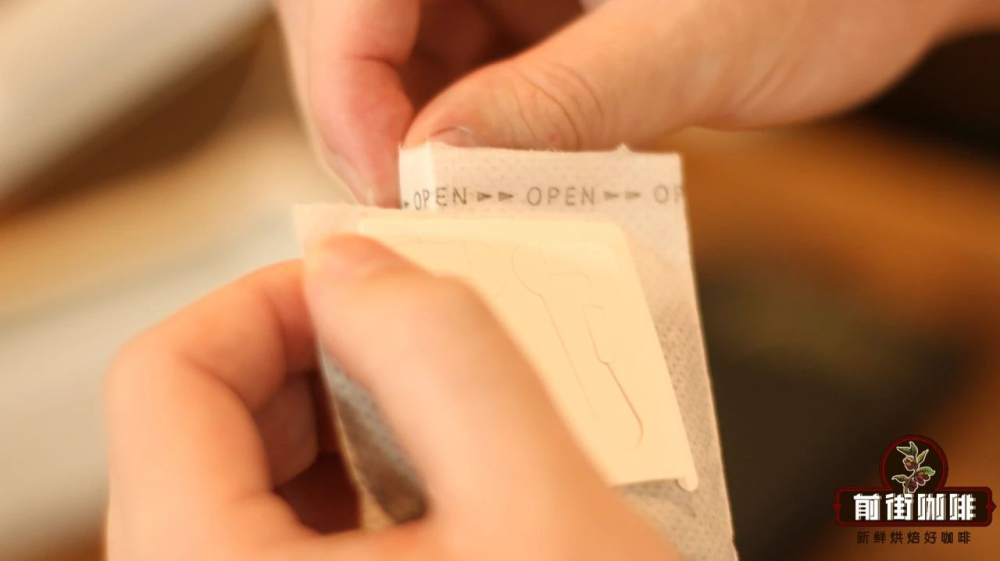
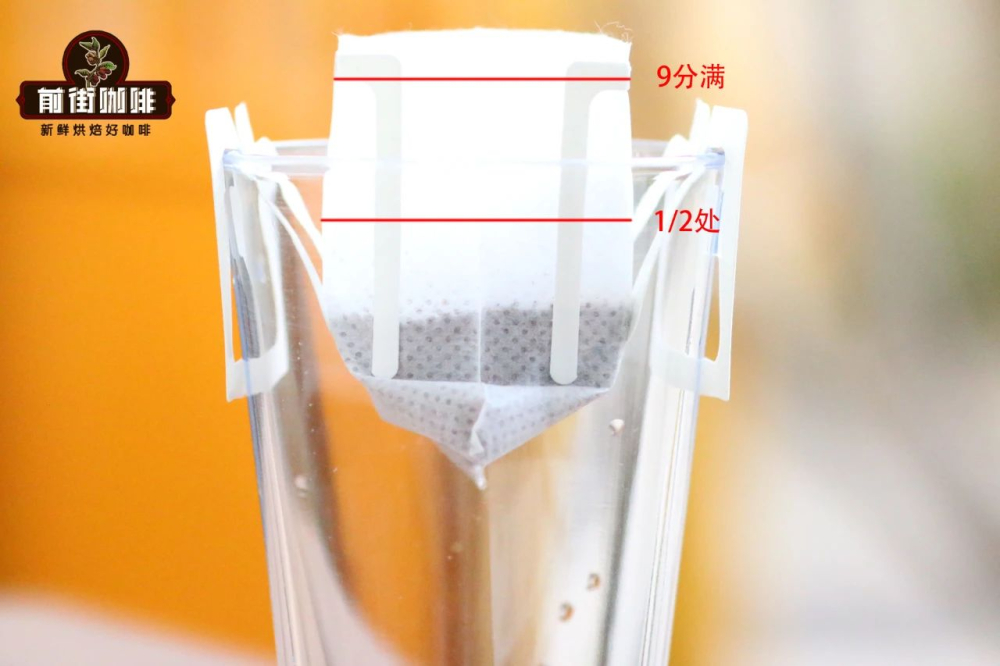
3. Once ready, take out the drip bag, tear open the sealed opening, unfold the "ears" on both ends of the filter bag, hang it on the rim of a mug (or cup), and shake the coffee grounds level.
4. For the first pour, simply wet the entire layer of coffee grounds, and let it bloom for 30 seconds.
5. After the bloom, make the second pour. Using a slow stream, circle around and fill directly. After the grounds layer drops slightly, continue pouring to the top. Repeat this until the coffee liquid in the cup reaches about 140 to 150 milliliters. Then you can remove the drip bag and enjoy.
6. If you want more precise water control, you can also pour 150 to 160 milliliters of water into the pouring kettle, and during brewing, pour all the water from the kettle. Once the coffee liquid has flowed into the cup, remove the drip bag. The entire brewing process takes about 1 minute.
Since drip coffee uses pre-ground coffee, its flavors dissipate faster than whole coffee beans. So if you want to taste the coffee's flavors, consume it as soon as possible.
Drip Coffee Brand Recommendation:
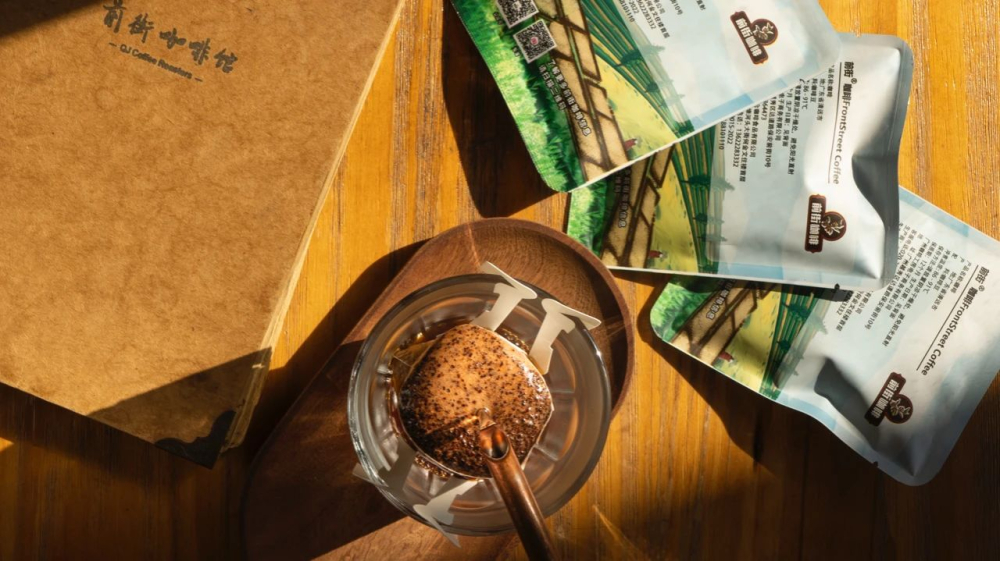
Front Street Coffee's seasonal drip coffee has full guarantees in both brand and quality. More importantly, it's extremely cost-effective—one box of ten packets, each 10 grams, priced at only 39.9 yuan. Calculating one drip bag per cup, one packet makes 150ml of coffee, costing only about 4 yuan per cup. Compared with coffee shops charging dozens of yuan per cup, this is truly a conscientious recommendation.
Front Street PWN Golden Mandheling Drip Coffee Beans
Mandheling coffee has also drawn attention in the past two years. Previously, Front Street Coffee's Mandheling sales were mostly in the Shanghai area. Shanghai and Taiwan have quite similar taste preferences, both favoring a rich, full-bodied feel. Front Street Coffee once had a Shanghai customer who kept insisting that the Mandheling be roasted darker than our usual dark roast. Nowadays, more and more people recognize Mandheling's unique flavor, and more and more customers order Mandheling at Front Street Coffee's shop, many of them Guangzhou locals.
Front Street PWN Golden Mandheling is actually different from ordinary Mandheling. It comes from the Indonesian green bean merchant PWN, the first company to cooperate with Japan on Golden Mandheling and to register Golden Mandheling as a trademark. The biggest characteristic of Golden Mandheling is that it lacks the off-flavors of ordinary Mandheling. After three strict manual screenings, the bean size is ensured to be uniform, allowing even coloring during roasting, so the taste presents a clean, full-bodied richness. Its flavor is much like Guangdong's herbal tea, so it's no wonder Guangzhou locals can accept this flavor. This time, Front Street Coffee specifically made Golden Mandheling drip coffee, also because we've noticed that people's acceptance is growing higher and higher.
The above content is compiled by CoffeeHunters, a coffee news website.


