







Why does Mandheling coffee taste earthy and full-bodied?
Mandheling coffee gets its wood, spice, earth, and herbal notes from wet hulling, an Indonesian semi-washed method known locally as Giling Basah. Instead of drying parchment fully before milling, producers remove the parchment while the beans still hold moisture. The shortcut speeds up processing and cash flow, but it also adds defects and flavor variability.
The beans come from high-altitude Aceh and North Sumatra, where humidity runs 70 to 90 percent and annual rainfall can exceed 2,000 millimeters, with sun in the morning and heavy rain by afternoon. Front Street roasts Mandheling to a deep roast, giving low acidity, lasting bitterness, a sweet aftertaste, and the stuffy aroma the origin is known for.
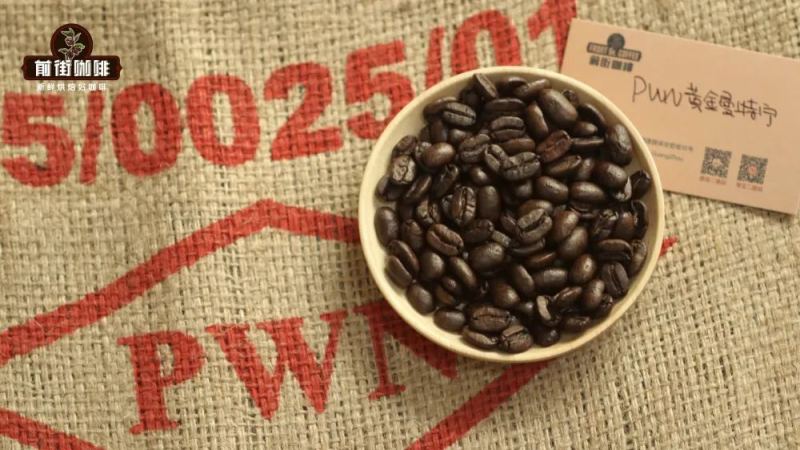
Mandheling coffee, as the darkest roast single-origin on Front Street Coffee's bean list, is renowned for its rich, solid mouthfeel and unique stuffy aroma. It originates from the island of Sumatra in Indonesia, where the hot and rainy climate has given rise to a distinctive semi-washed processing method—wet hulling. This technique removes the parchment layer while the beans are not yet fully dried, greatly shortening the processing cycle but also introducing more defects and flavor variables. It is precisely this interweaving of "roughness" and "contamination" that endows Mandheling with its regional flavors of wood, spice, earth, and herbs. This article will walk you through every step of wet hulling and reveal the origins of Mandheling coffee's unique flavor.
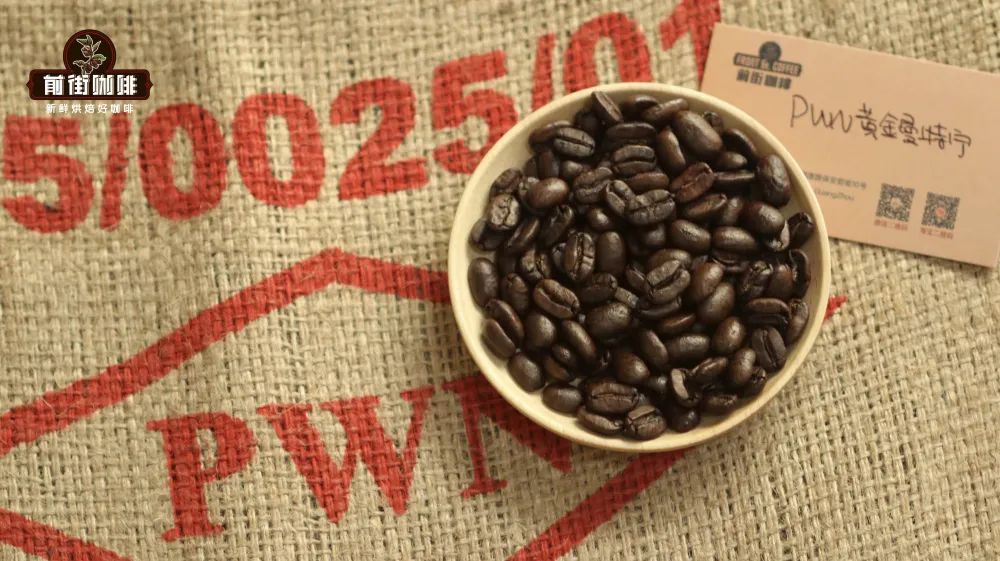
For more specialty coffee knowledge, please follow our WeChat official account: Front Street Coffee (FrontStreet Coffee) Among the many single-origin coffees, Front Street's Mandheling is the darkest roast. It exudes a rich roasting aroma, with a full and solid body and very low acidity. After deep roasting, you can taste both a lasting bitterness and an elegant sweet aftertaste, while the nose and palate simultaneously capture that unique stuffy aroma, making it more enjoyable with every sip.
At this point, some may wonder: among beans that also use a medium-dark roast, why does Mandheling alone carry this special flavor? Front Street Mandheling comes from the mysterious island of Sumatra in Indonesia. Sumatra is divided into eight provinces, but only the high-altitude provinces of Aceh and North Sumatra actually grow Arabica coffee on a large scale. Unlike many coffee-growing regions, Indonesia's weather is erratic, humid, and rainy, with year-round humidity between 70% and 90%. It is often sunny in the morning and pouring rain in the afternoon, with typhoons liable to strike at any time, and annual rainfall even exceeding 2,000 millimeters.
Under such harsh climatic conditions, drying parchment beans to the required moisture content is both difficult and time-consuming. Indonesia is also a coffee powerhouse oriented toward mass production. To compress processing time and sell the beans for cash as quickly as possible, locals developed a unique semi-washed method—wet hulling. Wet hulling is called "Giling Basah" in Indonesian. Like traditional methods such as washed, natural, and honey processing, it has been used in coffee production for many years. Today, wet-hulled coffee is still mainly produced in Indonesia, primarily in northern Sumatra and the Sulawesi growing regions.
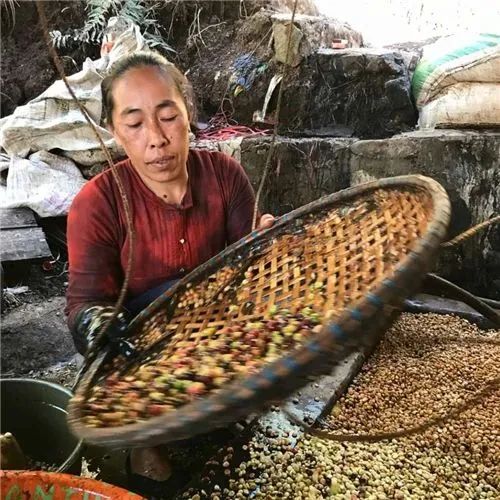
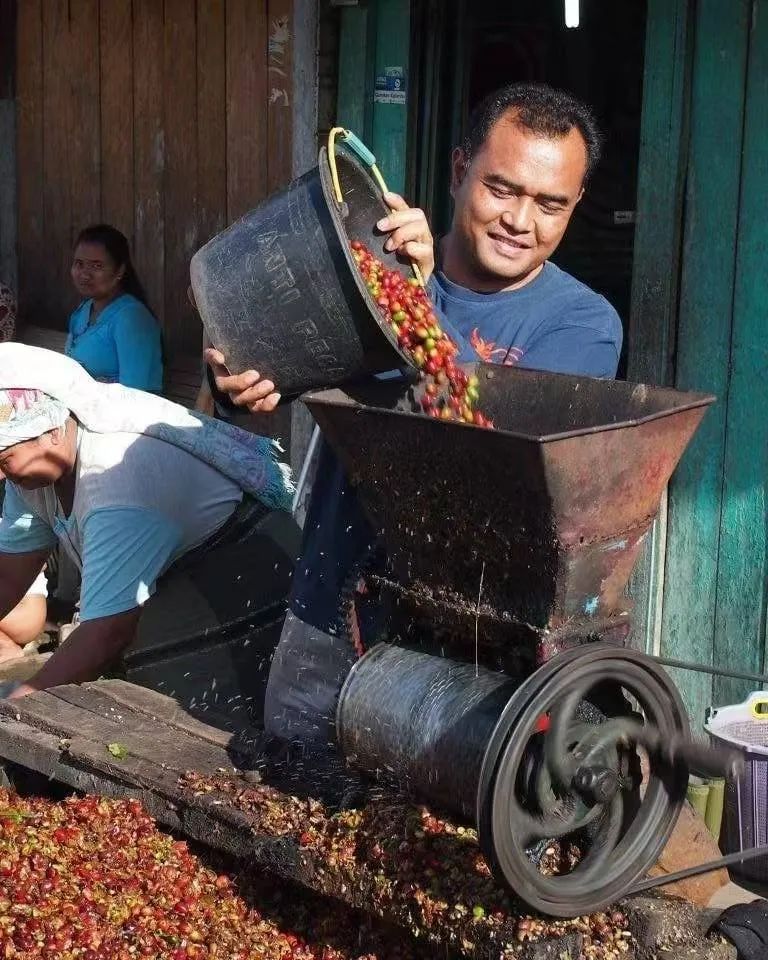
At first, this region also relied mainly on natural processing, but the quality was not stable enough, so it later switched to a semi-natural method similar to Brazil's. Farmers first use a machine to remove the skin of the coffee cherries, then dump them directly into a water tank, skim off the defective parchment beans floating on the surface, and take out the beans that sink to the bottom and put them into barrels for a short fermentation. The exact duration depends on the situation, usually only a few hours. After fermentation, a small amount of mucilage remains on the parchment, which must be scrubbed clean before the parchment beans are laid out outdoors to dry.
However, unlike Brazil, this region is not dry, so after removing the skin and extracting the sticky parchment beans, they cannot be left outdoors to dry for days, because hot, rainy Indonesia would simply make them mold. At most, they can be dried for only a day or two.
When the moisture content of the parchment beans drops to 30% to 50%, they are collected by brokers. At this point the mucilage layer has not yet solidified, and the bean body is half-hard and half-soft. They must be sent back to the processing plant in time and run through a special machine to grind off the parchment, otherwise over-fermentation will make them sour and foul-smelling.
Hulling undried green beans is more difficult, so a more powerful huller is required. Because hulling under wet hulling is more difficult, the machine must apply greater friction to tear open the parchment layer clinging tightly to the green beans. At this stage, white or green viscous liquid usually flows out. After prolonged soaking in the mucilage and exposure to the humid environment, the green beans eventually soften, turn white and swell, and take on a gray-green color. Under the friction and agitation, the green beans are also more likely to be crushed or dented, especially at both ends, forming small notches shaped like sheep's hooves. This is why Sumatra coffee has a relatively high proportion of "sheep's hoof" beans.
You should know that coffee beans originally have four layers of protection: skin, mucilage, parchment, and silver skin. Wet hulling removes the third and fourth layers halfway through, meaning wet-hulled coffee beans are directly exposed as the "inner bean" to sunbathing. After the parchment is ground off by machine, the beans continue to dry until the moisture content reaches between 12% and 15%, at which point the coffee beans can be put into woven bags, usually 40 kilograms or 80 kilograms per bag. Finally, these green beans are sent for mechanical sorting to remove various impurities and graded by bean size.
Moreover, because all four layers of protection are removed before drying, the beans are fully "naked" and exposed to the scorching sun or humid air, so they dry very quickly. Therefore, whether in fermentation time or drying time, wet hulling is shorter than the traditional washed process, thus saving a great deal of labor. Although wet hulling shortens the drying time of green beans, the roughness of the production steps also sharply increases the defect rate. First, natural defects from coffee harvesting are unavoidable; next comes the "crushing" during hulling; then there is moisture damage during the transport of wet parchment beans; and the harm done to bare green beans by sunlight and humidity. Finally, uneven drying caused by irregular weather also compromises flavor. This is the main reason why high-grade Mandheling must undergo so many rounds of hand sorting.
Operations directly exposed to a humid environment inevitably allow various microorganisms to grow on the inner bean, thus affecting the final coffee quality. But interestingly, "contamination" is not entirely a bad thing; certain microorganisms, for example, give Indonesian coffee its unique flavor. Some academic research suggests that the woody, grass jelly-like, earthy, and spicy notes of Sumatra coffee are likely created by molds. Finally, through a series of Maillard reactions and caramelization reactions, the substances are transformed into aromas such as caramel and dark chocolate, and the coffee presents a highly recognizable stuffy aroma—what we often call "flavor of the region." From this we can see that the unique herbal aroma and aged-wood notes of Front Street Mandheling coffee all stem from the high local humidity, which forces the entire post-processing to be split into three different stages to dry the coffee beans.
The above content is compiled by CoffeeHunters, a coffee news website.


