








What Sets Honey Processed Coffee Beans Apart?
Honey processing sits between the washed and natural methods. Cherries are floated and depulped, but a layer of sticky mucilage is left on the seed during drying rather than rinsed away. That residue feeds the bean and produces the fermented dried-fruit and tropical-fruit sweetness found in lots like Costa Rica's Canet Estate Musician Series.
The leftover mucilage also changes how the green coffee bean dries and how much color remains, which is why lots are graded white, yellow, red and black honey by the amount kept and the drying time. Raisin honey is a further variation. Because the sugars stay close to the seed, these coffees tend to show full body and prominent sweetness after pour-over.
In the world of specialty coffee, honey processing has won the hearts of many coffee lovers with its distinctive fruity fermented sweetness and full body. Front Street Coffee's Costa Rica Canet Estate Musician Series is a representative work of honey processing; after pour-over, it presents the fermented sweet aroma of dried fruit and tropical fruit, and is deeply favored by female customers. So how exactly is honey processing defined? What are the differences between white honey, yellow honey, red honey, and black honey? What kind of innovative process is raisin honey processing? This article will systematically sort out the classification and flavor characteristics of honey processing, and share the pour-over parameters recommended by Front Street along with the specific flavor performance of two raisin honey processed beans, to help you understand this processing method more comprehensively.
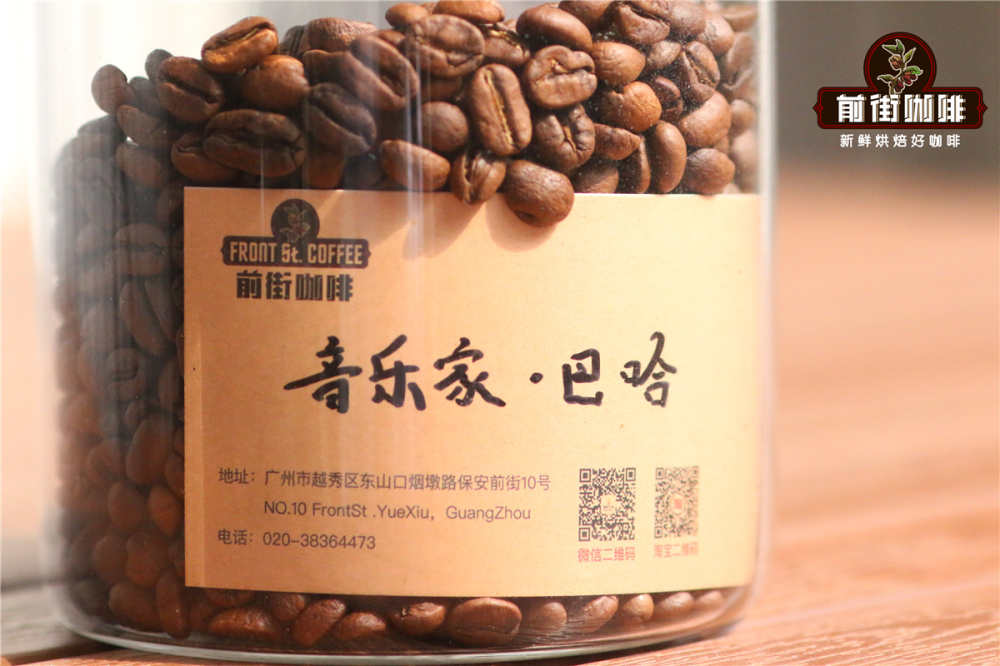
When it comes to coffee with prominent sweetness, the first thing that comes to Front Street's mind is honey processed coffee beans. Front Street's Costa Rica Canet Estate Musician Series precisely adopts the honey processing method; after pour-over extraction, it often displays fermented sweetness like dried fruit and tropical fruit, and many female customers are especially fond of it.
Why is it called "honey processing"?
A coffee cherry consists, from the outside in, of skin, pulp, mucilage, parchment, silver skin, and seed, and the coffee we ultimately drink is the innermost seed. To obtain this seed, there are traditionally two paths: the washed method and the natural method.
In the washed process, fresh coffee cherries are first depulped to remove the skin and pulp, then rinsed with a large amount of clean water, and afterward dried until the moisture density is stable, thus obtaining green coffee beans; the natural process is the opposite, with the fresh cherries not being depulped but directly dried to the corresponding moisture density, and finally hulled. Honey processing falls exactly between the two, so it is also called semi-natural or semi-washed, and is relatively common in Central and South American countries.
When using honey processing, producers first pour the fresh coffee cherries into a tank for flotation, removing unripe cherries and impurities, and then use a depulper to shave off the outermost skin. Unlike the washed method, after depulping the fresh cherries are no longer rinsed with a large amount of clean water to remove the mucilage, but are dried directly with the mucilage still attached. Because the mucilage contains sugar and is sticky in texture, it is easily associated with honey, hence the name honey processing.
Compared with the washed method, honey processing requires neither a large amount of fresh water and related equipment, nor does it carry the negative defective flavors that long sun-drying may bring. Honey processed coffee usually shows a full tropical fruit flavor and fermented sweet aroma in cupping, with an overall fresh taste and clean acidity.
What types of honey processing are there?
The subsequent stage of honey processing is to let the coffee seed ferment while the mucilage is still attached. Depending on the sugar content and fermentation state of the fresh cherries, producers give different names such as white honey, yellow honey, red honey, and black honey. The darker the color, the longer the seed ferments in the mucilage, and the deeper the degree of mucilage oxidation.
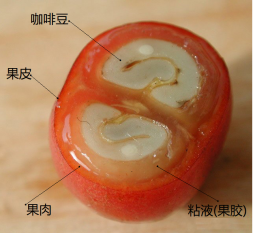
White honey processing is the method closest to washed processing, with the green beans retaining 40% to 60% of the mucilage and the shortest fermentation time. It is usually dried in the open air and needs frequent turning to maintain the upper limit of enzyme and bacterial activity. Shortly after drying, the mucilage is washed off in a manner similar to the washed method, and then the coffee beans are dried in preparation for export.
Yellow honey processing likewise retains about 60% of the mucilage, and the fermentation time is slightly longer than white honey, but it still belongs to rapid fermentation, with the entire sun-drying process lasting about 7 to 8 days.
Red honey processing is the ideal middle ground between the washed and natural processes, and is also the most common honey processing method. Red honey processing requires two to three weeks of drying time, so natural changes in the weather will correspondingly slow down or speed up fermentation. As the degree of honey processing deepens, it becomes increasingly critical for farmers or mill operators to turn the coffee beans skillfully and diligently. If the fermentation reaction is unstable, the coffee is prone to turning sour, becoming moldy, or developing negative flavors.
Black honey processing is the most fermented type of honey processing, and in flavor it is closest to fully natural coffee. Because the black honey process has a very long fermentation time, at least two weeks, depending on weather conditions, it is usually the most costly. This is because during fermentation it needs constant attention and careful watching, using extra fermentation to give the finished coffee a richer fruit flavor. Black honey processed coffee tends to be wild in flavor, showing intense sweetness and full body, and sometimes a mouthfeel similar to red wine.
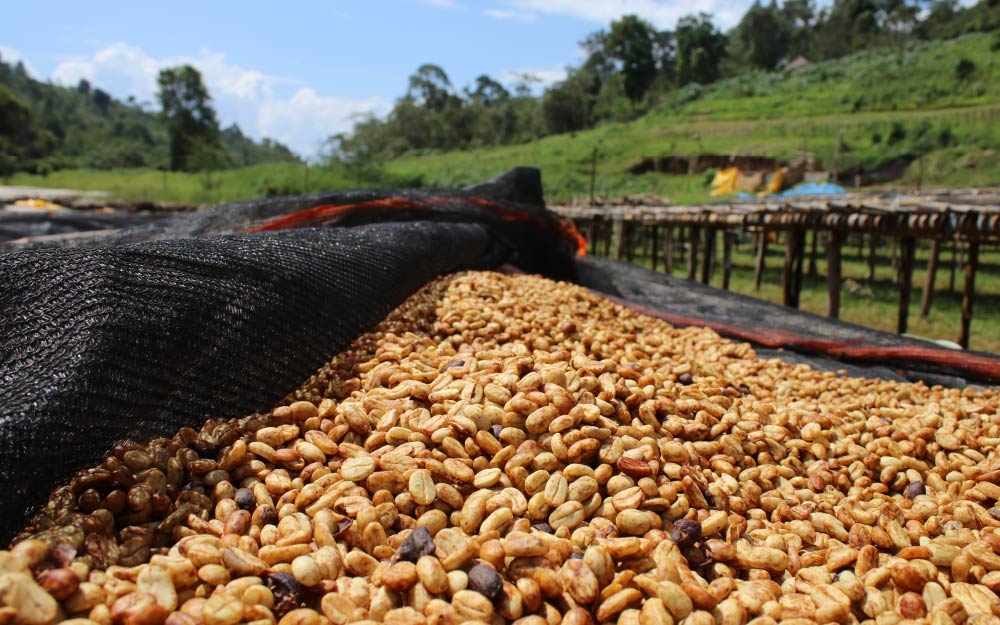
What is raisin honey processing?
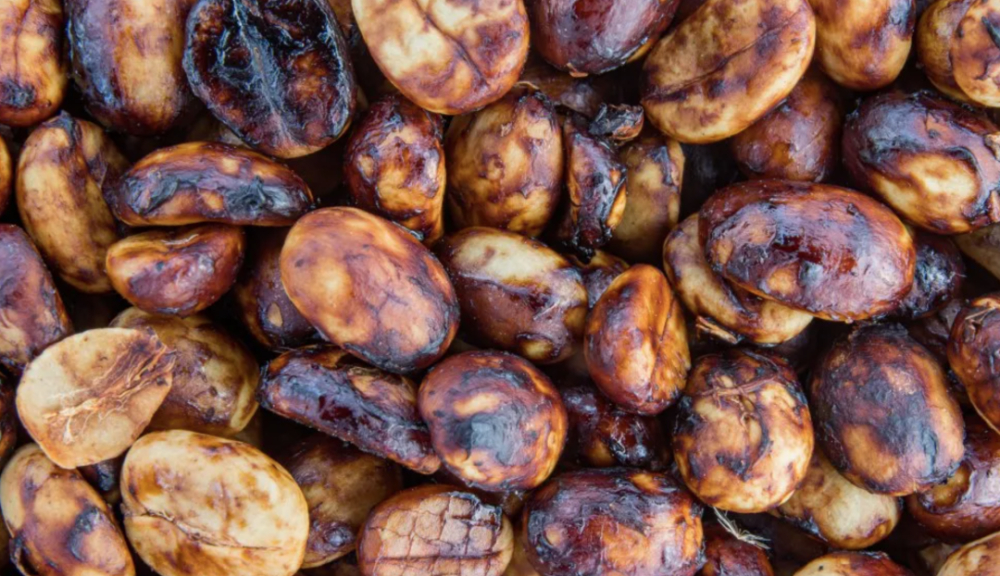
Honey processing first removes the outer layers of the coffee before fermenting and drying, whereas raisin honey processing is an innovative method that breaks out of the traditional honey processing framework. In raisin honey processing, the coffee cherries are dried on raised beds for at least three days before the skin and pulp are removed, allowing the fruit to dehydrate and shrivel into a "raisin" state, and only then are the skin and pulp removed, with the subsequent honey processing steps continuing afterward.
The characteristics of the raisin honey processing method are "retaining 100% mucilage" and "zero water treatment," which also increases the difficulty of this processing method. According to Front Street's understanding and analysis, this requires strict control of time, and the difficulty even exceeds that of black honey processing. The step of drying the green beans first allows the aromatic flavors of the pulp to penetrate into the green beans under the warming sun, so coffee using raisin honey processing not only has rich floral and fruity sweetness, but also a clear sweet-and-sour flavor profile. Two Front Street Coffee beans from Costa Rica on Front Street's daily bean list use the raisin honey processing method: Front Street Canet Estate Musician Series Bach coffee and Front Street Mirazu Strawberry Candy Geisha blend.
What brewing method suits honey processed coffee beans?
As Front Street mentioned above, compared with natural and washed processing methods, honey processed coffee shows diverse fruit flavors and higher sweetness, so it is easier to accept even for people who do not often drink black coffee. If you want to taste the flavor of honey processed coffee itself, Front Street believes pour-over black coffee is the most suitable.
Pour-over recommendations:
Dripper: V60
Water temperature: 90°C
Grind size: 80% passing rate on a No. 20 standard sieve
Coffee-to-water ratio: 1:15
Coffee dose: 15 grams
Staged extraction:
First use 30g of water to evenly wet the coffee bed and bloom for 30 seconds, then in the second stage pour 95g of water at a steady pace in circles from the inside out; when the water level drops to two-thirds of the coffee bed in the dripper, begin pouring the third stage of 100g, paying attention to keeping a small stream throughout; after dripping is completed in about 2 minutes 10 seconds, remove the dripper.
Pour-over flavor of Front Street Costa Rica Canet Estate Musician Series Bach coffee: ripe fruit, dark berries, caramel cookie, dark chocolate finish
Pour-over flavor of Front Street Costa Rica Mirazu Strawberry Candy Geisha blend coffee: dried fruit, red florals, strawberry, grape, berries
Of course, pour-over is not the only way to extract honey processed coffee. If you want a refreshing taste, Front Street also uses ice drip and cold brew methods for extraction. In a low-temperature environment, the release of bitter substances in coffee is reduced; the ice drip coffee made by Front Street using the Front Street Mirazu Strawberry Candy Geisha blend presents raisin-like dried fruit sweetness, and after a night of settling and fermentation, it has a distinct fruity wine-like flavor, which is very popular among Front Street's customers.
For professional coffee knowledge exchange and more coffee bean information, please follow Coffee Workshop (WeChat public account cafe_style)
For more specialty coffee beans, please add the private WeChat of Front Street Coffee (FrontStreet Coffee), WeChat ID: qjcoffeex
The above content is compiled by CoffeeHunters, a coffee news website.


