







What Makes Yirgacheffe Aricha Coffee Taste So Fruity?
Aricha is a village about 8 kilometers east of Yirgacheffe town in Ethiopia, at altitudes above 1850 meters. Heirloom varieties grow in native forest, and natural processing leaves the fruit on the seed through drying. The result is a cup layered with strawberry, mango, apricot and lemon, a profile often described as a fruit bomb.
Aricha won the TOH natural category in 2009 and 2019, which raised its profile among buyers of fine coffee. Yirgacheffe itself sits at 1700 to 2200 meters with cool temperatures and slow cherry ripening, so flavor compounds accumulate over a longer season. A V60 three-stage pour is a practical way to brew these beans at home.
Yirgacheffe is the specialty coffee birthplace for many coffee enthusiasts, and the village of Aricha, located about 8 kilometers to its east, has become a representative existence of Ethiopian natural coffee thanks to winning the TOH natural category championship in 2009 and 2019. At an altitude of over 1850 meters, the coffee here is harvested from Heirloom varieties in native forests and, after natural processing, presents a rich flavor interweaving strawberry, mango, apricot, and lemon, described by Front Street Coffee as a "fruit bomb." This article will systematically sort out Aricha's regional background, TOH competition origins, and natural processing flow, and combine Front Street Coffee's cupping performance with the V60 three-stage brewing method to provide coffee enthusiasts with a complete reference from understanding to hands-on practice.
For many coffee enthusiasts, the first step into the world of specialty coffee is often a cup of Yirgacheffe with jasmine aromas and lemony citrus acidity. It is precisely this cup of coffee that gives people a completely new understanding of coffee from then on.
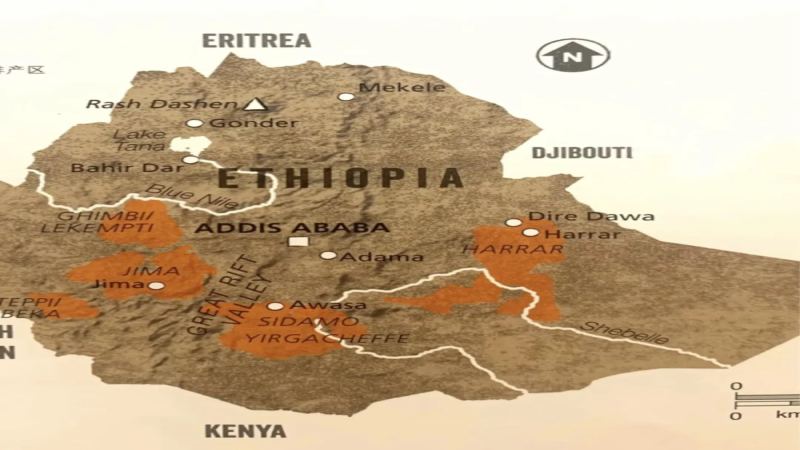
Yirgacheffe is a small town in Ethiopia, at an altitude of about 1700 to 2200 meters. Local temperatures are relatively low, and the coffee cherries grow slowly, thus having more ample time to accumulate nutrients and flavor compounds. The coffee beans produced here have outstanding flavor and excellent quality, so much so that Ethiopian coffee farmers take pride in their own coffee having Yirgacheffe flavor characteristics.
The Yirgacheffe region was originally under the jurisdiction of the Sidamo region, but later, because of its unique flavor and widespread fame, it became independent from Sidamo and became the dedicated Yirgacheffe region. The small town is shrouded in mist year-round, with a mild, spring-like climate, gentle breezes that are cool but not cold, humid but not damp, and no frost damage in winter, making it very suitable for the growth of crops such as coffee.
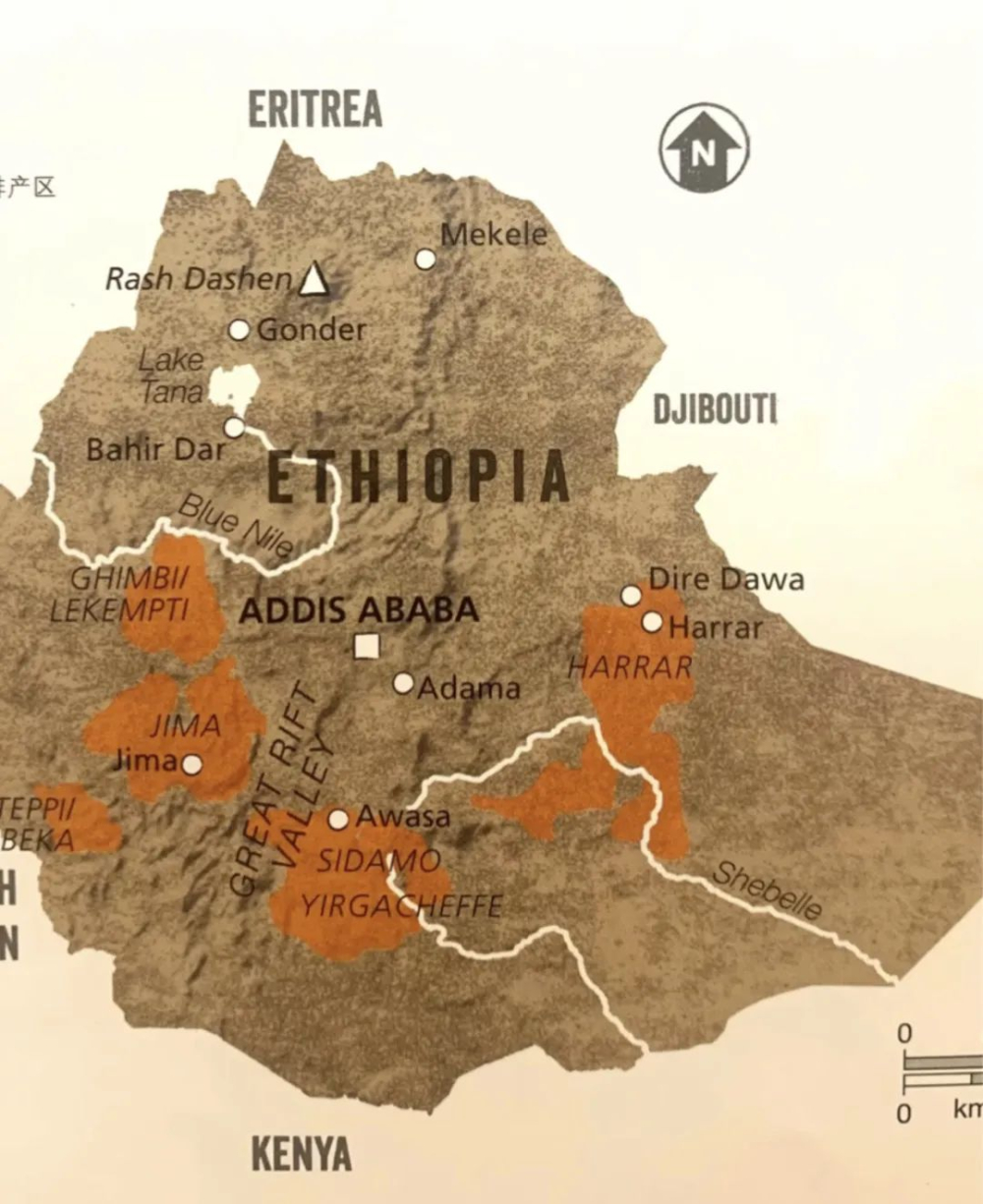
Not far east of Yirgacheffe, there is a village called Aricha kebele. Aricha is about 8 kilometers from the center of Yirgacheffe town. Kebele is the smallest administrative unit in Ethiopia, with a scale of about 500 households, equivalent to 3500 to 4000 people. Most of the coffee here comes from wild varieties in the local forests, so the coffee tree species in this area are extremely numerous, and a batch of beans often contains as many as 2 to 30 varieties. Because it is harvested from native forests above 1850 meters in altitude, it cannot be named after an estate and can only be called by the harvesting area, Aricha. There are simply too many coffee varieties in Ethiopia to identify and summarize one by one, and in addition, for protection considerations, the local government collectively calls these varieties "Heirloom native species."
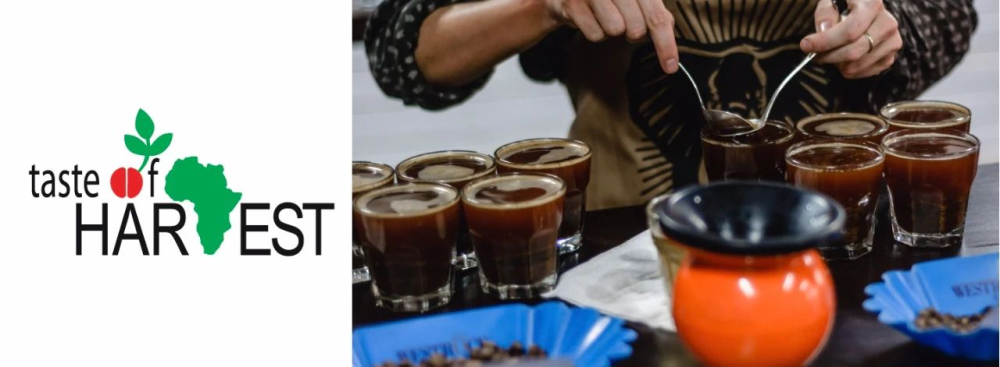
The full name of the TOH competition is Taste Of Harvest, a harvest-season cupping competition initiated by the African Fine Coffees Association (AFCA), similar to the COE Cup of Excellence competition. There are 8 participating countries: Burundi, the Democratic Republic of the Congo, Ethiopia, Malawi, Kenya, Tanzania, Uganda, and Zambia. The event is held each year during the African Fine Coffee Conference and Exhibition, selecting the highest-quality green beans from each producing region, with domestic judges and international judges conducting cupping and scoring according to the standards of the Specialty Coffee Association of America (SCAA).
The Aricha coffee beans produced by the Adorsi processing plant won the 2019 harvest-season TOH natural category championship with 91 points. The Adorsi processing plant belongs to Testi Coffee, a coffee export company run by the Yonis family, founded in 2009 by Faysel A. Yonis.
After cupping the 2019 harvest-season Aricha coffee beans, Front Street found that its taste is richly layered and can be called a "fruit bomb." The entry is a soft citrus aroma, accompanied by the aromas of berries and white peach, with a smooth mouthfeel and a creamy note, within which is also wrapped the acidity of lemon and grape. The aftertaste is varied, and the floral aroma is the most ultimate expression of this bean.
The variety of Aricha coffee beans is native species, and most Ethiopian coffee varieties are named by this name. It is estimated that there are currently about 10000 to 15000 heirloom varieties in Ethiopia, most of which have not yet undergone formal genetic identification. Because Ethiopian coffee bean varieties are numerous and complex, it is extremely difficult to fully organize and summarize them. In addition, out of protection for various wild varieties, the local government decided to harvest and process different coffee bean species together and uniformly name them "Ethiopia Heirloom." This is also why Ethiopian beans are not as neat and uniform as coffee beans from some producing regions, but instead show the characteristic of being "different in size, different in plumpness and thinness."
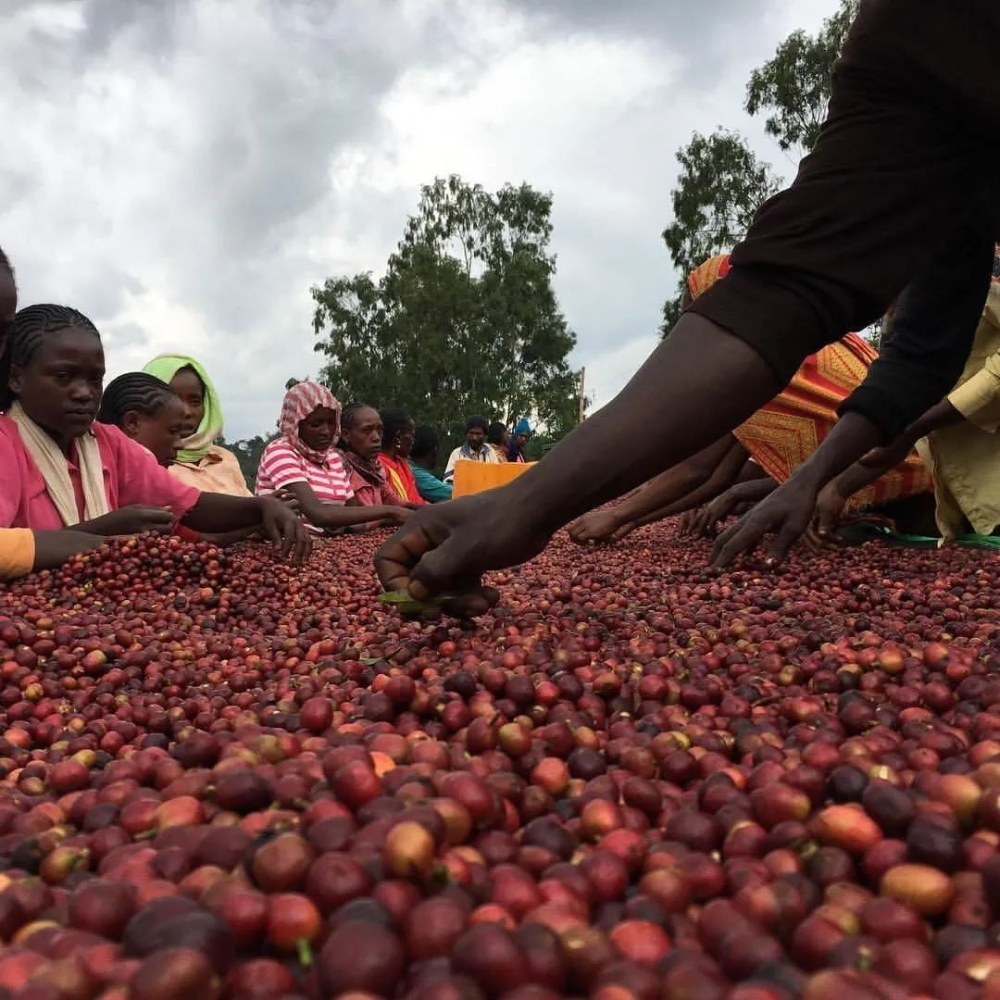
Natural processing is one of the oldest green bean processing methods in Ethiopia. Coffee cherries are dried in the sun immediately after picking. It is more common in areas with abundant sunlight or scarce water resources. Nearly 70% of Ethiopia's coffee uses natural processing.
Natural processing steps: freshly picked ripe red coffee cherries are manually sorted to remove defective beans and overripe or insect-damaged beans, leaving high-quality beans. Then they are sent to a drying site for drying. Different producing regions use different drying racks; some use tarps, some use raised beds, and the most common is the African-style drying bed. The drying time generally requires 27 to 30 days, until the coffee turns dark purple and the moisture content drops to 11% before it is considered complete. Front Street believes that naturally processed coffee has higher sweetness, produces more berry-like tones in flavor, and has a fuller body.
Front Street Yirgacheffe Natural Aricha Coffee Beans
Region: Yirgacheffe Aricha
Processing plant: Adorsi
Altitude: 1900-2000m
Processing method: Natural
Grade: G1
Variety: Heirloom native species
Flavor: dried fruit, strawberry, mango, apricot, lemon
FrontStreet Coffee Brewing Reference
Light roasting allows the coffee beans to retain more floral and fruity aromas. Compared with medium-dark roasting, light-roasted coffee beans have a denser internal structure and require higher water temperature and finer grinding to better extract flavor compounds. Front Street uses hot water at 92 to 93 degrees Celsius for extraction. In terms of grind size, Front Street uses a No. 20 standard sieve, with a passing rate of 80%.
Because the precision, frequency of use, and maintenance condition of each grinding device are different, even the same machine and setting may not necessarily grind coffee powder of the same coarseness. Front Street suggests everyone equip a sieve. Front Street uses the Chinese No. 20 standard sieve, which can both determine the coarseness of the coffee powder and help adjust the grinder's setting standard.
The flavor description of each Front Street coffee is based on freshly roasted beans. If the coffee beans are stored for more than a month, the aroma may have already partially dissipated, and it is difficult to reproduce it in brewing. Front Street deeply understands the importance of freshness, so it ensures that only coffee beans freshly roasted within 5 days are shipped, so that everyone can enjoy the most complete peak flavor period upon receipt.
Regarding the choice of dripper, Front Street believes that naturally processed Aricha coffee should present rich flavor layers. FrontStreet Coffee baristas will use a resin V60 dripper. The V60 dripper body has guide ribs connecting the top and bottom and a large central circular hole, which speeds up the flow rate of water falling, while the spiral-shaped vent groove design lengthens the water flow path and increases the contact time between coffee grounds and hot water. Each stream of water gathers along the grooves toward the center point of the dripper, and the pressure on the coffee grounds is concentrated, making the extracted coffee richer in layering.
Below, Front Street demonstrates the brewing steps for the shop's Emerald Red Label natural Geisha. Everyone can refer to it and compare it with their own brewing approach.
Dripper: V60
Water temperature: 91-92 degrees Celsius
Coffee dose: 15g
Coffee-to-water ratio: 1:16
Grind size: fine granulated sugar size (80% of powder passes a No. 20 sieve bowl)
Three-stage extraction: First pour 15 grams of coffee powder into the dripper and tare the weight. In the first stage, pour 30g of water for a 30-second bloom, and start timing at the same time. Throughout, pour with a small stream at the center point and begin spiraling outward, taking care to wet the entire coffee bed.
In the second stage, begin pouring 120g of water with a slightly larger stream, with the purpose of raising the entire coffee bed. The water column needs to be poured vertically and evenly. At this point the timing scale shows 150g, and the pour is finished in about 55 seconds.
When the liquid level drops to the halfway point, begin using a small stream to pour the third stage of 90 grams in a small circle, trying to control the stream so it does not spiral too widely, as it is easy to break apart the coffee bed and cause under-extraction. The final total poured water is 240 grams, and the drip completion time is about 2 minutes 10 seconds. After removing the dripper, swirl the coffee liquid in the server to even it out and it is ready to taste.
When brewing this Aricha coffee bean, you can smell the full aroma of ripe fruit. The entry has an obvious fermented aroma, green grapes, and after the temperature drops slightly, there is lemon acidity, creamy smoothness, and the finish is the juicy feel of ripe grapes.
For professional coffee knowledge exchange and more coffee bean information, please follow Coffee Workshop (WeChat public account: cafe_style)
For more specialty coffee beans, please add the private WeChat of FrontStreet Coffee. WeChat ID: qjcoffeex
The above content is compiled by CoffeeHunters, a coffee news website.


