







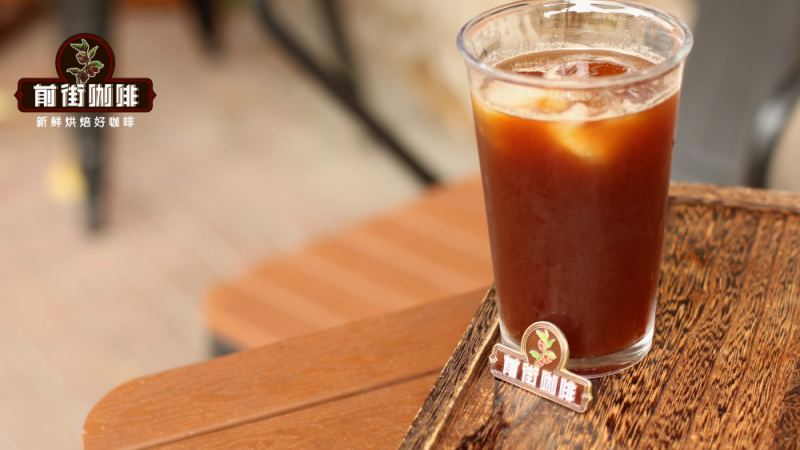
Why Does Cold Brew Taste Like Alcohol Without Any in It?
Cold brew can taste beer-like or boozy even though it contains no alcohol. Nitro coffee makes the effect intentional by pushing high-pressure nitrogen into black coffee, creating fine foam and a texture close to stout, with a fresher, sweeter finish. Quicksand iced Americano copies that idea at home: espresso crema is steamed into a golden microfoam that stratifies in the glass.
Alcohol is not the source of the flavor. Steaming draws air into the liquid, and milk proteins wrap around it to form bubbles, while coffee crema holds oils, proteins, sugars, and aromatics. Long, cold extraction in cold brew and ice drip also builds heavier body and lower perceived bitterness, which reads as a drink-like quality.
On a scorching summer day, a glass of iced coffee never fails to perk you up. Besides the familiar iced Americano, cold brew, and ice drip, there's also a quicksand iced Americano derived from the iced Americano, whose creative inspiration comes from nitro cold coffee. This article will compare these iced coffees in detail, from the beer-like mouthfeel of nitro coffee, to the velvety foam-making of quicksand iced Americano, to the extraction parameters of cold brew and ice drip, Front Street Coffee provides specific methods for all. If you want to know how to get a boozy feel without alcohol, or want to recreate a layered iced coffee at home, read on.
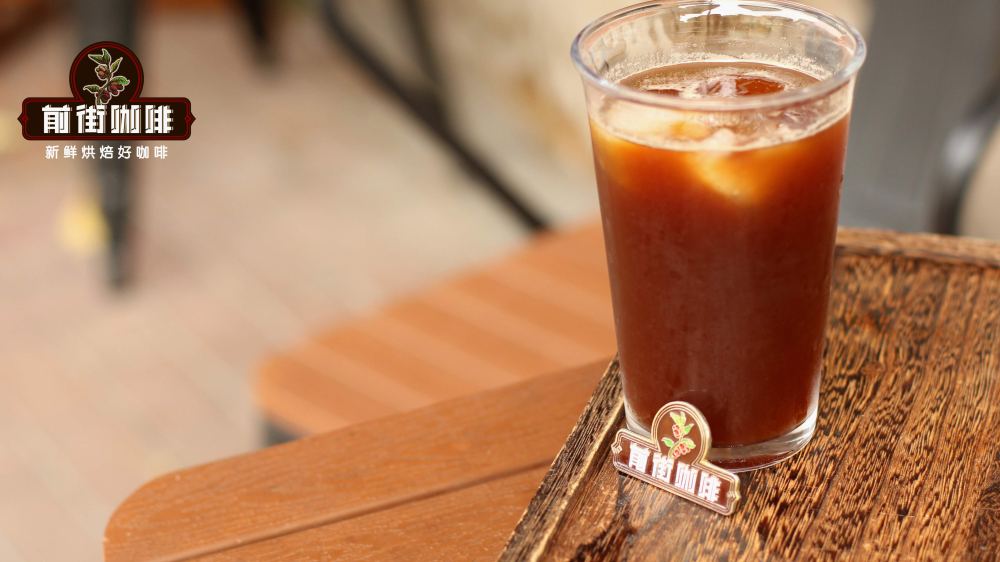
When it comes to iced coffee, most people first think of iced Americano, cold brew, and ice drip. However, there's another drink that also brings refreshing uplift: the quicksand iced Americano derived from iced Americano, whose creative idea actually comes from nitro cold coffee. Below, Front Street Coffee walks you through the differences among these types of coffee.
Adding alcoholic products to coffee is usually called liquor coffee, but not everyone can accept it—for example, those allergic to alcohol or those who need to drive. So, is there a way to make a coffee that contains no alcohol yet gives a drinking-like experience? The answer, of course, is yes—that's nitro coffee.
The word "nitro" sounds quite like a chemistry experiment, but it actually means infusing high-pressure nitrogen into black coffee, giving ordinary coffee a fine foam and texture similar to beer. Nitro coffee looks and tastes closer to stout, with dense foam and a fresher, sweeter finish. But nitrogen seems hard to get—so what should you do?
Today, let's teach you an alternative to nitro coffee: quicksand iced Americano.
The term "quicksand" refers to espresso's crema turning into a fine golden foam layer during steaming, then after pouring into a cup and letting it rest for stratification, finally showing a visual effect of fine sand sliding down in layers.
When steaming milk, air is drawn into the liquid, and under the surface tension of milk proteins, numerous tiny bubbles form. Coffee crema consists of vegetable oils, proteins, sugars, and some aromatic substances; during steaming, proteins wrap around air to form larger bubbles. The larger bubbles, once pulled into the vortex, are chopped into finer foam. The proteins in coffee stick to each other, becoming a dense foam structure mixed in the liquid.
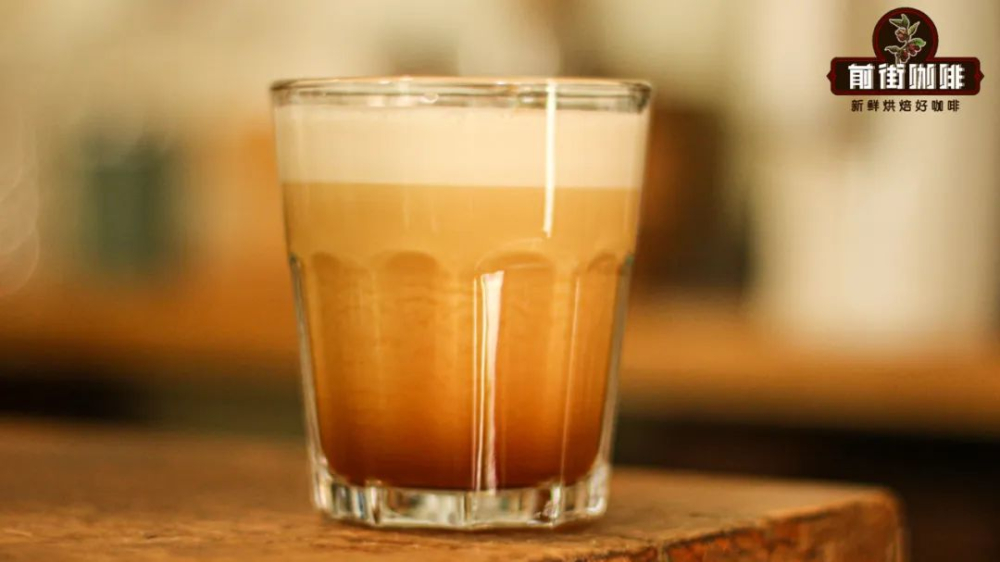
The lighter, pale small-bubble clusters begin to float upward and "gather" at the top. Water molecules sink downward, and the lower part gradually darkens, thus creating the "quicksand" look we see.
The steps aren't complicated; Front Street uses the shop's Warm Sun blend coffee beans for the operation. Extract a double espresso of 38 grams, pour it into a pitcher containing about 100 grams of ice, add 50 grams of room-temperature water, and shake gently to fully cool the coffee liquid.
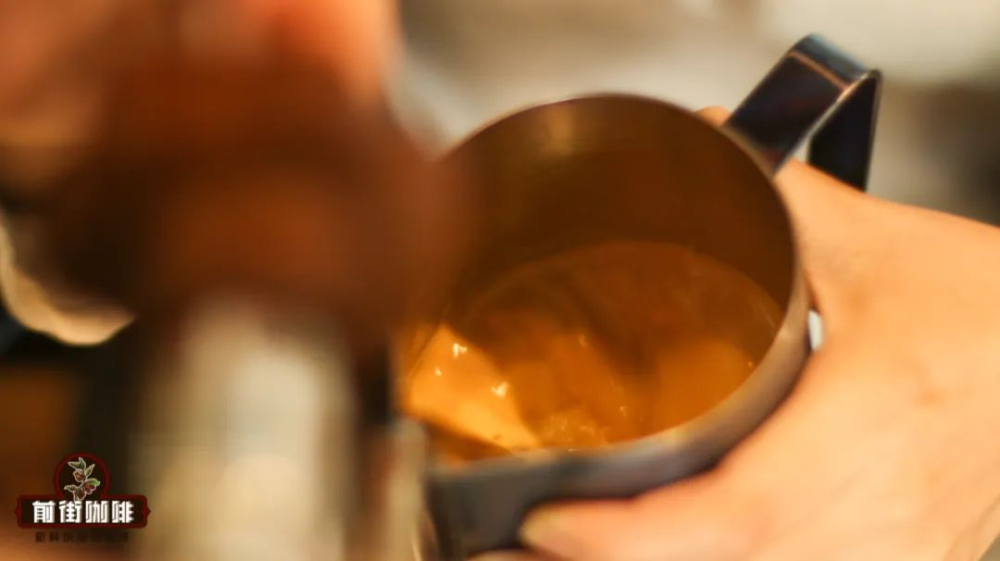
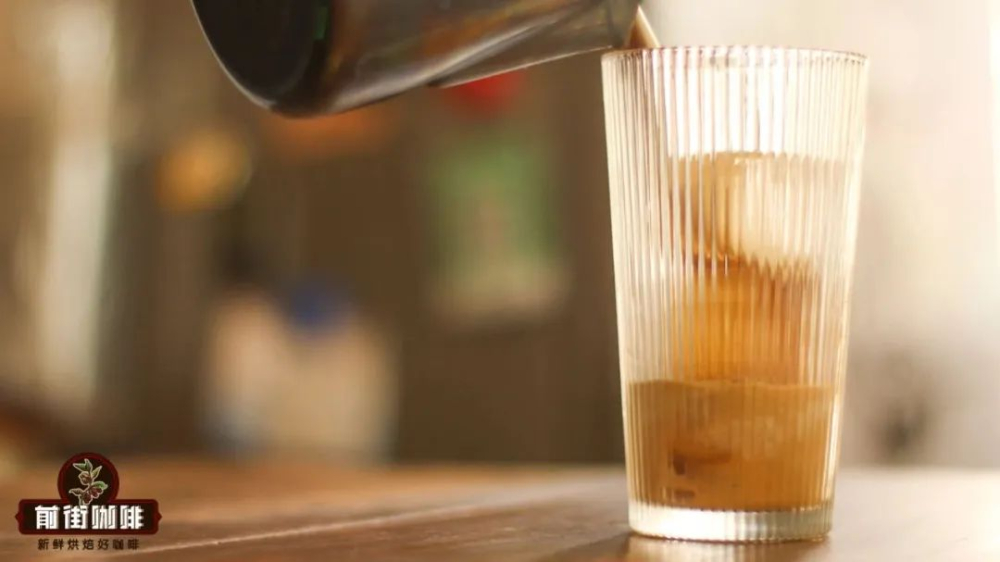
The steaming process is the same as making milk foam: after introducing air, adjust the angle of the pitcher to let the liquid form a vortex (you can hear the ice cubes clinking), and when the ice has completely melted, the steaming is done. Also, Front Street noticed that some friends steam without adding water, which easily introduces too much air, and too little liquid prevents the steam wand from being inserted to make the foam dense. Front Street suggests adding a small amount of ice water to avoid the coffee liquid heating up without forming a dense foam layer. Prepare a cup with ice cubes, pour in the steamed coffee liquid, and you can enjoy the coffee liquid sliding down like a waterfall. In terms of taste, because the strong espresso is steamed with ice, the bitterness is suppressed, highlighting a faint vanilla flavor and a refreshing berry-like sweet-tartness, plus the fine, smooth foam layer brings a bit of stout-like mouthfeel.
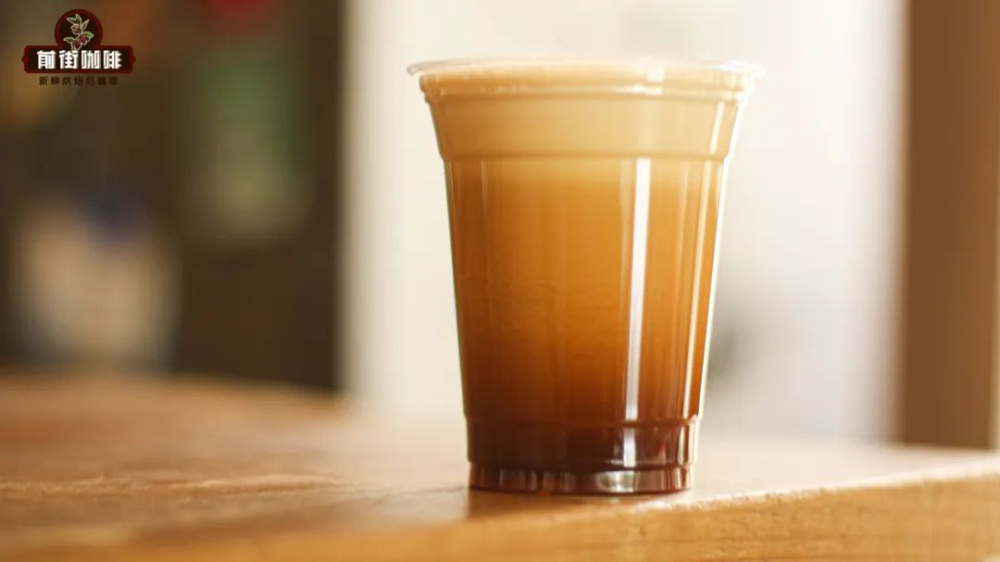
Cold brew coffee is coffee liquid obtained by soaking coffee grounds in cold water. It has a soft mouthfeel, bright acidity, and unobtrusive bitterness. Using different coffee beans and different parameters, cold brew coffee can also show different flavor profiles. Moreover, cold brew coffee is very simple to make, and the tools needed aren't as complicated as those for ice drip—you could say it has many advantages.
[FrontStreet Coffee's method for making cold brew coffee]
FrontStreet Coffee uses 50 grams of grounds as the base, extracting with Front Street Huakui coffee beans that have floral and berry aromas. For grind size, although the extraction water temperature is much lower than pour-over coffee, it is a long immersion extraction after all, so choose a grind slightly coarser than pour-over; if sifted with a Chinese standard No. 20 sieve, the passing rate is 65%. Put the coffee grounds into a glass bottle, pour 500 grams of water into the bottle, with a coffee-to-water ratio of 1:10, then stir the grounds and water evenly with a stirring rod, seal, and refrigerate.
After refrigerating for 12 to 24 hours, filter out the coffee grounds with filter paper to get a clean coffee extract. Then pour the filtered coffee liquid into a clean glass bottle, refrigerate for about 4 hours before drinking.
[FrontStreet Coffee's method for making ice drip coffee]
FrontStreet Coffee uses 60 grams of grounds as the base, using Front Street Strawberry Candy coffee beans. For grind size, since the water temperature contacting the coffee grounds is much lower than regular pour-over coffee, use a grind with an 85% passing rate on a Chinese standard No. 20 sieve; the entire extraction takes 6 to 8 hours, and the coffee-to-water ratio is the same as cold brew, 1:10.
① First, place a round filter paper at the bottom of the coffee powder cup, wet it with water so it adheres to the cup wall.
② Pour the ground Front Street Strawberry Candy coffee powder into the powder cup, level the surface, and gently press the powder bed with a weight to make the surface flat.
③ Lay a piece of filter paper on top of the coffee powder bed to prevent long dripping from creating a pit in the bed, which would cause uneven extraction.
④ Evenly wet the entire coffee powder bed with ice water, which acts like the blooming in pour-over coffee, improving extraction and consistency of the final product.
⑤ Fill the water container with a 1:1 ice-water mixture, and adjust the throttle valve drip rate to 7 drops per 10 seconds.
⑥ Pour the finished coffee liquid into a coffee bottle, seal, and refrigerate, allowing the extract to ferment and meld.
The above content is compiled by CoffeeHunters, a coffee news website.


