







Where Does Geisha Coffee Come From and How Is It Graded?
Geisha coffee did not start in Panama. The variety's homeland is Ethiopia, in the Geisha Mountain area on the southwestern edge of the Kaffa forest near the Sudanese border, at roughly 1,700 to 2,100 meters. Gesha Village Coffee Estate in the Bench-Maji region now grows and sells it under a five-tier system: Auction, Gold, Red, Green, and Chaka.
The estate grew out of a 2007 trip by documentary director Adam Overton and photographer Rachel Samuel, who encountered the Gera coffee forest while filming for the Ethiopian government. Gesha Village sells lots through international auctions and uses natural processing, which supports sweet, fruit-forward cups. Panamanian Geisha remains the better-known expression of the variety.
When Geisha is mentioned, most people first think of Panama, but the native home of this variety is actually Ethiopia. This article focuses on Gesha Village Coffee Estate, tracing its complete journey from the discovery of wild Geisha to the establishment of the estate and the hosting of international auctions, explaining in detail the five-tier grading system of Auction, Gold, Red, Green, and Chaka, and introducing the natural processing method. At the same time, Front Street Coffee will share the cupping performance of Gesha Village Red Label natural beans and thoughts on adjusting brewing parameters, helping coffee lovers understand the flavor characteristics and extraction key points of this bean.
When it comes to Geisha coffee, the first origin that comes to most people's minds is Panama. Panamanian Geisha is indeed impressive: intense citrus notes, layered floral aromas, and almond-and-honey-like sweetness that is hard to forget once tasted. However, Geisha did not originate in Panama; its true homeland is Ethiopia. What Front Street introduces in this article is precisely the Geisha coffee produced at Gesha Village Coffee Estate in Ethiopia—a Geisha with a flavor profile quite different from Panamanian Geisha.
The Geisha variety originated in the remote Geisha Mountain in southern Ethiopia, located on the southwestern edge of the Kaffa forest near the Sudanese border, at an altitude of about 1,700 to 2,100 meters. Since Geisha was born in Ethiopia, why did it become famous abroad? After reviewing materials, Front Street found records like this: Geisha had low yields, slender beans, and unremarkable flavor performance, but it possessed resistance to leaf rust, so it was often used as a mother plant for breeding hybrids. From this, it seems that when grown locally in Ethiopia, Geisha did not show varietal advantages; instead, Panama's terroir and the relatively harsh growing environment of windbreaks stimulated Geisha's true flavor potential.
What is Gesha Village Coffee Estate?
In 2007, documentary director Adam Overton and his photographer wife Rachel Samuel came into contact with the Gera coffee forest in the Bench-Maji region while filming a coffee-themed documentary for the Ethiopian government. This experience not only gave them a new understanding of the land of Ethiopia, but also inspired the idea of establishing their own coffee estate and brand. In 2009, the couple had the good fortune to meet Willem Boot, owner of Hacienda La Mula and BOP judge, and Willem Boot's idea of "returning to Ethiopia to find the native home of Geisha" provided exactly the opportunity for the couple.
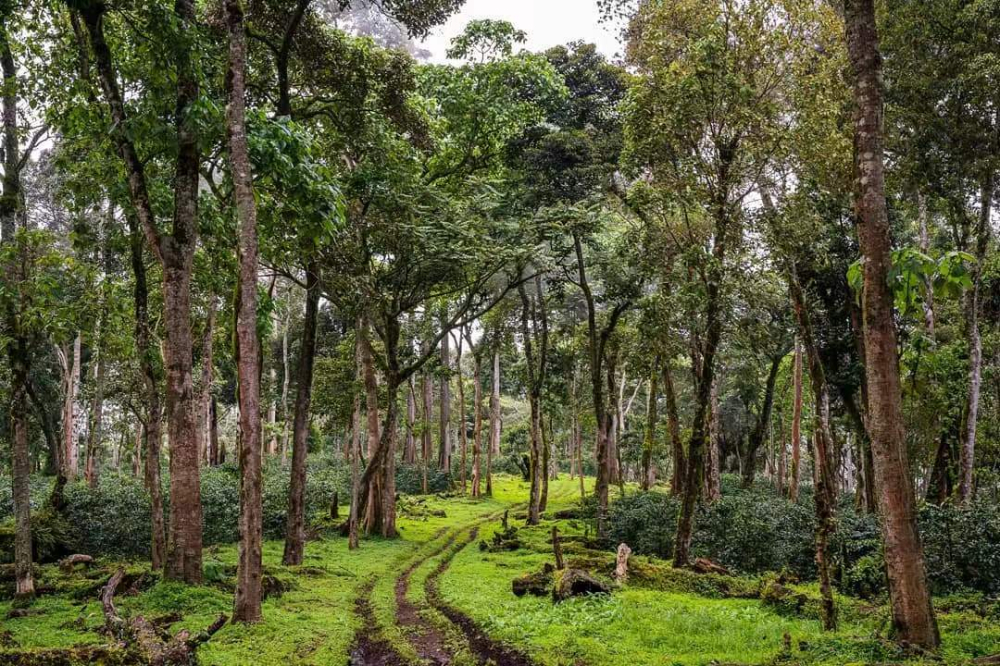
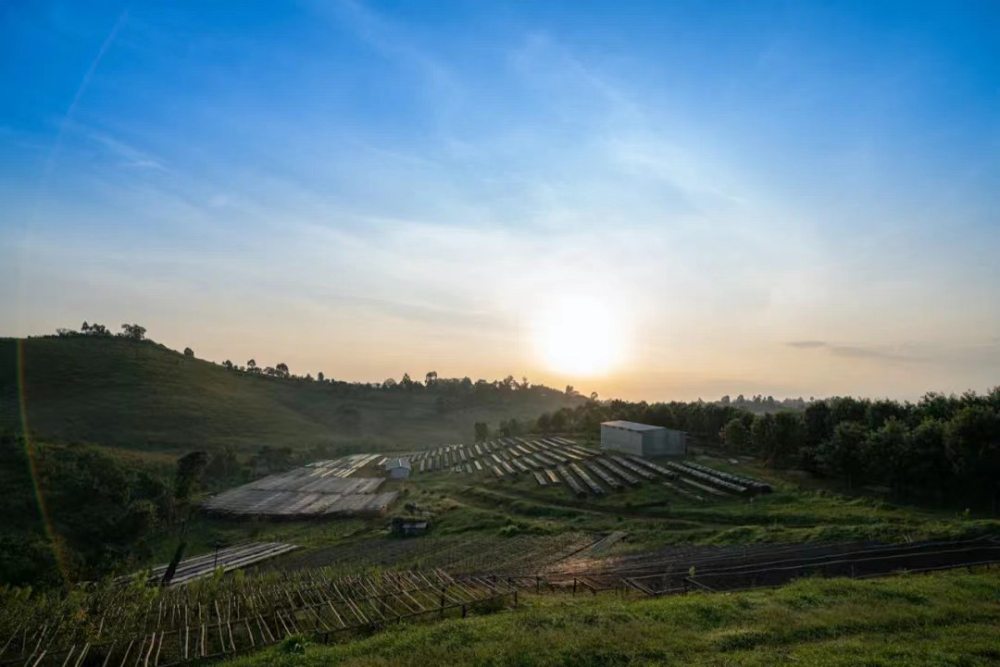
In 2011, they returned to Bench-Maji. Several local areas are called Gesha Village and are the zones most likely to contain native Geisha varieties. Adam followed Willem Boot to explore the surrounding forests and, in a jungle surrounded by dense forest (that is, the Gori Gesha forest), discovered several wild coffee tree species, among which the most surprising was native Geisha. They then collected seeds from the native Geisha trees, selected them, and planted them in Gesha Village, deciding to build the estate there and naming it Gesha Village Coffee Estate. The estate is about 12 miles from the Gori Gesha forest and covers 475 hectares.
Gesha Village Coffee Estate is completely different from the vast majority of small farms in Ethiopia. It is a large farm of nearly 500 hectares and is equipped with its own washing station and laboratory facilities. In 2015, Gesha Village Coffee Estate welcomed its first harvest, and the response from all sides was enthusiastic. Thus, with the assistance of Willem Boot, owner of Hacienda La Mula in Panama, the estate held its first international auction on May 31, 2017, offering 21 micro-lots in total, of which 19 were 120 kilograms and the remaining lots were even smaller.
Geisha coffee from Gesha Village Coffee Estate is widely favored, and many competitors have selected lots from the estate for competitions and won placements. Impressive examples include: Zhao Jiabao from Hong Kong used Geisha coffee from Gesha Village Coffee Estate to win third place in the 2017 World Barista Championship; in the same year, Takayuki Ishitani of Japan also chose coffee from Gesha Village Coffee Estate and won his first Japan Barista Championship (JBC) title in ten years of competition.
Gesha Village Grading System
Gesha Village Coffee Estate implements a strict internal grading system, in order: Auction, Gold, Red, Green, and Chaka lots.
Auction
Auction lots account for only 3.7% of Gesha Village Coffee Estate's annual production. They are the estate's top lots obtained after strict selection at every level and can only be acquired through global auction.
Gold RARITIES
Gold lots account for about 10% of Gesha Village Coffee Estate's annual production, with complex flavors and great rarity. These rare coffees are the estate's top offerings apart from Auction lots. Many baristas choose Gold lots as competition beans, and roasters with high quality requirements also purchase them. Gold lots have complete traceability, and each lot has outstanding flavor and high complexity.
Red RESERVE
Red lots account for about 15% of Gesha Village Coffee Estate's annual production. They are fully traceable lots with cupping scores above 88 points (SCA standard), displaying typical Gesha Village flavor. Their flavor intensity and complexity are slightly lower than Gold lots, making them very cost-effective single-origin lots.
Green SINGLE-TERROIR
Green lots come from a single parcel of Gesha Village Coffee Estate and are single-variety lots. Green lots provide complete traceability information for each lot number, including farm parcel name, coffee variety, and processing date.
Chaka CHAKA
Chaka lots blend coffee from all parcels of the estate and the entire production season. They are available in both natural and washed processing methods and cover three coffee varieties from Gesha Village Coffee Estate: Geisha 1931, Gori Geisha, and Illubabor.
Gesha Village Coffee Bean Processing Methods
Front Street Coffee's Gold, Red, and CHAKA are all naturally processed.
The natural process steps are actually not complicated: first remove floating matter and impurities, then dry the coffee in thin layers on African raised beds covered with plastic sheeting. During drying on the raised beds, it is sorted again to remove insect-damaged beans and greenish beans. The total drying time is 18 to 30 days. Front Street Coffee's Gesha Village Red Label coffee beans have always been loved by fans, but some people report that when brewing Gesha Village Red Label themselves, it always feels like something is missing. This time Front Street will share how to brew Gesha Village Red Label coffee. Before brewing, you must first understand the coffee beans. This Gesha Village Coffee Estate Red Label Geisha from Front Street Coffee comes from an estate located in Bench-Maji, Ethiopia. This Red Label lot comes from the estate's Shewa-Jibabu parcel, located to the northwest of the estate, with coffee trees planted at altitudes between 1,973 and 2,069 meters.
This Gesha Village Red Label Geisha is a coffee bean from the new crop season of that year, so Front Street Coffee's roaster extended the dehydration time during roasting to heat the bean surface and bean core evenly. In order to showcase this bean's acidity and floral-fruity aroma, a light roast was used, with the bean surface Agtron color value at 77.1 and the ground color value at 81.
After Front Street received the new-crop Gesha Village Red Label coffee beans and completed roasting, Front Street Coffee's barista re-cupped this bean.
Through cupping, it was found that this Gesha Village Red Label natural Geisha showed obvious yellow stone fruit notes, white floral aroma, a slight tea-like sensation, and a distinct creamy finish. Its advantage lies in the extremely high sweetness brought by refined natural processing running through from start to finish; in the front section, because the sweetness is prominent, the acidity is not sharp but rather a soft acidity, and the creamy sensation in the finish is especially obvious. Its disadvantage is a lack of body, and after the temperature drops, it becomes rather flat overall.
Adjusting Brewing Parameters
Only after understanding a coffee bean can brewing parameters be adjusted according to that bean. Cupping shows that this Gesha Village Red Label's advantage is very high sweetness, but it lacks body, so the goal when brewing this coffee bean is to highlight sweetness as much as possible while improving overall body. To improve body, a finer grind can be chosen to increase coffee concentration and extraction yield.
Front Street Brewing Parameters
Dripper: V60#01 Water temperature: 91℃ Dose: 15 grams Coffee-to-water ratio: 1:15 Grind size: medium-fine grind (80% passing through Chinese standard No. 20 sieve) Front Street Coffee uses staged extraction: bloom with 30 grams of water for 30 seconds, then pour in a small stream in circles to 125 grams for the stage break, and when the water level is about to expose the coffee bed, continue pouring to 225 grams and stop. When the water level is about to expose the coffee bed, remove the dripper. The extraction time (starting from the beginning of blooming) is 1 minute 55 seconds. Through this brewing method, the target coffee concentration is about 1.32%, and the extraction yield is about 18.13%. This concentration is on the high side within the Golden Cup standard range, while the extraction yield has only just reached the standard, using a high-concentration approach to improve the coffee's overall body.
Gesha Village Red Label Geisha brewed in this way shows citrus acidity at high temperature without losing body; after the temperature drops slightly, the acidity turns softer, the flavor leans toward yellow stone fruit notes, with creamy sweetness, slight floral aroma, and a slight dark cocoa finish; at low temperature, it shows maple syrup and berries.
For more specialty coffee beans, please add the private WeChat of Front Street Coffee, WeChat ID: kaixinguoguo0925
The above content is compiled by CoffeeHunters, a coffee news website.


