







What Makes Golden Mandheling Coffee So Heavy and Low in Acid?
Golden Mandheling is PWN's graded Indonesian lot and a recognized benchmark among Sumatran specialty beans. It comes from the Gayo Mountain area of Aceh, is graded G1, and is grown from the Ateng variety. Expect a solid, heavy body with herbal and dark chocolate notes, low acidity, and a long nutty caramel finish.
The wet-hulling process, known locally as giling basah, shapes that profile: parchment is removed while the bean is still moist, which lowers acidity and deepens body. For pour-over, a Kono dripper with water around 88C and a staged extraction rhythm suits the bean, helping draw out layered sweetness without pushing bitterness.
Mandheling is the most recognizable representative of Asian coffee, and the Golden Mandheling produced by PWN is the benchmark among Indonesian specialty beans. This article starts from Indonesia's coffee-growing history, traces the origins of Sumatra Mandheling, and explains in detail the trademark background of PWN Golden Mandheling, the G1 grade standard, the origins of the Ateng variety, and the terroir conditions of the Gayo Mountain producing area in Aceh. It also analyzes how the wet-hulling process shapes Mandheling's signature low-acid, rich, and mellow taste, and includes Front Street Coffee's complete pour-over recipe, including the reasons for choosing the Kono dripper, the 88°C water temperature setting, and the staged extraction rhythm, helping enthusiasts recreate at home a cup of Golden Mandheling with rich layers and a long-lasting nutty caramel finish.
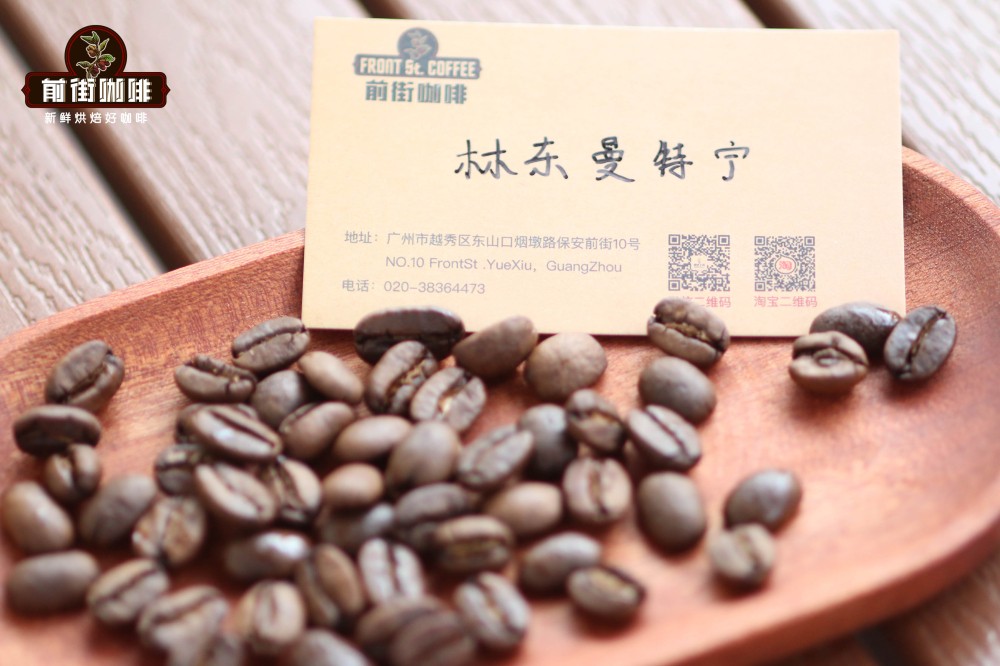
In the Asian coffee landscape, Front Street Indonesian Mandheling is undoubtedly one of the most recognizable beans. It is not only a classic representative of the Asian producing region, but was once crowned the "world's most full-bodied coffee." If you are not particularly fond of coffees with prominent acidity, this Front Street Mandheling may be just to your taste. Its mouthfeel is solid and heavy, and in most cases you can taste herbal and dark chocolate notes. Front Street believes that those who love it will repurchase it again and again, unable to stop; while those who do not enjoy it may bluntly describe it as tasting like dishwater. Many friends who have just stepped into the world of specialty coffee are often confused by Mandheling's powerful flavor, and may even mistakenly judge it to be Robusta.
Sumatra Mandheling coffee beans
Sumatra Mandheling is a highly renowned Indonesian specialty coffee and also one of the top-selling Indonesian beans in Front Street's daily-drinker series. Indonesia is located in Southeast Asia, and its coffee-growing history can be traced back to 1696, when Dutch plantation owners surveyed various locations to expand their plantations and ultimately settled on Java. Over the following three decades, Indonesia built a solid foundation in the coffee trade. However, as it developed to the present day, Indonesia's coffee calling card has come to rest on Sumatra-produced Mandheling, which is actually not surprising—much of the Java coffee shipped to Europe in the early days came from the Sumatra region, and Mandheling is a product of Sumatra. Therefore, it can be said that Sumatra is a critically important coffee-producing region in Indonesia.
So what exactly is Golden Mandheling coffee?
Front Street Mandheling is already an Indonesian specialty coffee, while Front Street Golden Mandheling can be called the crème de la crème. So is it more premium than regular Mandheling? Front Street clarifies here: Golden Mandheling is not a grade designation, but a trademark registered by the Indonesian company N.V. Pawani Medan (abbreviated as PWN). The company was founded in 1957 and deals in the export of Indonesian specialty products such as coffee, rubber, cinnamon, cloves, and patchouli oil. It was the first Indonesian company to export coffee from North Sumatra Island and the pioneer who made the name "Mandheling coffee" famous in Japan.
Since 1977, PWN has focused on exporting premium Sumatra Arabica Mandheling Grade 1 and Robusta AP-I Grade 2, mainly to Japan, Taiwan, and the United States, with Japan and Taiwan together accounting for more than 95%, where locally "PWN" is almost synonymous with quality assurance. Because Pawani holds the "Golden Mandheling" trademark, Japan had to register a separate "Gold Top Mandheling" trademark.
Front Street PWN Golden Mandheling
Since its positioning is the crème de la crème, its price is naturally higher than regular Mandheling. Some merchants, in order to sell their beans at a good price, will also label them with the words "Golden Mandheling" without indicating whether they come from PWN. The Front Street Golden Mandheling coffee beans currently listed by FrontStreet Coffee are precisely the Golden Mandheling from PWN. After harvesting and drying, Front Street PWN Golden Mandheling undergoes at least three rounds of purely manual sorting to ensure that the green beans meet a specification of 18 mesh or above, with no more than 3 defective beans in a 300-gram sample, belonging to the highest grade G1. Front Street PWN Golden Mandheling green beans have a darker green color and a neat flat-bean shape.
Golden Mandheling Coffee variety
FrontStreet Coffee's new-season Golden Mandheling comes from Gayo Mountain in Aceh, North Sumatra. The variety is Ateng, which is a hybrid descendant of Arabica and Robusta and is widely planted in Sumatra and other Indonesian islands. Ateng is actually the local name for Catimor. Catimor was created in 1959, when the Portuguese moved the Brazilian Bourbon mutant Caturra to East Timor and crossed it with Timor, which carries Robusta blood, giving it super-strong disease resistance and a yield three times that of Typica. During the leaf rust crisis, the Indonesian government not only introduced Robusta, whose flavor is far inferior to Arabica, but also introduced Timor from East Timor, intending to replace Typica. Later, expert investigations found that a batch of Timor seeds introduced by the Indonesian government in 1980 was mixed with some Catimor seeds. This batch of seeds was planted in Aceh in northern Sumatra, and the region where Catimor was first identified in Indonesia was precisely Central Aceh. Therefore, locals call Catimor Ateng, taken from Aceh Tengah (Central Aceh).
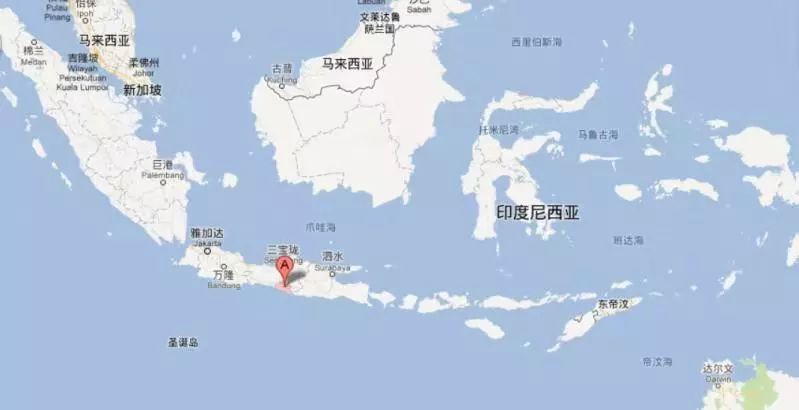
Aceh's Gayo Mountain is located at the northernmost corner of Sumatra Island. Coffee cultivation in Gayo Mountain is mainly distributed in Takegon town and the hillside areas around Lake Tawar, with an average elevation of between 1,100 and 1,600 meters. The coffee quality in this area has always been excellent, but earlier political instability once obstructed exports. In recent years, the situation has stabilized, and coffee cultivation in Aceh has gradually developed, with quality also superior to that of the Lintong region.
Front Street PWN Golden Mandheling has even stricter quality control. First, it must ensure that the coffee beans reach 19 mesh and are plump and uniform. Then it must undergo one machine sorting and three manual hand sortings to control the defect rate of green beans. This is undoubtedly a vote of confidence in the coffee quality of the Aceh Gayo Mountain producing area.
Golden Mandheling coffee processing method:
Front Street Mandheling coffee 's unique flavor is fundamentally related to its processing method. Indonesia is hot and humid year-round with scarce water resources. In order to better strip the coffee beans and complete drying while saving water, coffee farmers developed a more efficient drying method—wet hulling, also called Wet Hulling, which is now the standard processing method for Mandheling coffee beans. The characteristic of wet hulling lies in staged, rapid drying and drying after removing the parchment. Teacher Han Huaizong once described it as "This is also a rare processing method in the world, accidentally creating Mandheling's special low acidity , thick body, and funky aroma." And Front Street PWN Golden Mandheling coffee also uses the wet-hulling processing method.
Front Street believes that Front Street PWN Golden Mandheling is a specialty coffee unique to Indonesia, and every bean of the carefully selected Front Street Golden Mandheling is plump, with a rich aroma when drunk, and a mouthfeel that is more intense, rounded, and mellow than ordinary Mandheling, with a slight sweetness at the finish! Front Street Golden Mandheling can be said to hold the title of an unbeaten legend among direct-serve coffees.
So how do you make a pour-over with these Front Street Golden Mandheling coffee beans?
Coffee beans can be light-roasted or dark-roasted, and the pour-over considerations differ. Front Street Golden Mandheling coffee beans are dark-roasted beans, so the water temperature should not be too high, and a Kono dripper is chosen. The low water temperature is because we do not want to extract too many off-flavors. When FrontStreet Coffee chooses dark roasting, too many aromatic substances have already been released. If you continue to use the water temperature for light roasting to extract, it will lead to over-extraction. The reason FrontStreet Coffee chooses the Kono dripper is that the V60 dripper has too fast a flow rate, and under low water temperature conditions, it is prone to under-extraction. The Kono dripper has few ribs and they are located at the bottom. The filter paper clings tightly to the dripper, which can restrict airflow, increase the contact time between water and coffee grounds, allow the coffee grounds to be fully extracted, and enhance the mellow mouthfeel.
Front Street brewing parameters for Front Street PWN Golden Mandheling coffee:
Water temperature: 88°C, coffee dose: 15 grams, coffee-to-water ratio: 1:15, grind size: medium-fine grind (70% passing through a No. 20 sieve).
Use staged extraction, using twice the amount of water as the coffee grounds for blooming, that is, 30 grams of water for a 30-second bloom. The reason a blooming process is needed is to allow the coffee grounds to release their internal carbon dioxide gas, thereby making the later stages of extraction more stable. Pour in a small stream in circles until 125 grams, then pause; continue pouring until 225 grams and stop. After the water in the dripper has dripped through, remove the dripper. Start timing from the beginning of pouring; the extraction time is 2'00". Next, pick up the entire cup of coffee and swirl it to mix evenly, then pour it into a cup for tasting.
[Front Street Front Street PWN Golden Mandheling coffee bean flavor ]: The coffee as a whole has varied layers, is mellow and clean, with rich nutty and caramel aromas, chocolate notes, a long finish, and high balance.
FrontStreet Coffee brewing suggestions
For coffee brewing, Front Street recommends using freshly roasted coffee beans, as this allows you to experience the coffee's rich flavors to the greatest extent. The coffee beans shipped by FrontStreet Coffee are all within 5 days of roasting, because Front Street deeply understands the great impact of coffee bean freshness on flavor. Front Street's roasting philosophy is "Freshly roasted good coffee," so that every customer who places an order receives the freshest coffee. The resting period for coffee is about 4-7 days, so when customers receive it, it is at its peak flavor.
Of course, some customers need Front Street to help grind the coffee, and that is fine too, but Front Street must remind you: once coffee beans are ground in advance, they no longer need resting, because during transportation the pressure from carbon dioxide in the packaging can also make the coffee flavor rounder, so you can brew a cup immediately after receiving the coffee grounds. However, the coffee grounds need to be brewed promptly, because once coffee grounds are exposed to air, they oxidize relatively quickly, meaning the coffee's flavor will dissipate relatively quickly and the coffee will not taste as good. Therefore, Front Street recommends buying whole beans and grinding fresh before brewing, so you can better taste the coffee's flavor.
This Front Street PWN Golden Mandheling in Front Street's stores has always been the most popular! And the Front Street Indonesian Lintong Mandheling coffee in Front Street's daily-drinker series is also an economical and popular bestseller! In addition to Indonesian coffee beans, there are also dozens of single-origin beans from different producing areas in South America and Africa. You are welcome to come and experience them!
For professional coffee knowledge exchange and more coffee bean information, please follow Coffee Workshop (WeChat public account cafe_style)
For more specialty coffee beans, please add the private WeChat of Front Street Coffee (FrontStreet Coffee), WeChat ID: qjcoffeex
The above content is compiled by CoffeeHunters, a coffee news website.


