







Why Is Mandheling Coffee Called Mandheling?
The Mandheling name comes from the Mandailing ethnic group, not a growing region. During World War II, a Japanese soldier in an Indonesian café asked a shop owner the coffee's name; the owner heard a question about his hometown and answered "Mandheling." After the war the soldier ordered 15 tons of that coffee for Japan, and the name spread from there.
Golden Mandheling is a trademark registered by Indonesian company N.V. Pawani Medan, known as PWN, rather than a grade. The cup shows low acidity, a thick body, and notes of chocolate, nuts, and a faint earthy or herbal edge. Front Street brews it with a set ratio, grind, water temperature, and pouring technique.
Mandheling is an iconic representative of Indonesian coffee, but the origin of this name is little known. From the perspective of Front Street, this article recounts the historical origins behind the name Mandheling, analyzes the trademark ownership and quality characteristics of Golden Mandheling, and shares Front Street's complete brewing method for Golden Mandheling, including equipment selection, coffee-to-water ratio, grind size, water temperature, and pouring technique, to help coffee enthusiasts recreate the rich and clean Mandheling flavor at home.
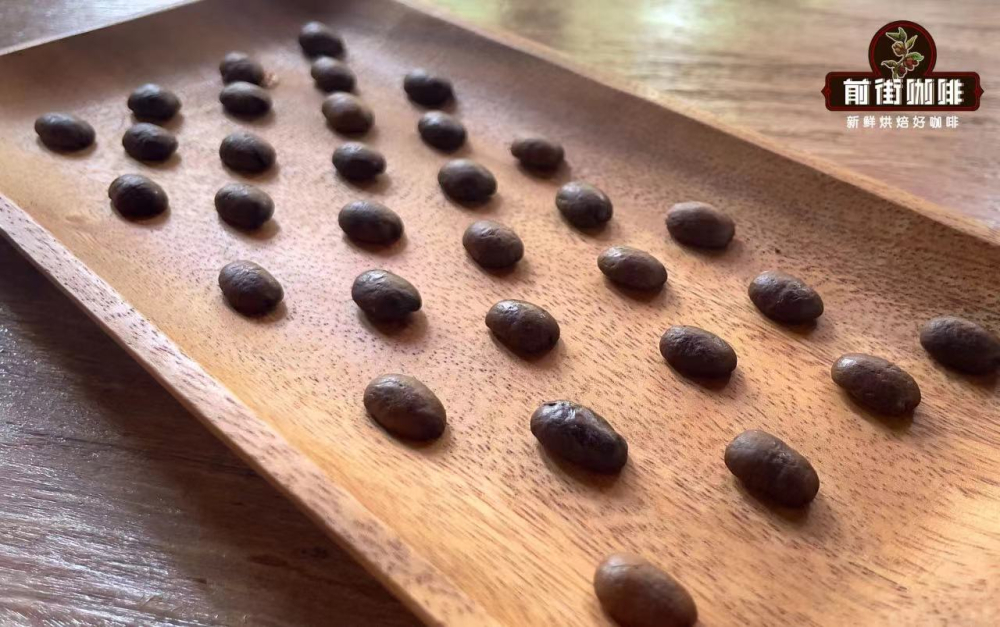
Mandheling coffee beans can be considered a calling card of Indonesian coffee, and on many occasions, the word Mandheling is almost synonymous with the quality standard of Indonesian coffee. Front Street currently only lists Mandheling as the Indonesian coffee bean for sale, and its flavor is dominated by intense chocolate and nutty notes; more importantly, that thick and full-bodied mouthfeel is hard for other coffees to match.
However, quite a few friends have never quite understood why Mandheling is called "Mandheling," and what exactly lies behind this story. Today Front Street will tell this story.
The name Mandheling is actually a transliteration of the Indonesian Mandailing ethnic group. During World War II, when the Japanese army occupied Indonesia, a Japanese soldier drank an extremely rich and aromatic coffee in a café and asked the owner the name of the coffee. The owner mistakenly thought he was asking "Where are you from?" and answered: Mandheling. After the war ended, this Japanese soldier recalled the "Mandheling" he had drunk in Indonesia and commissioned an Indonesian coffee merchant to ship 15 tons to Japan, where it became hugely popular, and the name Mandheling spread in this way.
Mandheling coffee is regarded as one of the fullest-bodied coffees in the world. When tasting Mandheling, the tip of the tongue can feel a distinct smoothness; its acidity is low, but not completely undetectable. That lively slight acidity interweaves with the rich aroma, allowing people to easily experience the vibrant quality contained within its gentle richness. In addition, this coffee also carries a faint earthy fragrance, which some also describe as the aroma of herbs and plants.
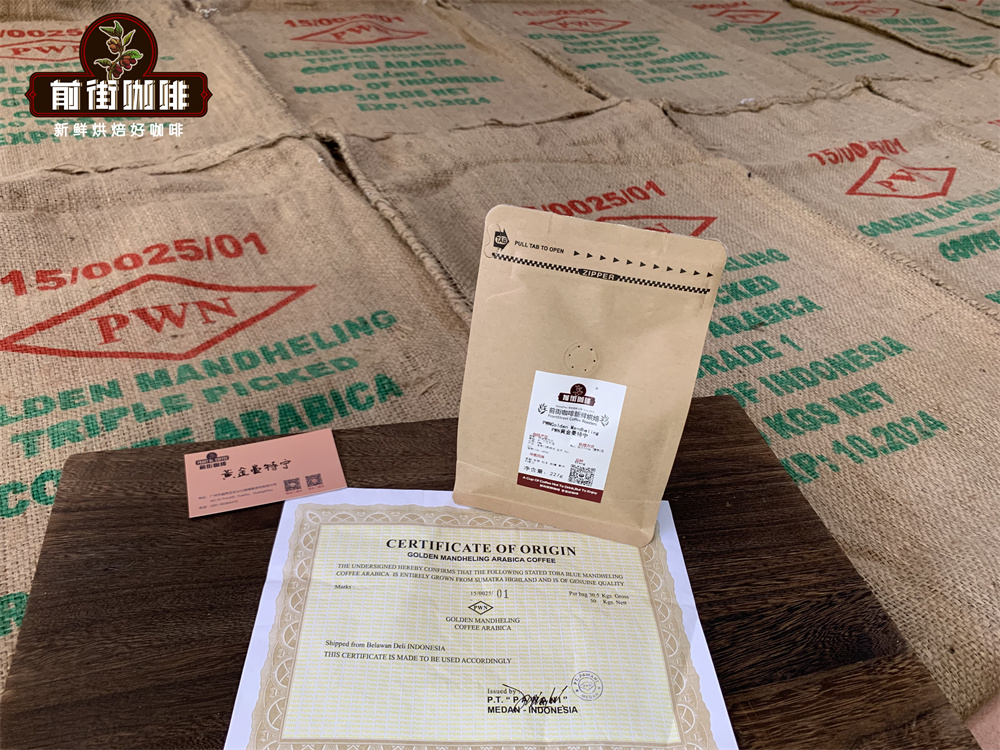
Golden Mandheling is not a grade name, but a trademark registered by the Indonesian company N.V. Pawani Medan (PWN for short). The company was founded in 1957 and engages in the export of Indonesian products such as coffee, rubber, cinnamon, cloves, and patchouli oil. It was the first Indonesian company to export coffee from North Sumatra and the first company to make "Mandheling coffee" famous in Japan. Since 1977, the company has focused on exporting high-quality coffee beans, including Sumatra Arabica coffee Mandheling Grade 1 and Robusta coffee AP-I Grade 2; its main export destinations are Japan, Taiwan, and the United States, with Japan and Taiwan accounting for more than 95% of exports. In Japan and Taiwan, "PWN" is synonymous with quality assurance. N.V. Pawani Medan holds the "Golden Mandheling" trademark, so Japanese companies had to register a separate "Gold Top Mandheling" trademark. Mandheling refers to semi-washed or natural beans from the hilly area of Lintong at 900-1200 meters above sea level on the southwestern shore around Lake Toba in north-central Sumatra; Front Street Golden Mandheling undergoes four rounds of hand sorting, is of a higher grade than ordinary Mandheling, and has larger beans; the uniform bean appearance of Golden Mandheling created a new round of market demand, and even the European and American markets pursued it.
Because Front Street Golden Mandheling is exceptionally outstanding in quality, its price is naturally much higher than ordinary Mandheling, which is also the reason why a large amount of counterfeit Golden Mandheling appears on the market.
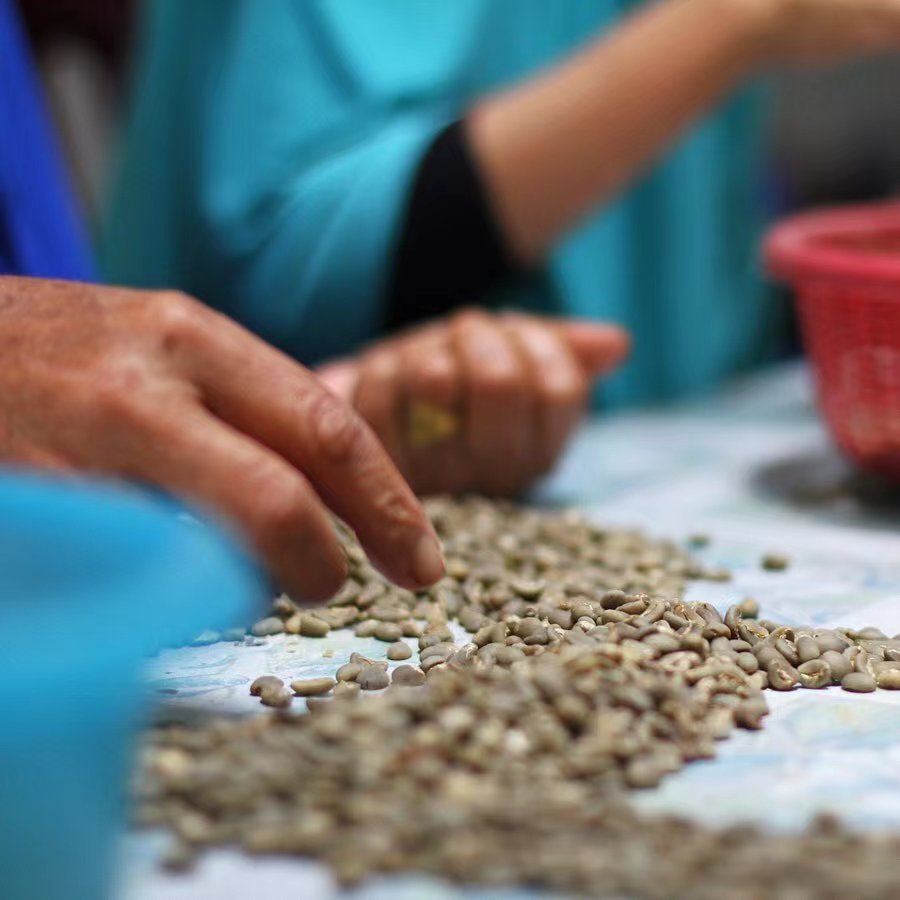
Front Street believes that authentic Golden Mandheling must be the product of Indonesia's PWN coffee company (the Golden Mandheling trademark belongs to PWN). When importing Golden Mandheling green coffee beans, a certificate from PWN is included (which can be used to identify authenticity). If the seller cannot provide source information for the Golden Mandheling green beans (certificate or burlap sack), then you should be cautious in identifying it.
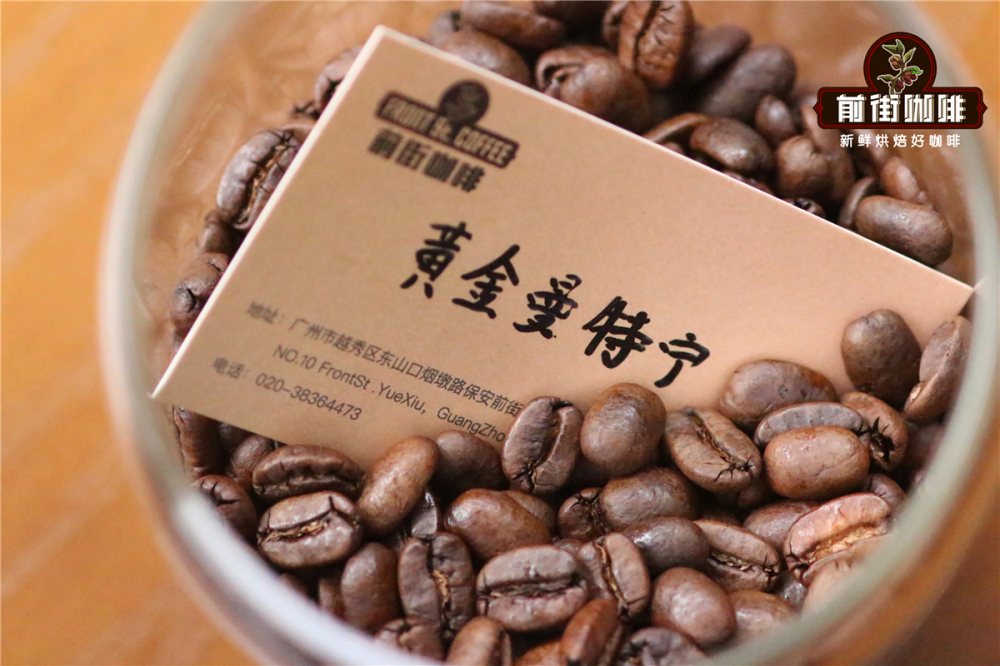
Front Street Golden Mandheling coffee beans are produced in the Gayo Mountains of Aceh, Grade G1, and use 3 rounds of hand sorting to ensure large, plump beans (19 mesh) with few defects. It presents a very clean and full-bodied mouthfeel with high sweetness, a high-quality Mandheling coffee.
So how should Front Street Golden Mandheling coffee be brewed to taste good?
Front Street's brewing approach for Mandheling coffee is: to express a full-bodied yet clean mouthfeel, highlight caramel, chocolate, and the signature herbal aroma, while avoiding unpleasant bitterness. Front Street will explain from the aspects of equipment selection and important brewing parameters. The beans used for the demonstration are Front Street Golden Mandheling.
Front Street recommends using freshly roasted coffee beans for brewing , as only in this way can you experience the rich flavors of the coffee to the greatest extent . The coffee beans shipped by FrontStreet Coffee are all within 5 days of the roasting date , because Front Street deeply understands that the freshness of coffee beans has a great impact on flavor . Front Street's roasting philosophy is " freshly roasted good coffee ," so that every customer who places an order receives the freshest state when the coffee arrives . The resting period for coffee is about 4-7 days , so when customers receive it, it is exactly at its best flavor .
For the dripper, Front Street uses the Kono Meimon dripper. The biggest feature of the Kono dripper is that the ribs extend from the bottom to the middle, and the upper part is a smooth dripper wall, so when the filter paper fits the dripper, water cannot "secretly" bypass the coffee grounds and slip away, thereby enhancing the fullness of the mouthfeel.
The amount of coffee powder used by Front Street is still 15g. More coffee powder is not necessarily better, nor is less necessarily better; it depends specifically on the dripper size. Front Street uses a 1-2 cup dripper, and a coffee dose of 15-20g is a reasonable brewing range; brewing outside this range will present certain difficulties.
For the brewing coffee-to-water ratio, Front Street recommends 1:15. Although some may suggest 1:13 or an even smaller coffee-to-water ratio, Front Street has stated in previous articles that concentration and body are not necessarily related, and that too strong a coffee can make people uncomfortable. Therefore, using a 1:15 coffee-to-water ratio can also very well showcase Mandheling's full-bodied mouthfeel.
For the coffee grind size, Front Street uses a grind size with a 70% passing rate through a No. 20 sieve. When brewing Front Street Golden Mandheling, the grind size should be coarser than for light-roasted coffee beans, because Front Street Golden Mandheling is dark-roasted and has a looser structure, making it easier to absorb water and release coffee substances. If it is ground to the fineness of light-roasted beans, it is easy to brew out burnt bitterness; if ground coarser, the coffee will become thin and tasteless, with a mouthfeel as weak as water.
For water temperature, Front Street recommends brewing at 87-88°C. For the same reason as with grind size, too high a water temperature tends to produce burnt bitterness, while too low a water temperature makes the coffee flat and also produces unpleasant sourness.
The brewing method uses three-stage pouring. Dividing into three stages of pouring can better express the full-bodied mouthfeel and caramel sweetness of Front Street Golden Mandheling coffee. The specific water amounts are: the first stage, bloom pour of 30ml, which completely wets the coffee grounds and allows degassing, preparing for better extraction of coffee flavor substances later; the second stage pours 100ml; the final stage pours 95ml, enhancing the coffee's sweetness.
The Front Street Golden Mandheling coffee brewed in this way shows an overall thick and full-bodied mouthfeel, with caramel sweetness and chocolate, nutty flavors.
The above content is compiled by CoffeeHunters, a coffee news website.


