







Can Blend Coffee Beans Work in a Pour-Over?
Espresso blend beans can be brewed as pour-over, and single-origin beans can be pulled as espresso, but the results differ from what each was roasted for. Pour-over is drip extraction, where hot water passes through ground coffee, while espresso uses pressure. Roast curves and flavor goals for the two methods are not the same, so the cup changes.
For pour-over, Front Street uses 15 grams of coffee ground to 70 to 80 percent passing a No. 20 standard sieve, brewed at a 1:15 coffee-to-water ratio with water between 87 and 93 degrees Celsius, poured in steady stages. Equipment includes a dripper, grinder, server, thermometer, pouring kettle, matching filter paper, and a digital scale. Coffee roaster types also affect how a bean performs.
There are many ways to brew coffee, and espresso and pour-over drip are currently the two most mainstream methods. Many enthusiasts often have a question: will espresso blend beans taste good when used for pour-over? Conversely, can pour-over single-origin beans be used to extract espresso? To answer these questions, we need to start with the principles of the two extraction methods. Pour-over belongs to drip extraction, while espresso relies on pressure extraction, and the roasting curves and flavor goals of the two are not the same. This article will start from the extraction principles, analyze the feasibility of using blend beans for pour-over, and, combined with specific products on the Front Street bean list, provide practical suggestions for making espresso with single-origin beans.
Today the coffee industry is growing continuously. The same coffee bean can be brewed and enjoyed in several different ways, with the more common ones including espresso, pour-over coffee, cold brew coffee, and moka pot, among others. Front Street has observed that espresso and pour-over are the two most widely used methods, so some friends raised two questions with Front Street: can espresso blend coffee beans be used for pour-over? And can Front Street's pour-over single-origin coffee also be made into espresso?
Before answering, it may be helpful to first understand the extraction principles of espresso and pour-over coffee respectively.
Pour-over coffee follows the drip extraction path
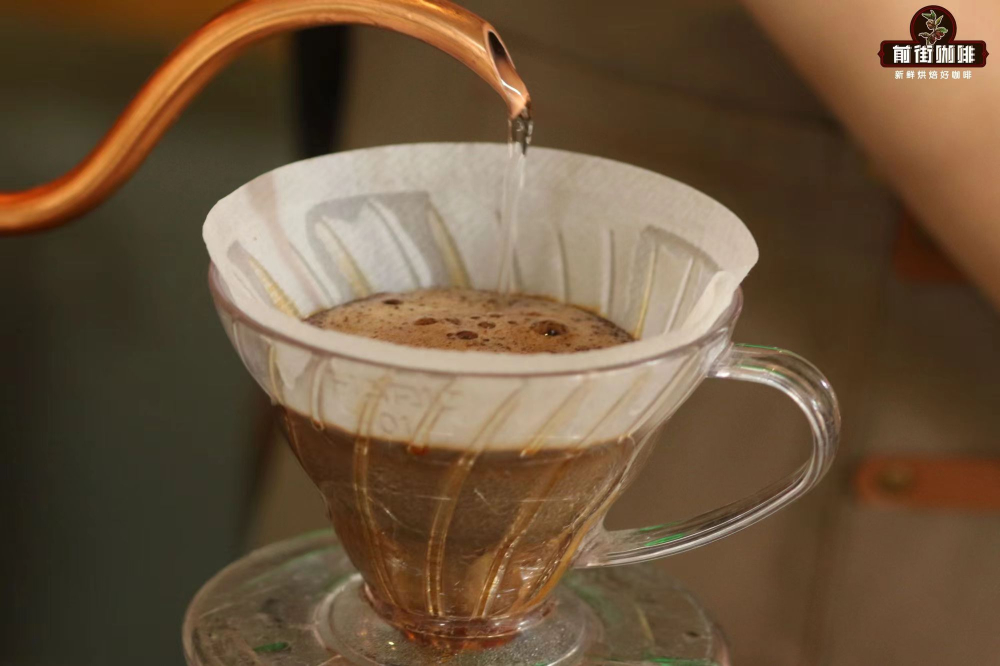
With pour-over single-origin beans becoming increasingly diverse, the menus of the vast majority of coffee shops will include at least one pour-over single-origin option. The pour-over method is to let hot water pass through ground coffee and release the aromatic soluble substances within it; it belongs to drip extraction.
The conventional equipment needed for pour-over coffee includes: a dripper, a grinder, a server, a thermometer, a pouring kettle, filter paper that matches the dripper, and a digital scale. Taking Front Street's in-store serving standard as an example, use 15 grams of coffee beans, grind to a coarseness with a 70–80% pass rate on a No. 20 standard sieve, and brew at a 1:15 coffee-to-water ratio. Pour the ground coffee into the dripper with the filter paper already rinsed, then pour hot water at 87–93°C in stages and steadily to dissolve the aromatic substances in the coffee grounds.
Espresso follows the pressure extraction path
The Americano, latte, and cappuccino we usually drink actually all belong to espresso coffee, and they all use espresso as the base. Espresso refers to the concentrated coffee liquid extracted in a short time under high temperature and high pressure from finely ground coffee beans with a reasonable dose, using a semi-automatic or fully automatic coffee machine. A freshly extracted shot of espresso will have a signature layer of crema on the surface, which is the "product" of fresh coffee beans and multiple atmospheres of pressure working together.
Every day, Front Street must fine-tune the extraction parameters according to the current condition of the Front Street espresso blend coffee beans used in-store, for example, using 20 grams of coffee powder to extract 40 grams of coffee liquid, with the extraction time controlled at 29 seconds.
Can Front Street espresso blend coffee beans be used for pour-over?
As mentioned earlier, the same bean can indeed be extracted in different ways, but Front Street would like to remind you of one point: different extraction principles correspond to different roasting curves. In other words, when a roaster adjusts a bean, they decide the roast level according to the flavor direction they want to present. For example, if they want to highlight the fruity acidity of African beans, they choose a light roast; if they want to emphasize the dark chocolate richness of Brazilian beans, they choose a dark roast.
Espresso coffee pursues a balanced and full-bodied taste more, so it mostly uses medium-dark roasting and blends beans from more than two origins to make the flavor direction more stable. If drip pour-over is used to extract this type of bean, the coffee tends to show a bitter and rather thin taste.
Of course, as everyone's pursuit of coffee flavor continues to change, there are more and more espresso beans with distinctive flavors, such as Front Street Strawberry Candy espresso blend, which ingeniously combines washed Colombia, natural Ethiopia, and honey-processed Costa Rica. The extracted espresso has both a sweet floral and fruity aroma and creamy nutty notes, along with a soft candy-like character, with rich layers and a gentle mouthfeel, very suitable for extraction with a home coffee machine.
Can Front Street pour-over single-origin coffee extract espresso?
In recent years, there has been more and more coffee pursuing personalized flavors, and single-origin espresso has become the main focus of many coffee shops, while some friends also buy beans to make it at home themselves. Because espresso magnifies flavors greatly, the bright and moderate acidity in pour-over can easily become sharply sour when made into espresso; the full-bodied mouthfeel in pour-over may also become very bitter in espresso. Front Street suggests choosing single-origin beans with a moderate roast level, as this can adapt to more brewing methods and has a higher margin for error. Below, Front Street takes several beans on its bean list with different flavor types as examples for everyone to refer to and try.
1. Front Street Natural Yirgacheffe Red Cherry Coffee Beans
When this bean is originally brewed by pour-over drip, the sweetness is very high and the fruity aroma is rich. When used to extract espresso (the grind size needs to be readjusted), the crema on the surface is delicate and pale yellow in color, with a sweet berry aroma on the nose; the sweet-and-sour berries interweave with caramel, and the mouthfeel is clean. After adding steamed hot milk, it presents a honey-like sweetness.
2. Front Street Mozart Coffee Beans
Anaerobic honey processing allows the coffee beans to retain the mucilage layer before drying for sealed fermentation, pushing sweetness to the maximum. This bean shows rich rose floral aromas and raisin-like high sweetness in pour-over; when extracted as SOE, it shows intense tropical fruit and fermented flavors.
3. Front Street Brazil Queen's Estate Yellow Bourbon Coffee Beans
If none of the above are your preferred flavor types, you might take a look at this Front Street Queen's Estate coffee bean from Brazil, a major coffee country. Medium-dark roasting gives the coffee a strong nut, cream, and peanut aroma, with a finish of amply sweet chocolate; when extracted as SOE, it has a beautiful rich crema, and it is also full of aroma when made into milk coffee.
The above content is compiled by CoffeeHunters, a coffee news website.


