







What makes Mandheling coffee from Sumatra different?
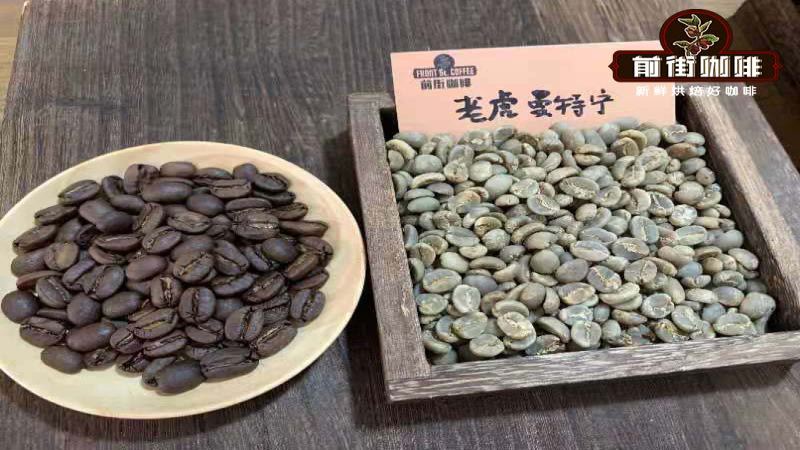
Tiger Mandheling is a specialty coffee grown around Lake Tawar in Aceh, Sumatra, Indonesia. Only beans of 17 mesh or above with a defect rate under 4% qualify for the Tiger name. The coffee shows citrus acidity, cream, dark chocolate and nutty notes over a thick base, with cedar and herbal aromas.
The name Mandheling traces back to a misunderstanding: it was originally an Indonesian tribe's name that Japanese soldiers took for the coffee itself. Processing on Sumatra uses the wet-hulling method rather than fully washed steps, which shapes the heavy body. The coffee tree and its varieties also influence the final cup.
Tiger Mandheling is a specialty coffee produced around Lake Tawar in the Aceh province of Sumatra, Indonesia, known for its strict screening standards—only beans of 17 mesh or above with a defect rate below 4% can earn the "Tiger" name. It uses the local unique wet-hulling method, presenting a complex flavor of citrus acidity, cream, dark chocolate, and nuts within a rich base, along with distinctive cedar and herbal aromas. Front Street Coffee included it in its product line after multiple tests, and this article will fully analyze the personality and charm of this bean, from the origin story, variety composition, processing method, roasting curve, to KONO dripper brewing parameters.
For more specialty coffee knowledge, please follow our WeChat official account: Front Street Coffee (FrontStreet Coffee)
Regular customers familiar with Front Street should know that we carry more than one Mandheling in our store, and each one has been retained only after repeated cupping and screening. Mandheling holds a prominent position in Indonesia's coffee landscape. The bitter taste on entry is many people's first impression of this type of coffee, but a more accurate description would be bitterness with sweetness. Mandheling from different origins and different batches varies in flavor expression. For example, the well-known Golden Mandheling is known for its cleanliness and layered complexity. This time, Front Street wants to talk about another bean—Tiger Mandheling. It also has a strict quality control threshold, so what exactly are the origins and flavors of this bean?
Indonesia is an important coffee-producing country in Asia and occupies a significant position in the global coffee export market. Its most representative product is none other than Mandheling, which has secured a foothold in the world's specialty coffee circles with its thick body and rich aroma. Its standard is often mentioned alongside Blue Mountain, and it is especially popular in Japan. Today, Front Street will introduce you to a Tiger Mandheling from Indonesia.
Where does the name Mandheling coffee come from?
The name "Mandheling" actually originated from a misunderstanding. It was originally the name of an Indonesian tribe. When Japanese soldiers asked locals about this delicious coffee back then, due to the language barrier, the locals thought they were asking about the tribe's name and blurted out "Mandheling." The Japanese later popularized this coffee and carried on using the name as well. It was this twist of fate that gradually brought the Sumatra-producing region into public view.
Tiger Mandheling Coffee
The producing region of Tiger Mandheling is located around Lake Tawar in the Aceh province of Sumatra. Lake Tawar sits in the Gayo highlands of northern Aceh. Indonesia straddles the equator and has a hot, humid tropical rainforest climate with abundant rainfall, while fertile volcanic soil provides ample nutrients for coffee trees. However, due to its remote location and poor transportation conditions, local coffee planting did not begin until 1924, and it mostly uses traditional shade-growing methods without pesticides, belonging to an organic cultivation model.

In Aceh, coffee is the region's second-largest export cash crop. There are about 60,000 small-scale growers locally, each with coffee gardens of about one to two hectares. Indonesia's traditional coffee circulation method is a multi-level supply chain, starting from farmers, passing through layers of middlemen, and finally gathering into large export shipments. In Indonesia's coffee trade system, it is quite rare for a single window to directly purchase from farmers and then arrange exports.
The entry threshold for Mandheling Tiger is: the flavor must carry an aroma reminiscent of traditional Chinese herbal medicine, and only Mandheling of 17 mesh or above with a defect rate below 4% is qualified to be called "Tiger."
In addition, Indonesia's humidity remains between 70% and 90% year-round, annual rainfall can reach 2000 millimeters, and typhoons are frequent. To speed up capital recovery, farmers adopted the wet-hulling method: in the regular washed process, the beans are first sun-dried with parchment for two to three days, and once the moisture content drops to 20% to 24%, the parchment is removed. This makes the beans prone to compression damage, forming small nicks, commonly known as horse beans or goat-hoof beans, with a relatively higher defect rate, but it is precisely this that creates the rich, intense, and highly recognizable flavor.
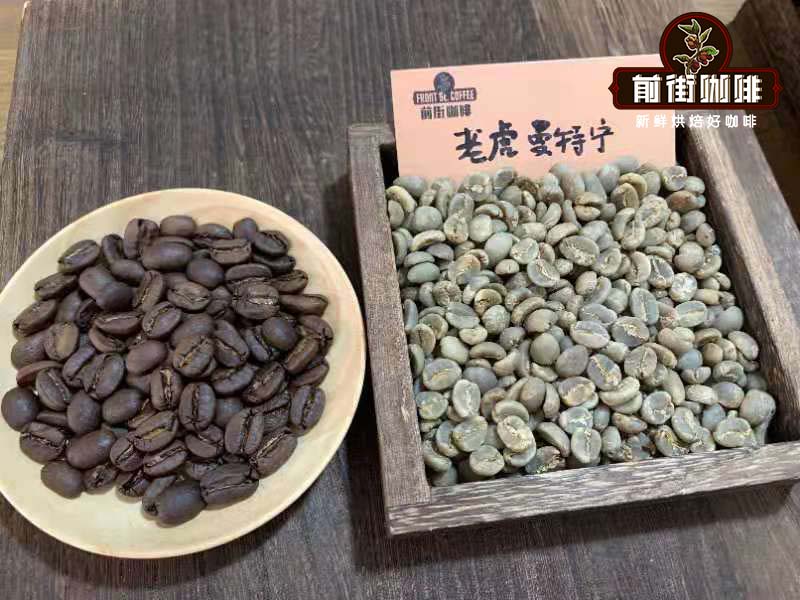
The main varieties of Tiger Mandheling include Caturra, Typica, and Sidikalong. In flavor, it has lemon or citrus acidity, clean acidity, and a sweet finish. The overall taste is balanced with good cleanliness, and the aromas of cream, dark chocolate, caramel, and nuts are prominent. The green beans are round in shape, yellow-green in color, with good uniformity and relatively high moisture content. The roasting direction is positioned as medium-dark, with the aim of grinding away excess acidity and enhancing body and balance.
The Charm of Taming
Tiger Mandheling, just like its name, tests patience and skill in every step from processing to screening, like taming a fierce tiger. It uses Sumatra's unique wet-hulling method. The local weather is rainy and constantly affected by typhoons, making it difficult to meet the long sunlight conditions required for natural drying, while economic conditions also do not allow for the more costly washed method. The combination of multiple factors gave rise to this highly local characteristic wet-hulling process (that is, during the regular washed process, drying with parchment for two to three days, then removing the parchment after the moisture content drops to 20% to 24%). The specification requirement for Tiger Mandheling is 17 mesh or above and a defect rate below 4%.
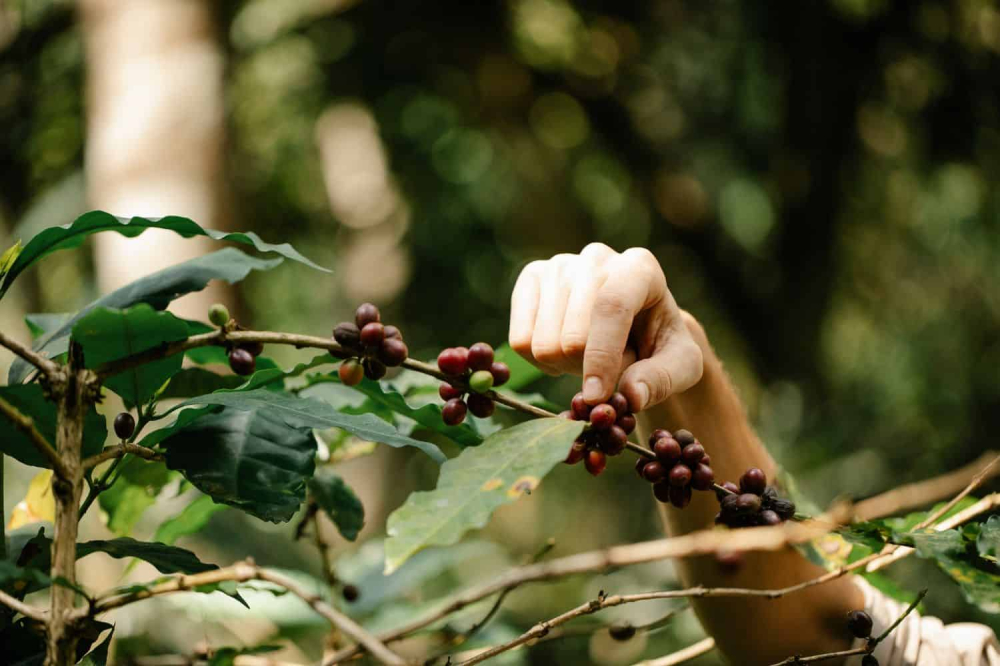
In addition, the producing region of Tiger Mandheling is near Lake Tawar in Aceh, Sumatra. Mandheling from this area naturally carries obvious fruity sweetness and creamy notes, which are difficult for other regions to replicate. With favorable timing, geography, and human effort all in place, Tiger Mandheling presents a unique flavor: it lacks the herbal bitterness of regular Mandheling, replaced instead by bright acidity and a rich fruity-herbal profile. Of course, not everyone can accept its herbal taste, so evaluations tend to polarize.
Front Street Coffee (FrontStreet Coffee) Roasting Analysis
Tiger Mandheling green beans are round in shape, yellow-green in color, with relatively good uniformity and relatively high moisture content. The roasting goal is dark roast, intended to remove excess acidity, enhance body and balance, while preserving Tiger Mandheling's signature cedar aroma.
In the first batch of roasting, the drop temperature was set relatively high, with a charge temperature of 200°C and correspondingly higher firepower. During roasting, considering that this bean is only at medium altitude and the bean texture is relatively soft, in order to fully remove excess moisture and avoid astringency caused by insufficient dehydration, a strategy of extending the dehydration time and reducing heat to coast was adopted. The firepower was lowered separately when the beans reached the turning-yellow point, completed dehydration, and before first crack, to prevent scorching the bean surface, and the roast was dropped 4 minutes after the end of first crack and 20 seconds before second crack, extending the caramelization reaction to showcase its excellent cleanliness and sweetness.
When the roaster temperature rose to 200°C, the beans were charged, the damper was opened to 3, and after 30 seconds the firepower was adjusted to 160°C while the damper remained unchanged. The turning point appeared at 1 minute 45 seconds, and the firepower was maintained; at 5 minutes 18 seconds the bean surface turned yellow, the grassy smell completely dissipated, and it entered the dehydration stage, so the firepower was lowered to 140°C and the damper adjusted to 4;
At 7 minutes 30 seconds dehydration was complete, and the firepower was lowered to 140°C; at 8 minutes 55 seconds wrinkles and dark streaks appeared on the bean surface, and the toasted bread smell clearly turned into coffee aroma, which can be regarded as the prelude to first crack. At this time, it is necessary to listen carefully for the first crack point; at 9 minutes 00 seconds first crack began, the firepower was reduced to 110°C, and the damper was fully opened to 5 (adjusting firepower requires extra caution, and it must not be so low that the cracking sound cannot be heard). After first crack, development lasted 4 minutes 00 seconds, and the beans were dropped at 203°C.

Front Street Coffee (FrontStreet Coffee) Brewing Recommendation
This brewing focuses on showcasing Tiger Mandheling's richness, cedar aroma, and intense characteristics, using a KONO dripper (this dripper was originally designed to mimic flannel brewing in order to present a fuller mouthfeel). For medium-dark roasted coffee, choose a medium-coarse grind (70% passing rate on a No. 20 standard sieve). The coffee-to-water ratio is 1:15, with 15 grams of coffee grounds. Lowering the coffee-to-water ratio makes the taste richer. The water temperature is controlled at 87°C.
Brewing process: slowly add the coffee grounds, and try to keep the coffee bed flat throughout, avoiding shaking the dripper (shaking will reduce the spacing between particles, which is not conducive to blooming and degassing). In the first stage, pour 40 grams of water from the center in a small circular motion, and bloom for 30 seconds; the coffee bed will gradually expand into a "hamburger" shape.
In the second stage, pour 120 grams of water in circles from the center outward, keeping the pouring height as close to the coffee bed as possible and slowing down the motion to avoid excessive agitation. In the final stage, pour 100 grams, and once all the coffee liquid in the dripper has flowed into the server, the extraction can be ended. The total extraction time is about 2 minutes.
The above content is compiled by CoffeeHunters, a coffee news website.


