







Where Are Jura Coffee Machines Made and How Do They Extract Espresso?
Espresso extraction happens when hot water at about 94°C is forced through finely ground coffee at 9-10 bar of pressure, producing a thick, honey-like liquid. A full shot usually runs 25-30 seconds. The liquid starts brownish-red and concentrated, then turns golden, and later light golden as extraction continues.
Beans, grind, dose and machine performance all shift the result, so no single parameter set fits every setup. Home machines often give less consistent pressure and temperature than commercial ones, which explains the burnt, bitter taste many users report. Adjust one variable at a time and taste the outcome. Espresso is not concentrated by heating brewed coffee; a dedicated machine is required.
Espresso is popular worldwide for its rich and full-bodied flavor, but many coffee enthusiasts who try to make it at home often struggle to achieve the concentration and flavor of coffee shop offerings, and even tend to get a burnt, bitter taste. In this article, Front Street Coffee will systematically explain the principles and practical methods of espresso extraction in coffee shops, including how espresso machines work, the setting and adjustment of extraction parameters, suitable coffee bean choices, and the complete steps from grinding to extraction. Whether you are a beginner who has just gotten a home espresso machine or an advanced player looking to refine your skills, you will find practical references and advice here.
For more specialty coffee knowledge sharing, please follow our WeChat official account: Front Street Coffee (FrontStreet Coffee)
As the world's most well-known coffee product/category, espresso has always been famous for being rich, full-bodied, and highly concentrated. Some friends have said, why is it that no matter how I brew at home, I can't get the concentration of the espresso sold in coffee shops, and I even end up burning it! In this article, Front Street Coffee (FrontStreet Coffee) will talk with you about how coffee shops extract espresso~
How to extract es presso?
Actually, espresso is not made by simply brewing coffee grounds with water, nor is it made by heating extracted coffee to concentrate it. Making espresso requires a dedicated coffee machine—the kind of espresso machine we see in coffee shops that can shoot out steam.
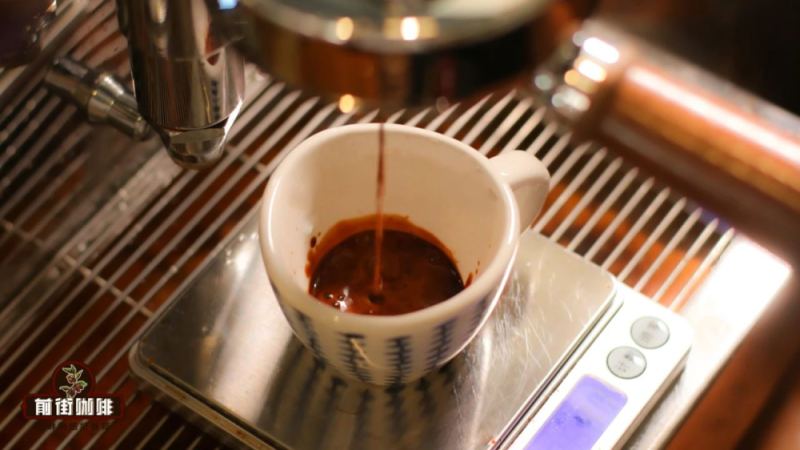
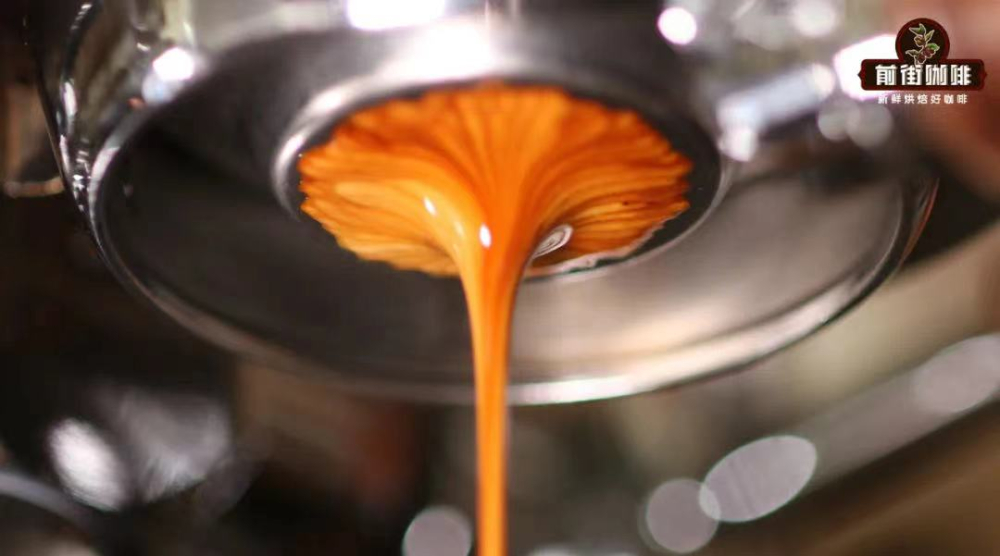
The extraction principle of an espresso machine is to heat the water in the boiler to produce steam. Using the pressure of the steam, hot water at 94°C is rapidly passed through very finely ground coffee at 9-10 bar of pressure, extracting a coffee liquid as thick and viscous as honey.
In the early stage of extraction, the coffee liquid appears brownish-red, concentrated and smooth in texture. As extraction time increases, the coffee liquid gradually turns golden, then light golden.
How to tell whether espresso has been extracted properly?
The extraction of a full shot of espresso is very fast; espresso can usually be extracted in 25-30 seconds. However, because the performance of every coffee machine and grinder varies, there is no specific set of parameters that can serve as a reference for espresso.
Therefore, Front Street Coffee (FrontStreet Coffee) can only provide you with initial parameters, and you can adjust them according to the final taste performance of the espresso: (double basket) use 20g of coffee at a 1:2 ratio + 9 bar of pressure + 94°C hot water to extract 40g of coffee liquid; (single basket) use 10g of coffee at a 1:2 ratio + 9 bar of pressure + 94°C hot water to extract 20g of coffee liquid. Extraction time is between 25-30 seconds in both cases.
If the flow rate is too fast during extraction/the espresso tastes thin, you can grind finer/increase the amount of coffee grounds used for extraction (choose one); if the flow rate is too slow during extraction/the espresso tastes burnt and bitter, you can grind coarser/reduce the amount of coffee grounds used for extraction (choose one).
What coffee beans to use for extracting espresso?
If you are just starting out with espresso, Front Street Coffee (FrontStreet Coffee) recommends using blended coffee beans specifically made for espresso. The advantage of blended coffee beans is stability! And they are cost-effective. Through blending beans from different origins and in different proportions, it reduces the shortcomings that single-origin coffee beans (coffee beans from a single origin) may show under high concentration + increased extraction.
If you want your espresso to have a unique and rich aroma and flavor, you can try the "Front Street Sunflower Warm Sun Blend Coffee Beans" used in Front Street Coffee (FrontStreet Coffee) store offerings; the 227g packaging is very suitable for home use. This coffee bean blend uses Ethiopian Yirgacheffe natural-process coffee beans + Honduras Moka Estate Sherry coffee beans, with a rich whisky-like fermented aroma, vanilla-cream-like smoothness, berry-like sweet acidity, and hazelnut-caramel-like sweetness.
If you want your espresso to be full-bodied without acidity, highly aromatic, and rich in crema , you can try Front Street Classic Espresso Blend Coffee Beans, which are very suitable for those who like Americanos with a mellow taste, and for those who can easily pour latte art patterns in their lattes. This coffee bean blend uses Arabica coffee beans from Brazil's Cerrado region and Indonesia's Sumatra island, along with a small amount of Robusta. The espresso extracted not only has a rich roasted-nut-like aroma, and a rich, full-bodied flavor like dark cocoa, as well as caramel-like sweetness and a sweet aftertaste, but the key point is that it also has a very beautiful golden crema.
Steps for extracting espresso
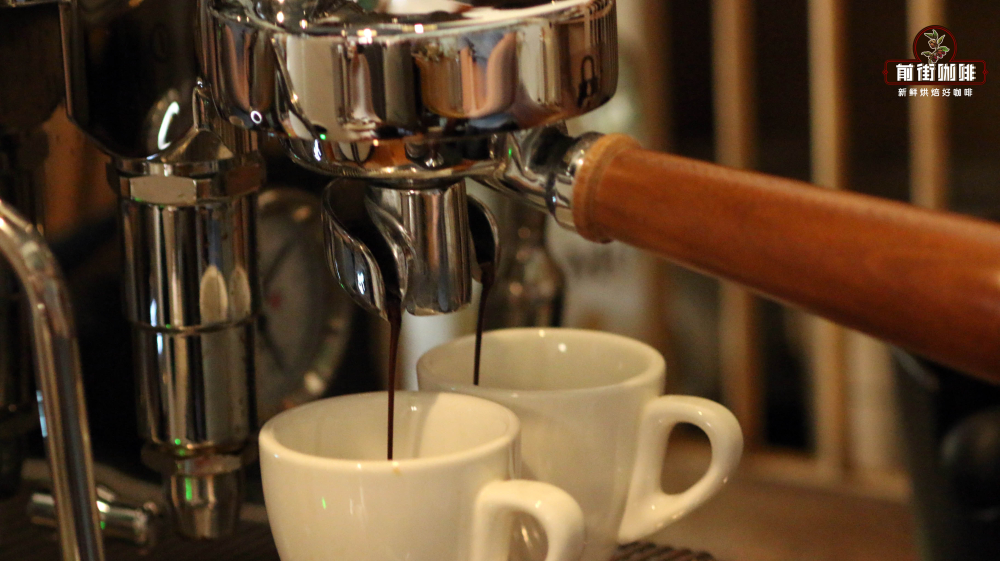
First, turn on the coffee machine switch and wait for the machine to heat up automatically. When the display shows the temperature has reached 94°C, you can begin preparing for extraction.
Before extraction, you need to first wipe the portafilter basket dry, turn on the grinder, grind out the amount for a double shot of coffee grounds, place them on an electronic scale to adjust up or down until reaching 20 grams. Then use a distribution tool to level the coffee grounds, and press the tamper straight down with force to tamp the coffee puck firmly, ensuring more stable extraction.
Then turn on the extraction switch and let water run for 1-2 seconds to wet the group head, which can also wash away stuck coffee grounds. Next, place an electronic scale under the cup that will catch the espresso, and tare the weight to 0, placing it together under the group head during extraction.
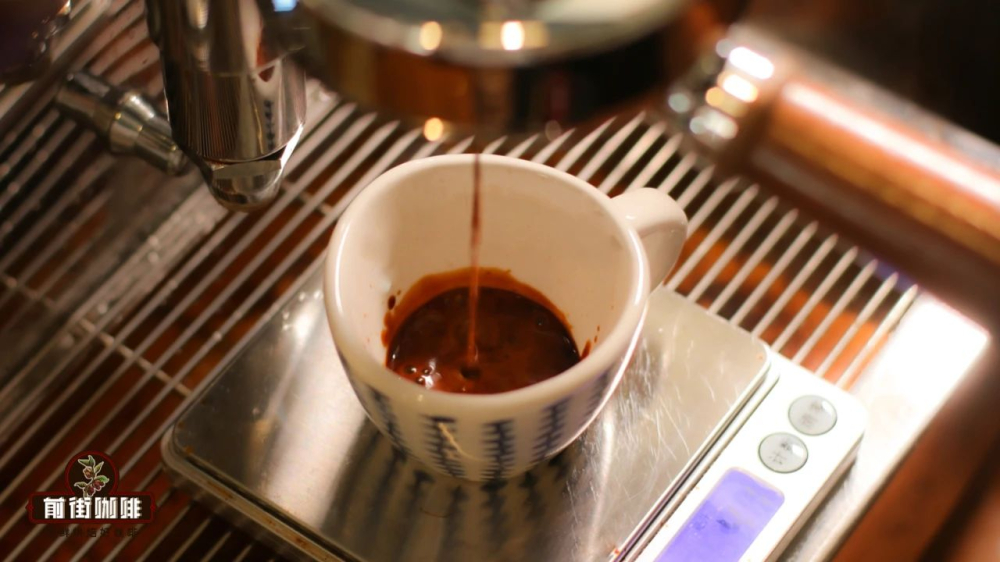
Gently and slowly lock the portafilter onto the group head, and begin flipping down the extraction switch. Observe the changes in the extracted liquid. When the electronic scale shows 40 grams of coffee liquid extracted, at about 30 seconds, pull down the extraction switch.
The brewing parameters will undergo subtle changes according to daily air humidity and the condition of the coffee beans, so it is necessary to adjust the amount of coffee grounds, the grind setting, and the extraction yield of the coffee liquid up or down.
The above content is compiled by CoffeeHunters, a coffee news website.


