







Inside the Cauca Coffee Producing Regions of Colombia
Cauca Department is a key specialty coffee origin in Colombia, where high altitude, volcanic clay soil, and wide day-night temperature swings produce a washed Caturra with bright acidity and clear sweetness. The Suarez micro-region, sitting between 1,758 and 2,100 meters, is a representative example of what these coffee producing regions can deliver.
Commercial coffee growing in Colombia began in the mid-1830s, and the country now cultivates roughly 875,000 hectares across 590 municipalities and 14 regions. About 60 percent of coffee farms are under one hectare. A Cenicafe ecological processing system cuts water use by 95 percent and water pollution by 90 percent, and medium-dark roast curves shape the final cup.
Cauca Department in Colombia is an important origin for specialty coffee, where high altitude, volcanic soil, and significant day-night temperature differences nurture a washed Caturra with bright acidity and pronounced sweetness. This article provides a complete overview of the flavor code of Cauca coffee, from the terroir of the producing region, the Cup of Excellence competition, and the characteristics of the Suarez micro-region to green bean roasting and brewing suggestions. Front Street Coffee combines roasting practice to share medium-dark roast ideas and specific curves, helping enthusiasts understand how this bean performs from origin to cup.
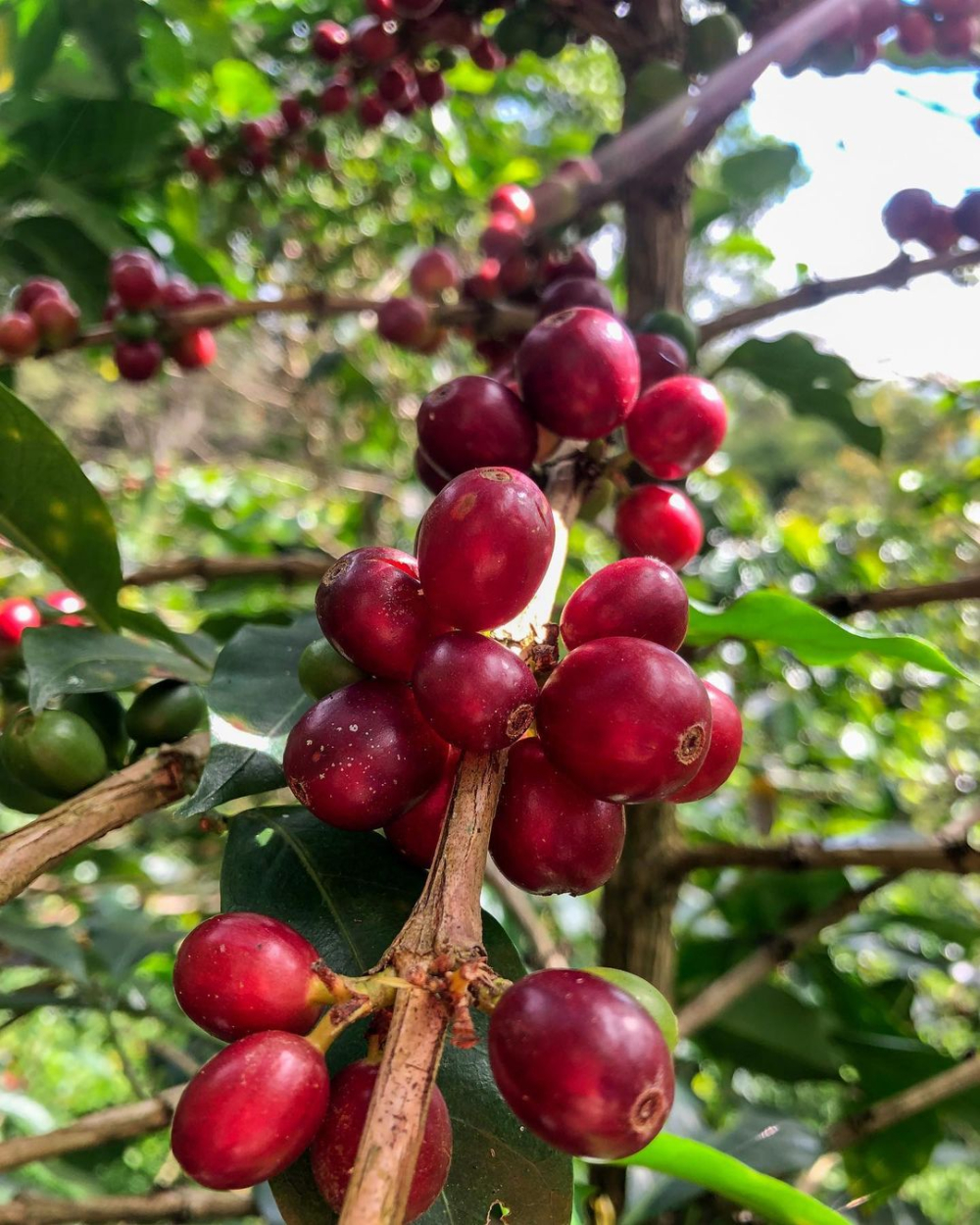
Colombia Best of Cauca
Colombia Cauca Cup of Excellence
■Region: Cauca Department
■Micro-region: Suarez Micro-region
■Soil: Volcanic clay
■Altitude: 1,758m–2,100m
■Variety: Caturra
■Processing: Washed processing
Colombian Coffee
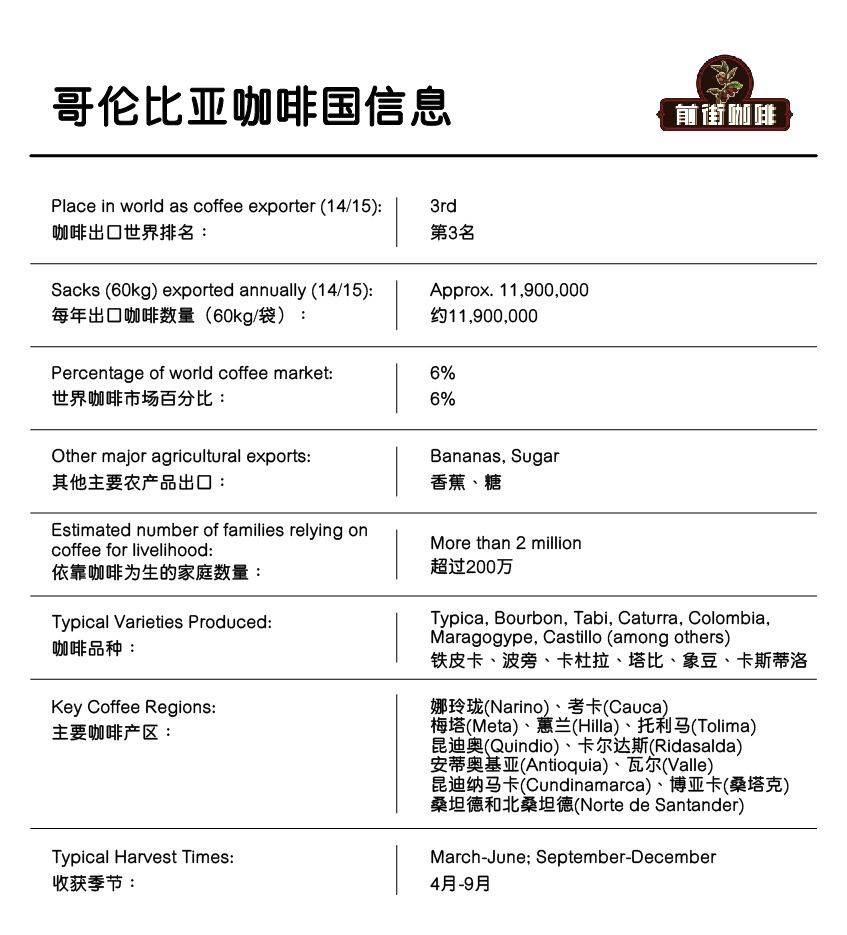
Front Street Coffee (FrontStreet Coffee) has learned that commercial coffee cultivation in Colombia began in the mid-1830s and remained the country's most important agricultural export throughout the 20th century. The continuous mountainous terrain and rich, diverse tropical microclimates provide a nearly ideal growing environment for coffee, and have also helped Colombian coffee build a globally recognized "brand" image. Currently, the country cultivates about 875,000 hectares of coffee across 590 municipalities and 14 coffee-growing regions, with an average of 75% of production sold around the world, and the coffee crop contributes 10% to 16% of agricultural GDP. What surprised Front Street Coffee (FrontStreet Coffee) is that most of this coffee comes from small farms—60% of Colombian coffee farms are less than one hectare, while those with more than 20 hectares account for only 0.5%.
Traditionally, most Colombian coffee has been processed using the fully washed method. However, the coffee research institution (Cenicafe) developed an ecological processing system that uses very little water and can reduce local water pollution by 90% and water use by 95%. Practice has shown that this dry pulping method is not only reliable for ecological protection, but also trustworthy for stabilizing cup quality, and it is now being applied more and more widely nationwide.
Colombian Coffee Grading
Colombia uses bean size as a distinguishing standard. Both Excelso and Supremo count as large beans, but the latter is larger than the former. Front Street Coffee (FrontStreet Coffee) believes that, compared with bean size, understanding the source of the producing region would be more helpful for judging quality.
Supremo | 17 mesh
Excelso | 14–16.5 mesh
Colombian Coffee Producing Regions
Colombia's coffee-producing regions are divided into commercial beans and specialty beans.
Commercial coffee bean production areas are concentrated in central and northern Colombia, mostly large-scale commercial coffee farmers. Among them, the well-known "MAM" three major producing regions are Medellin, Armenia, and Manizales. Their main flavor is the familiar Central American style, with strong fruity acidity. However, Bucaramanga, produced in the northeastern Santander Department, is known for low acidity and a heavy bitter-aromatic profile, somewhat similar to Indonesian Mandheling. (This phenomenon may occur because lower altitude leads to reduced acidity.)
Specialty coffee bean production areas are mainly in the south, at altitudes of about 1,500 meters or more, and with many volcanoes, creating many well-known specialty regions, including Cauca, Huila, Meta, Tolima, Narino, and so on. Their main flavor is caramel aroma, with delicate berry aromas and acidity, and obvious sweetness!
Antioquia
Antioquia has for many years been the country's "Wild West," initially settled almost entirely by gold miners. In the latter part of the 19th century, Antioquia became one of Colombia's most important coffee-producing regions.
Choco
Most of the coffee in Choco grows near the municipality of El Carmen de Atrato, separated from the fertile coffee-growing slopes of southwestern Antioquia only by a steep ridge. The area is biodiverse and one of Colombia's most remote regions, and in the past suffered from violence and isolation due to the presence of the Revolutionary Armed Forces of Colombia.
The coffee area of Choco is located within the mountains bordering Antioquia, and there is no other viable route to transport coffee out of the region. Therefore, almost all coffee from Choco is milled in Antioquia.
Huila
Huila has excellent soil and geographical advantages for growing coffee. This region belongs to the specially selected high-mountain coffee beans of Colombia's state-owned company and is hailed as a national treasure of Colombia. The region has more than 70,000 coffee growers, covering more than 16,000 hectares (about 39,500 acres). Colombian coffee beans that usually do not have a special market trademark name all come from the National Federation of Colombia Coffee Growers, which has long been known for strict quality control and active promotion.
Narino
Narino is located at the southernmost tip of Colombia. Because it is close to the equator, the region can grow coffee at very high altitudes, and many farms are located on slopes more than 2,000 meters above sea level. Growing coffee in many areas at these high altitudes is a challenge, and coffee trees may be attacked by leaf rust. However, Narino is close enough to the equator that the climate is suitable for growing coffee trees. The vast majority of Narino's 40,000 producers are smallholders, each cultivating less than 2 hectares (4.4 acres). Many have formed groups and institutions to support one another and interact with the FNC. In fact, the average farm size is less than 1 hectare (2.2 mu), and only 37 producers in the region own more than 5 hectares (11 acres) of land.
Santander
Santander grows a large amount of Typica, most of which has Rainforest Alliance certification. The region has a drier climate and lower altitudes.
Sierra Nevada
Located in the branch of the Andes on the Caribbean side of northern Colombia—the Sierra Nevada mountain range (also translatable as the Sierra Nevada)—it is the highest mountain range in Colombia. The peaks are covered with snow year-round. Specialty beans produced in this mountain area are named after the Sierra Nevada range, and their reputation has gradually grown in recent years. In addition to being purchased by the FNC (the state-run organization for Colombian coffee beans), coffee farmers organize cooperatives and sell externally under the micro-region names Sierra Nevada or Snow Cap.
Tolima
TOLIMA, Tolima, is located in one of the strongholds of the notorious insurgent group the Revolutionary Armed Forces of Colombia, and until recently it still held control. Tolima has suffered from fighting in recent years, which has made visits difficult. High-quality coffee from this region comes from smallholders growing on very small micro-lots and is exported through cooperatives.
Cauca
Cauca's most famous coffee comes from the areas near Inza and Popayan. Meseta de Popayan is a plateau, and its high altitude provides favorable growing conditions. In addition, being close to the equator and surrounded by mountains protects the coffee from the humidity of the Pacific and the southern trade winds. This creates a very stable climate year-round. In addition, the coffee in this region has notable volcanic soil. Historically, there has been a single rainy season from October to December each year.
■Altitude: 1,758–2,100m
■Harvest period: March–June (main crop season), November–December (secondary crop season)
■Varieties: 21% Typica, 64% Caturra, 15% Castillo
■Flavor: Balanced body, with malic acidity and caramel notes
What is the Cauca Cup of Excellence?
The Cauca Best Cup auction has existed since 2014, jointly organized by well-known American traders, local exporters, and the Colombian Coffee Growers Federation. The first Cauca Cup of Excellence in 2014 received about 200 competition samples, while in 2015 the number more than doubled, with about 500 smallholders competing. The organizers would screen more than 500 samples down to the top 30, after which an international jury would cup and select the final top 12. On the last day of the event, green coffee buyers and roasters from around the world attending the Cauca Cup would bid on them.
Competitions like the Cauca Cup are indeed helpful in practical terms. They not only greatly increase smallholders' incomes and give them the opportunity to improve their living conditions, but also make them more willing to invest in and refine coffee cultivation and production, producing higher-quality coffee.
Coffee Cultivation in Cauca Department
Cauca Department, whose name comes from the Cauca River, is located in southwestern Colombia. Together with Narino Department and Huila Department, it is an important specialty coffee-producing region in Colombia.
Cauca Department is a region certified for Colombian coffee origin. Its average altitude is 1,758m, and the highest altitude can rise to 2,100m. The region's terrain, rainfall, temperature, and volcanic soil provide suitable conditions for coffee growth. Eighty percent is mountainous, with parallel mountain systems distributed in the east and center that are part of the Andes. The central mountain system includes two major volcanoes, Sotara and Petacas. On its borders, Cauca Department is similar to other southwestern producing regions, with rainfall showing an obvious monomodal distribution; the dry season mainly occurs from August to September each year, and the subsequent rainy season brings a concentrated coffee flowering season, followed by a concentrated coffee harvest season the next year.
If there is one biggest climatic difference between Cauca and other producing regions, it is probably the relatively large temperature difference: the average daily temperature is 11°C, while the average daytime temperature is 18°C. The day-night temperature difference is an important factor in forming high-quality coffee. Low nighttime temperatures and relatively higher altitude slow the growth rhythm of the coffee, allowing the coffee seeds and beans to more fully absorb the nutrients of the coffee fruit, and also creating Cauca coffee's better acidity and widely praised special sweetness.
Local judges selected 30 lots from 500 competing lots after four rounds of cupping to enter the finals, and 30 international judges then conducted two more rounds of cupping to determine the final top ten.
Introduction to the Suarez Micro-region
Local coffee farmers grow coffee along the highlands of these mountain ranges, with production conditions featuring climatic diversity. Also, due to variations in terrain and altitude, a large part of Colombia's coffee industry follows a smallholder production model. Surrounded by high mountains, the majestic mountains block air currents and moisture from the Pacific and also block the southern trade winds, thereby keeping the producing region's climate stable. Close to the equator, it has abundant sunshine. The stable climate and ample sunlight provide a guarantee for stable coffee quality.
Altitude: 1,758m–2,100m
Harvest: October–December; June–August
Variety: Caturra
Roasting Suggestions
This green coffee bean is plump and round, yellow-green in color, with relatively good uniformity and high moisture content. Therefore, Front Street Coffee (FrontStreet Coffee)'s roasting goal is a medium-dark roast, on the one hand to express a balanced and mellow texture, and on the other hand to showcase rich, layered chocolate and nutty flavors and aromas.
In the first batch of roasting, the drop temperature was relatively high, with a charge temperature of 200°C and relatively high heat. During roasting, Front Street Coffee (FrontStreet Coffee) found that this bean was from a higher altitude, with harder bean density and higher moisture content, so it adopted a roasting approach of extending dehydration, gradually reducing heat, and stabilizing the rise. The heat was adjusted lower respectively when the beans reached the yellowing point, when dehydration was complete, and before first crack, to avoid scorching the bean surface, and it was chosen to coast to 2 minutes 50 seconds after the end of first crack before dropping, extending the caramelization reaction time, grinding away excess fruity acidity, and increasing more nutty and kernel-like finish.
Roaster Yangjia 600g semi-direct fire
Charge when the drum temperature reaches 200°C, set the airflow to 3. After 30s, adjust the heat to 160°C, keep the airflow unchanged. The turning point is 1'37. Maintain the heat. At 5'15'', the bean surface turns yellow, the grassy smell completely disappears, and it enters the dehydration stage. Reduce the heat to 140°C and adjust the airflow to 4;
At 8'55", dehydration is complete. Reduce the heat to 185°C. At 9'10'', ugly wrinkles and dark streaks appear on the bean surface, and the toasted bread smell clearly turns into coffee aroma. This can be defined as the prelude to first crack. At this time, listen carefully for the sound of the first crack point. At 9'17'', first crack begins. Reduce the heat to 90°C and open the airflow fully to 5 (adjusting the heat must be done very carefully, not so low that there is no cracking sound). After first crack, develop for 2'50'' and drop at 199.4°C.
Colombia Cauca Coffee Brewing Report
The above content is compiled by CoffeeHunters, a coffee news website.


