







Which coffee producing regions define Ethiopian specialty beans?
Ethiopia is Africa's largest coffee producer, and its coffee producing regions stretch across nine main areas, with Yirgacheffe and Sidamo among the most recognized. Coffee there is woven into daily life, from wedding ceremonies to traditional remedies, and roughly sixty percent of the national harvest reaches the international market while the rest stays for local use.
Administrative changes around 1995 reshaped the map: the old Sidamo Province was split, part becoming Sidama and most folded into Oromia, while Yirgacheffe now sits in the Gedeo Zone. The ECX grading system and variety records shape how coffee cultivation and processing are documented, and old and new region names are still used side by side.
As Africa's largest coffee producer, Ethiopia's connection to coffee goes far beyond a beverage—from wedding ceremonies to traditional remedies, coffee has long been woven into the daily lives of locals. This article systematically outlines Ethiopia's coffee cultivation systems and the distribution of its nine major producing regions, analyzes the flavor characteristics and processing method differences of two representative specialty coffees, Yirgacheffe and Sidamo, and also introduces how the Red Cherry Project operates, the current state of coffee variety records, and the ECX grading system. The article also combines Front Street Coffee's roasting and brewing recommendations to provide coffee enthusiasts with a complete reference from understanding producing regions to actual brewing.
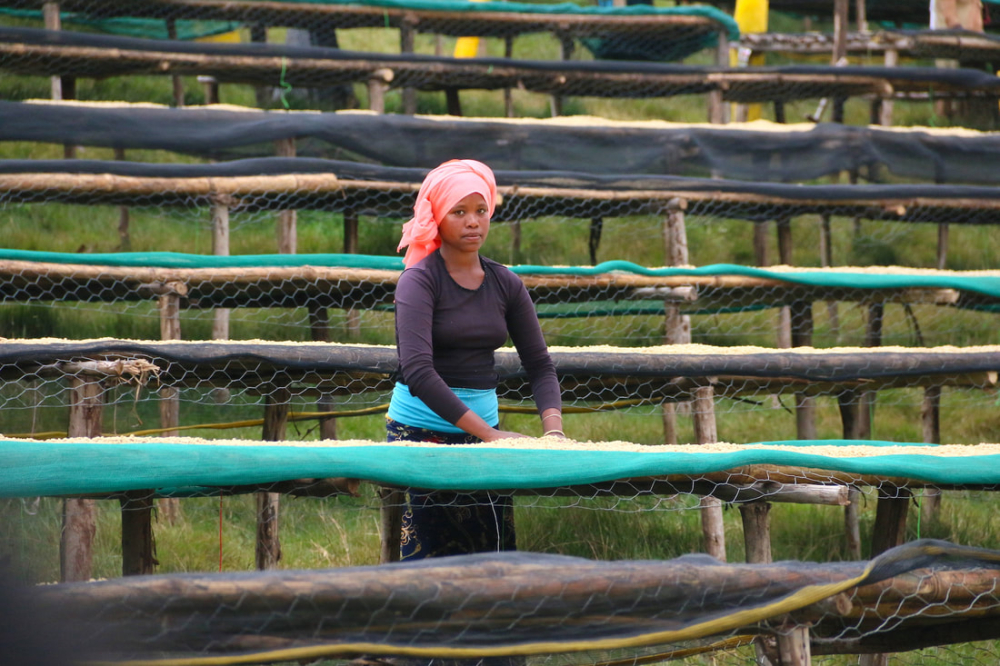
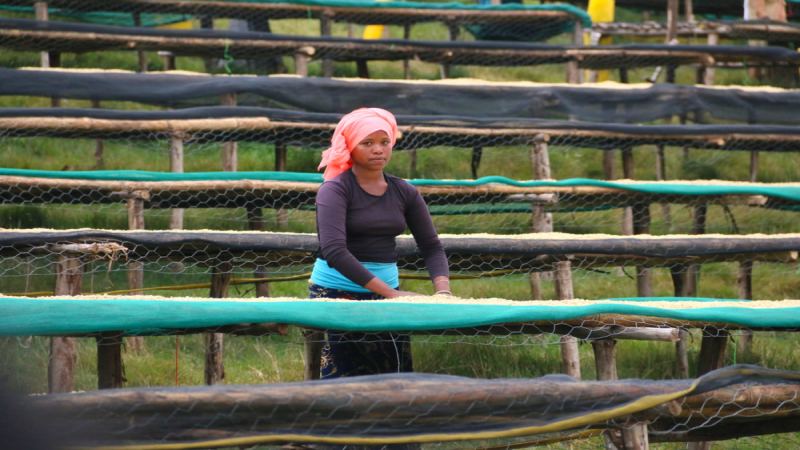
Ethiopia is currently the country with the highest coffee production in Africa, though only about sixty percent of its coffee beans flow to the international market, while the rest are widely used in various traditional ceremonies. For example, at weddings, locals mix coffee beans with coffee cherry pulp, or blend coffee with honey and various herbs into a potion used to ward off bad luck. It is clear that coffee has long been deeply embedded in local daily life.
Front Street Ethiopia Yirgacheffe has in the minds of many coffee enthusiasts almost become synonymous with Ethiopian specialty coffee. In Front Street's staple bean series, there happens to be a Front Street washed Yirgacheffe, which presents the most typical flavor characteristics of the Yirgacheffe producing region. The starting point for Front Street launching this staple bean series is to let drinkers feel the basic flavor of the producing region and deepen their recognition of it, while also balancing a positioning of low price and high cost-effectiveness.
Coffee Cultivation in Ethiopia
Ethiopia adjusted its administrative divisions around 1995. The point with the greatest impact on coffee-producing regions was undoubtedly the splitting of the former Sidamo Province—a small part became the new Sidama, while most was incorporated into Oromia State; and Yirgacheffe, originally under Sidamo Province, is now assigned to the new Gedeo Zone. In the Ethiopian coffee items currently circulating on the market, new and old regional names are often used interchangeably. The following uses the new regional divisions as the basis and combines administrative regions to outline Ethiopia's coffee cultivation map.
Ethiopia's coffee cultivation is concentrated in the western and southern regions. Smallholder family operations account for ninety percent of overall cultivation. Nearly 1.2 million smallholder families make a living by growing coffee, with each household cultivating less than 4 hectares, at an average altitude between 1,000 and 2,300 meters, with a planting density of about 1,000 to 1,800 coffee trees per hectare, and a yield of nearly 600 kilograms per hectare.
Ethiopia's coffee cultivation can be divided by scale and model into:
● Forest coffee (8-10%): Coffee trees grow together with other crops in primary forest without any manual management, and farmers go regularly to pick coffee cherries.
● Semi-forest coffee (30-35%): The coffee tree planting area lies between the forest and the farmers' living area. Like forest coffee, the coffee trees are naturally growing varieties, and farmers manage the planting area and cultivate other cash crops.
● Garden coffee (50-55%): Coffee trees are planted around the farmers' living areas, mostly planted by the farmers themselves.
● Plantation coffee (5-6%): Operated by large private growers, with more processing facilities and production capacity.
Ethiopia's Nine Major Coffee Producing Regions
1. Yirgacheffe (specialty producing region): altitude 1,800~2,000 meters (garden coffee system)
Yirgacheffe is attached to the Sidamo producing region and was separated out on its own because of its unique flavor. In addition to the town of Yirgacheffe, it also includes surrounding sub-regions such as Wenago, Kochere, Gelena, and Abaya. Therefore, in the new Yirgacheffe grading system, the prices of Yirgacheffe A, Wenago A, Kochere A, and Gelena/Abaya A will be higher than the B grades of the same names.
The so-called Yirgacheffe flavor refers to intense jasmine floral aroma, lemon aroma, and the sweet aroma of peach and almond along with tea aroma. Front Street Coffee believes that "a hundred flowers in full bloom" is the most apt description.

Traditionally, Ethiopia's Yirgacheffe used the oldest natural sun-dried processing method. But in 1972, Ethiopia introduced washed processing technology from Central and South America in order to improve coffee quality, making Yirgacheffe's jasmine floral aroma and citrus aroma clearer and more transparent. Front Street Coffee believes that the most essential difference between the washed method and the natural method is this: the washed method presents coffee's most basic flavor and can most directly reflect the special flavor of the producing region; the natural method adds sweet aroma and fermented notes on top of this basic flavor.
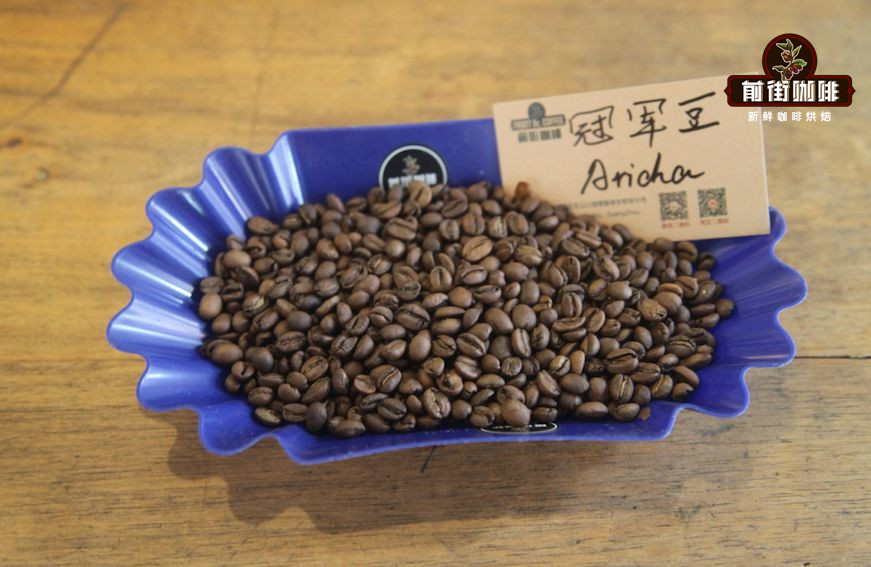
Thanks to the introduction of the washed method, Yirgacheffe leaped to become a representative of the world's specialty coffee. After the 1970s, this region was mainly washed and became Ethiopia's hottest washed bean producing region. However, in the 21st century, natural processing techniques gradually improved, frequently producing stunning natural beans. This is thanks to Yirgacheffe coffee trader Baghisi—he missed the flavor of traditional natural beans and could not bear to see natural techniques replaced by washed processing, so he improved the natural bean processing method, enhanced the flavor, reduced the proportion of defects, and launched three extremely famous Yirgacheffe natural beans: Idido Misty Valley, Beloya, and Aricha.
In addition to washed and natural, there are also other processing methods such as red honey and anaerobic. Front Street Coffee previously cupped a Front Street red honey Yirgacheffe. On the basis of retaining the original basic flavor, it added layering, with a mouthfeel lighter than Front Street natural Yirgacheffe and heavier than Front Street washed Yirgacheffe.
2. Sidamo (specialty producing region): altitude 1,400~2,200 meters (garden coffee system)
Finely washed or natural Sidamo coffee usually has obvious sweetness, and its strawberry and berry flavors are deeply loved by many coffee enthusiasts, with a status no less than Yirgacheffe. Sidamo and Yirgacheffe have similar varieties, with medium-sized beans, but there are also small-seeded dwarf plants, which farmers often sell separately. At present, the most closely watched Sidamo coffee bean is none other than Front Street natural Huakui—it made a stunning debut after appearing in Ethiopia's green bean competition TOH in 2017, breaking Geisha's monopoly in brewing competitions and becoming currently the only coffee able to compete with it. Huakui comes from Hambela, a sub-region under the Guji producing region, and Guji, like Yirgacheffe, originally belonged to Sidamo and later became independent because of its outstanding flavor, though when Guji is mentioned now, it is still generally默认 regarded as part of the Sidamo producing region.
3. Limu (specialty producing region): altitude 1,200~2000 meters (garden, forest, semi-forest, and plantation coffee systems)
Production is relatively small, mainly exported to European and American markets, and not easy to buy in Taiwan, but it is very popular in Europe and the United States. It has three processing methods: washed, natural, and semi-washed. Limu's viscosity is noticeably lower, and its expression of floral and citrus notes is also inferior to Yirgacheffe and Sidamo, but it has an extra grassy aroma and brown sugar aroma, with bright fruit acidity.
4. Harrar (specialty producing region): altitude 1,500~2400 meters (garden coffee system)
Harrar exclusively uses natural processing. It is an ancient eastern city, but coffee is not grown in the urban area. So-called Harrar coffee refers to coffee produced in the Hararghe highlands of the greater Harrar area. Because annual rainfall is only 1,000 millimeters, all use natural processing. In terms of flavor, Harrar coffee is known for its special "mixed aroma," a typical example of ancient early flavors, and is called the "twin star" together with Yirgacheffe.
If Harrar's defective beans can be sorted cleanly, it is easy to taste berry aroma, with a slightly pleasant fermented mixed aroma. However, due to various factors, Harrar coffee quality has been unstable in recent years, and the grading system is not reliable enough, so when purchasing, be sure to cup or taste it.
5. Gimma (large-scale commercial bean producing region): altitude 1,350–1,850 meters (forest/semi-forest system)
Gimma is the capital of the Kaffa forest or Kaffa Province. Its English spelling is very inconsistent; on maps it is mostly Jimma, but on coffee burlap bags it is spelled Djimmah. This is Ethiopia's largest coffee-producing region, accounting for one third of exports.
The Kaffa forest is known for primitive wild varieties. Gimma is the collection and distribution center for Kaffa in this region. Farmers habitually transport coffee picked in forest areas to Gimma, then mix hundreds or thousands of varieties together and sell them as commercial beans, causing the aroma of many delicious varieties to be obscured. Although washed specialty Gimma does not have the citrus aroma and floral charm of Yirgacheffe, its flavor profile is also quite clean and transparent, similar to Central American specialty coffee. Commercial-grade specialty Gimma is very common in Taiwan, and with luck one can also buy inexpensive and good-quality Gimma, in which one can taste the fresh aroma of lemon peel, not inferior to Sidamo. Overall, Gimma has better flavor than Brazil's large-scale commercial bean Santos, and is a good mid-to-low-price blend bean.
6. Illubabor (large-scale commercial bean producing region): altitude 1,350–1,850 (forest/semi-forest coffee system)
This region is located in western Ethiopia, right on the border with Sudan, and is the westernmost producing region. Its coffee gene complexity is second only to the Kaffa forest. The beans are noticeably larger than Yirgacheffe and Sidamo, with lower fruit acidity, good viscosity, and balanced flavor. Coffee from here is mostly transported to Gimma for blending and is rarely sold independently.
7. Gimbi, Lekempti (large-scale commercial bean producing region): altitude 1,500–1,800 (forest/semi-forest coffee system)
This region has natural and washed beans. The beans resemble Harrar's longberry beans, and there are also a small amount of specialty-grade beans quite popular in Europe and the United States. Most are praised as the "poor man's Harrar," with fruit acidity and fruitiness superior to Illubabor and a bright flavor.
8. Tepi, Bebeka (large-scale commercial bean producing region): altitude 500–1,900 meters (garden/forest/semi-forest coffee system)
The two producing regions are very close. Tepi is north of Bebeka and has coffee plantations under corporate management. In recent years, the garden system has been promoted to increase farmers' income, with annual output of about 3,000 tons. Both places have wild coffee, output is not high, and the flavor is quite different from Harrar and Yirgacheffe. Low fruit acidity is the greatest feature, making it suitable for blend beans. It has natural and washed types.
9. Lake Tana (alternative producing region): altitude 1,840 meters (forest system)
Monastery coffee. The surrounding forest coffee has extremely small annual output, less than 10 tons, so it actually cannot be called a producing region. The Orthodox monasteries, churches, religious murals, and myths standing around the lake area have created the world's most "divine" coffee. European monks opened up the local coffee planting industry, which was later changed to operation by coffee communities or cooperatives in villages around the small town. There are no specialized plantations here; coffee trees are naturally scattered in forests and gardens. During harvest season, the Ethiopian coffee trading company goes to the town to purchase coffee beans collected by farmers.
Red Cherry Project
The so-called Red Cherry actually refers to the Red Cherry Project, jointly initiated by Dutch trader Trabocca and local farmers, aiming to improve the quality of small-scale farms. When picking coffee cherries, not only must fully red, highly mature fruits be picked, but they must also be harvested entirely by hand, yet this is only the most basic requirement. There are also corresponding requirements for coffee bean processing methods.
The Red Cherry Project is also a reinforcing practice, making farms put more thought into the process of screening and sorting beans. These coffees are also relatively higher in price. The main implementing producing regions include Yirgacheffe, Sidamo, Bonga Forest, Lekempti, Kembata, Illubabor, Harrar, and Limu. These are all producing regions with unique flavors that can fully display the flavor of Ethiopian coffee. But Front Street Coffee believes that in fact today's specialty coffee all operates coffee production in this Red Cherry Project manner; it is just that the unique term Red Cherry coffee still belongs exclusively to Ethiopia, and the burlap bags of Red Cherry coffee will be printed with Trabocca.
Ethiopian Coffee Varieties
Ethiopia has close to 2,000 recorded coffee bean varieties (of which 1,927 are native varieties and 128 are introduced foreign varieties). Ethiopian coffee is not cultivated by distinguishing varieties, which causes coffee beans to be mixed together at harvest, with visibly uneven bean sizes. In coffee variety labeling, it is usually mainly described as "local native species."
However, Front Street Coffee found that this year's COE held in Ethiopia no longer described coffee varieties as "local native species," and numbers such as 74158 and 74110 appeared, as well as KURUME and TYPICA. Front Street Coffee photographed the 22nd-place coffee bean, whose variety is Typica, located in the West Arsi producing region of Sidamo. At present, this producing region is far less famous than Yirgacheffe and Guji, but among the 28 beans that won awards in this year's COE, 9 came from this producing region.
Ethiopian Coffee Bean Processing Methods
Ethiopia's coffee processing methods are mainly natural and washed, with washed accounting for a relatively large proportion. The biggest difference between washed and natural lies in the role of the coffee pulp. After screening out ripe coffee cherries, the washed processing method removes the skin and pulp for washed fermentation, and finally dries them to 12% moisture content. The natural processing method omits the washed fermentation process and directly dries the screened ripe coffee cherries until the moisture content is 12%, and finally removes the skin and pulp.
If it is your first time trying Ethiopian coffee beans, Front Street Coffee would suggest first trying washed coffee beans, because washed coffee beans can better reflect the most original flavor of Ethiopian coffee beans—clear acidity and elegant floral and fruity aromas; natural coffee beans will add aromatic intensity and sweetness on top of this.
Ethiopian Coffee Bean Grading
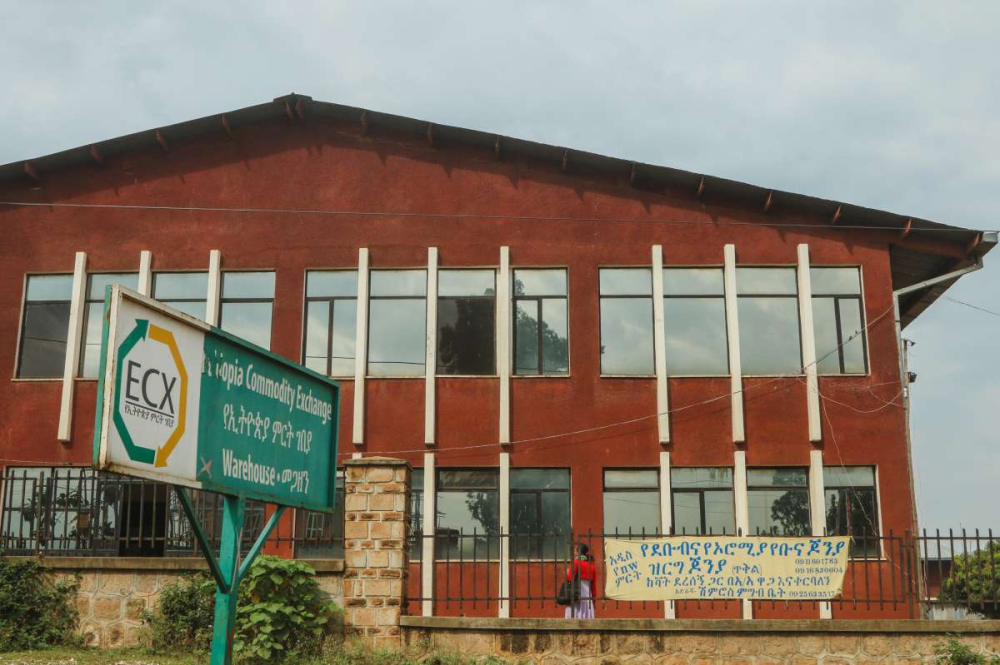
ECX (Ethiopian Commodity Exchange) has made grading definitions for the defect rate of coffee beans, namely G1 and G2. G1 means no more than 3 defective beans per 300g of green beans, and G2 means 4-12 defective beans per 300g of green beans. In addition, there are also grading definitions for flavor evaluation, using the SCA Specialty Coffee Association of America cupping method to evaluate the quality of G1 and G2 grade coffee beans. A score of 85 or above is rated Q1, and 80-84.75 is rated Q2.
Ethiopian Yirgacheffe Coffee Beans Front Street Yirgacheffe Coffee Roasting Recommendations
The most iconic flavor of Yirgacheffe coffee is its refined acidity and rich floral and fruity aromas. In order to highlight this flavor to the greatest extent, Front Street Coffee believes that light roasting is most suitable. Whether natural-processed or washed-processed Yirgacheffe coffee beans, light roasting can maximize their special flavor. However, there are now also Yirgacheffe coffees on the market roasted at medium or above, which slightly weaken acidity and enhance body. It depends on personal preference when choosing, but the mainstream is still mainly light-roasted Yirgacheffe coffee.

Front Street Washed Yirgacheffe Coffee Bean Roast Curve
Front Street Natural Yirgacheffe Coffee Bean Roast Curve
Yirgacheffe Coffee Brewing Recommendations
Front Street Coffee recommends using a V60 dripper for light-roasted coffee beans, with a water temperature of about 90°C, a water-to-coffee ratio of 1:15, a dose of 15g, and a grind size like fine granulated sugar (80% passing through China's No. 20 standard sieve).
Front Street Coffee uses staged extraction. The amount of water for blooming is twice the coffee grounds, that is, 30 grams of water for 30 seconds of blooming. Pour in a small stream in circles to 125 grams, then pause. When the water level drops and is about to expose the coffee bed, continue pouring to 225 grams and stop. The total extraction time is 2 minutes.
Flavor Description
Front Street Natural Yirgacheffe Coffee: It has a faint fermented wine aroma, rich intensity in the mouth, with citrus aroma, honey sweetness, and cocoa flavor, and a lasting finish.
Front Street Washed Yirgacheffe Coffee: The acidity is brighter and more lively, citric acid, citrus aroma, a fresh and fragrant mouthfeel, with some black tea sensation in the latter part.
Overall, both natural Yirgacheffe coffee and washed Yirgacheffe coffee have fruity acidity and an obvious fruit juice sensation, similar to fruits such as lemon and citrus.
Ethiopian Sidamo Coffee Beans Front Street Sidamo Coffee Roasting Recommendations In fact, the roasting approach for Sidamo coffee is similar to that for Yirgacheffe coffee; both need to highlight its bright berry tone. Front Street Coffee believes that light roasting is most suitable. The following uses Front Street Sidamo Natural Huakui 4.0 for demonstration.

Front Street Sidamo Huakui 4.0 Coffee Bean Roast Curve
Sidamo Coffee Brewing Recommendations Front Street Coffee recommends using a V60 dripper for light-roasted coffee beans, with a water temperature of about 90°C, a water-to-coffee ratio of 1:15, a dose of 15g, and a grind size like fine granulated sugar (80% passing through China's No. 20 standard sieve). Perhaps sharp-eyed readers will notice that the grind size for this Sidamo coffee bean is different from the grind size for Yirgacheffe mentioned earlier. The grind size of each coffee bean will differ because of factors such as variety, altitude, processing method, and roasting. Therefore, whenever Front Street Coffee receives a newly roasted bean, it will first sift it once to determine the appropriate pour-over grind.
Front Street Coffee uses staged extraction. The amount of water for blooming is twice the coffee grounds, that is, 30 grams of water for 30 seconds of blooming. Pour in a small stream in circles to 125 grams, then pause. When the water level drops and is about to expose the coffee bed, continue pouring to 225 grams and stop. The total extraction time is 2 minutes.
Flavor Description
Citrus acidity, full berry juice sensation, strawberry, cream, lemon black tea tea-like sensation, lasting sweetness.
The above content is compiled by CoffeeHunters, a coffee news website.


