







How to Make Coffee with a Coffee Machine: Standard Espresso Volume and Why Extraction Goes Wrong
A traditional single shot of espresso is about 1 ounce, roughly 20 to 30 ml, pulled in 20 to 30 seconds from about 7 grams of coffee at around 92°C and 9 bar, topped with crema. Many cafes now dose by weight instead, because crema varies in density and volume from cup to cup and makes milliliters an unreliable measure.
One working example uses 19 grams of coffee at a 1:2 ratio to yield 38 grams of liquid in 28 seconds, based on two shots as a single serving. Extraction problems such as crema clumping, tiger striping, and one-sided flow trace back to dose, water temperature, pressure, grind, and tamping, so checking americano coffee proportions and similar ratios helps keep results repeatable at home.
As the base for flavored coffees like mocha, cappuccino, and latte, the extraction standards for espresso have always been a topic of interest for coffee enthusiasts. How many milliliters should a qualified espresso actually be? How should phenomena like crema clumping, tiger striping, and one-sided extraction during the process be understood and addressed? Starting from Front Street's output standards, this article systematically organizes the definition of espresso, international technical specifications, and common issues from dose, water temperature, and pressure to grinding and tamping, helping readers build a clear framework for understanding extraction and replicate rich, balanced espresso at home.
For friends who regularly drink Italian-style coffee, espresso is the common foundation of beverages like mocha, cappuccino, and latte—they are simply made by blending milk and espresso in different proportions. So, how many milliliters should an espresso extract to meet the standard? Next, Front Street will explain common extraction questions surrounding espresso.
What is espresso
Espresso, originating from Italy, is both a classic local coffee beverage and the base for many Italian-style coffees. It relies on high pressure to complete extraction in a short time, and the volume of a traditional single shot is about 1 ounce.
According to internationally accepted technical standards: take about 7 grams of freshly ground coffee powder, use hot water at around 92°C and a pressure of about 9 Bar, and extract a cup of 20–30 ml of coffee liquid within 20–30 seconds, with the surface covered by a layer of crema.
With the spread of the specialty coffee concept, new theories keep emerging, and because independent cafes have different styles, espresso extraction schemes also show subtle differences. Taking Front Street's standard output as an example, one espresso is based on 2 shots (that is, 1 serving of espresso), using 19 g of coffee powder, extracted at a ratio of 1:2 to obtain 38 g of espresso liquid, taking 28 seconds.
Why do most domestic cafes today no longer measure in milliliters, but instead use grams? This is related to density. A cup of espresso consists of dark coffee liquid and crema floating on top, while crema has low density and large volume, and the crema state of each cup is difficult to keep consistent, so using weight as the unit of measurement is clearly more accurate.
What coffee beans should be used to make espresso with richer crema?
In fact, when making espresso, in addition to controlling various parameters, Front Street believes that choosing the right coffee beans is equally key, because they are the fundamental factor determining whether the coffee tastes good.
If you want to replicate the same espresso as in coffee shops at home, Front Street Classic Espresso Blend is recommended. This recipe is composed of three origins: Brazil, Indonesia, and Vietnam, combining the caramel aroma of American coffee with the wild tone of Asian coffee. To maximize the rich aroma of the coffee and allow everyone to easily extract abundant, dense crema, Front Street Coffee uses a dark roast. It is very suitable whether making an Americano diluted with water or a latte paired with milk. You can place an order at the Front Street Taobao store or the Front Street Tmall flagship store.
How to understand under-extraction and over-extraction of espresso?
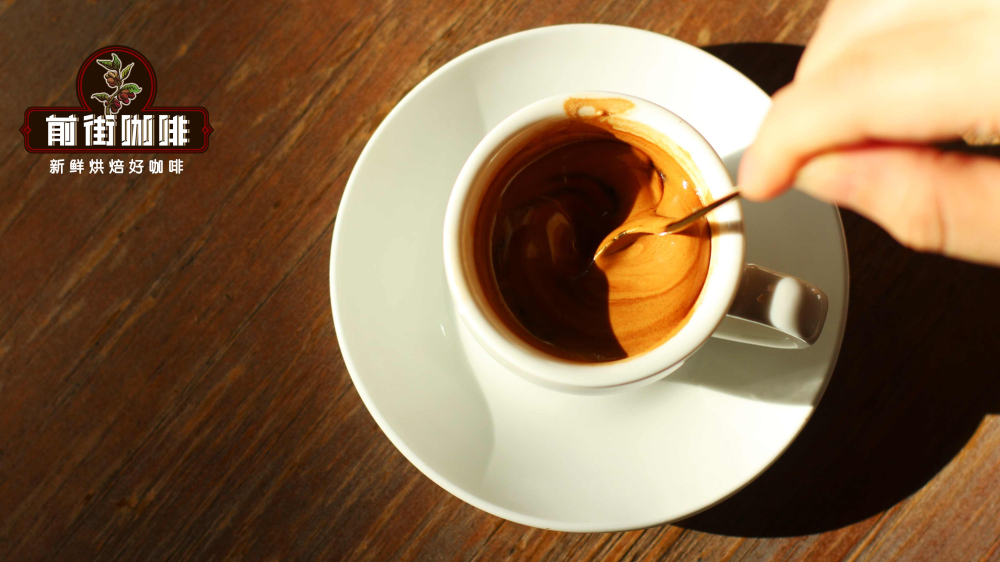
Over-extraction often shows as the coffee liquid and crema being dark in color, sometimes with obvious large bubbles floating on the surface, and the extraction time is usually too long (such as more than 1 minute), with the first drop of coffee liquid appearing only after more than 10 seconds. There are many causes of over-extraction, common ones include: coffee powder ground too fine, water temperature too high, extraction pressure too high, tamping force too strong, etc. When tasting, the flavor often carries burnt bitterness and astringency.
Under-extraction is the opposite of over-extraction, usually meaning that a large amount of unextracted aromatic molecules still remain in the coffee powder, but the preset extraction time has already ended, which is generally called an extraction yield below 18%. When under-extracted, the coffee liquid may appear lighter yellow and lack crema, and the extraction time is often too short (such as completing in 15 seconds). The coffee pours out in large amounts like water under pressure, rather than the viscous flow like honey during normal extraction. These are all signs of under-extraction.
In addition to these theoretical issues, some practical situations are also often encountered when extracting espresso, for example:
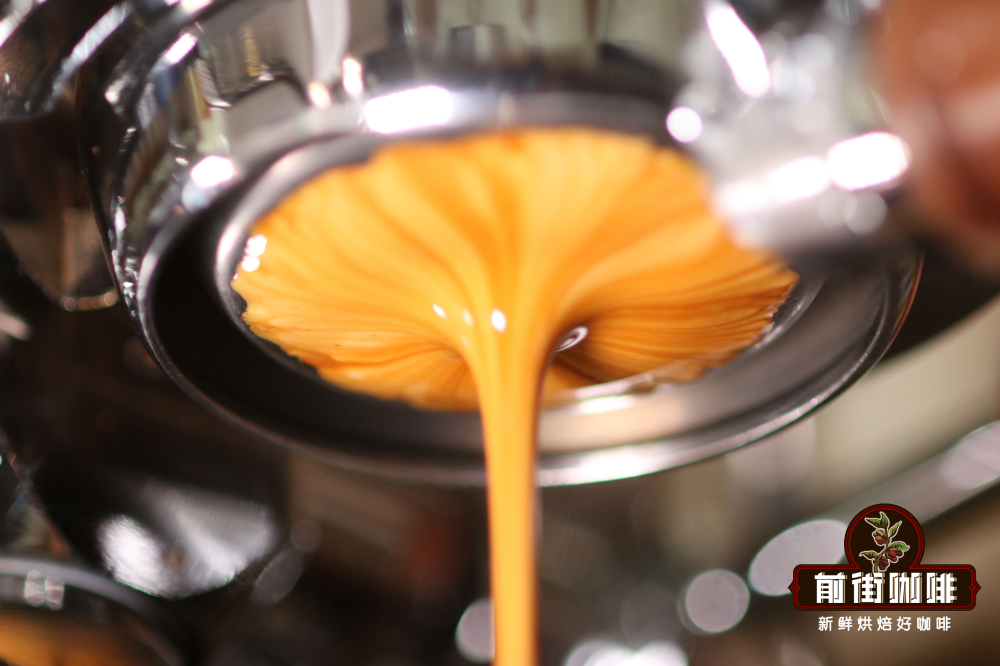
When using a double-spout portafilter to extract espresso, why does the coffee liquid always drip from one side first?
There are three main reasons. First, confirm whether the group head's dispersion screen is clogged with coffee residue, and observe whether the water flow from the group head is evenly distributed. If the water flow is found to偏向 one side, then the group head and dispersion screen need to be cleaned.
Second, check whether the tamping is level. If one side of the puck is high and the other low, water will penetrate too quickly through the lower side, causing the liquid to flow out from one side first.
Third, observe whether the coffee machine or table is level with the ground. In many cases, the first two situations do not exist; instead, the coffee machine or table is uneven, causing the body to tilt, so the liquid flows out from one side first.
What causes crema clumping?
The production of crema is caused by the combination of air and soluble fats in coffee under high temperature and high pressure during brewing. If the coffee beans are too fresh and contain too much internal gas, the crema will be too rich (thick). Moreover, overly fresh beans are very unstable, and the crema produced is also very rough, and after sitting for a while it will coagulate and clump.
So if crema clumping is observed, it is very likely that the coffee beans are too fresh. The best solution is to store them for a few more days and use them after the resting period has passed.
Is tiger-striped crema on the surface of espresso normal?
Tiger-striped crema refers to crema with dark spots on the surface, looking like tiger stripes. In fact, the dark spots on the crema are some very fine particles. The causes may be too many fines produced by the grinder, the portafilter basket holes becoming coarser, or the coffee machine's extraction pressure being too high. Also, coarse grinding plus heavy tamping makes fines easy to move downward and pass through the filter basket into the espresso cup, causing dark tiger stripes to appear on the surface of the crema and making the crema color look darker.
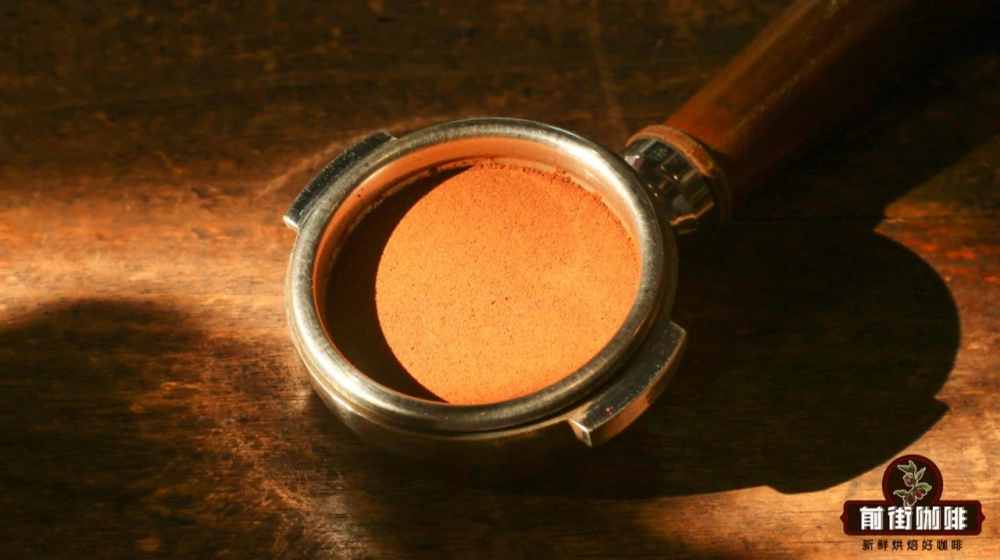
In fact, whether there are tiger stripes does not have much effect on the flavor of espresso. Espresso with tiger stripes has a fuller body, but if there are too many fines, it can also have the opposite effect and create a rough mouthfeel.
The above content is compiled by CoffeeHunters, a coffee news website.


