








What Makes Antigua Coffee and Guatemala's Eight Regions Distinct?
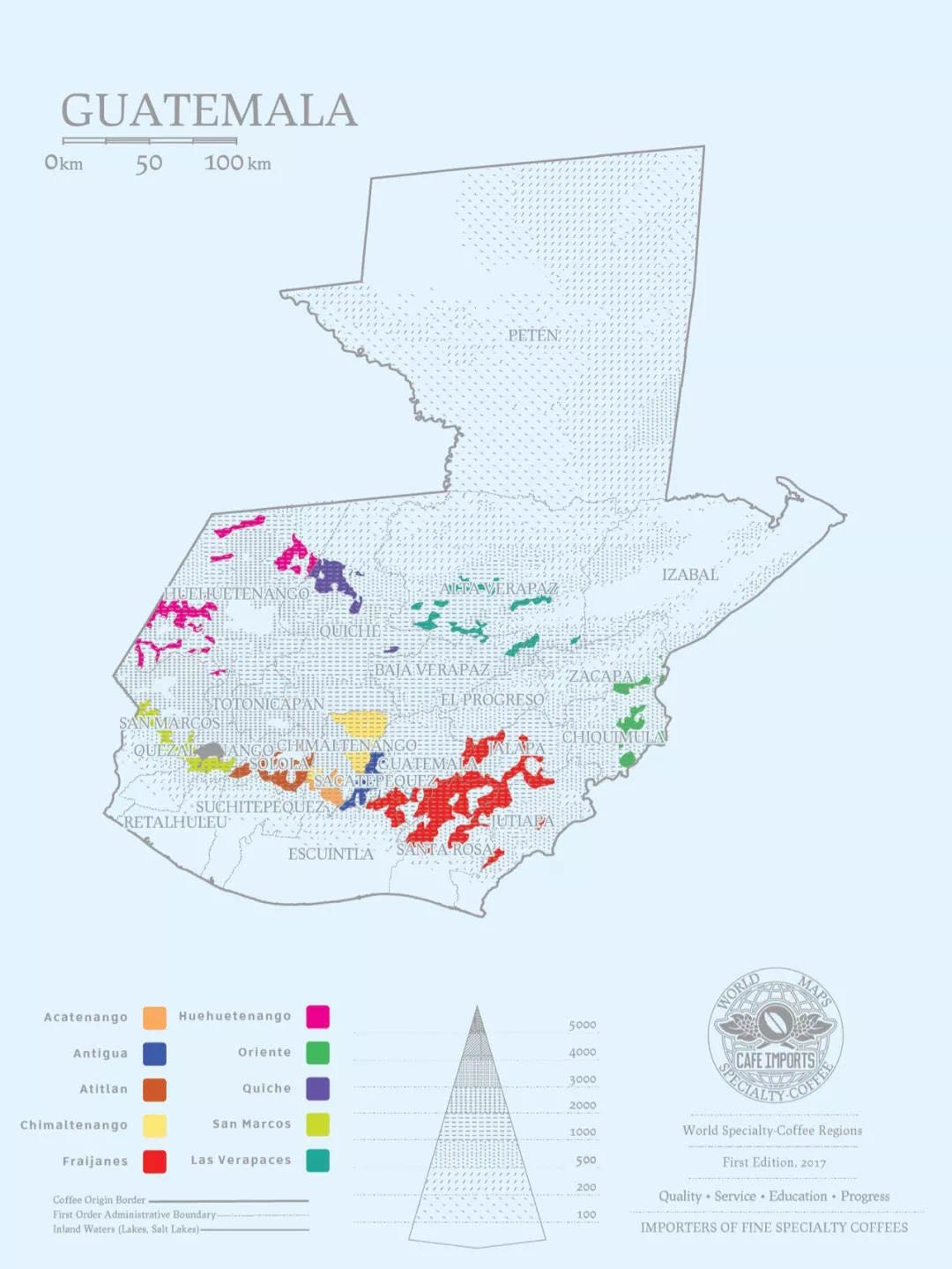
Guatemala grows coffee on high-altitude volcanic terrain, mostly around 1,700 meters, which produces hard beans with layered flavor and a charcoal-roasted aroma. The country has eight major regions, including Antigua, Acatenango Valley, Rainforest Coban, Volcanic San Marco, Traditional Atitlan, Highland Huehue, Fraijanes Plateau, and New Oriente, each with its own cup profile.
Antigua coffee, grown in fertile volcanic soil with low humidity, ample sun, and cool nights, is nicknamed "cigarette coffee" for its smoky, chocolate-like notes. The washed coffee process dominates Guatemalan production, and beans are graded by hardness. Coffee arrived in Guatemala in 1750 via Jesuit priests, and German colonists expanded the industry in the late 19th century, with output now centered in the south.
Guatemala is a major coffee-producing country in Central America. Thanks to its high-altitude volcanic terrain and fertile soil, it cultivates top-quality coffee beans that are hard in texture, rich in flavor, and carry a distinctive charcoal-roasted aroma. This article systematically reviews the historical origins of Guatemalan coffee, the differences between washed and natural processing methods, and introduces one by one the flavor characteristics and altitude information of eight major producing regions: Antigua, Acatenango Valley, Rainforest Coban, Volcanic San Marco, Traditional Atitlan, Highland Huehue, Fraijanes Plateau, and New Oriente. At the same time, Front Street Coffee presents detailed profiles of two representative beans, Guatemala Antigua La Flor del Cafe and Huehuetenango, for coffee lovers to reference when purchasing.
When it comes to coffee from Central America, Front Street firmly believes that many seasoned coffee enthusiasts have tasted Guatemalan beans. The coffee of this country is known for being mellow and rich, with layered complexity and a tobacco-like note. It is smooth on the palate, and within its aromatic richness there is a faint charcoal-roasted flavor, as if the sweetness of chocolate intertwines with a smoky aroma. Because of this distinctive charcoal-roasted fragrance, Antigua coffee has also earned the nickname "cigarette coffee."
Guatemala's coffee ranks among the world's finest, and Front Street believes this is inseparable from its high-altitude volcanic terrain. Volcanic soil is extremely fertile, and altitudes are generally around 1,700 meters, making it possible to cultivate extremely hard coffee beans. Generally speaking, the harder the bean, the richer the flavor compounds it contains.
According to materials reviewed by Front Street, coffee was truly introduced to Guatemala in 1750 by Jesuit priests, and in the late 19th century German colonists further promoted the development of the local coffee industry. Today, coffee production is mainly concentrated in southern Guatemala. Guatemala has seven major coffee-producing regions in total, and the coffee from each region has its own distinctive flavor. Overall, however, Guatemalan coffee presents a mild and mellow body, elegant aroma, and a pleasant acidity reminiscent of fruit acid, making it truly the nobility of coffee. Among them, Antigua Classic is deeply admired by coffee fans around the world. Front Street has also introduced Front Street Guatemala La Flor del Cafe coffee beans from the La Minita estate, featuring citrus, delicate floral notes, and a chocolate finish.
Guatemala's coffee processing methods are mainly washed, with natural processing as a supplement. Front Street Coffee often receives questions from customers asking what the difference is between washed and natural. You should know that even coffee beans from the same region and the same estate are divided into washed and natural processing methods. Friends who regularly buy Front Street Coffee daily beans should be deeply familiar with this.
Most of the Front Street daily bean series uses the washed processing method, because washed processing can showcase the basic flavor of a region and is also the starting point for understanding a region's flavor. Natural processing adds sweetness and fermented notes on top of the basic flavor. And Front Street Guatemala Huehuetenango coffee beans, with their unique smoky note, have become the representative of Front Street's Guatemalan daily beans.
Washed Processing Flow
1. Harvesting. After ripe coffee cherries are picked, impurities and defective beans are initially removed, and floating beans are screened out. This step is the same as in the natural method.
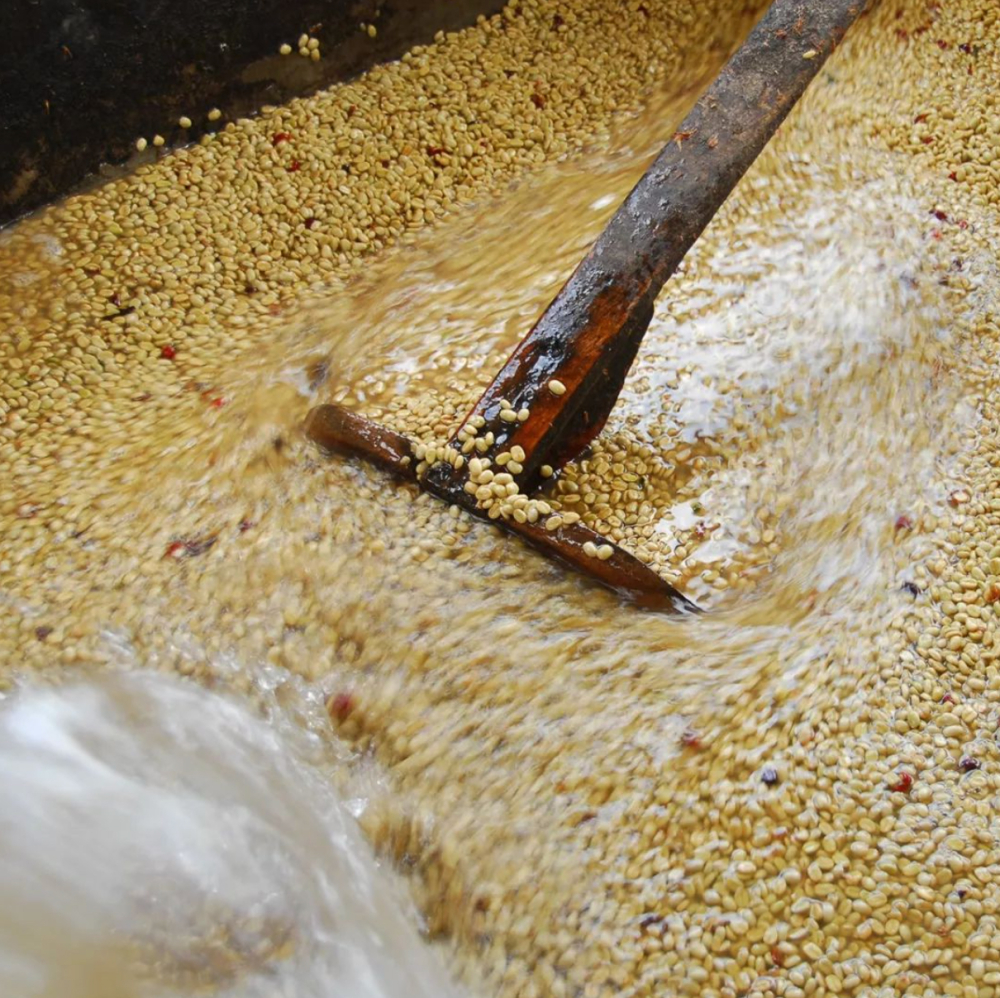
2. Pulping. Fresh cherries are sent into a pulping machine to remove the skin and pulp. Unripe cherries are screened out at this stage because their pulp is difficult to separate. After passing through the pulping machine, what remains is mucilage, parchment, and the seed.
3. Fermentation to remove mucilage. The seeds that have been pulped but still carry mucilage are moved into fermentation tanks. Although it is called the washed method, it is not actually washing away the mucilage with water, but rather using fermentation to remove the mucilage through biological decomposition. Fermentation takes about 16 to 36 hours, during which the beans need to be stirred frequently to accelerate the separation of mucilage from the seeds. Washed fermentation produces acidic substances such as citric acid, malic acid, and acetic acid. These acids penetrate the green beans, making washed beans more acidic than natural beans. After fermentation is complete, the beans are washed clean again.
4. Drying. After washing is completed, sun-drying or machine drying is likewise needed to reduce moisture content to 12%. Because the washed method has already removed the pulp, there is no need to worry about mold during drying as there is with the natural method. The dried parchment green beans are also not as hard as natural beans that still contain pulp and skin, and can be hulled to obtain green beans.
Guatemala has eight major producing regions, and each region's flavor is influenced by its different geographical distribution. Next, Front Street will tell all you coffee fans about these eight regions! Antigua
The old capital and an ancient city, close to the capital, it is the most famous of all Guatemala's coffee-producing regions, and naturally expensive, so there are also quite a few counterfeit Antigua coffee beans. The highest-priced among them are Bourbon coffee cherries grown in the volcanic soil most characteristic of Antigua. Front Street certainly would not miss such distinctive coffee cherries, and below Front Street will also bring you a Front Street Guatemala La Flor del Cafe coffee from Antigua.
Flavor: balanced acidity and sweetness.
Altitude: 1500-1700m
Acatenango Valley
Guatemala's eighth coffee-producing region. According to Front Street's understanding, it was once a supply area for Antigua in the early period and is located right next to Antigua. The valley is majestic, and the coffee-producing areas are planted along the volcanic valley. The valley can retain warm, humid air, and combined with the temperature difference between day and night, this place is very suitable for growing coffee cherries.
Flavor: good sweetness, delicate fruit acidity, and both flavor and aroma are widely loved by coffee fans.
Altitude: 1300-2900m
Rainforest Coban
This region has very heavy rainfall, is shrouded in mist and clouds year-round, has a cool climate, and its soil contains limestone and clay. Post-harvest processing often affects the quality of coffee from this region, but as long as it is handled properly, the flavor will be full and enchanting.
Flavor: good mouthfeel, accompanied by chocolate and tropical fruit flavors.
Altitude: 1300-1500m
Volcanic San Marco
The coffee level in this area fluctuates greatly, and rainfall is abundant. Once it rains, coffee cherries bloom densely, which means that sun-drying after harvest depends on luck, so the coffee quality in this region is unstable.
Flavor: obvious acidity and sweetness; properly handled coffee cherries will have a full and unique aroma.
Altitude: 1400-1800m
Traditional Atitlan
The soil of Lake Atitlan is very fertile, and the highest-altitude coffee is produced at 1,950 meters, with most extending along slopes down to the shores of Lake Atitlan, where the altitude by the lake is still 1,500m. This is also Guatemala's largest and most famous high-altitude lake area.
Flavor: rich aroma and viscous body.
Altitude: 1500-1750m
Highland Huehue
This region has the highest average altitude in Guatemala and belongs to the volcanic production areas, but the route to the capital is rugged and remote. Fortunately, dry hot winds from Mexico blow here, enabling Highland Huehue to grow coffee cherries at 2,000m.
Flavor: bright and delicate acidity, with floral notes and varied flavors.
Altitude: 1500-2000m
Fraijanes Plateau
This region belongs to the volcanic production areas, with high altitude and soil rich in pumice, which can even ignite. Its coffee flavor is of the balanced type, yet it has a more unique aroma than Antigua. Front Street believes this is probably because the region's soil characteristics and variable temperature and humidity make its coffee flavor stand out.
Flavor: unique aroma, balanced flavor, mild acidity, and a rich body.
Altitude: 1400-1800m
New Oriente
This region is close to neighboring Honduras, and its climate is similar to Coban, but some areas are hotter. New Oriente belongs to a volcanic region, yet its flavor is extremely different from other volcanic areas.
Flavor: obvious aroma, with chocolate and spice notes.
Altitude 1200-1700m
Next, Front Street will introduce to all you coffee fans all of Front Street's current Guatemalan varieties and their flavor characteristics!
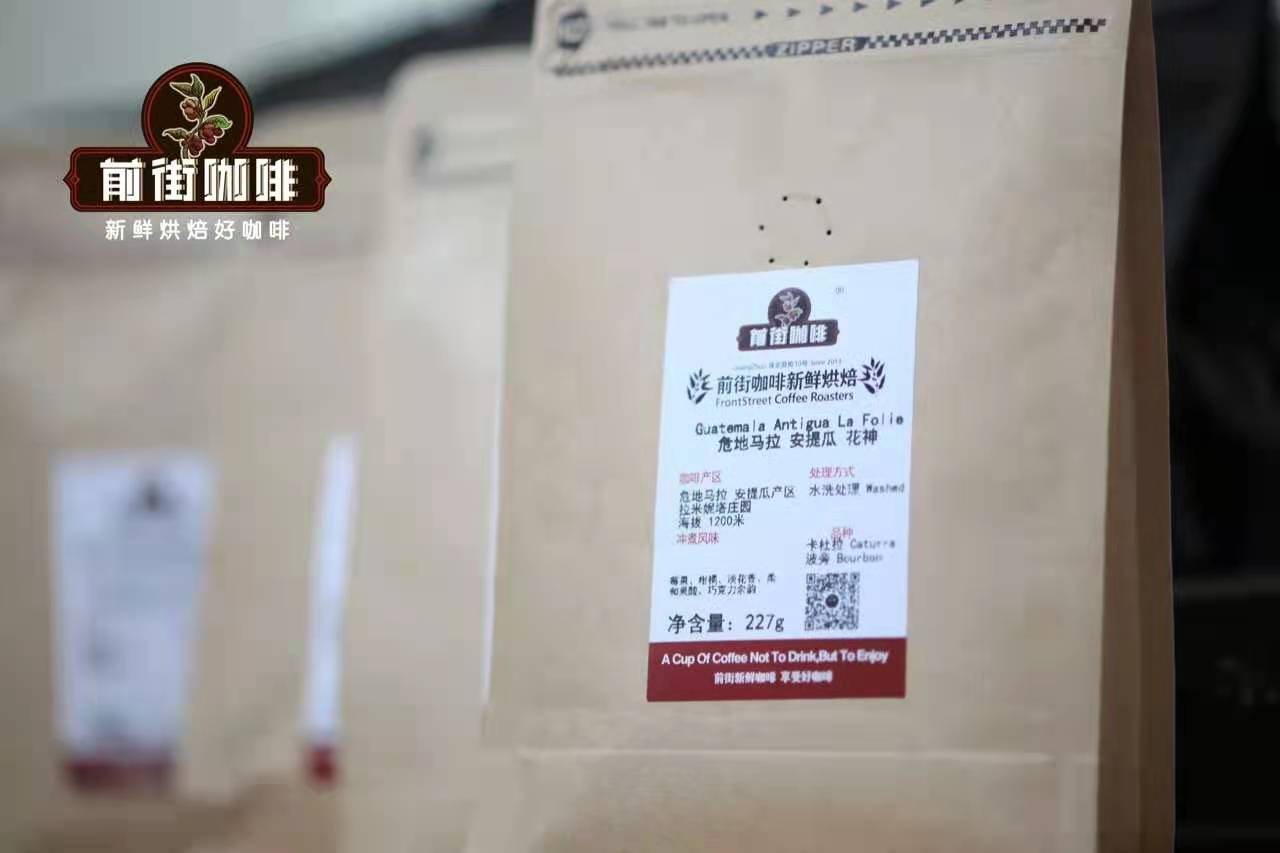
Front Street Coffee · Guatemala Antigua La Flor del Cafe Coffee Beans
Country: Guatemala
Region: Antigua
Altitude: 1200-1600m
Variety: Bourbon, Caturra, Catuai
Processing Method: Washed
Flavor: floral, fruity, mild acidity
La Flor del Cafe is one of the brand beans under La Minita, with its producing region located in Antigua, Guatemala.
According to Front Street's understanding, La Minita is famous for excellent cultivation and processing techniques as well as extremely strict quality control. With such standards, they commission Las Pastores, the largest washed processing plant in Antigua, to process the green beans, and name the coffee beans La Flor del Cafe. This is because, in addition to retaining the original regional flavor, this Front Street La Flor del Cafe coffee also carries rich floral and tea aromas. After entering the mouth, there is also the tart aroma of lime and berry notes, finally turning into a honey finish. It is precisely this excellent cleanliness and rich layering that have also become the characteristics of Front Street Guatemala La Flor del Cafe coffee.
La Minita never uses insecticides, and because the estate's geographical advantages create a climate and altitude that limit the number of pests, a small number of pests do not have much impact on the coffee trees. When the rainy season is about to end, the coffee cherries also ripen soon after. The green cherries begin to turn red, but the ripening of coffee cherries is very slow and uneven, unlike flowering, which is rapid and uniform. Therefore, harvesting must be handled more carefully, picking only fully ripe dark red cherries.
The cherries produced by a single tree may be harvested as many as 5 times depending on ripeness. The estate conducts soil tests twice a year to decide how to fertilize. La Minita estate is very careful when using products that can increase yield, and fertilizes about 3 times a year.
In addition, applying trace elements such as zinc, boron, and copper can provide more nutrients to the coffee trees and prevent disease. Such scientific cultivation and management have created the outstanding flavor expression of La Flor del Cafe coffee as well as its reputation for consistent quality over the years. Following La Minita's famous gatekeeping procedures, the entire process of La Flor del Cafe coffee from planting to packaging is strictly supervised. These complicated procedures are all to ensure that what Pastores processing plant provides is of the best quality, and to strictly control the estate's standard operating procedures.
Front Street thinks it is precisely because of such strict standards that such an excellent-flavored Front Street Guatemala La Flor del Cafe coffee is produced.
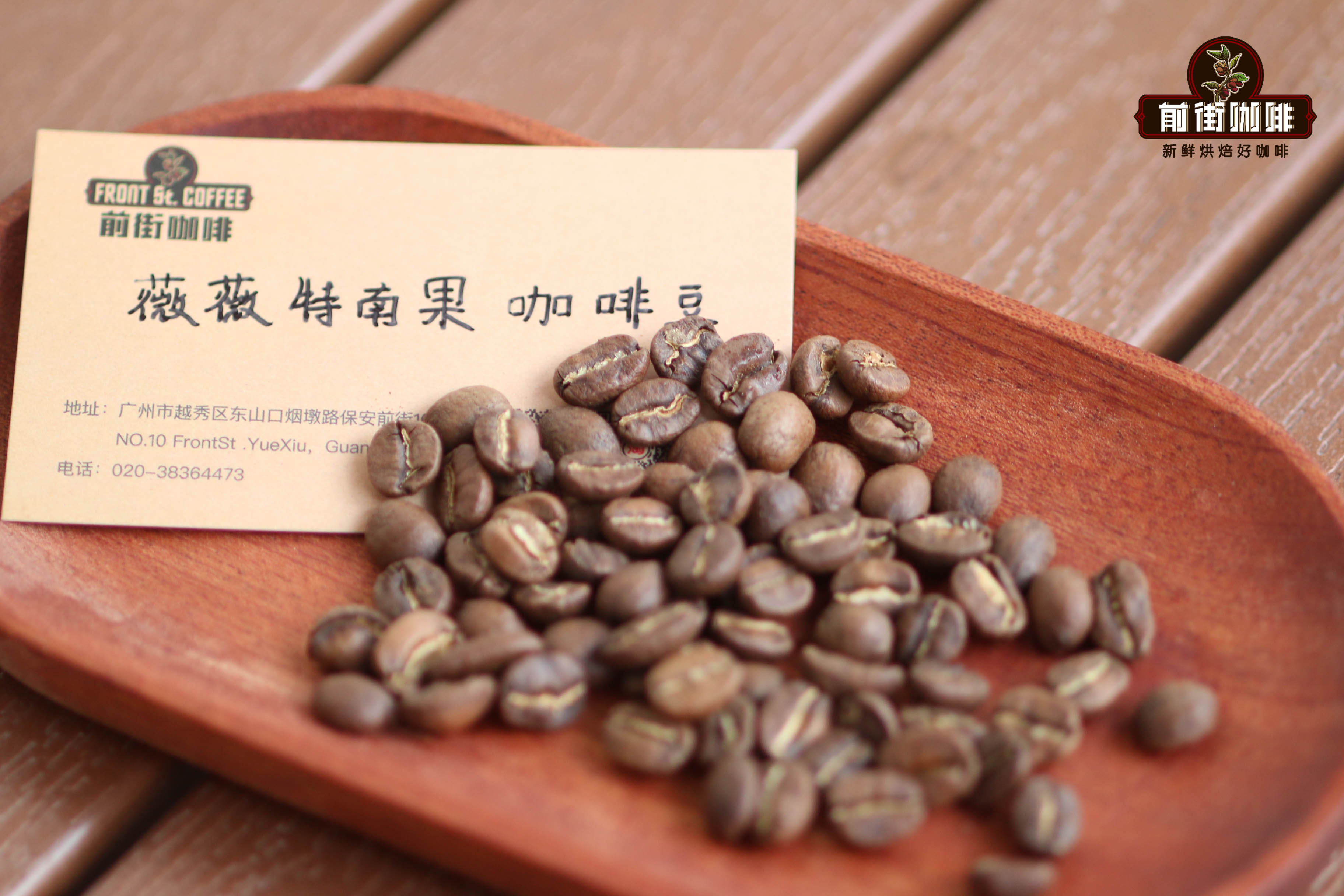
Front Street Guatemala Huehuetenango Coffee Beans
Country: Guatemala
Region: Huehuetenango
Altitude: 1500-2000m
Variety: Bourbon, Typica, Catuai
Processing Method: Washed
Flavor: citrus, berries, nuts, fruit tea
Huehuetenango is a relatively famous coffee bean-producing region in Guatemala, and its regional name is also the most intriguing. The name comes from Nahuatl and means: place of the ancients. The region has Central America's highest non-volcanic mountain range and is quite suitable for coffee cultivation. This region also relies considerably on coffee exports, so it produces quite a few astonishing coffees.
As for this Front Street Guatemala Huehuetenango coffee, Front Street believes its flavor has a lively and bright fruit acidity, grapefruit tartness, berry notes, and body. It can be called the crown of Guatemalan coffee and is the favorite of lovers of fruity acidity. The sweet-acid balance is good, with occasional lemon peel or citrus notes, so it is strongly recommended to all you coffee fans who like coffee with fruity acidity!
For professional coffee knowledge exchange and more coffee bean information, please follow Coffee Workshop (WeChat public account cafe_style)
For more specialty coffee beans, please add the private WeChat Front Street Coffee (FrontStreet Coffee), WeChat ID: kaixinguoguo0925
The above content is compiled by CoffeeHunters, a coffee news website.


