







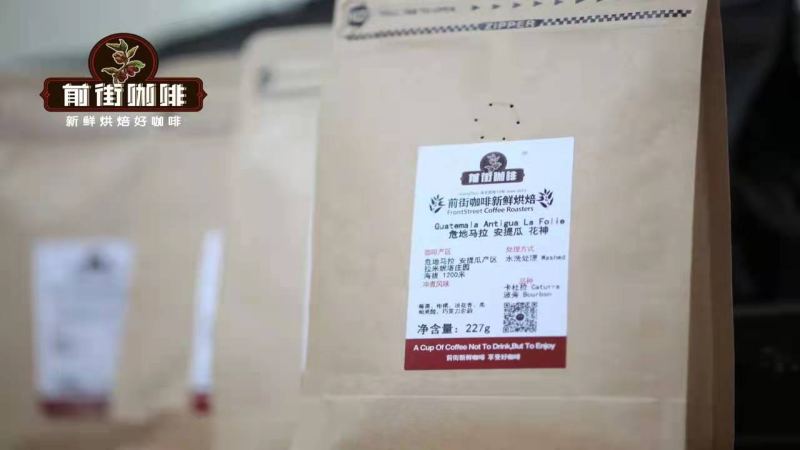
What Defines Antigua Coffee Beans From La Flor del Cafe?
Guatemala Antigua La Flor del Cafe comes from the La Minita line and is processed by the Pastores mill, which controls quality from cultivation through packaging. Grown at 1,200 to 1,600 meters in volcanic soil with low humidity, ample sun, and cool nights, the washed SHB beans use Bourbon and Caturra varieties and show floral notes, lime acidity, and a honey finish.
Antigua is one of Guatemala's seven main coffee regions, alongside Huehuetenango, Atitlan, Coban, Fraijanes, San Marcos Volcano, and Acatenango. All grow arabica in subtropical highland terrain, and Guatemala ranks ninth among coffee-producing countries. Roasting curves, cupping scores, and pour-over parameters for this bean help guide brewing at home.
The Antigua region of Guatemala, with its unique terroir of volcanic soil, low humidity, abundant sunshine, and cool nights, nurtures world-renowned specialty coffee. The Guatemala Flower of God on Front Street Coffee's bean list comes from La Minita and is processed by the Pastores mill, with strict quality control from cultivation to packaging. This article provides a comprehensive interpretation of this star bean—featuring floral notes, lime acidity, and a honey finish—from the region's background, variety composition, washed processing flow, green bean analysis, roasting curve, and cupping performance to pour-over demonstration, offering coffee enthusiasts detailed brewing and roasting references.
In the eyes of Front Street Coffee (FrontStreet Coffee), Antigua is arguably Guatemala's most representative coffee origin. Fertile volcanic soil, relatively low air humidity, ample sunshine, and cool nighttime temperatures together give Antigua coffee its distinctive quality. On Front Street's bean list, there is a well-known bean from this region—Front Street Guatemala Flower of God coffee beans. This bean belongs to a brand product line under La Minita, and La Minita Flower of God is one of its star products, processed on its behalf by the renowned local Guatemalan Pastores mill. The entire process—from green bean procurement and washing to sun-drying—is carried out under La Minita's strict supervision according to standards, with every step from cultivation to packaging tightly controlled, all to ensure that coffee produced by the Pastores mill consistently maintains the highest quality.
Front Street Guatemala Antigua La Minita Flower of God
Region: Antigua Region
Altitude: 1200-1600m
Company: La Minita
Varieties: Bourbon, Caturra
Processing Method: Washed Processing
Grade: SHB
Guatemala Introduction
Guatemala is located in the Central American isthmus, where volcanic activity has formed numerous high mountains and plateaus, producing high-quality Central American high-altitude strictly hard coffee beans and ranking ninth among global coffee-producing countries. The country's coffee cultivation is mainly concentrated in seven major regions: Antigua, Huehuetenango, Atitlán, Cobán, Fraijanes, San Marcos Volcano, and Acatenango. All seven of Guatemala's major regions grow Arabica varieties, all located in subtropical highland terrain with abundant and evenly distributed rainfall and fertile volcanic ash soil, providing uniquely favorable natural conditions for coffee cultivation.
Each region has its own distinctive flavor; high-quality beans feature bright acidity and fruity notes with a smooth mouthfeel, ranking among the world's top coffees and suitable for drinking as single-origin. The Antigua region is located in the opographically mountain range that runs through Guatemala, with the entire area centered on the Madre plateau. It is precisely the region's unique natural conditions that have made Antigua Guatemala's most renowned coffee-producing region.
Antigua Origin
The Front Street Guatemala Flower of God mentioned earlier belongs to the La Minita brand bean series, with its origin located in Antigua City, Guatemala. This highland is surrounded by active volcanoes and reaches an altitude of 1850 meters, making it the country's most awarded and best-known coffee region.
Antigua receives relatively little summer rainfall, and winter occasionally brings frost due to severe cold. On climate conditions alone, this is actually not favorable for coffee tree growth. Fortunately, the region lies in an active volcanic belt; the pumice produced after volcanic eruptions falls into the soil and, after cooling, forms a large number of fine pore structures with excellent water retention. In addition, many shade trees are planted on the estates, protecting the coffee trees from cold damage in winter. These measures to overcome unfavorable conditions, combined with significant day-night temperature differences, shape Antigua's unique microclimate, giving local coffee beans a faint smoky note and rich fruity aroma.
La Minita is renowned in the industry for excellent cultivation techniques, processing methods, and stringent quality control standards. Using these standards, they commissioned Las Pastores, Antigua's largest washing processing plant, to process green beans and named the product Flower of God. In addition to retaining the region's original flavor characteristics, the dry aroma of Front Street Guatemala Flower of God presents intense floral and tea notes; on the palate, it begins with lime acidity and berry flavors, then transitions into a honey-like finish. Outstanding cleanliness and rich layering are precisely the signature characteristics of this Front Street Antigua Flower of God.
La Minita estate insists on not using insecticides. Thanks to the climate and altitude conditions formed by its geographical environment, pest populations are naturally suppressed, and a small number of pests is not enough to pose a significant threat to coffee trees. As the rainy season approaches its end, the coffee fruit then enters its ripening period, with green fruit gradually turning red. However, the fruit ripening process is extremely slow and uneven, unlike flowering, which is rapid and uniform, so harvesting must be especially careful, picking only fully ripe dark red fruit. Due to differences in ripeness, fruit on the same tree may be harvested up to five times. La Minita conducts two rounds of soil testing each year to determine its fertilization plan. La Minita is very cautious when using yield-enhancing products, fertilizing about three times a year.
In addition, applying trace elements such as zinc, boron, and copper can supplement more nutrients for coffee trees and prevent diseases. This scientific cultivation management has created Flower of God coffee's outstanding flavor performance and its consistently high-quality reputation over the years. According to La Minita's famous control process, every step of Flower of God coffee from cultivation to packaging is strictly supervised. These elaborate procedures are designed to ensure that products provided by the Pastores processing plant are of the highest quality and to tightly control the estate's standard operating procedures. The Antigua region itself is the most prestigious of Guatemala's seven major regions; its high altitude, unique volcanic soil, and shade cultivation give coffee beans from the Antigua area a distinctive regional flavor.
Washed Processing Method
This batch of Front Street Guatemala Flower of God coffee beans purchased by Front Street Coffee (FrontStreet Coffee) uses the washed processing method. The specific steps are as follows.
1. Removing floating beans: Pour the coffee beans into a large water tank. Underdeveloped, defective beans will float on the surface, while mature, plump fruit sinks to the bottom. At this point, scoop out the floating beans, completing this step.
2. Removing peel and pulp: Through a pulping machine, remove the outer peel and pulp of the coffee fruit, leaving the mucilage, parchment, and silver skin.
3. Fermentation: This step aims to remove mucilage through biological processing. Place the coffee fruit processed by the pulping machine into a fermentation tank and let it sit for 16 to 36 hours; fermentation bacteria will break down the mucilage.
4. Washing: After fermentation is complete and the mucilage removed, because fermentation bacteria and impurities still remain on the coffee beans, they need to be washed again. To achieve a cleaning effect, this step consumes a large amount of clean water.
5. Drying and removing parchment and silver skin: Dry the coffee fruit in the sun until the moisture content drops to 10% to 14%. Then use a hulling machine to remove the remaining parchment and silver skin, completing the processing.
05 | Green Bean Analysis
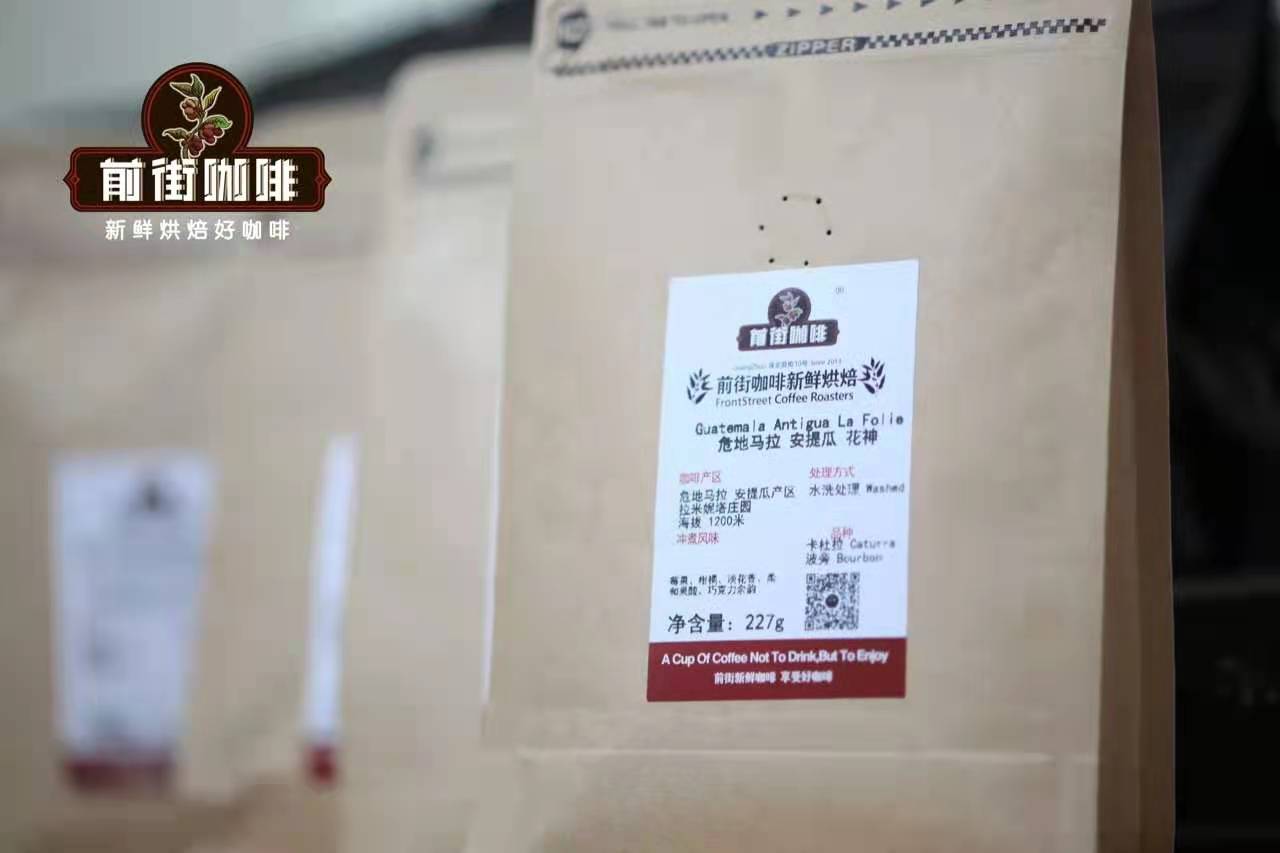
The varieties of this batch of Front Street Guatemala Flower of God coffee purchased by Front Street Coffee (FrontStreet Coffee) are Bourbon and Caturra. Bourbon is a natural mutation of Typica and, like Typica, is an old and high-quality variety; its bean shape is slightly smaller and rounder than Typica. Caturra is a natural mutation of Bourbon, with a fresh lemon-citrus acidity on the palate and slightly less sweetness than Typica and Bourbon.
06 | Roasting Analysis
07 | Cupping Flavor
This Front Street Guatemala Flower of God coffee bean has round green beans, a greenish-yellow color, good uniformity, and medium moisture content. Front Street Coffee (FrontStreet Coffee) sets its roasting target at medium roast, preserving bright acidity on one hand to showcase floral and fruity aromas, while enhancing richness and balance on the other.
08 | Brewing Demonstration
Professional coffee knowledge exchange. For more coffee bean information, please follow Coffee Workshop (WeChat public account: cafe_style)
For more specialty coffee beans, please add the private WeChat of Front Street Coffee (FrontStreet Coffee), WeChat ID: kaixinguoguo0925
The above content is compiled by CoffeeHunters, a coffee news website.


