







What Makes Golden Mandheling Coffee Taste Different?
Golden Mandheling is the specialty grade of Sumatra Mandheling, an Arabica coffee from northern Sumatra with a full body, dark chocolate and herbal spice notes, and a clean, transparent cup. It is distinct from Lintong, Tiger and Aged Mandheling, which differ by region, processing and aging rather than by variety alone.
The name Mandheling comes from a mispronunciation of the Mandailing ethnic group, and in Indonesia the term covers Arabica grown across northern Sumatra. Output centers on Aceh around Lake Tawar and Lintong near Lake Toba. Indonesia's wet-hulling process drives the herbal and spicy character, and a KONO dripper suits Golden Mandheling's clarity.
Sumatra Mandheling coffee from Indonesia has long been renowned for its rich and mellow character, and Golden Mandheling is the standout among specialty grades. This article will walk you through the origin of the name Mandheling, the geographical features of Sumatra's two core producing regions—Aceh and Lintong—and clarify the differences among Lintong, Tiger, Aged, and Golden Mandheling. We'll also take a deep dive into how Indonesia's unique wet-hulling process shapes Mandheling's distinctive herbal and spicy notes. Finally, using Front Street Golden Mandheling as an example, we'll share a complete parameter framework from roast level selection to KONO dripper pour-over, helping you brew a clean, transparent, and richly layered cup of Mandheling.
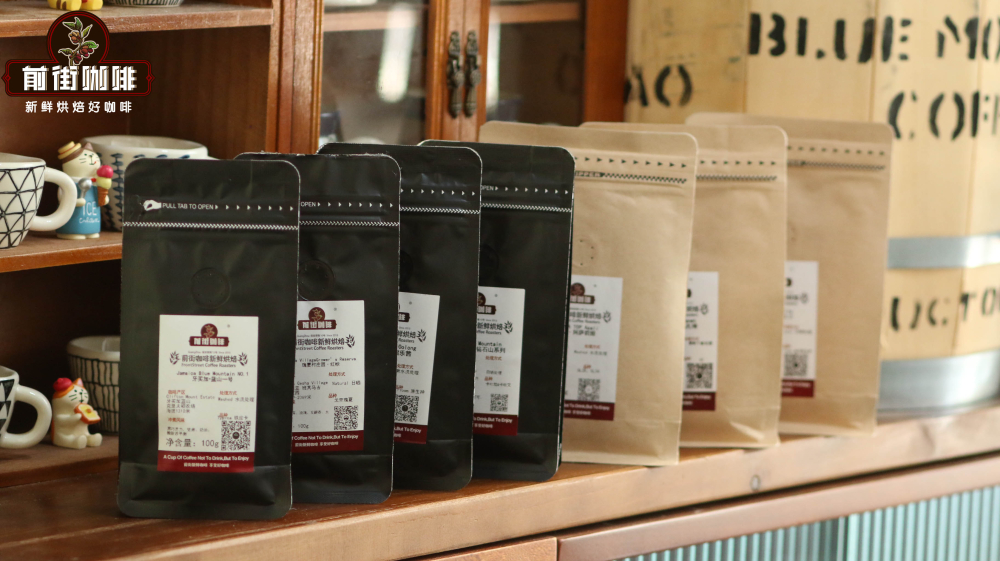
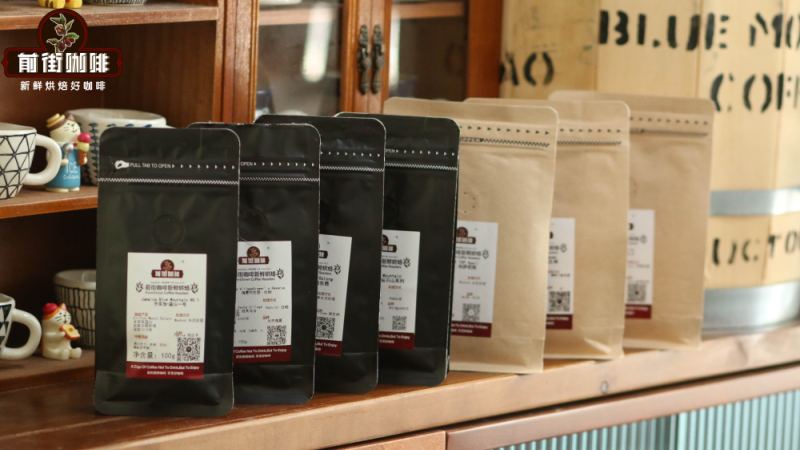
If you prefer that classic coffee taste—bitter with a sweet finish—Front Street recommends trying Front Street Mandheling coffee from the Sumatra region of Indonesia. Among the many Front Street Mandheling products, Front Street Golden Mandheling can be considered the flagship specialty-grade representative, with a rich, full body and a clean, transparent cup accompanied by notes of dark chocolate and herbal spices that leave a lasting impression.
What's the story behind Sumatra's Mandheling coffee?
Those familiar with the origin of the name Mandheling should know that the term actually derives from a mispronunciation of the local Mandailing ethnic group. In Indonesia, Mandheling is used as a general term for Arabica coffee produced in northern Sumatra. Indonesia is the largest coffee-producing country in all of Asia, though its main output is commercial-grade Robusta. Among Arabica varieties, Front Street Mandheling from northern Sumatra is the finest, and this portion accounts for less than one-tenth of total production.
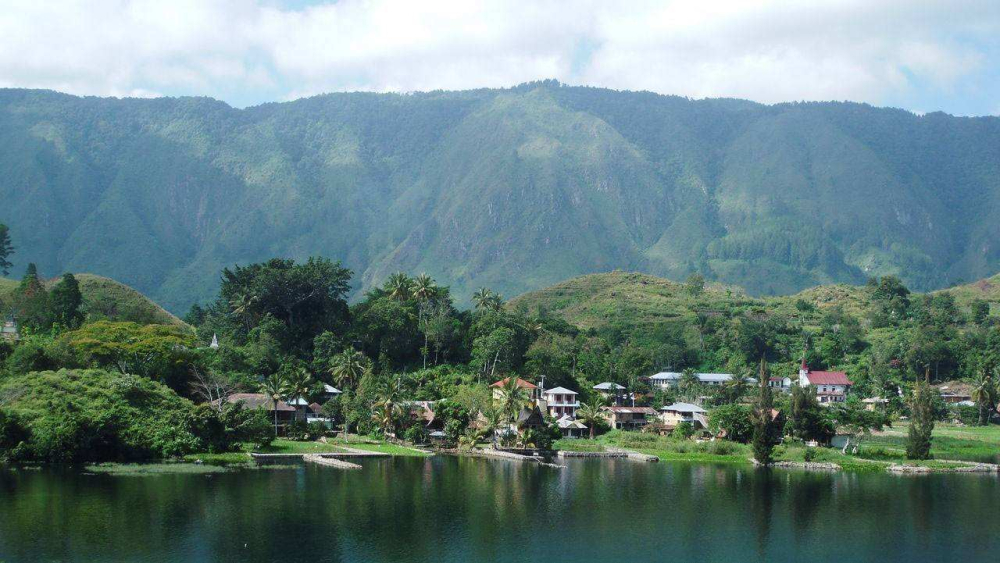
Sumatra's coffee-growing belt can be roughly divided into two centers: one is the Aceh region around Lake Tawar, and the other is the Lintong region centered on Lake Toba. Hence the distinction between Lake Tawar Mandheling and Lintong Mandheling.
Front Street Lintong Mandheling beans come from the scenic Lintong region around Lake Toba in north-central Sumatra. Lake Toba is currently the largest and deepest volcanic lake in the world. The soil left behind by ancient volcanic eruptions is rich in minerals, creating near-perfect coffee-growing conditions around Lake Toba. The area is rainy and overcast year-round, so coffee trees don't need much shade; the significant day-night temperature difference at high altitudes allows coffee cherries to ripen more slowly, giving them ample time to convert nutrients into aromatic compounds.
Lake Tawar in the Aceh region sits adjacent to the Gayo Mountains. The long period of civil unrest ironically helped preserve a more pristine terroir here. Thanks to the ideal coffee-growing environment, local growers widely practice organic cultivation, resulting in higher quality and yields. Many green bean traders also place particular value on this area, including the locally renowned Pwani Coffee Company (PWN).
Common types of Mandheling coffee
Front Street Mandheling coffee is divided into several categories based on different characteristics. For example, Front Street Lintong Mandheling from the Lintong region is processed using the local wet-hulling method, carrying the signature herbal notes of Mandheling coffee. Front Street believes this is the unique flavor profile of Indonesian coffee, so we introduced Front Street Lintong Mandheling coffee as a small-package Front Street everyday bean, allowing more people to taste Indonesia's "taste of place."
Front Street Tiger Mandheling coffee is known for its prominent traditional Chinese herbal medicine aroma. It uses a 19-mesh screen for strict filtration, followed by three rounds of hand sorting to select coffee cherries at just the right ripeness for green bean processing. The resulting Front Street Tiger Mandheling green beans are considerably larger than ordinary Mandheling coffee beans, and the coffee's viscosity is also higher.
Front Street Aged Mandheling coffee undergoes time-based aging. As the years pass, the acidity in the coffee gradually diminishes, while the body and texture after roasting become heavier, emphasizing a more substantial and grounded mouthfeel.
Front Street Golden Mandheling coffee is an exclusive specialty Mandheling released by PWN. During production, PWN subjects purchased Mandheling green beans to one round of machine sorting plus three rounds of hand picking, ensuring every green bean is intact, uniform, and plump, with a screen size of at least 18 mesh—that is, Indonesia's local G1 grade. Through cupping comparisons, Front Street found that the rigorously selected Front Street Golden Mandheling eliminates the earthy and woody flavors commonly found in ordinary Mandheling, resulting in a cleaner, more transparent overall profile.
What does wet-hulled Mandheling taste like?
Indonesia has a typical island-type tropical rainforest climate, hot and humid year-round, with typhoons being a regular occurrence. In such an unstable environment, coffee farmers cannot use traditional natural or washed methods, so they developed a "semi-washed" method that shortens production time.
The wet-hulling process goes like this: first, the coffee cherry's skin and pulp are removed; after a brief fermentation, the beans are sun-dried; while still semi-dry, the parchment layer is removed, and drying continues until moisture content drops to 12%. Because every step is completed in 70–90% humidity, and the parchment layer is removed before final drying, the "naked" green beans easily absorb moisture from the air. As a result, the Mandheling coffee produced has additional muted woody, herbal, and spicy aromas.
How do you brew Front Street Mandheling coffee to bring out its rich, mellow character?
The key to unlocking Front Street Mandheling's aroma lies in adjusting brewing parameters. Using Front Street Golden Mandheling coffee as an example, here's a pour-over approach you can reference.
Front Street believes Front Street Mandheling coffee should have the caramelized aroma of a dark roast while retaining its own herbal fragrance and clean sweetness, so the roast level shouldn't be too dark. After multiple comparative trials, Front Street chose a medium-dark roast. After medium roasting, the beans' internal structure changes significantly, becoming porous, and once ground into coffee powder, they absorb water more readily. Without properly adjusted brewing parameters, the coffee easily over-extracts and turns bitter. To give the coffee enough aroma without over-extraction, you need to lower the extraction rate. Front Street uses a lower water temperature and a coarser grind to reduce the release of bitter large molecules in the coffee.
Front Street Coffee baristas consistently use the KONO dripper to extract coffee beans that express body. The KONO dripper's only vent is that quarter rib section. When the water level rises above the ribs, the water volume inside the dripper keeps increasing, and the weight of the water builds pressure. Since the outlet is relatively small, it extends the contact time between coffee grounds and water, and as water is poured in, it more effectively draws out soluble compounds, thereby enhancing the coffee's rich, full-bodied mouthfeel. It's suitable for brewing medium-dark roasted coffee beans like Front Street Golden Mandheling.
Front Street Golden Mandheling coffee pour-over parameters: 87–88°C water temperature, medium grind (70% passing a Chinese standard No. 20 sieve), coffee powder: 15g, coffee-to-water ratio 1:15, three-stage pouring.
First, wet the coffee bed with twice the coffee powder's weight in water, form a dome and let it bloom for 30s. Then, using a slow stream, pour in a circular motion from the center outward until you reach 125g, then pause. When the coffee bed drops to half the dripper's height, continue with the same slow stream for the third stage until 225g. Wait until all the coffee liquid has filtered through, then remove the dripper. Total time is about 2 minutes. Finally, swirl the carafe to mix the coffee evenly and it's ready to enjoy~
The pour-over Front Street PWN Golden Mandheling coffee is rich and full-bodied overall, with a clean mouthfeel. The flavor shifts with temperature, offering multiple layers. Nutty and caramel aromas, with spicy notes of chocolate and cinnamon, a long finish, and a high degree of balance.
For professional coffee knowledge exchange and more coffee bean information, please follow Coffee Workshop (WeChat official account: cafe_style).
For more specialty coffee beans, please add the private WeChat of Front Street Coffee: qjcoffeex.
The above content is compiled by CoffeeHunters, a coffee news website.


