







Are Robusta Coffee Beans Really Lower Quality Than Arabica?
Robusta coffee beans are not automatically inferior. The plant comes from the Congo region of West Africa, grows faster than Arabica, tolerates harsh climate and pests well, and carries about twice the caffeine. It makes up roughly 30 percent of global production, and high-quality Robusta can taste better than poor-quality Arabica.
In blends, Robusta is added to build body and crema; a commercial espresso blend may include around 10 percent Robusta for a fuller mouthfeel. Botanically it belongs to the Canephora species rather than the Arabica species, so the two sit at different levels. Indian specialty Robusta is now challenging the old low-end reputation.
Robusta is often labeled as low-end, but the truth is not so simple. It originated in the Congo region of West Africa, grows quickly, and has strong resistance to extreme climates and pests and diseases. Its caffeine content is about twice that of Arabica, and it accounts for about 30% of global production. Front Street believes that high-quality Robusta can even taste better than poor-quality Arabica. Robusta is mostly used in espresso blends to enhance body and crema, and Front Street’s commercial espresso blend includes 10% Robusta. This article will review Robusta’s origins, identification methods, advantages and disadvantages, analyze the Catimor hybrid variety, and introduce how Indian specialty Robusta is overturning traditional impressions.
Robusta’s most prominent characteristic is that it grows faster than Arabica and is also more resilient in harsh climates. At present, about 30% of the world’s coffee production is Robusta. Front Street has always felt that excellent-quality Robusta can outperform mediocre Arabica in flavor performance. These beans are usually used in espresso blends to enhance the coffee’s body. For example, FrontStreet Coffee’s commercial espresso blend includes 10% Robusta, making the extracted espresso fuller in mouthfeel and richer in crema. Next, Front Street will introduce Robusta coffee beans.
The Origin of Robusta Coffee Beans
Robusta comes from the Congo region of West Africa. People are used to comparing Arabica and Robusta side by side, but this comparison is not actually rigorous, because the two do not belong to the same botanical level. Robusta actually belongs to the Canephora species, also called the Congo species, just as Typica belongs to the Arabica species. Unfortunately, among the Canephora species, only Robusta has achieved commercialization and become widely known, which has led to Robusta now being almost synonymous with the Canephora species group.
How to Identify Robusta Coffee Beans
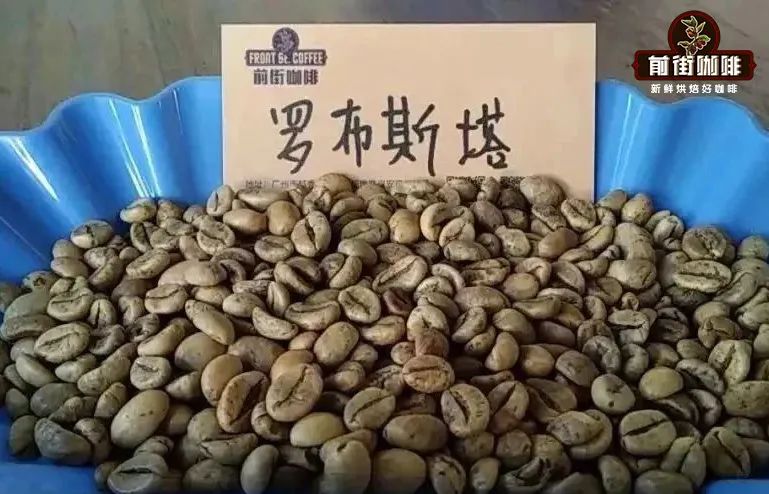
Robusta coffee beans have one bean per fruit. They are relatively round and C-shaped; the center line is straight, and the green bean color is yellowish-brown.
The Advantages of Robusta
Growing conditions: The global coffee-growing belt lies between the Tropic of Cancer and the Tropic of Capricorn, and the same is true for Robusta. However, its requirements for the growing environment are not as strict as those of Arabica, and it can adapt to lower altitudes and higher temperatures. It grows faster than Arabica and is also more tolerant of extreme weather. Robusta is widely planted in Vietnam, Brazil, India, and other countries, and it is also grown in Hainan, China. FrontStreet Coffee often says that for coffee beans to have a refined flavor, there are basically two conditions: first, an excellent Arabica variety; second, high-altitude cultivation. Because Robusta is grown at low altitude and is limited by the variety itself, its flavor tends to be deeper and fuller.
Pest resistance: Robusta’s caffeine content is between 2.7% and 4%, twice that of Arabica. As a natural insecticide for plants, caffeine helps it resist most insect damage.
Disease resistance: Arabica has 44 chromosomes, while Robusta has 22. Generally speaking, the more chromosomes there are, the more complex the genes are, and the more advanced it appears. But Arabica is self-pollinating, while Robusta is cross-pollinating. Pollination is related to heredity, and plants obtained through cross-pollination are usually of higher quality—the offspring possess the genetic traits of both parents at the same time, and are very likely to produce new characteristics that help them survive in changing environments. Therefore, self-pollinating Arabica is quite fragile, and during reproduction its genes become increasingly uniform (lacking the participation of foreign genes). Once it encounters certain diseases (such as leaf rust), coffee trees carrying the same genes may be destroyed in large patches. Robusta’s strength lies in its ability to adapt to the environment by constantly changing its genes.
The Disadvantages of Robusta
Flavor: Front Street just mentioned that Robusta’s flavor is affected by low-altitude cultivation and the variety itself. Compared with Arabica, Robusta has higher contents of caffeine, amino acids, and chlorogenic acid, and chlorogenic acid is the source of bitterness. Therefore, Robusta naturally does not have the elegant aroma unique to Arabica. Instead, it has a fuller, deeper mouthfeel, along with flavors such as walnut, peanut, hazelnut, wheat, and grain, and may even have a pungent earthy taste. Because of its poor flavor, Robusta is often rejected by the specialty coffee world and is generally used in blends with Arabica or to make instant coffee.
Robusta is not picky about the growing environment and has strong disease resistance, while Arabica is relatively rich in flavor. So is there a hybrid variety of Robusta and Arabica? Yes! Catimor is the hybrid of the two.
The Catimor Coffee Variety
Catimor is a combination of the Arabica species and the Robusta species. The Robusta species has good resistance to leaf rust and rich oils, with high yield and easy cultivation; after crossing with the Arabica species Typica, Catimor obtained 25% Robusta genes, which not only improved its resistance to leaf rust and retained rich oils, but also inherited part of the rich taste of the Typica heirloom variety. Catimor is the most commonly planted variety in Yunnan coffee cultivation. One of the Front Street Yunnan coffee beans currently listed by Front Street includes a lot of Catimor small-bean coffee.
Front Street Yunnan Catimor Small-Bean Coffee
Region: Baoshan, Yunnan
Altitude: 1,200 meters
Variety: Catimor
Processing method: Washed processing
Washed Processing Method
Because Yunnan has a long rainy season and unstable climate, most local coffee beans use washed processing. The harvested cherries are passed through a depulper to separate most of the pulp, and then the parchment beans are introduced into a clean tank and soaked in water to ferment, completely removing the remaining mucilage layer. About five years ago, the washed method was often regarded as the first choice for processing good coffee beans.
After washed processing, unripe beans and defective beans are picked out due to differences in buoyancy, and the fermentation process is also easier to control. Therefore, the flavor does not have the miscellaneous notes of natural beans, but instead shows obvious fruit acidity, slightly stronger complexity, and a cleaner cup profile (without any negative flavors, such as astringency or sharpness).
FrontStreet Coffee Roasting Suggestions
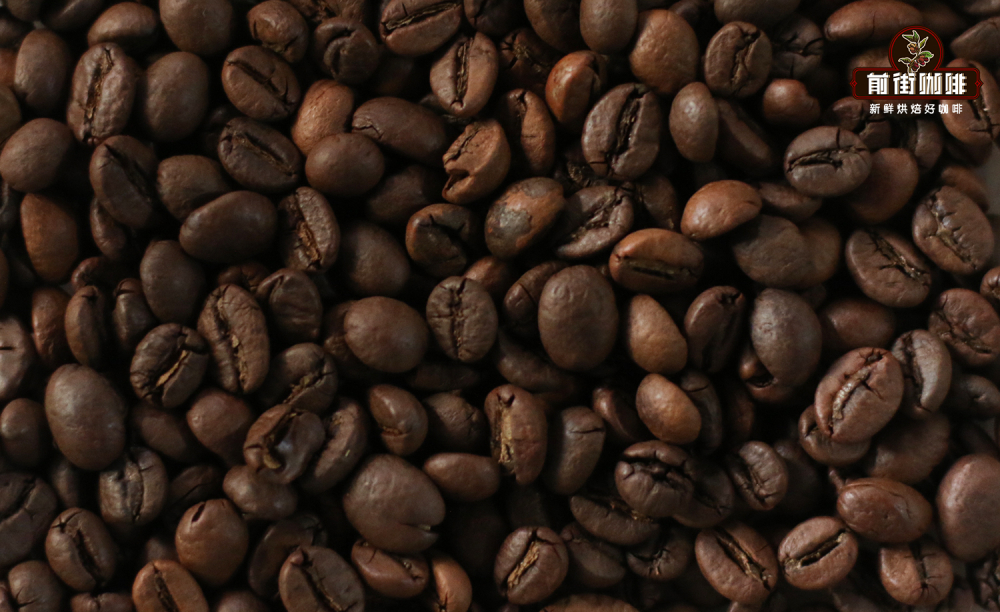
Yangjia 800N (300 g roasting capacity): charge at 190°C, power 120, damper open to 3; turning point at 1'40", when the temperature is 145°C open the damper to 4 and keep the power unchanged; when the temperature is 166°C the bean surface turns yellow, the grassy smell completely disappears, and the dehydration stage begins; when the temperature reaches 188°C, adjust the power to 60°C and set the damper to 5;
At 8'37", ugly wrinkles and dark streaks appear on the bean surface, and the toast aroma clearly turns into coffee aroma, which can be defined as the prelude to first crack. At this time, listen carefully for the sound of the first crack. At 9'00", first crack begins, keep the damper unchanged, develop for 3 minutes after first crack, and drop at 198°C.
FrontStreet Coffee Cupping Report
Smooth on the palate, with Asian herbal aroma, lively and bright acidity, salivation on both sides of the cheeks, soft acidity, good body and balance, rich layers, and a finish with obvious dark chocolate, honey, and sucrose notes. After completely cooling, it shows a brown sugar flavor.
FrontStreet Coffee Brewing Suggestions
FrontStreet Coffee recommends leaning toward balance when brewing Yunnan coffee, neither making the acidity too prominent nor over-adjusting the tail end. Choose 15 g of coffee powder, and a recommended coffee-to-water ratio of 1:15; if you want a clearer flavor, use 1:16. Choose a Kono dripper, with a brewing water temperature of 88°C, in order to make the acidity softer. The grind size is medium-fine / fine sugar size (80% passing a No. 20 sieve).
Front Street’s staged brewing method: use 30 g of water for a 30-second bloom, then pour in a small stream in circles until 125 g, then pause in stages. When the water level is about to expose the coffee bed, continue pouring until 225 g and stop. When the water level is about to expose the coffee bed again, remove the dripper. (Start timing from the beginning of the bloom.) The extraction time is 2'00".
Brewed flavor: nutty aroma, herbs, chocolate, caramel, with a slight faint fruit acidity in the finish.
At the end of the article, Front Street will talk about specialty Robusta coffee beans. Yes! Robusta also has a specialty grade.
India “Kappi Royale” Robusta: Kappi Royale means “top grade.” At present, there are at least four or more private coffee estates in India that cultivate and produce “Kappi Royale” grade Robusta coffee beans using the standards and procedures for specialty Arabica beans.
The introduction of “Kappi Royale” specialty Robusta beans has undoubtedly begun to change the world’s stereotyped impression of Robusta. Most people who have tried it are surprised by its combination of fullness and cleanliness. Because of the refined cultivation and processing procedures, the flavor performance of “Kappi Royale” grade Robusta is mostly quite clean, without the unpleasant defective flavors of cheap-grade Robusta. The Robusta species naturally does not have the elegant aroma unique to Arabica beans. Instead, it has a thicker, steadier mouthfeel, along with strong walnut, peanut, hazelnut, and wheat flavors, as if tasting peanut butter or hazelnut spread.
The above content is compiled by CoffeeHunters, a coffee news website.


