







How Do Honduran Coffee Grades and Regions Differ?
Honduras sorts its coffee by grade and by region, and the country has also introduced its first government-protected geographical indication system. Western Honduras holds six major producing regions split into eight sub-regions, and quality has climbed since the 2017 harvest, when production rose and long-criticized processing and logistics problems began to ease.
Two decades ago Honduran green beans were considered rough, with only a few estates or CoE-winning lots reaching specialty level. Investment in processing equipment, station upkeep, export procedures, and green bean transport starting around 2007 changed that picture, and estates such as Sweet Orange now show the cleaner, sweeter profile the country is known for.
As an important coffee-producing country in Central America, Honduras's coffee industry has undergone a transformation from extensive processing to specialization. This article will guide you through the grading standards for Honduran coffee beans, the distribution of six major producing regions and eight sub-regions in western coffee, as well as the country's first government-protected geographical indication system. At the same time, we will also share Front Street Coffee's brewing suggestions for Honduras's Sweet Orange Estate, helping coffee enthusiasts better appreciate the unique flavors of this Central American producing country.
The Story of Honduran Coffee
According to Front Street's research, Honduras is located in northern Central America, bordered by the Caribbean Sea to the north, the Gulf of Fonseca in the Pacific to the south, Nicaragua and El Salvador to the southeast, and Guatemala to the west, with terrain dominated by mountains and plateaus. The country has a total area of 112,492 square kilometers and a coastline of about 1,033 kilometers. Aside from the coastal plains, almost the entire country is mountainous, with the highest point in the northwest reaching 3,000 meters above sea level, and heights of over 2,400 meters in the south as well. Major rivers include the Coco, Patuca, and Ulúa. Multiple rivers originating from the inland mountains crisscross the country, flowing toward the two oceans. Numerous basins and river valleys have formed between the mountain ranges, with the larger basins being the Sula and Lepaguare basins, and the main river valleys being the Comayagua and Jamastran valleys.
Looking back at the 2017 harvest season, Honduras not only saw a significant increase in production but also an improvement in quality, and the processing and logistics transportation issues that had long been criticized were gradually being addressed.
Twenty years ago, Honduran coffee beans could hardly compete with neighboring countries in terms of attention to processing details, maintenance of the environment around processing stations, investment in processing equipment, export procedures, and logistics transportation of green beans. The general quality of green beans was naturally rather rough and not refined enough, with only a few estates or CoE winning lots qualifying as specialty coffee. Starting in 2007, the situation began to improve. Driven by IHCAFE and many far-sighted dry processing stations, Honduras's active improvements in processing procedures, investment in green bean processing equipment, and transportation and export gradually took effect. Although its international reputation remained relatively low, proactive roasters had already ventured deep into Honduran coffee-producing regions, trying to discover specialty coffee. In terms of production, Honduras even rose to the top among Central American producing countries in 2011-2012, harvesting about three million bags (46kg) of coffee annually. Beyond volume, IHCAFE, together with like-minded production associations and processing stations, carried out a series of programs, hoping to provide international buyers with high-quality, great-tasting Honduran coffee.
According to IHCAFE data, Honduran coffee can be divided into six major producing regions, mainly located in the western and southern areas: Copán, Opalaca, Montecillos, Comayagua, Agalta Tropical, and El Paraíso. The average cultivation altitude for specialty coffee in these regions is over 1,100 meters. Of the coffee grown in these areas, 69% is HG grade, 12% is SHG, and 19% is CS. The main varieties include Typica, Bourbon, Caturra, Villa Sarchi, and Lempira. At present, the main grading is still based on altitude. The relationship between Honduran coffee grades and altitude is as follows:
The following three grades and their specified altitude ranges are--
Standard grade, cultivation altitude of 610 – 915 (meters)
High Grown grade, cultivation altitude of 915 – 1220 (meters)
Strictly High Grown grade, cultivation altitude of 1221 meters and above
What interests me more is the recently established "Honduras Western Coffee" association, abbreviated as HWC, located in the western producing region. Its development is worth watching.
The coffee produced and labeled by Honduras Western Coffee (HWC) is the first geographical indication (PGI) protected by the Honduran government, and is also registered as Honduras's property right (IP) and brand (MC)--
Coffees of western Honduras (HWC) is the first Protected Geographical Indication (PGI) and Brand Collective (MC) recognized and registered by the Honduran Institute Honduran Property (IP)。
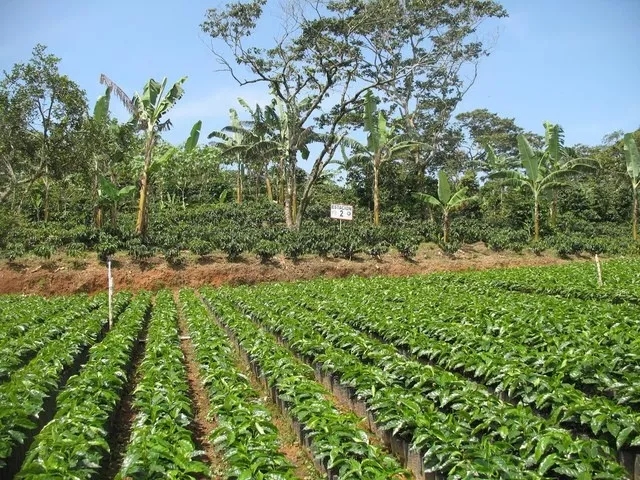
In addition to promoting specialty coffee through CoE competitions, Honduras has also introduced regional brands with greater refinement and precision. The purpose is no different from Guatemala's regional identification and geographical indications. Perhaps influenced by Ethiopia's defense of coffee geographical names such as Sidamo and Yirgacheffe through trademark rights, the labeling of Honduran western coffee was already registered and approved by the government and the national coffee institute during the preparatory stage. Their idea is to establish Grade 1 and Grade 2 standards based on the tested quality of coffee harvesting and processing in the western region, as well as cupping results, to provide market procurement references. At the same time, based on organoleptic characteristics, geography, climate, soil, process, and other conditions, they have defined 8 sub-regions of Honduras Western Coffee (HWC).
These sub-regions are:
Erapuca (Ocotepeque-Copon),
Gmlisayote (Ocotepeque)
Celaque (Ocotepeque, Copon and Lempira),
Puca (Lempira),
Camapara (Lempira)
Congolon (Lempira)
Opalaca (Intibuca)
Green Mountain (Lempira)
The coffee from this region is known for its bright citrus acidity, with excellent sweetness, especially prominent caramel sweetness. Its thick mouthfeel and rich oily texture create a full body that is very appealing! The overall balance is quite good. If compared with bright high-altitude fruity-acid beans from Guatemala, it should be no less impressive, and the mouthfeel may even be superior!
【FrontStreet Coffee Brewing Recommendation】
Taking Honduras Sweet Orange Estate as an example:
Recommended brewing methods: siphon, pour-over
Grind size: fine granulated sugar (80% passing through China's No. 20 sieve)
V60 dripper, 15g coffee powder, water temperature 89°C, grind setting 3.5, water-to-coffee ratio close to 1:15, 30g water for blooming, bloom time 30s
Stages: pour water to 120g and pause, then slowly pour to 225g, i.e., 30-120-225g
Flavor: dry aroma with spices and roasted peanuts, giving the beans an elegant acidity, soft citrus acidity, flavors of orange, melon, cream, nuts, and dark chocolate, with a Sunkist-like sweetness in the finish, and a bit like a cup of lemon tea.
Honduras has many coffee-producing regions and many estates, and the flavors vary slightly. In Front Street's view, the most important thing is to find coffee that suits your own taste. Front Street's bean list includes dozens of single-origin beans from well-known producing regions around the world for you to choose from, available for direct purchase at Front Street's Taobao store or Front Street's Tmall flagship store.
The above content is compiled by CoffeeHunters, a coffee news website.


