







How do dose, yield, and time set the coffee specification?
A stable espresso recipe rests on three variables: dose, yield, and extraction time. Calibrating them every morning is necessary because beans keep changing during storage, and a recipe that worked yesterday may pull bitter or astringent today. If the shot clearly deviates from the previous day's flavor, adjust the grind size first, then the other two.
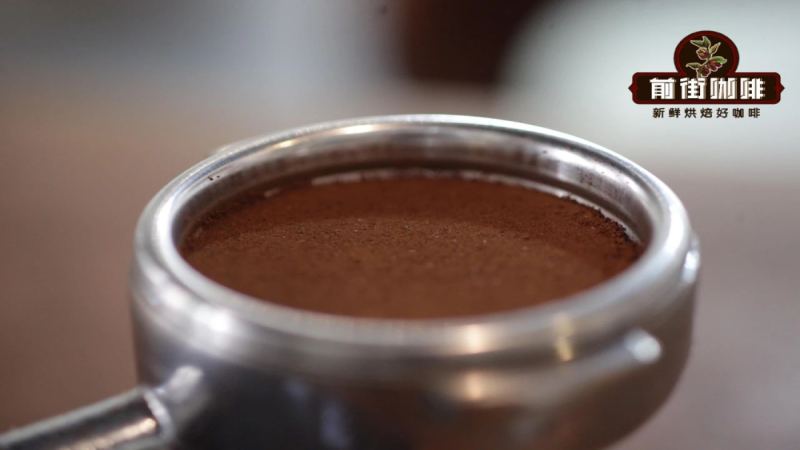
Dose has a fairly fixed answer, set by what the basket holds. Check the model engraved on the basket, or use the inward-recessed ring line on the inner wall: after tamping, the puck surface should fall within that line. A puck above it may stop the portafilter locking in, while one below it lets the bed shift and produce off flavors. A common fill is 19 grams.
To consistently produce a delicious espresso every day, morning parameter calibration is an indispensable task. The condition of coffee beans changes over time, and the extraction recipe that worked well yesterday may not be suitable today. Starting from the daily practices at Front Street Coffee, this article systematically sorts out the three core variables—dose, yield, and extraction time—to help you diagnose the causes of espresso that is too bitter or too astringent, and provides actionable adjustment ideas and a standard workflow.
If you want to ensure that the quality of espresso is always on point, performing a parameter calibration every morning is very necessary. During storage, coffee beans are constantly changing, and the originally suitable extraction recipe may no longer handle the current bean condition, so the espresso extraction parameters need to be reset based on the beans' actual performance.
Before opening for business each day, Front Street first confirms whether the day's extraction parameters are still appropriate. If the espresso obtained shows a fairly noticeable deviation from the previous day's flavor, that indicates it is time to make adjustments, and the usual starting point for adjustment is the grind size.
If the espresso you extract has a prominent bitterness, it is very likely that the extraction recipe itself has a problem. You may refer to the following suggestions from Front Street:
Dose
The reason dose is discussed first is that it is a variable with a relatively fixed answer. How much coffee powder to put in the portafilter depends on how much the basket itself can hold. So how can you know the reasonable capacity of a basket?
Method one: check the model engraved on the basket, then look up the detailed specifications for that model on the corresponding brand's official website. Method two: the inner wall of the basket usually has an inward-recessed ring line. After tamping, if the surface of the puck falls within the range of this ring line, the capacity is reasonable. If after tamping the puck is above the ring line, the portafilter may not even be able to lock onto the group head; conversely, if it is below the ring line, the coffee bed is prone to shifting during extraction, which in turn produces unpleasant flavors.
For example, Front Street uses 19 grams of coffee powder as the standard fill amount, so each extraction should maintain 19 grams of dose, with the error controlled within 0.1 grams.
Yield
Yield refers to how many grams of espresso liquid are finally extracted. Once the dose is determined, yield brings in the concept of the brew ratio. In the early years, when making espresso, people were used to measuring by volume, such as milliliters or ounces, but the volume and weight of crema are not equivalent. In pursuit of precision, weighing is now generally used, with grams as the unit.
Taking the espresso extraction at FrontStreet Coffee as an example, 19 grams of coffee powder corresponds to extracting 38 grams of espresso liquid, so the brew ratio is 1:2. Of course, this ratio is not an iron rule; specifically, it still depends on what flavor you want to present. The more liquid extracted, the thinner the coffee tastes and the more prominent the bitterness; the less liquid extracted, the more viscous and rich the coffee appears, with concentrated flavor but not complete enough.
In the past, some people also judged when to stop extraction by observing changes in the color of the crema. When espresso first flows out, it is dark brown and thick in texture. As extraction proceeds, the color gradually turns golden yellow, then pale yellow. Usually, when the crema begins to turn white, it is time to end extraction.
Time
This is an extremely critical element in espresso extraction, and from it the concept of "flow rate" has also derived. Generally speaking, the extraction time of espresso falls between 20 and 30 seconds, while Front Street leans more toward 25 to 30 seconds. When both dose and yield are fixed, a shorter time means a faster flow rate. If the extraction time is less than 20 seconds, under-extraction may occur, with a sour and astringent flavor and a relatively thin mouthfeel. Conversely, a longer time means a slower flow rate. If the extraction time exceeds 30 seconds, over-extraction may occur, bringing a burnt bitter taste, and the mouthfeel will also become viscous.
Also under the premise that dose and yield remain unchanged, the only way to change extraction time is to adjust the grind size of the coffee, which also leads to the core of espresso adjustment—grind size. Make the coffee powder coarser, and the extraction time will shorten; make it finer, and the extraction time will lengthen.
Therefore, when adjusting espresso, in the end it is all about working on the three elements of dose, yield, and time. The specific approach is as follows: first determine the dose → preset the yield ratio to 1:2 and define the extraction time range → taste and obtain feedback → change the time by adjusting the grind size → taste again after reaching the preset → if there are still slight deficiencies, continue to fine-tune the grind size or change the brew ratio → taste and pass → record the parameters.
For professional coffee knowledge exchange and more coffee bean information, please follow Coffee Workshop (WeChat public account: cafe_style) For more specialty coffee beans, please add the private WeChat of Front Street Coffee (FrontStreet Coffee), WeChat ID: qjcoffeex
The above content is compiled by CoffeeHunters, a coffee news website.


