







Where does Papua New Guinea arabica coffee come from?
Papua New Guinea arabica coffee grows on highland plots at roughly 1,300 to 1,900 meters, on volcanic soil in a tropical rainforest climate. Local farms mainly plant the Typica variety, introduced from Jamaica in 1931, which is why the beans are nicknamed Little Blue Mountain. Washed processing and medium-dark roasting give hazelnut, toasted bread, sugarcane and caramel notes.
Coffee is the only cash crop in the highlands and supports more than two million smallholder farmers, accounting for about 40 percent of the national economy. Beans from the Sigri Estate are washed and medium-dark roasted, producing soft acidity and a clean, balanced cup. Typical brewing uses a medium grind with water just off the boil and a slow, even pour.
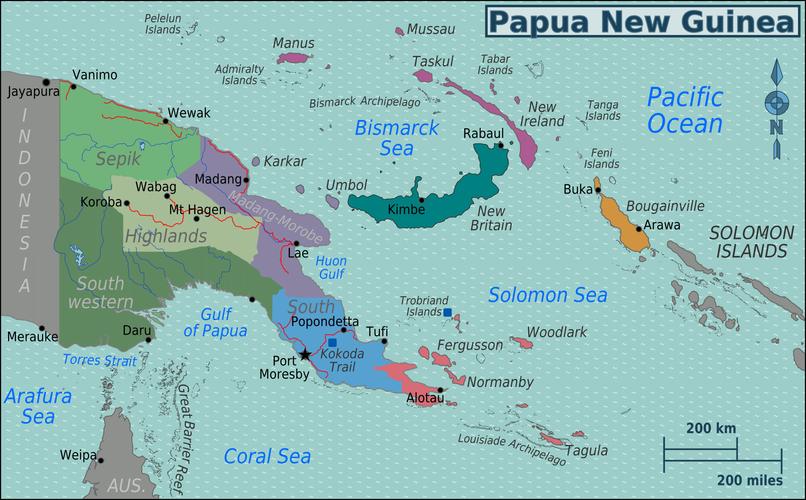
Papua New Guinea is located in the southwestern Pacific Ocean, with fertile volcanic soil and a high-altitude tropical rainforest climate, making it an important producer of specialty Arabica coffee. Local coffee is mainly of the Typica variety, and because it was introduced from Jamaica Blue Mountain, it enjoys the name "Little Blue Mountain." The Bird of Paradise coffee beans recommended by Front Street Coffee come from the Sigri Estate, using washed processing and medium-dark roasting, presenting aromas of hazelnut, toasted bread, sugarcane, and caramel, with soft acidity and a clean, balanced taste. This article will guide you through the historical origins, regional characteristics, and grading methods of Papua New Guinea coffee, as well as the brewing parameters and flavor experience provided by Front Street Coffee baristas, suitable for coffee lovers who enjoy a rich and balanced flavor.
If you prefer coffee with a balanced flavor and full body, the baristas at FrontStreet Coffee usually recommend this island bean from Papua New Guinea — the Bird of Paradise. It undergoes washed processing and medium-dark roasting, and when tasting it you can perceive aromas of hazelnut, toasted bread, sugarcane, and caramel, along with a hint of gentle fruity acidity, making it clean and harmonious overall, which is why it is often called "Little Blue Mountain."
Where is Papua New Guinea located?
Papua New Guinea is an island country adjacent to Indonesia, with a tropical rainforest climate, lush forests, and highlands at an altitude of 1,300 to 1,800 meters that are very suitable for coffee tree growth. Because it was long a British colony, locals only began planting Typica seeds introduced from Jamaica in 1931, after which the coffee commercial industry gradually developed.
Papua New Guinea is located in the southwestern Pacific Ocean. Coffee is the only cash crop in the country's highlands, accounting for 40% of the national economy, with more than 2 million smallholder farmers making a living from coffee cultivation year-round. Coffee is mainly distributed in mountainous areas at an altitude of 1,500 to 1,900 meters, where rainfall is abundant, volcanic soil is fertile, and the scenery is picturesque, very conducive to cultivating high-quality Arabica coffee.
In the 1930s, the British introduced Jamaican Typica coffee to Papua New Guinea, and Jamaica's most famous coffee is precisely the Typica variety Blue Mountain, so Papua New Guinea coffee earned the laudatory name "Little Blue Mountain." Papua New Guinea's coffee-producing region is located at 6 degrees south latitude, closer to the equator than Jamaica Blue Mountain's producing region at 18 degrees north latitude, so the flavor carries a dark-fruit-like sweet-and-sour sensation.
In addition to Jamaican Typica Blue Mountain, Papua New Guinea introduced the Bourbon variety from Kenya in 1950, and also introduced Mundo Novo and Caturra from Brazil in 1962, greatly enriching the diversity of local coffee cultivation. In 1975, Brazil suffered a frost disaster, dealing a heavy blow to its coffee industry, and Papua New Guinea's coffee industry took this opportunity to expand rapidly.
Front Street's "Little Blue Mountain" is selected from the Sigri Estate in the Western Highlands. The estate was founded in 1950 and is a pioneer of the local coffee industry. The Bird of Paradise estate is located in the Waghi Valley, with abundant ecological resources, including Papua New Guinea's national bird — the bird of paradise. The high-altitude island climate here is very close to that of Blue Mountain, and is closer to the equator, so compared with Blue Mountain, Papua coffee has an extra sweet-and-sour sensation of dark fruits.
FrontStreet Coffee: Papua New Guinea Bird of Paradise Coffee Beans
Country: Papua New Guinea
Origin: Sigri Bird of Paradise Estate
Altitude: 1,600-1,800m
Grade: AA
Variety: Typica
Processing Method: Washed
Flavor: Nuts, cocoa, soft citrus acidity, cream, caramel finish
Papua New Guinea's green bean grading method is the same as that of Kenya, Tanzania, Uganda, Zimbabwe, and Puerto Rico, all using coffee bean size as the grading basis. Front Street's Bird of Paradise is precisely the highest grade AA. Although bean size is not an absolute standard for flavor quality, for some producing regions it is an extremely valuable reference indicator — in these areas the beans grow robustly, and plump, beautifully shaped mature beans best display excellent flavor. Consistent ripeness, hardness, moisture content, and other factors make it easier for the roasting process to achieve a uniform and perfect result, so many emerging producing regions also adopt this grading method.
As an ancient Arabica variety, Typica coffee has a unique clean flavor and balanced taste. To highlight this bean's clean characteristics, the Bird of Paradise estate uses the washed processing method: after picking ripe coffee cherries, they are transported to the washing station for soaking, washing, and fermentation in three stages, each soaking lasting 24 hours; after cleaning, they are hulled and dried. This better showcases the coffee's own bright and delicate fruity acidity, bringing a clean and lingering sweetness.
Typica is a lower-density green bean. To highlight the nutty and creamy tonality while preserving fruity aromas, Front Street recommends medium roasting. This way you can taste the coffee bean's own grapefruit acidity and bright, juicy fruit character, while the middle and later stages display tea-like and cocoa aromas.
Front Street Brewing Recommendations
Dripper: Kono dripper
Dose: 15g
Coffee-to-water ratio: 1:15
Grind size: 75% passing through a No. 20 sieve
Water temperature: 88–89°C
Front Street found that brewing with the Kono dripper better presents this coffee's body, and the nutty and cocoa aromas are also extracted more fully. For this brewing, Front Street adopted staged extraction: first bloom with 30 grams of water for 30 seconds, then pour in a circular motion with a small stream until 125 grams, at which point a stage break is made; when the water level drops and is about to expose the coffee bed, continue pouring until 225 grams and stop; when the water level drops again and is about to expose the coffee bed, remove the dripper (timing starts from the beginning of the bloom), with a total extraction time of 2 minutes 00 seconds.
Flavor Description: The dry aroma of Bird of Paradise Little Blue Mountain has a faint spice note beyond Jamaican Blue Mountain. On entry, there is the sweet aroma of nuts and toasted bread, and a little fruity sweet-and-sour makes the layers richer. The finish carries a spicy sweetness, and the overall taste is rich and balanced.
For professional coffee knowledge exchange and more coffee bean information, please follow Coffee Workshop (WeChat public account: cafe_style)
For more specialty coffee beans, please add the private WeChat of FrontStreet Coffee, WeChat ID: qjcoffeex
The above content is compiled by CoffeeHunters, a coffee news website.


