







Why does a latte separate into visible layers?
A latte layers because espresso and milk have different densities. Espresso is denser and carries crema, so it sits below or pushes through the lighter, airier milk foam. When milk is steamed to a fine microfoam and poured slowly, the two liquids stay distinct long enough to form the visible bands rather than blending at once.
The word comes from the Italian caffe e latte, and the combination of coffee and milk has been drunk since the seventeenth century. The term appeared in English in 1867, and the 1961 FAEMA E61 machine made consistent espresso and milk frothing possible. Dirty coffee uses the same density contrast, but cold milk and a ristretto shot are layered in reverse order.
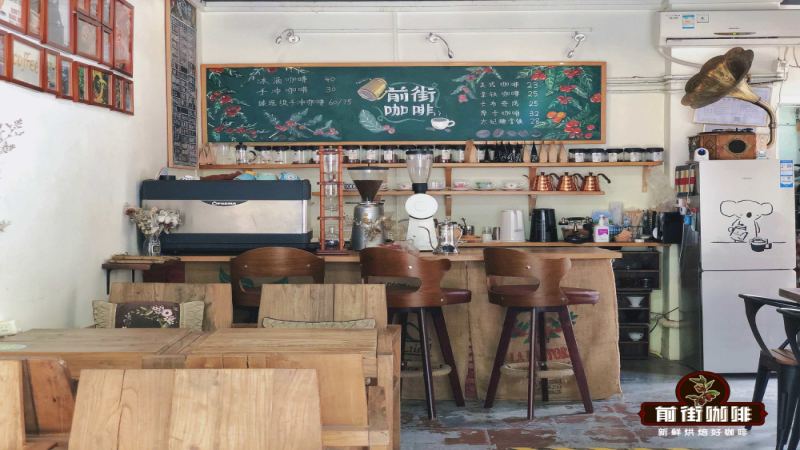
Latte is the starting point for many people's journey into freshly ground coffee, but do you know why a latte can achieve such a beautiful layered look? This article begins with the historical origins of the latte and, drawing on Front Street Coffee's experience, explains how the density difference between espresso and milk creates the layered effect. We will also take a closer look at the flavor characteristics, extraction parameters, and milk frothing techniques for Front Street's Sunflower Warm Sun blend, and compare the layering principle and drinking method of Dirty coffee. Whether you want to understand the science of lattes or recreate a beautifully layered milk coffee at home, this article offers practical guidance.
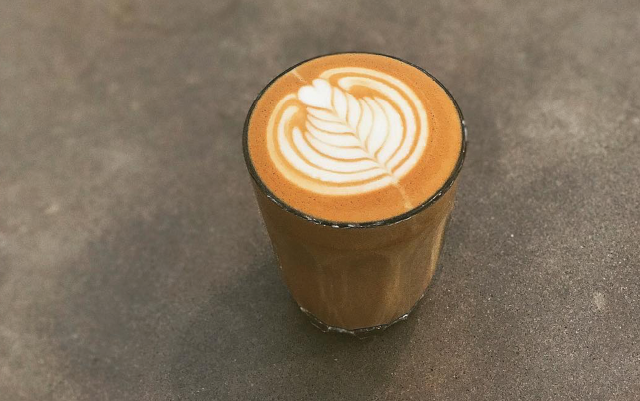
Whether it is the generation of our parents or young people still buried in their studies on campus, the first freshly ground coffee most people try is often a latte. After all, when you first walk into a café and see a delicate latte art pattern floating in the cup at the next table, who wouldn't want to order one too?
As for the origins of the latte, many sources point to Italy. The word latte comes from the Italian caffè e latte, and latte means milk. Interestingly, the literal combination alone reveals all the ingredients of this drink: coffee and milk.
Since the seventeenth century, people have enjoyed this beverage that blends coffee and milk. The term caffè e latte first appeared in English in 1867, when William Dean Howells mentioned it in an article titled "Italian Journeys." At the time, this coffee was a regular presence on many local breakfast tables in Italy. Although the latte had long been part of European breakfast culture, it was Americans who truly made it popular around the world.
Looking back at history, even during World War II, when population movement was frequent, the café menus of Italy and France—two countries that loved espresso—had no listing for "latte."
Starbucks was founded in Seattle, USA, in the 1970s and opened its first store there. After the launch of the FAEMA E61 espresso machine in 1961, espresso extraction and milk frothing techniques made a qualitative leap—rich crema and fine milk foam gave a cup of milk coffee a much better appearance.
As Starbucks expanded globally, more and more people learned about this coffee brand and also became familiar with the latte, a sweet, smooth, and not bitter coffee.
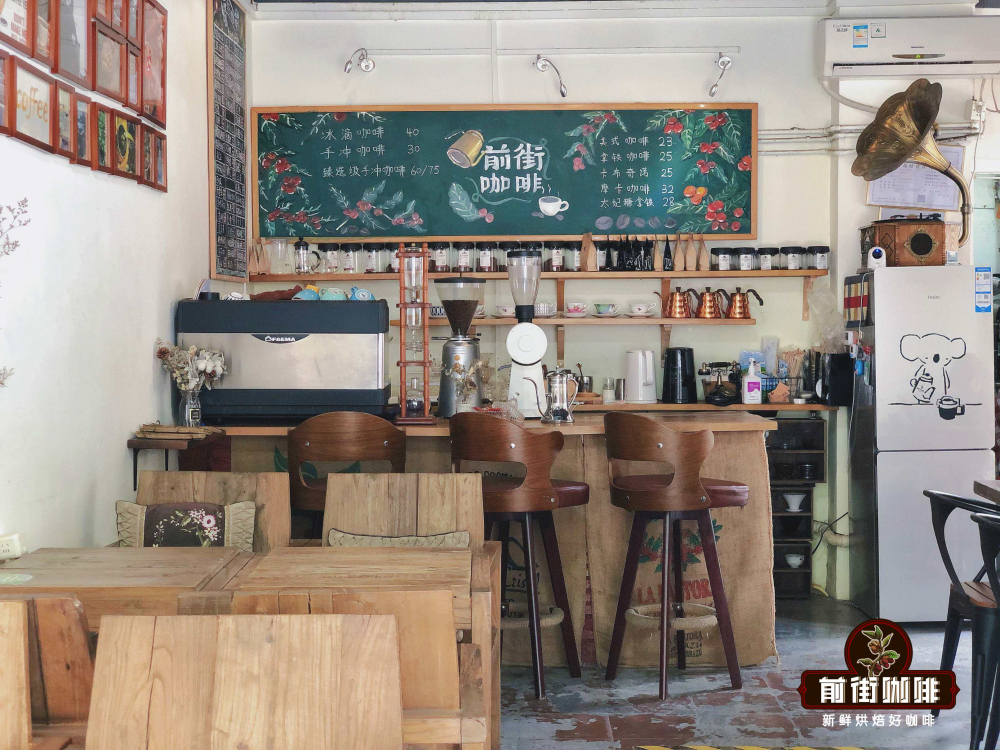
Front Street's stores also often welcome customers who are just beginning to drink coffee. They can neither accept the charred bitterness and richness of dark-roasted coffee nor appreciate the bright, acidic style. Front Street Coffee's baristas usually recommend a latte with a less intense coffee flavor. Because the ratio of espresso to milk is relatively small, the aroma of the coffee in a latte is actually showcased better, while the bitterness is completely dissolved by the sweetness of the milk.
When making lattes, Front Street Coffee stores use an espresso blend called Sunflower Warm Sun blend as the espresso base. When Front Street developed this Sunflower Warm Sun espresso blend, the goal was to create an espresso bean with a rich, boozy flavor that is rarely seen on the market, so this blend consists of 70% Honduras Sherry and 30% Ethiopian natural Red Cherry.
Front Street Coffee Sunflower Warm Sun espresso blend
Region: Honduras & Ethiopia
Varieties: Caturra, Catuai, Pacas, local heirloom varieties
Processing method: washed & natural
Honduras Sherry is shade-dried after low-temperature fermentation in sherry whisky barrels for 30 to 40 days. Anyone familiar with whisky can easily notice that whisky aged in port barrels has a slight savory note, while whisky aged in sherry barrels is sweeter and more aromatic. By avoiding direct sunlight during shade drying, the coffee beans reduce the loss of boozy aroma caused by rising temperatures and avoid undesirable fermented notes and sourness. Sherry coffee beans thus acquire sweet characteristics similar to sherry-cask whisky, giving this blend a rich boozy aroma along with vanilla and cream flavors.
The Ethiopian natural Red Cherry comes from the Yirgacheffe region and uses the most primitive and traditional natural processing method, retaining the skin and pulp. The whole coffee cherries are evenly spread on raised beds to dry in the sun, allowing the sugars in the pulp and mucilage to slowly penetrate into the green beans, thereby adding more berry-like acidity to the blend.
When Front Street makes latte, the espresso grinder used is the Galileo Q18, and the espresso machine is the FAEMA E98. After parameter adjustments, Front Street's extraction recipe is as follows:
The Galileo Q18 grind setting is 1.9, using 20 grams of coffee powder, with brewing time controlled at 26 to 28 seconds, and 35 grams of extracted liquid.
When Front Street serves a latte, it uses a 300 ml wide-mouth coffee cup, so an appropriate amount of milk is added to the milk pitcher. The steam wand is placed with the pitcher spout as the pivot and positioned toward the 2 to 3 o'clock direction. Then the milk is aerated, and the steam is allowed to form a vortex as quickly as possible to eliminate larger bubbles, frothing the milk to a dense state.
The frothed milk should be integrated with the espresso and poured into latte art as soon as possible; otherwise, the milk and milk foam will separate further, making it difficult to blend perfectly and also affecting the latte art result.
The latte made by Front Street with this Sunflower Warm Sun espresso blend has a very rich whisky aroma and vanilla and cream flavors; in addition, after the milk is frothed to about 65°C, the lactose breaks down into more sugars, making the milk sweeter. Combined with the acidity brought by the Ethiopian natural Red Cherry, this unsweetened latte is especially sweet and delicious.
As aesthetics become increasingly diverse, a drink also made of coffee and milk has become popular nationwide—a milk coffee called "Dirty." With its beautiful layered effect, it makes many people want to see it for themselves. When Front Street makes Dirty coffee, it first pours an appropriate amount of milk into an iced cup, then places it under the group head so that the coffee liquid flows directly onto the surface of the milk.
The reason for this layering phenomenon lies in the difference in liquid density. Milk is slightly denser than coffee liquid, so the coffee liquid can float on top. But as time passes, the coffee liquid will eventually gradually merge with the milk below, becoming a cup that truly lives up to the name of milk mixed with coffee.
Here, Front Street would like to remind those who want to taste the true flavor of Dirty coffee: although Dirty looks beautiful, it must be drunk as soon as possible. What Dirty offers is the sensation of ice and fire—first take a sip of the warm espresso on top, then drink the middle part where coffee and milk are mixed, and finally only the cold milk remains.
For more coffee bean information, please follow Coffee Workshop (WeChat public account: cafe_style) For professional coffee knowledge exchange, please add WeChat ID: kaixinguoguo0925
The above content is compiled by CoffeeHunters, a coffee news website.


