







How does coffee bean processing change Sidamo and Yirgacheffe?
Ethiopia's Sidamo and Yirgacheffe regions are often compared. Yirgacheffe was once a town inside the Sidamo administrative area, but its citrus-lemon acidity earned it separate status. The two differ in terroir, variety, and processing method, which together shape flavor, body, and acidity in the cup.
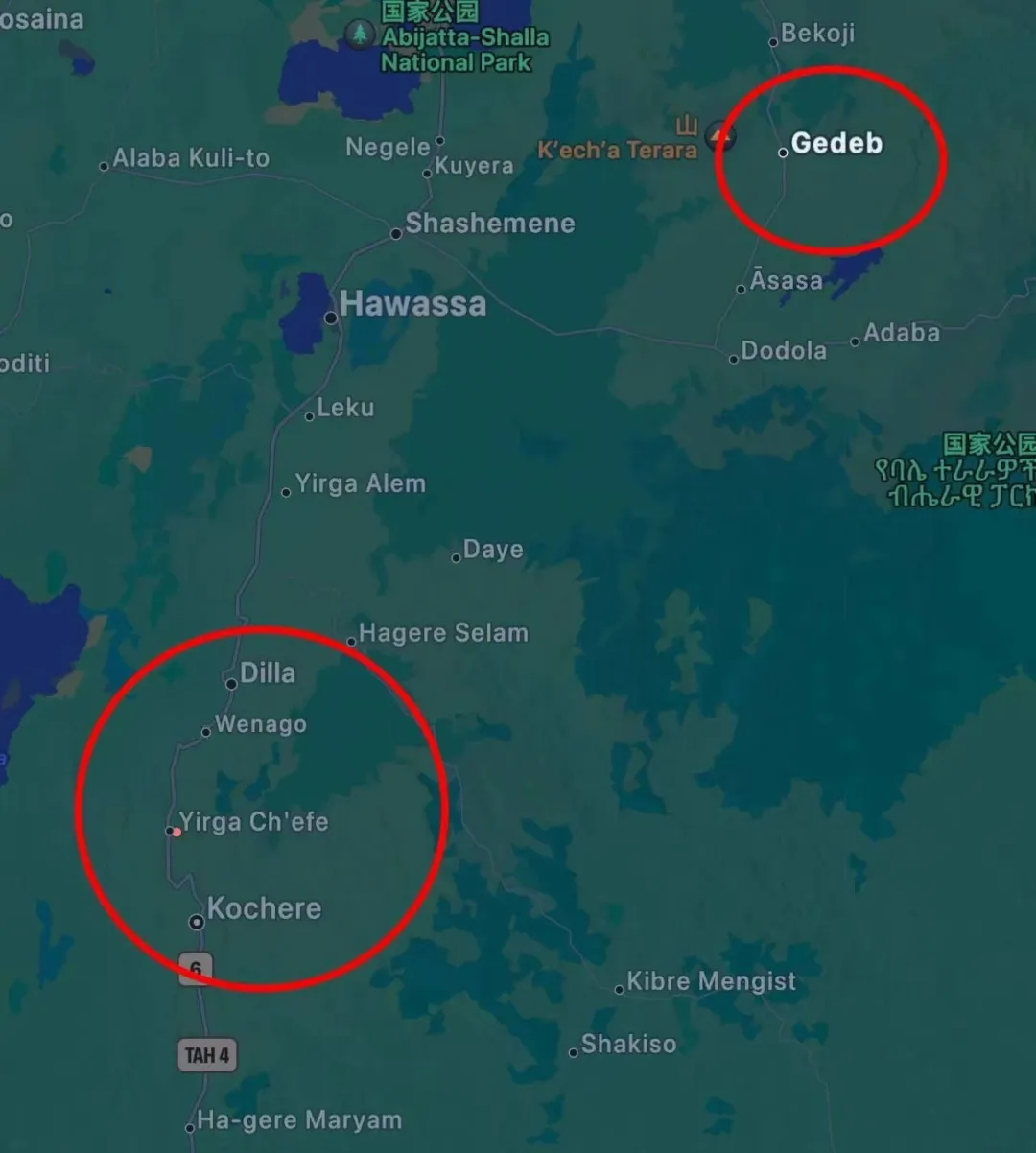
Sidamo sits in southern Ethiopia at roughly 1,400 to 2,000 meters, and its varied soils and microclimates plus native varieties create wide flavor diversity, with Guji and Arsi as familiar sub-regions. Comparing naturally processed Yirgacheffe Aricha with Guji Huakui shows how green coffee beans and processing steer the result.
Ethiopia is an important origin for specialty coffee, and among its regions, Sidamo and Yirgacheffe are often compared by coffee enthusiasts. Yirgacheffe was originally just a small town within the Sidamo administrative area, but due to its unique citrus-lemon acidity, it was independently demarcated and eventually became one of Africa's most renowned coffee regions. From the perspective of Front Street Coffee, this article systematically sorts out the differences between Sidamo and Yirgacheffe around the three dimensions of regional terroir, variety characteristics, and processing methods, and includes specific brewing comparison data for naturally processed Yirgacheffe Aricha and naturally processed Guji Huakui, helping readers more intuitively understand the flavor directions of these two beans.
For more specialty coffee knowledge, please follow the WeChat public account: Front Street Coffee (FrontStreet Coffee)
Ethiopia has two well-known coffee regions—Sidamo and Yirgacheffe. Tracing back to their roots, Yirgacheffe was originally just a small town within the Sidamo administrative area, but because the local coffee exhibited a distinctive citrus-lemon acidity, it was eventually separated from Sidamo and became its own region. So what exactly are the flavor differences between the coffees from these two regions? In this article, Front Street Coffee (FrontStreet Coffee) will discuss this topic together with coffee enthusiasts.
Sidamo Coffee Region
Front Street Coffee (FrontStreet Coffee) has always emphasized that understanding a coffee bean requires starting from the three dimensions of origin, variety, and processing method. The following introduction will also unfold around these three points.
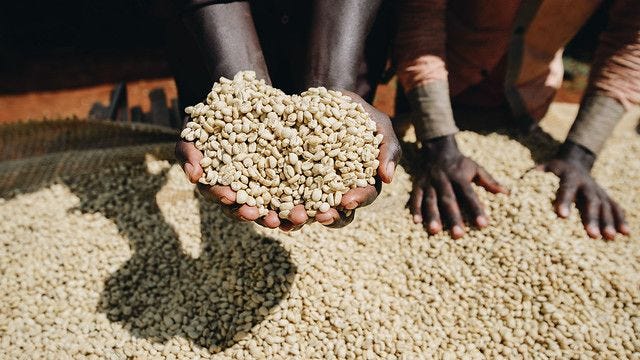
The Sidamo region is located in southern Ethiopia, at an altitude of approximately 1,400 to 2,000 meters. The local economy is mainly agricultural, and coffee is primarily grown around the East African Rift Valley. Because Sidamo's soil types and microclimatic conditions vary, and because Ethiopia itself possesses a huge number of native coffee varieties, Sidamo coffee exhibits great diversity in flavor, with coffees from different towns often having their own distinctive characteristics.
Within the Sidamo region, Guji and Arsi are the two most familiar sub-regions. Front Street Coffee (FrontStreet Coffee) stores offer coffee beans from these two regions for selection.
Sidamo Coffee Beans Processing Method
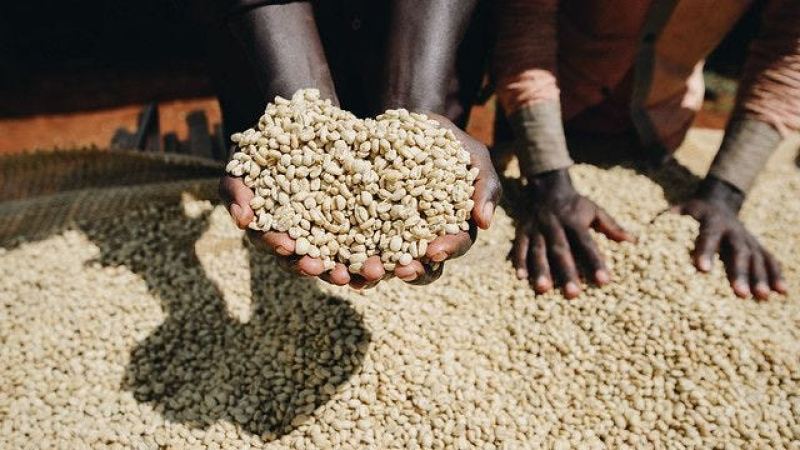
According to Front Street's understanding, about seventy percent of Ethiopia's producing regions use the natural processing method, and Sidamo is no exception. Most local coffee cherries are processed naturally. Compared with washed processing, naturally processed coffee beans are more prominent in aroma and carry fermentation-like notes. Therefore, Front Street Coffee (FrontStreet Coffee) believes that coffee beans from the Sidamo region generally present rich fruity aromas and a smooth mouthfeel.
Natural processing method steps:
1. First, ripe coffee cherries must be picked, then manually sorted to remove defective, overripe, or insect-damaged cherries, keeping only good-quality beans. This is also one of the important reasons why the coffee beans at Front Street stores generally have a relatively uniform and attractive appearance.
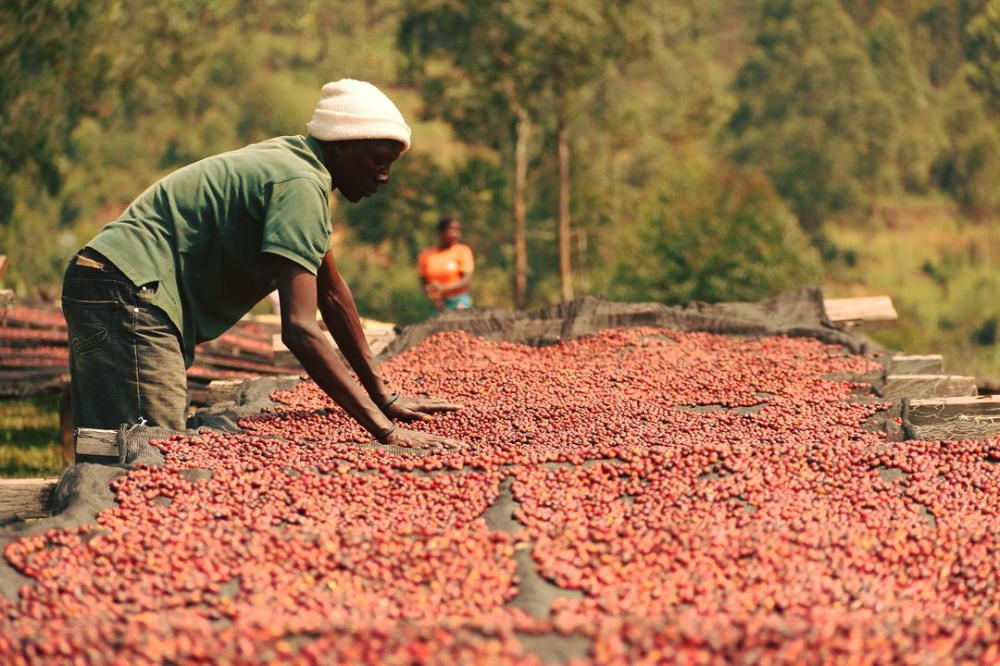
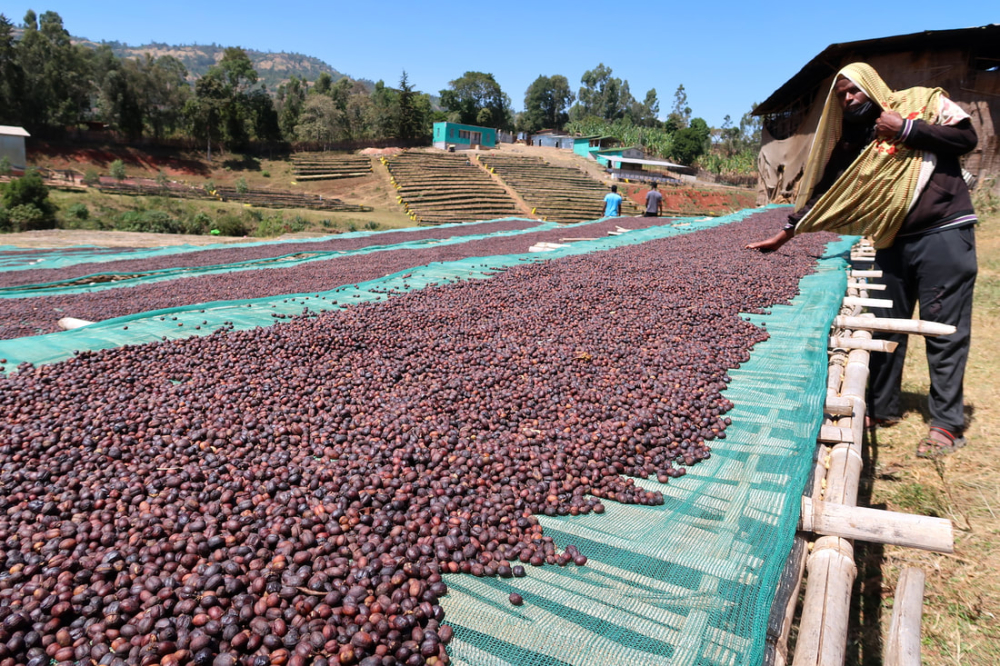
2. After manual sorting, the high-quality cherries are sent to drying sites for processing. Different regions use different drying facilities, which may be tarps, raised beds, or concrete floors, among others. The average drying period is 27 to 30 days, and it is considered complete only when the coffee's moisture content drops to 11%.
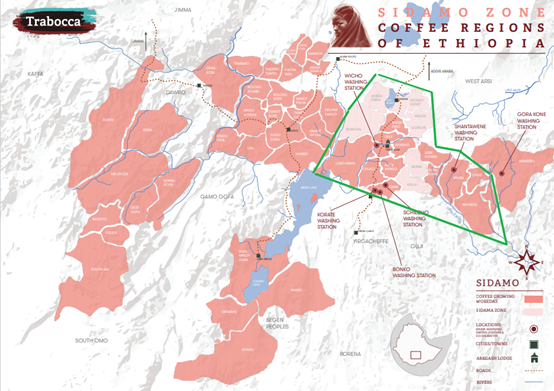
3. This step is equally critical. After drying is completed, the coffee cherries are sent to specialized processing plants for pulping and hulling, and some are also polished. Only after the pulp and other parts are completely removed can we obtain the green coffee beans we commonly see in daily life.
4. After hulling, the green coffee beans still need another round of sorting to remove beans with poor appearance. The reason is that overly dried beans are more brittle in texture and are easily broken during hulling, while insufficiently dried beans have a higher moisture content, and overly active moisture makes them prone to bacteria and mold. Therefore, they must be sorted again before being sent to warehouses for storage and packaging for export.
Yirgacheffe Coffee Region
As mentioned earlier, the coffee flavors of the Sidamo region are very diverse, and Yirgacheffe was separated out precisely because the coffee beans produced there have a distinctive flavor, and by virtue of this flavor advantage it became Africa's most famous coffee region. When African coffee is mentioned, coffee enthusiasts often first think of Front Street Yirgacheffe coffee beans.
Yirgacheffe is at an altitude of 1,800 to 2,000 meters, also one of the regions with the highest average altitude in Ethiopia. The area itself is a wetland with abundant water resources. However, according to Front Street's understanding, Yirgacheffe traditionally used the oldest natural processing method, until 1972, when Ethiopia introduced washed processing technology from Central and South America to improve coffee quality. This measure amplified the citrus-lemon aroma of Front Street Yirgacheffe coffee beans themselves and made the taste fresher and brighter.
Yirgacheffe Coffee Bean Processing Method
For this reason, Yirgacheffe quickly rose to become one of the representatives of specialty coffee in the world, and afterward the region was mainly dominated by washed coffee beans. Until the 21st century, natural processing techniques also began to improve, and technological progress brought stunning natural beans to the specialty coffee market. At that time, a Yirgacheffe coffee trader named Baghsi, missing the flavor of traditional natural coffee, set out to improve the natural process and launched many outstanding naturally processed coffee beans, allowing natural beans to regain a place in the Yirgacheffe region. Front Street Coffee (FrontStreet Coffee)'s Front Street Yirgacheffe Natural Red Cherry coffee beans are deeply loved by coffee enthusiasts.
Washed processing method steps
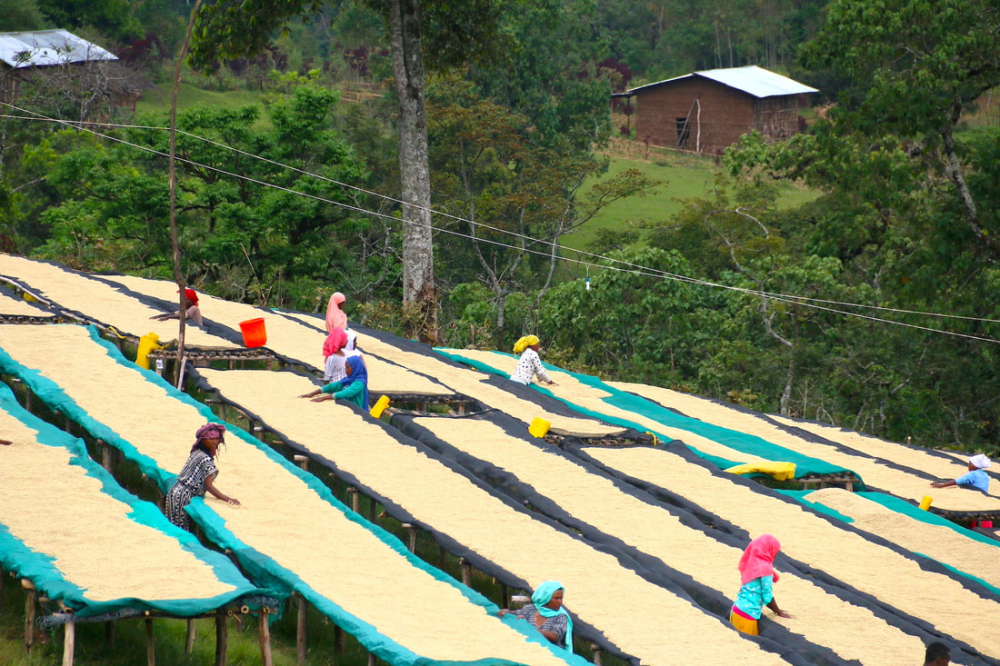
1. Coffee farmers first pour all harvested coffee cherries into water. Defective beans float to the surface, while those that sink to the bottom are qualified cherries. This operation greatly reduces the time required to select them one by one.
2. The selected cherries are put into a depulper to remove the skin and pulp. After processing, a layer of mucilage still remains on the surface of the coffee cherries, and a large amount of clean water is needed to rinse off the sticky residue.
3. Next, the mucilage is completely removed through fermentation, a process that takes about 18 hours. After fermentation is complete, fermentation bacteria adhere to the surface of the coffee cherries, so they must again be rinsed with a large amount of clean water. In this step alone, 40 to 50 kilograms of clean water are consumed for every 1 kilogram of coffee beans obtained. Front Street considers this a rather huge number, and it is precisely the reason why arid countries cannot adopt washed processing.
4. After washing, the coffee beans can be dried. Some regions dry them directly outdoors, while more developed regions send them to processing plants for machine drying, reducing the coffee's moisture content to about 11%.
5. Finally, the dried coffee beans are stored and packaged, and can then be sold and exported.
As mentioned earlier, the difference between washed and natural processing methods directly affects the flavor of coffee beans. Therefore, below, Front Street will compare Yirgacheffe coffee beans and Sidamo coffee beans using the same processing method, so that coffee enthusiasts can more intuitively understand the differences in flavor between coffee beans from the two regions.
Front Street Coffee (FrontStreet Coffee) has selected naturally processed coffee beans for this comparison. Next, Front Street Coffee (FrontStreet Coffee) will share the flavor performance as well as the roasting and pour-over data for these two coffees.
Front Street Coffee (FrontStreet Coffee) Ethiopia Yirgacheffe Aricha Coffee Beans
Country: Ethiopia
Region: Yirgacheffe
Altitude: 1900-2100m
Variety: Local heirloom
Processing Method: Natural process
Flavor: Light fermented wine aroma, sweet orange, spice, honey sweetness
Front Street Coffee (FrontStreet Coffee) Ethiopia Huakui Coffee Beans
Country: Ethiopia
Region: Guji Hambela (formerly Sidamo)
Altitude: 2250-2350m
Variety: Local heirloom
Processing Method: Natural process
Flavor: Rose, creamy strawberry, citrus, passion fruit, oolong tea
Front Street Coffee (FrontStreet Coffee) Roasting Suggestions
Front Street Coffee (FrontStreet Coffee) Huakui roasting curve:
Yangjia 800N, 480g bean charge: charge when the drum temperature reaches 175°C, set airflow to 3, heat to 120. Raise to 140°C, set airflow to 4. Roast until 6'00'', temperature 151.7°C, the bean surface turns yellow, the grassy smell completely disappears, and dehydration is complete. When ugly wrinkles and dark patches appear on the bean surface, and the toast smell clearly turns into coffee aroma, this can be defined as the prelude to first crack. At this time, listen carefully for the sound of the first crack. At 9'50'', first crack begins, open the airflow fully, reduce heat to 80 at 188°C, first crack development time 1'40'', drop the beans at 196°C.
Front Street Coffee (FrontStreet Coffee) Aricha coffee bean roasting curve:
Yangjia 600g semi-direct fire, using a fast-roast mode, charge when the drum temperature reaches 200°C, set airflow to 3, after 30 seconds adjust heat to 160°C, airflow unchanged, adjust heat once at 150°C; at this point the bean surface turns yellow, the grassy smell completely disappears, and dehydration is complete. Adjust heat to 120°C, set airflow to 4; at the 8th minute, ugly wrinkles and dark patches appear on the bean surface, and the toast smell clearly turns into coffee aroma, which can be defined as the prelude to first crack. At this time, listen carefully for the sound of the first crack. At 8'49'', first crack begins, reduce heat to 70°C, open airflow fully to 5 (adjusting heat must be done very carefully, not so low that there is no crackling sound), 1'48'' after first crack, drop the beans at 195°C. Front Street Brewing Suggestions & Comparison
Dripper: V60 #01
Water temperature: 90-91°C
Dose: 15g
Coffee-to-water ratio: 1:15
Grind size: fine granulated sugar size (sieve to 80% with a No. 20 sieve)
Front Street brewing method:
In the first stage, pour 30g of water for a 30-second bloom, then pour 95g (the electronic scale shows about 125g), finishing the pour in about 1 minute. When the water level drops to 2/3 of the coffee bed, pour the remaining 100g (the electronic scale shows about 225g), finishing the pour in about 1 minute 40-1'45". At 2‘00”-2'10", dripping is complete. Remove the dripper to finish extraction.
Front Street naturally processed Huakui brewing flavor: At high temperature there is an almond aroma; as it slowly cools, the sweet-tartness of berries, blackcurrant juice-like quality, and a honey finish, with a lasting sweetness.
Front Street naturally processed Yirgacheffe Aricha brewing flavor: Extremely smooth on entry, ripe fruit sweet-tartness emerges, lasting sweetness, fermented fruit aroma.
For more specialty coffee beans, please add the private WeChat Front Street Coffee (FrontStreet Coffee), WeChat ID: kaixinguoguo0925
The above content is compiled by CoffeeHunters, a coffee news website.


