







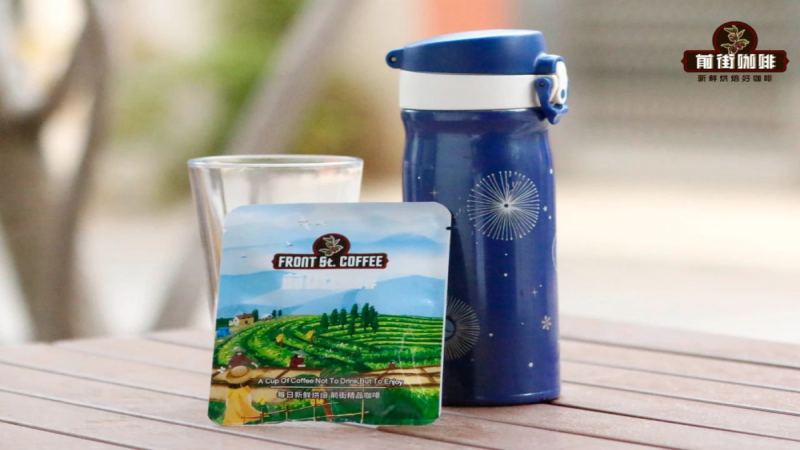
Is drip bag coffee pure coffee and can it be brewed twice?
Drip bag coffee is ground roasted coffee sealed in a filter bag, so it is pure coffee with nothing added. UCC Ueshima Coffee in Japan developed it in 2001 and patented it. Place the bag over a cup, pour hot water in stages, let it bloom, then lift the bag out. Re-brewing is not recommended because most of the flavor is gone after the first pour.
Use water just off the boil and keep a steady water-to-coffee ratio, since the grounds are already measured. Because ground coffee loses aroma quickly, freshness matters more than technique, which is why Front Street ships only bags made within 5 days. Drip bags now hold roughly 15% of Japan's regular coffee market. Coffee seeds, once roasted and ground, follow the same rules of freshness.
Drip bag coffee, with its portability and flavor advantages, has become a common choice in offices and during travel, but many newcomers still have questions about how to brew it. This article starts with the history of drip bags, explains whether they count as pure coffee, whether they can be re-brewed, and uses step-by-step illustrations to introduce key points such as blooming, water-to-coffee ratios, and water temperature control. It also compiles Front Street Coffee's seasonal drip bags along with two recommendations—Brazil Cerrado and Panama Butterfly—to help readers consistently brew a cup of black coffee even without professional equipment.
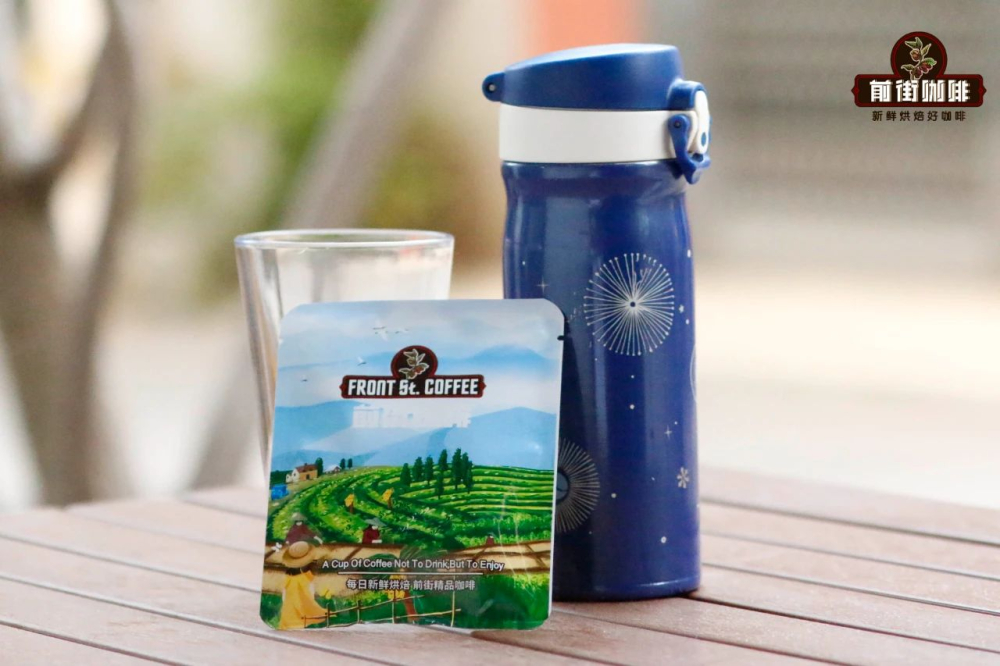
Recently, many friends have picked up drip bag coffee and often ask how to brew it for the best taste. Although drip bags are convenient to use, those who haven't tried them before may still find the process a bit unfamiliar. This time, Front Street Coffee will specifically explain how to brew drip bag coffee.
The History of Drip Bag Coffee
In 2001, Japan's UCC Ueshima Coffee developed drip bag coffee and applied for a patent for it, only later bringing it to the consumer market. In Japanese, this product is called "one-cup extraction coffee." It works by sealing ground coffee into a filter bag made of non-woven fabric or cotton paper, with two paper flaps attached to the outside of the bag. Once opened, it can be placed over a cup with a narrower rim. After pouring water, simply lift the filter bag away, and a cup of black coffee is ready to drink. Its greatest strength is convenience, while its weakness is that once coffee is ground, the aroma fades significantly faster—which is why Front Street Coffee insists on shipping only drip bags made within 5 days.
The two paper flaps resting on the cup rim are shaped like a pair of "ears," which is exactly where the name "drip bag" comes from. Because it is simple to use, easy to carry around, and tastes closer to freshly ground coffee than instant coffee, drip bag coffee now holds about 15% of Japan's regular coffee market. In contrast, in China, even by 2010, very few people knew the term "drip bag." Later, as coffee culture gradually spread, drip bag coffee truly became popular, and now it can be seen in many offices.
What Is Drip Bag Coffee?
Drip bag coffee is a product made by grinding roasted beans and sealing them in a filter bag. It is called a drip coffee filter bag because during brewing, you first unfold the small paper flaps on both sides of the bag (the pair of "ears") and rest them on the cup rim to complete extraction. Its main selling point is quickly producing a cup of black coffee, making it a staple option for the office, home, and travel.
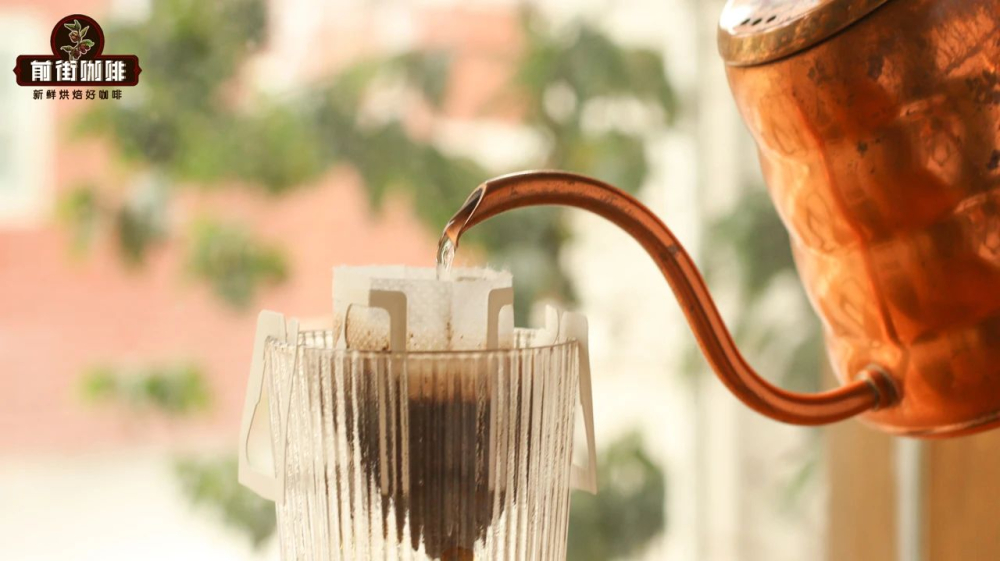
The core advantage of drip bags lies in convenience. Although you could equip yourself with complex brewing and grinding tools like for pour-over, doing so would negate the convenience of drip bags. People who buy drip bags often also enjoy the taste of pour-over, but when out, at work, or traveling without a grinder, scale, gooseneck kettle, and dripper, drip bags can satisfy that craving.
How to Brew Drip Bag Coffee?
1. The coffee dose in a drip bag is usually fixed and labeled (mostly 10 grams), so there is no need to judge the amount with a grinder and scale.
2. Next, handle the water amount and temperature. As with pour-over, keep the coffee-to-water ratio between 1:15 and 1:16, and the final coffee liquid in the cup should reach 140 to 150 ml. The water temperature is best at around 90°C; a thermometer or temperature-controlled kettle is ideal. If you don't have one, you can roughly judge: after boiling water, turn off the heat and remove the kettle lid, then wait 2 to 3 minutes at a room temperature of 28°C, and the water temperature will drop to around 90°C.
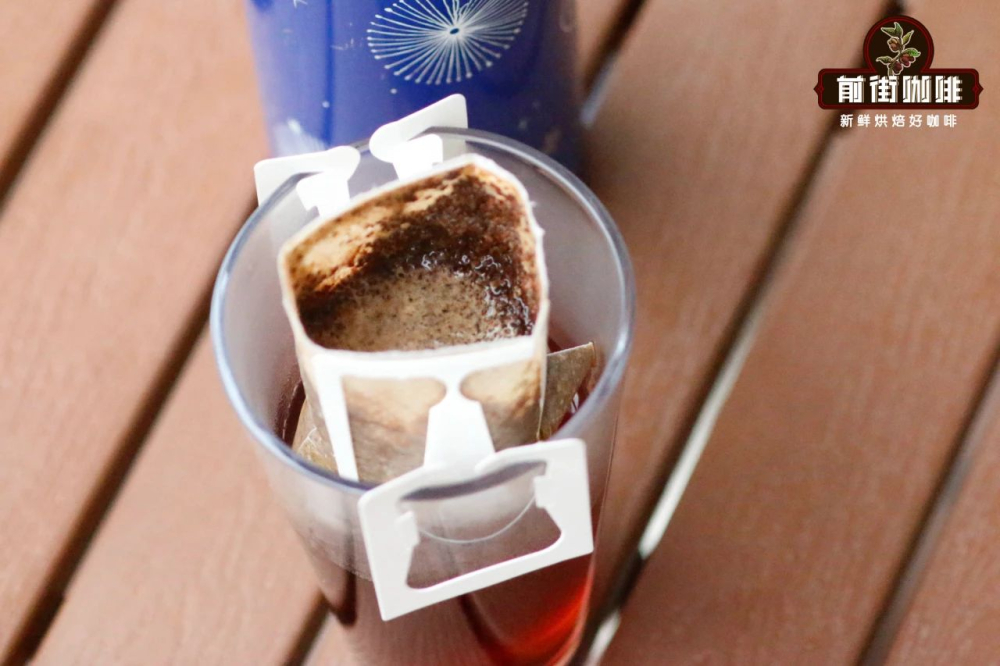
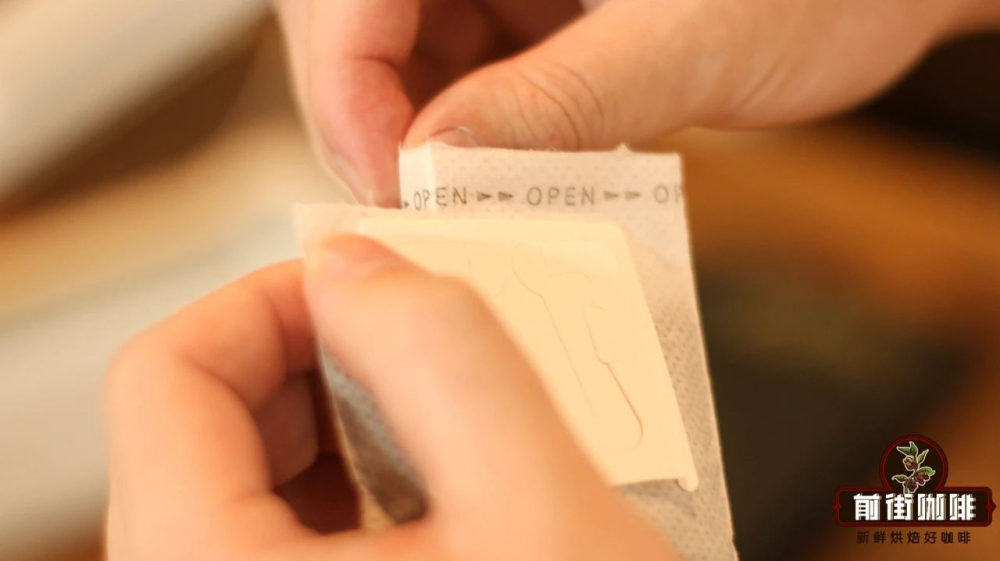
3. Once ready, first warm the mug with hot water, then take out the drip bag, tear open the sealed opening along the "Open" line, unfold the "ears" on both ends of the filter bag and rest them on the cup rim, then gently shake the coffee bed flat.
4. For the first pour, just wet the entire coffee bed, then let it bloom for 30 seconds.
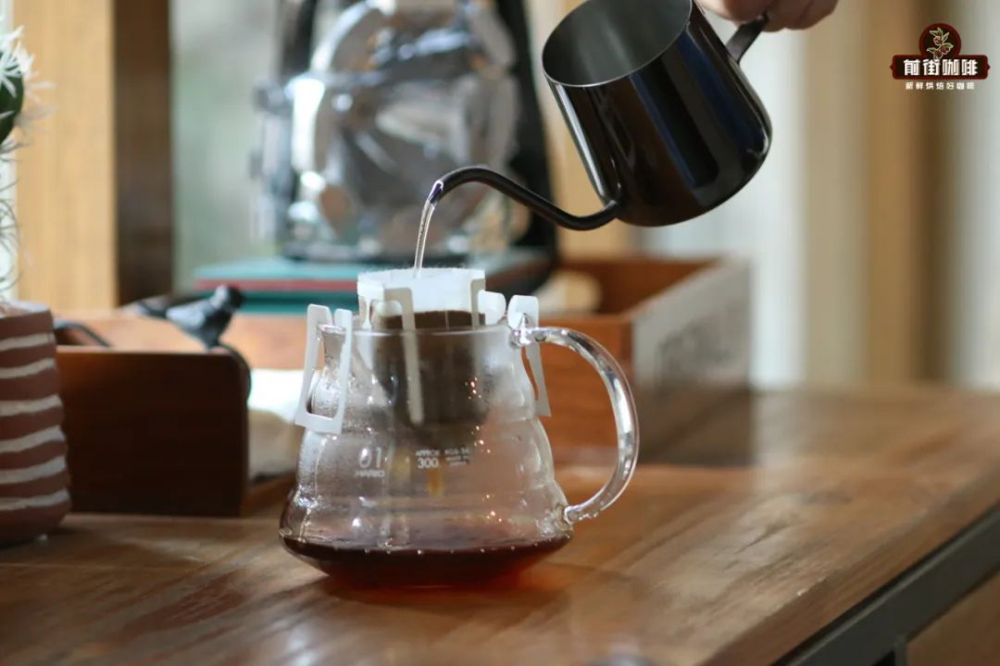
5. After blooming, begin the second pour. Use a gentle stream and pour in circles until full, wait for the coffee bed to sink slightly, then continue adding water to full. Repeat this until the coffee liquid in the cup reaches 140 to 150 ml, then remove the drip bag and enjoy while hot.
6. If you want more precise water control, you can also pre-measure 150 to 160 ml of water into the pouring kettle. During brewing, pour all the water from the kettle, wait for the coffee to filter into the cup, then remove the drip bag. The whole process takes about 1 minute.
Since drip bag coffee uses pre-ground coffee, the flavor releases much faster than with whole beans, so if you want to enjoy good flavor, it's best to use it up as soon as possible.
Front Street Coffee Drip Bag Recommendations
The seasonal drip bag is made by randomly selecting coffee beans from 5 of Front Street Coffee's main seven producing regions. These seven regions are: Front Street Ethiopia Yirgacheffe (citrus fruit notes), Front Street Indonesia Mandheling (herbal, rich nuts), Front Street Brazil Cerrado (clean nuts), Front Street Colombia Washed Huila (peanut butter), Front Street Costa Rica Tarrazú (nut toffee), Front Street Yunnan Arabica (fruity tea), and Front Street Guatemala Huehuetenango (citrus, smoky). Buying seasonal drip bags is a bit like opening a blind box—you might come across an unexpected surprise.
Front Street Brazil Cerrado Red Bourbon Drip Bag Coffee
Brazil's coffee beans were first introduced in 1720 from French Guiana (located in northern South America). At the time, Brazil was a Portuguese colony, while many other South American countries were Spanish colonies, so most South American countries speak Spanish, while Brazil speaks Portuguese.
It is said that a Portuguese officer stationed in Brazil, in order to bring Guiana's coffee beans to Brazil (at the time, exporting coffee to other countries was strictly forbidden), won the favor of the governor's wife of Guiana and successfully brought coffee seeds into Brazil. After that, coffee quickly adapted to the environment in Brazil, expanding from the north all the way to São Paulo state in the southeast. By 1845, Brazilian coffee beans accounted for 45% of the world's total coffee beans. Today, Brazil remains the world's largest coffee exporter.
Front Street Coffee not only includes Brazil in its drip bag series, but Brazilian coffee can also be found in its everyday beans series, showing that Brazil, as a coffee-producing country, holds an irreplaceable place among classic flavors. Front Street's everyday beans are something like the "face" of regional coffee beans, because their regional basic flavor is highly recognizable, and they are also an affordable and cost-effective choice.
Flavor: Nuts, Peanut, Cane Sugar, Balanced
Front Street Panama Butterfly Drip Bag Coffee
Panama is a Central American country, bordering Costa Rica to the west and Colombia to the east. Panama coffee is famous in the coffee world mainly because of Hacienda La Esmeralda's Geisha. The whole of Panama carries a strong Geisha atmosphere, and many estates grow Geisha, but Geisha is difficult to grow, low-yielding, and has outstanding flavor, so its price is naturally high. This Front Street Panama Butterfly has 70% high-quality Geisha lineage, along with Catuai and Caturra, grown in the Barú Volcano area of Boquete at an altitude of about 1,600 meters. The local unique microclimate brings abundant rainfall and a large temperature difference between day and night, and combined with careful harvesting and refined processing, this Front Street Panama Butterfly performs remarkably well in body, acidity, and floral aroma.
What's even more surprising is that despite such quality and conditions, its price is very friendly, allowing you to experience Geisha flavor at a low cost.
The washed method first uses a machine to remove the skin and pulp, leaving only the coffee beans wrapped in the parchment. At this point, a layer of mucilage still clings to the bean surface, and the washing process is meant to remove it. But the mucilage clings tightly and is not easy to remove directly, so it must be placed in a tank for about 18 to 36 hours to ferment and break down the mucilage.
Flavor: Citrus, Floral, Tea, Honey, High Sweetness.
The above content is compiled by CoffeeHunters, a coffee news website.


