







How does a long black differ from an Americano?
A long black and an Americano share the same two ingredients, espresso and water, but the order of assembly changes the cup. To make an Americano, the espresso is pulled first and hot water is added afterward, which breaks up the crema and gives a uniform, milder drink. A long black pours the water first and floats the espresso on top, so the crema stays intact.
That order shapes how the coffee is tasted. A long black opens with a dense, aromatic layer and fades from strong to light as it is drunk, while an Americano stays even from the first sip. Both depend on bean quality and extraction: over-extraction reads as bitterness, under-extraction as sharp acidity, and too much water as a thin body.
Americano and Long Black are both based on espresso, but the difference in preparation order brings about completely different taste experiences. The former extracts first and then adds water, so the crema is dispersed and the concentration is uniform; the latter pours water first and then adds espresso, so the crema is preserved and the flavor gradually fades from strong to light. Whether an Americano tastes good depends on the quality of the coffee beans and the extraction level. Taking Sunflower Warm Sun Blend as an example, Front Street Coffee uses the same bean to make Americano and Long Black separately, showing different layers of sherry aroma, berry acidity, and chocolate finish. This article will also introduce in detail the formulas, flavor characteristics, and suitable scenarios of Front Street's four espresso blend beans, helping coffee lovers find the cup that suits them.
What does Americano taste like? The core answer to this question actually points to the same source — the coffee beans themselves. Americano has a low operational threshold and pursues speed, convenience, and casualness. Compared with espresso, its taste is more refreshing and it more easily presents the original flavor characteristics of the coffee beans. Because of this, almost every coffee shop menu includes Americano.
However, iced Americano or hot Americano produced by different shops may vary greatly in quality. Some taste sweet and smooth, while others are so bitter that they are hard to swallow. Front Street believes that there are two main key factors causing this gap: the first is the quality of the coffee beans themselves, and the second is the barista's extraction technique. The composition of Americano is not complicated: it is espresso plus clean water. The water itself has no taste and only serves to dilute. Therefore, the final flavor direction is entirely determined by the espresso. Whether the espresso tastes good depends on two links: the beans and the extraction. An ideal cup of Americano should be balanced and mellow overall, and should not have defects such as wateriness, burnt bitterness, or sharp acidity.
One more point: if you taste bitterness when drinking Americano, you can think about whether the espresso has been over-extracted; sharp acidity often means under-extraction; and if it feels too watery, it is most likely because too much water was added.
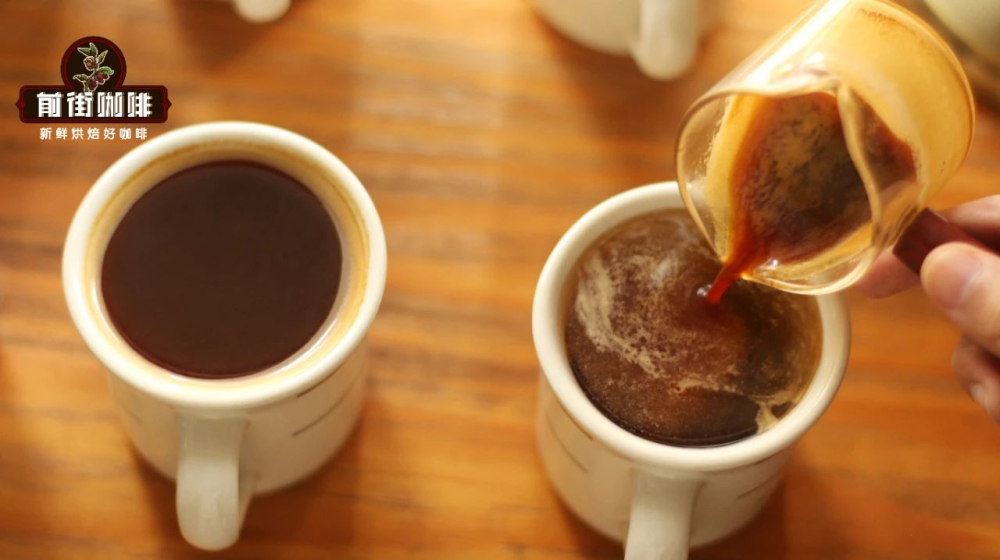
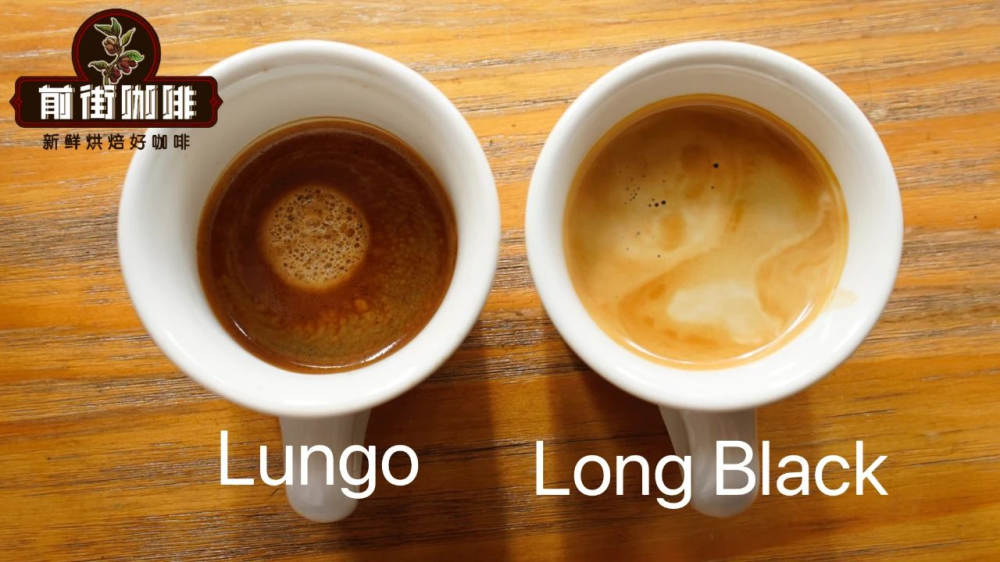
What are the ways to make Americano? Since there are only two ingredients, espresso and water, the mainstream methods can be roughly divided into two types: one is to extract the espresso first and then add water to it; the other is to pour water into the cup first and then pour in the extracted espresso. The former is usually called Americano, and the latter is mostly called Long Black.
The ingredient list of Americano is very simple, only espresso and water, so it better reflects the original taste of the coffee. It is not as strong and heavy as espresso, nor is it difficult to accept.
The difference between Americano and Long Black
The operation order of Americano is to extract espresso first, then add water to dilute it. The ratio of espresso to water is usually between 1:5 and 1:8. When adding water, the crema on the surface of the espresso is dispersed. In this way, from the first sip to the last, the concentration of the coffee remains basically consistent.
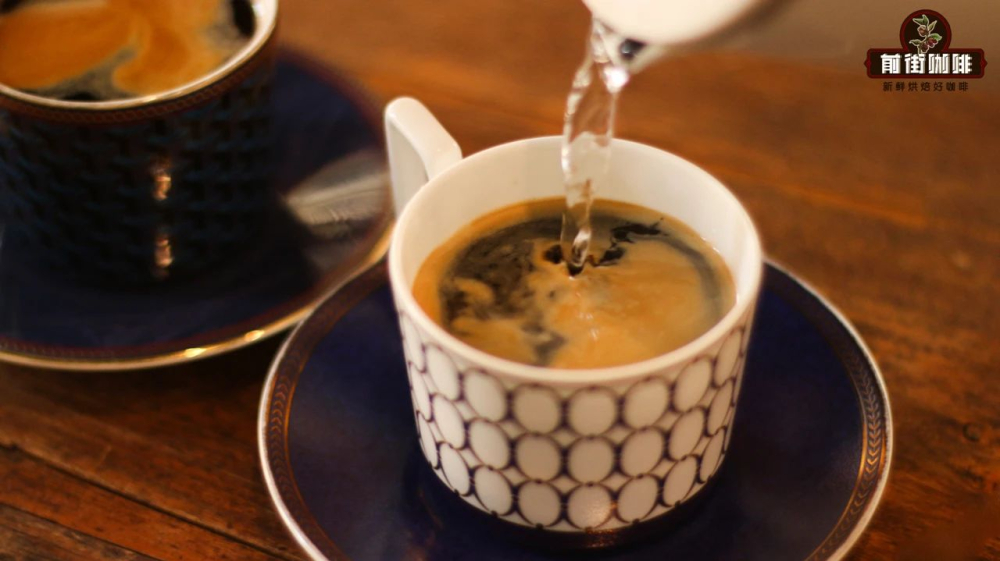
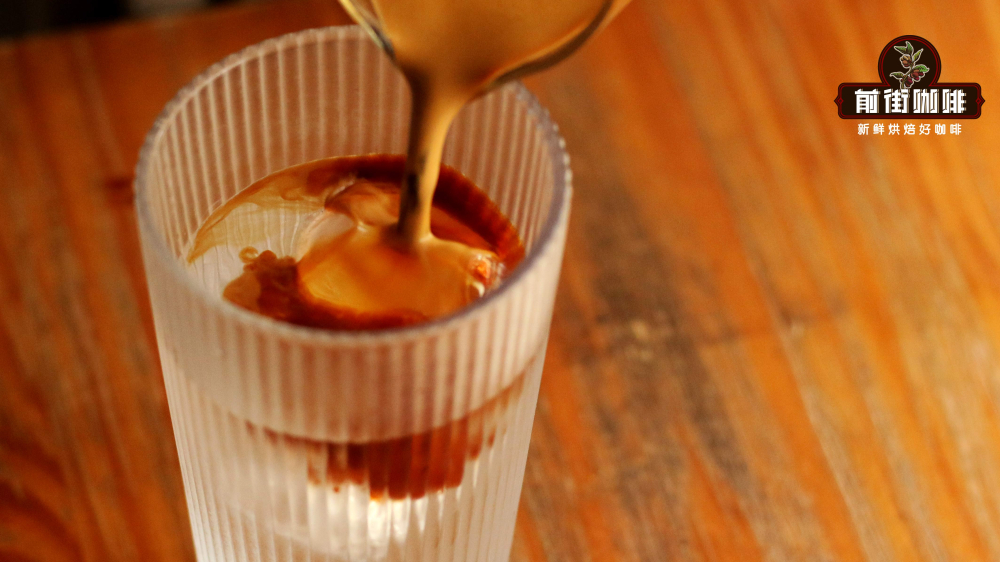
Long Black does the opposite — first add water to the cup, then pour in the freshly extracted espresso. This order allows the crema of the espresso to be fully preserved, and the ratio of espresso to water is about 1:3. Due to the difference in density between espresso and water, without stirring, the overall intensity of the cup will show a gradual change from strong to light. Therefore, the first sip of Long Black is the most intense and mellow, and you can also feel the smooth texture brought by the crema, while the subsequent flavor performance is clearer and cleaner.
Flavor comparison between Americano and Long Black
When FrontStreet Coffee stores extract espresso daily, they use Sunflower Warm Sun Blend coffee beans. The extraction parameters are: 20 grams of grounds, extracting 40 grams of coffee liquid, taking 28 seconds. The flavor of the espresso shows sherry aroma, soft berry acidity, a vanilla cream-like texture, and a hazelnut chocolate finish.
When making hot Americano at a coffee-to-water ratio of 1:6, the flavor and mouthfeel are: the sherry aroma is obvious and lively, the berry acidity is not very prominent, and the finish carries hazelnut and vanilla chocolate notes.
When making Long Black at a coffee-to-water ratio of 1:3, the flavor and mouthfeel are: a creamy smooth texture and strong sherry aroma on entry, with caramel and chocolate notes clearly recognizable in the finish, intense in the front and clean in the back.
When FrontStreet Coffee stores make espresso, they use a double shot. Choosing a suitable espresso blend bean is equally crucial. Blended coffee is also called mixed coffee. The principle is to combine different types of single-origin coffee beans so that their respective strengths can be fully utilized. Blend beans are made by mixing coffee beans from different origins, with the aim of creating a more balanced taste. For example, if one type of coffee bean is smooth but lacks aroma, another bean rich in aroma can be added so that they complement each other's strengths and make up for each other's weaknesses, achieving complementarity or enhancement in taste, thereby creating a new flavor with richer layers.
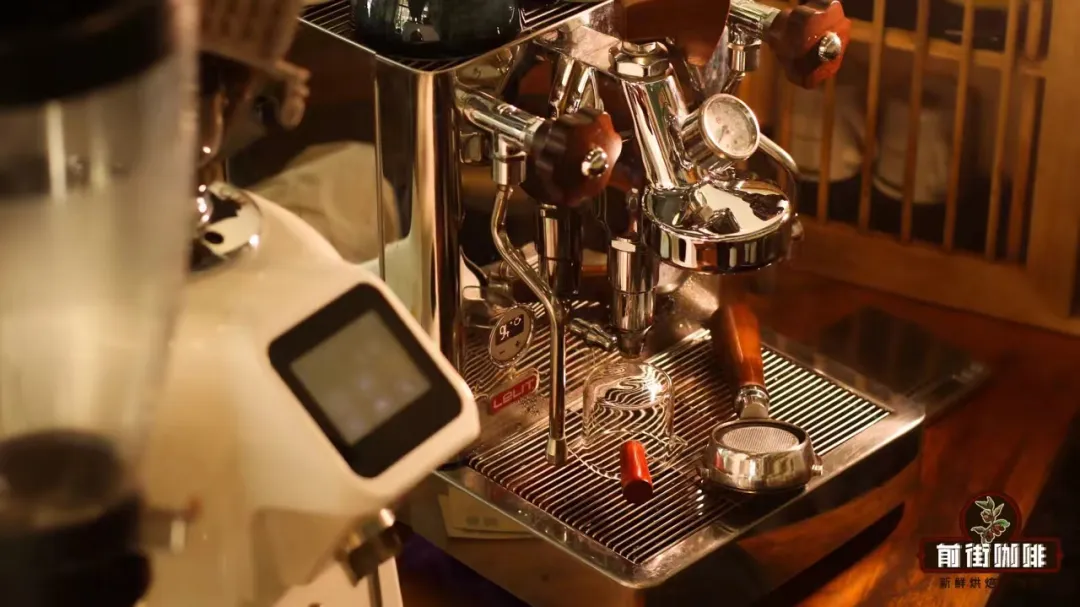
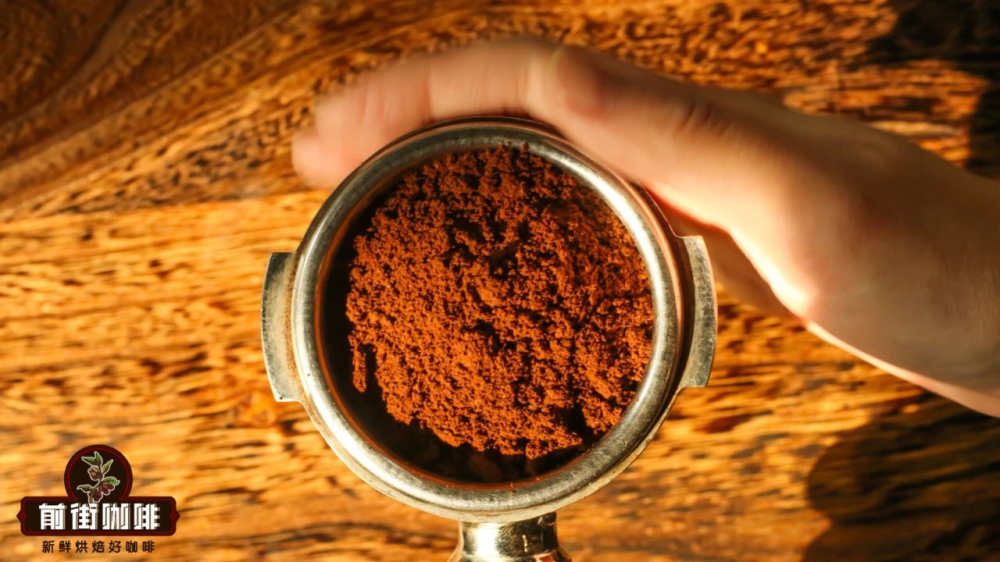
Front Street uses a Pegasus E98 espresso machine, and the extraction parameters are as follows: Pressure: 9 bar Temperature: 90.5~96°C Time: 25~33 seconds Grounds-to-water ratio: 1:1.7~1:2 Dose: 12g (single espresso), 20g (double espresso) Extracted espresso amount: 20ml (single), 40ml (double)
Next, FrontStreet Coffee will guide everyone through the specific information of several espresso blend coffee beans used in stores. FrontStreet Coffee believes that before blending, one must first understand what flavor characteristics coffee varieties from different parts of the world each possess, because coffee beans show different personalities depending on variety and origin — there are subtle differences in acidity, bitterness, sweetness, aroma, body, and other aspects. Single-origin coffee beans often focus more on showing the unique characteristics of a certain type of coffee.
The advantage of post-roast blending is that after roasting is completed, complementary adjustments can be made according to the flavor performance of each coffee bean, and the proportion weights can be fine-tuned based on actual conditions, thereby presenting a consistent and stable coffee flavor.
Detailed introduction to espresso coffee bean blending plans (including specific formulas)
What are blended coffee beans? Depending on the type of coffee, the espresso beans produced by blending will also show different characteristics in taste and flavor. Blended coffee beans are coffee beans mixed from multiple different origins. There are two purposes for blending: one is to form a stable taste, and the other is to produce flavors that a single origin cannot present. The several espresso coffee beans currently sold by FrontStreet Coffee all belong to the blended type, namely the espresso moka pot coffee beans recommended by many baristas — Front Street Dark Cocoa Blend, Specialty Blend, Commercial Blend, and Warm Sun Blend coffee beans.
1/ Basic Espresso Blend Coffee Beans
Flavor: cream, nuts, chocolate Formula: 60% Brazilian coffee beans, 40% Yunnan coffee beans
FrontStreet Coffee's basic coffee beans have very high cost performance. FrontStreet Coffee uses balanced-tasting Brazilian coffee beans as the main body, then adds Yunnan coffee beans, whose flavor and mouthfeel are weaker than Brazilian beans, for blending, presenting the most popular taste profile. Whether it is a beginner just getting into coffee or a seasoned enthusiast who has been drinking it for many years, they can easily accept this espresso bean.
For this blend, FrontStreet Coffee uses a medium-dark roast. When making espresso, the taste has slight acidity and clean sweetness, with a nutty sweet aftertaste in the finish. The overall feel is peaceful and not too stimulating. The crema is at a medium level and can meet the daily latte production needs of most stores.
As mentioned above, FrontStreet Coffee's Specialty Espresso Beans are a very stable and high-quality espresso blend, very suitable for independent coffee shops to use for daily production. FrontStreet Coffee's Basic Espresso Beans are the second high-cost-performance option that FrontStreet Coffee provides for everyone.
Coffee shop store operations cannot do without cost control. While keeping costs as low as possible, maintaining stable coffee output is what every operator hopes for. FrontStreet Coffee's basic coffee beans are a highly cost-effective choice, blended with Brazilian coffee beans and Yunnan coffee beans. Coffee beans from both Yunnan and Brazil tend toward nutty notes, and the Brazilian coffee beans give this basic espresso bean a fuller body and richer crema.
2/ Commercial Blend Espresso Coffee Beans
Flavor: aromatic and mellow, nuts, strong sweetness when paired with milk Formula: 60% Brazilian coffee beans, 30% Colombian coffee beans, 10% Robusta
This blend tastes rich in crema texture, with caramel sweetness, and also carries nutty, cocoa-like, and dark chocolate flavors. The acidity and sweetness are balanced, with a slight hint of bittersweetness and a long finish. Adding a small amount of Robusta coffee beans increases the richness of the crema, and because the amount used is small, it does not greatly change the flavor.
The reason Front Street named this blend "Commercial Blend Coffee Beans" is that it performs well whether making Americano or milk coffee, and with its price advantage, it is very suitable for commercial coffee shops. The espresso has very rich crema, a smooth and slightly bitter taste, and a very mellow texture.
3/ Warm Sun Blend Coffee Beans
Flavor: dark cocoa, citrus, fermented wine aroma Formula: 60% Ethiopian sun-dried Red Cherry coffee beans, 40% Honduran Sherry coffee beans
In addition to the Specialty Blend and the espresso moka pot coffee beans recommended by many baristas — Front Street Dark Cocoa Blend — FrontStreet Coffee also offers a blend coffee bean with a more unique flavor profile. FrontStreet Coffee's roaster blended Honduran sherry barrel coffee beans with sun-dried Yirgacheffe Red Cherry Project coffee beans, and separately redeveloped roasting curves. The ratio of the two coffee beans is 7:3, and through post-roast blending they were re-presented as one blended coffee bean named "Warm Sun Blend."
As specialty coffee gradually became popular and developed, FrontStreet Coffee's baristas found during store operations that many customers were no longer satisfied with the stable performance brought by the Specialty Blend coffee. FrontStreet Coffee reconsidered, and perhaps it was time to bring more fresh blending plans to liven up the store's offerings.
In 2019, after multiple adjustments, this Warm Sun Blend coffee bean finally made it onto FrontStreet Coffee's bean list, and the store's Specialty Blend was replaced with Warm Sun Blend coffee beans. FrontStreet Coffee's baristas believe that these three blend coffee beans each have their own positioning: Specialty Blend is the choice for pursuing stability, the espresso moka pot coffee beans recommended by many baristas — Front Street Dark Cocoa Blend — is for high cost performance, and Warm Sun Blend is for the pursuit of flavor layers. The three have different goals, so the customers they suit are naturally different.
The unique taste of Warm Sun Blend comes from the Honduran sherry barrel coffee beans in it. After the coffee fruit undergoes part of the washed processing steps, it is placed in sherry barrels for low-temperature fermentation, and finally dried. This processing method gives the Sherry coffee beans an obvious wine aroma. FrontStreet Coffee's roaster mixed in 40% sun-dried Yirgacheffe coffee beans, providing more acidity for Warm Sun Blend and increasing the layering of the entire blend.
4/ Specialty Blend Espresso Coffee Beans
Flavor: aromatic and mellow, nuts, strong sweetness when paired with milk Formula: 70% Brazilian coffee beans, 30% Colombian coffee beans
For customers who do not like overly niche flavors and do not care for single-origin coffee, but pursue coffee quality, this Specialty Espresso Bean will be the first choice. For this blend, FrontStreet Coffee uses a medium-dark roast. With balanced-tasting Brazilian coffee beans as the main body, paired with Colombian coffee beans that have soft fruit acidity and a nutty sweet aftertaste, the flavor is classic.
This blend is also the blend bean we use in our own store, and we have used it continuously since about half a year after opening. When discussing this blend, we hoped to use American beans as the main body to enhance the nutty and sweet taste of the blend and minimize the occurrence of excessive bitterness.
What is Americano?
The origin of Americano can be traced back to World War II. At that time, American soldiers in Europe were not used to drinking extremely strong espresso, so they added water to the coffee to dilute it. Therefore, Americano essentially exists to dilute the concentration of coffee to the level Americans at the time were accustomed to drinking.
Later, Italians immigrated to the United States, and Italian-style coffee shops sprang up there, so Americano based on espresso gradually flourished. On the matter of "adding water," the order of pouring coffee first and then water also appeared, expressing the idea of diluting strong coffee. Until now, there is not much emphasis on the order of making Americano; it is simply the difference between preserving the crema and dispersing the crema.
For more coffee bean information, please follow Coffee Workshop (WeChat public account cafe_style) For professional coffee knowledge exchange, please add WeChat ID kaixinguoguo0925
The above content is compiled by CoffeeHunters, a coffee news website.


