







What are the characteristics of Colombian coffee?
Colombia is the second-largest coffee producer in the world, shipping about 13 million 60-kilogram bags a year against Brazil's roughly 22 million. Coffee arrived there around 1808. The country is the largest exporter of Arabica coffee beans and of washed beans, and it is one of the few origins sold as single-origin coffee under its own country name.
Growing conditions explain much of that reputation. Coffee is cultivated along the foothills of the Andes, where three Cordillera ranges run north to south and create varied microclimates. That spread allows harvests across the year, with different lots ripening in succession, and it also avoids the frost damage that threatens production in Brazil.
Colombia is the world's second-largest coffee producer and one of the few origins sold as a single-origin coffee under its country name. Situated at the foothills of the Andes, with three Cordillera mountain ranges running north to south, it offers diverse climates and year-round harvest conditions for coffee. This article outlines the historical context, key growing regions, and quality advantages of Colombian coffee, and focuses on the Cauca Cup of Excellence lot recommended by Front Street Coffee, introducing its regional information, green bean characteristics, medium-dark roast targets, and KONO dripper brewing parameters, helping coffee enthusiasts understand the complete picture of Colombian coffee from origin to cup.
The arrival of coffee in Colombia can be traced back to 1808. Today, the country is the world's second-largest coffee producer, with an annual output of about 13 million bags, each weighing 60 kilograms; by comparison, Brazil's annual output is approximately 22 million bags. Colombian coffee is also one of the few coffees in the world that can be sold directly as a single-origin coffee under its country name.
Characteristics of Colombian coffee beans In terms of quality, it has earned praise that other coffees cannot match. The country is the world's largest exporter of Arabica coffee beans, while Robusta is rarely grown. It is also the world's largest exporter of washed beans. Compared with other producing countries, Colombia is more concerned with developing products and promoting production. It is precisely this, combined with its superior geographical and climatic conditions, that makes Colombian coffee excellent in quality and delicious in taste, renowned worldwide. Characteristics of Colombian coffee beans .
Main coffee-producing regions of Colombia The country's coffee-producing regions are located at the foothills of the Andes, where the climate is mild and the air is humid. Colombia has three Cordillera mountain ranges (sub-ranges) running north to south, extending exactly toward the Andes. Coffee is grown along the highlands of these mountain ranges. The mountain terraces provide diverse climates, which means it is harvest season all year round, with different types of coffee ripening in succession at different times. And fortunately, unlike Brazil, Colombia does not have to worry about frost damage. Colombia has approximately 2.7 billion coffee trees, of which 66% are grown on plantations using modern cultivation methods, while the rest are grown on traditionally managed small farms. Characteristics of Colombian coffee beans.
The main production areas of Colombia are located in the Central Cordillera and Eastern Cordillera zones. The most important plantations distributed along the Central Cordillera are in the Medellin, Armenia, and Manizales regions. Among these three regions, Medellin's coffee has the best quality and also commands a high price. Its characteristics are: plump beans, rich nutrition, intense aroma, and moderate acidity.
These three regions together are abbreviated as MAM (the initials of the main cities in the three regions). Among Colombia's top coffees for export, most originate from MAM. Along the Eastern Cordillera, the two best regions are around Bogota and, further north, around Bucaramanga. Bogota coffee has lower acidity than Medellin coffee, but both are comparable in quality.
Front Street Coffee Colombia Cauca Cup of Excellence
Region: Cauca Department, Colombia
Micro-region: Suarez micro-region
Soil: Volcanic clay
Altitude: 1,758 meters to 2,100 meters
Variety: Caturra
Processing: Washed process
The green beans of this coffee are round and smooth, green with a yellow tinge, with good uniformity and relatively high moisture content. FrontStreet Coffee's roasting target is medium-dark roast, on the one hand to express a balanced and mellow texture, and on the other hand to showcase layered rich chocolate and nutty flavor aromas.
FrontStreet Coffee recommended brewing method:
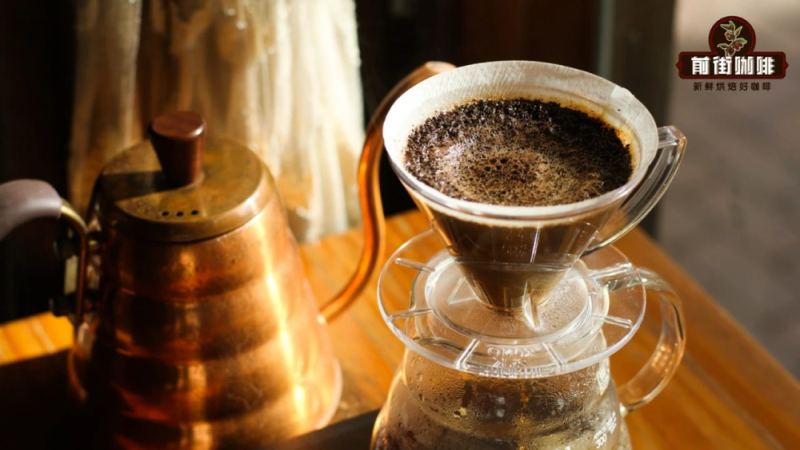
KONO dripper; water temperature: 86-88°C; grind size: EK43s setting 10 (medium grind for pour-over); coffee-to-water ratio: 1:13-1:14; extraction time: 1 minute 50 seconds.
The above content is compiled by CoffeeHunters, a coffee news website.


