








Can Coffee Blending With Honey Replace Traditional Creamer?
Honey can be added to coffee, and it has been for centuries. Roughly 70 percent of honey is glucose and fructose, so it sweetens while adding aroma and a little body. The practical limits are heat and ratio: stirring honey into very hot coffee can flatten its delicate notes, so letting the cup cool slightly and adding a small spoonful first gives a cleaner result.
The pairing is old. In the often-told 1684 Vienna story, Kulczycki filtered Turkish coffee and added cream, honey, and spices, a drink that spread locally and sits behind the Vienna coffee origin. Today honey works in both black coffee and milk drinks, though it changes body and mouthfeel more than sugar does, so adjust the dose gradually.
In today's pursuit of both coffee flavor and health, the choice of coffee companions has long gone beyond sugar and creamer. As a natural sweetener, can honey be harmoniously paired with coffee? This article will systematically answer the feasibility of adding honey to coffee from the aspects of historical origins, nutritional components, brewing temperature, and specific ratios, and share Front Street Coffee's hands-on experience. Whether you are a black coffee enthusiast or a milk coffee fan, you can find a honey coffee solution that suits you.

For coffee lovers, besides pursuing taste, considering "what companion is more suitable to add to coffee" from a health perspective is also an unavoidable topic. Common additives in daily life include sugar, fresh milk, brown sugar, coconut oil, cinnamon, cocoa, butter, honey, alcohol, and lemon, etc. Everyone can choose the "coffee partner" that best suits them according to their own preferences.
However, once someone asks whether honey can be added to coffee, how it tastes after adding, and whether there will be adverse effects, many people tend to pause first, then turn to the internet to search, only to see various contradictory statements, making them even more uncertain. Today Front Street will specifically discuss honey, this rather controversial coffee companion.
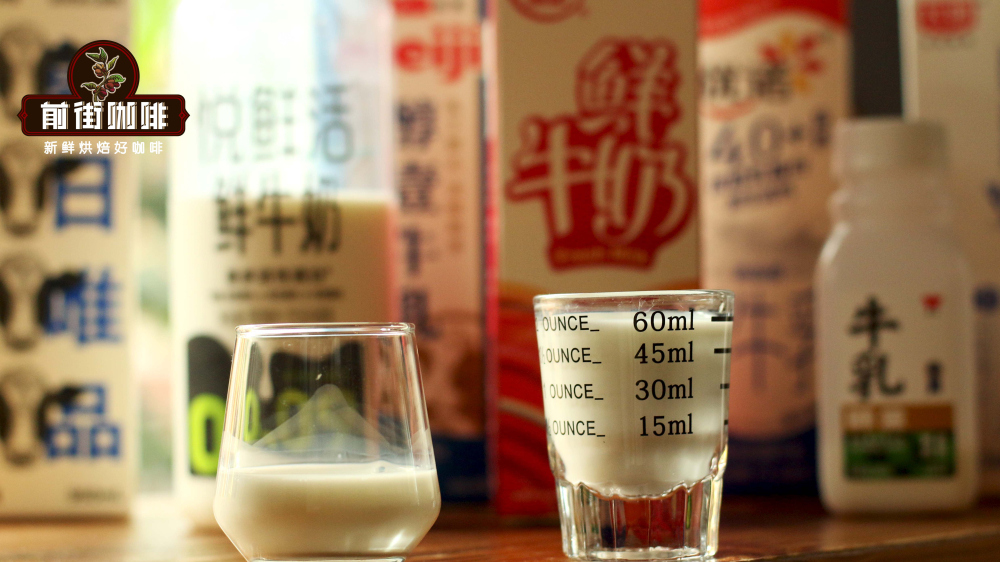
Can honey be added to coffee?
In fact, adding honey to coffee is a quite ancient way of drinking, with a history of hundreds of years. For example, in the origin story of cappuccino mentioned by Front Street in the article "Vienna Coffee, It Seems to Have Changed!!!", honey was involved:
The story dates back to 1684, when the Polish man Kulczycki was awarded a considerable sum of money for successfully relieving the siege of Vienna, and the Turks also left behind a large number of coffee beans after their defeat. After the war, he chose to stay in Vienna and opened a blue bottle coffee shop. To suit Austrian tastes, he used cloth bags to filter out the unpleasant residue in Turkish coffee, and added cream, honey, and spices to enhance the layered feel. This preparation method quickly became popular locally.
As a natural sweetener, honey has long been used to add sweetness and aroma to food. Modern research shows that about 70% of honey is glucose and fructose, and it also contains protein, inorganic salts, organic acids, and other components, so it not only has high nutritional value but also certain auxiliary therapeutic effects. Therefore, for the question of whether honey can be added to coffee, the answer is undoubtedly yes.
How should honey be added to coffee to make it delicious?
Unlike white granulated sugar and other seasonings, honey, besides sweetness, also has a unique aroma, with a fresh, sweet, and soft entry. High-quality honey may even give off a light floral fragrance. Therefore, using honey instead of sugar in coffee can not only provide sweetness, but if used in the right amount, it may also give the coffee a brand-new complex flavor.
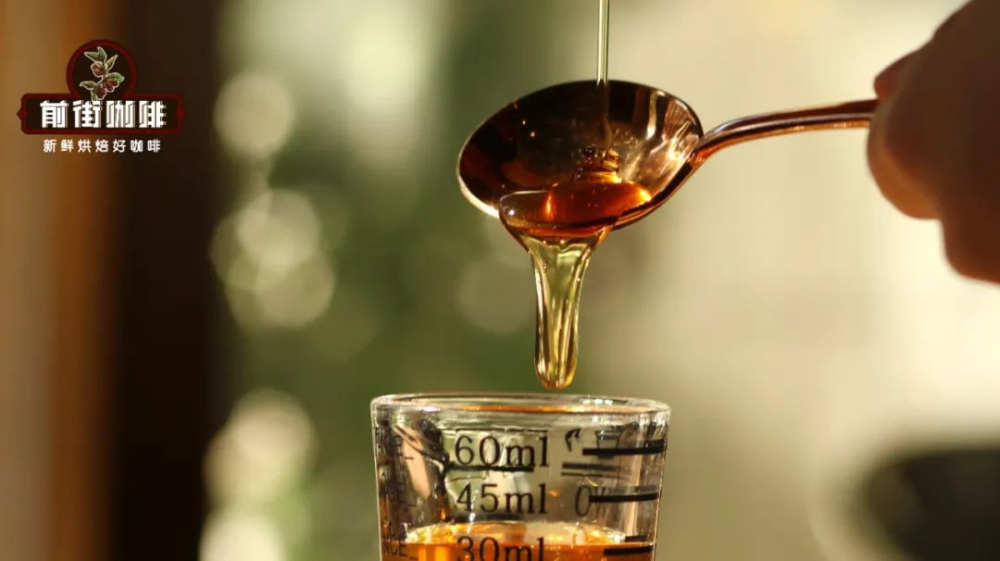
Front Street learned from family elders that the water temperature for brewing honey is actually quite particular. Too high a temperature will destroy heat-sensitive nutrients in honey such as enzymes, vitamins, and polyphenols, and boiling water will make honey sour, affecting the taste. Current mainstream research believes that brewing honey with water below 60°C can avoid the loss of heat-sensitive nutrients, with 40–55°C being the most ideal.
Black coffees such as pour-over and drip bag are usually extracted with hot water close to 90°C, and by the time they reach your hands, the coffee temperature is often 65–75°C or even higher. To avoid unpleasant flavors, it is better to let the coffee cool slightly first, then add an appropriate amount of honey according to personal taste.
For example, today Front Street let the brewed Brazil Queen's Estate sit indoors for 6–8 minutes, then added 2 small spoons of honey and stirred evenly. After it completely melted, tasting it, the coffee was neither too hot nor burned, and carried a hint of honey aroma and sweetness, making it very comfortable to drink.
If you want to add honey to a latte, cappuccino, or flat white, you need to pay attention to the amount, because if you add too little, it is easily covered by the coffee flavor, and if you add too much, the milk coffee may become too sweet and cloying. In this regard, after many attempts with different parameters, Front Street found that the best effect is when the ratio of honey to coffee liquid is controlled at 1:2, that is, 1 part honey to 2 parts espresso.
For example, Front Street here uses oat milk to make a cappuccino, paired with honey, first extracting 40g of coffee liquid from 20g of Warm Sun coffee powder;
Next, pour 180ml of oat milk and 20g of honey into the milk pitcher in sequence, froth into a fluffy and thick milk foam, with the temperature controlled at 50–55°C, suitable for drinking directly;
Finally, combine the two, and the honey oat cappuccino is ready.
The above content is compiled by CoffeeHunters, a coffee news website.


