







How Do You Calibrate Coffee Grinding by Particle Size?
Coffee grinding can be measured instead of guessed. Pour-over coffee particles generally fall between 600 and 850 microns; tested on a 0.85mm (No. 20) sieve, light roasts pass at about 80 percent and medium-dark roasts at about 65 to 70 percent. Finer grinds expose more surface area and extract faster, which is why each method needs its own target.
Sieves replace vague comparisons such as as coarse as granulated sugar. Cold drip, siphon, moka, American drip, cupping, and French press each sit at different pass rates, so the same setting on a grinder can behave differently across methods. Burr type also matters: conical, flat, and ghost tooth burrs distribute coffee particles differently, which shifts how evenly water moves through the bed.
The first step in coffee brewing often begins with grinding. Different extraction methods have different requirements for coffee grounds coarseness: a French press needs coarse particles visible to the naked eye, while a Turkish pot requires a grind as fine as flour. At the same weight, the finer the grind, the greater the number of cuts and the larger the surface area, giving water more opportunities to contact the coffee grounds and releasing flavor compounds more quickly. To move away from vague descriptions like "as coarse as granulated sugar," Front Street Coffee uses standard sieves to calibrate particle size: generally, pour-over coffee particles range between 600-850 microns. Using a 0.85mm (No. 20) sieve for testing, light roasts have a pass rate of about 80%, and medium-dark roasts about 65-70%. This article will also compare the pass rates of common methods such as cold drip, siphon, moka, American drip, cupping, and French press, and introduce the effects of conical, flat, and ghost tooth burrs on grinding results, as well as recommendations for choosing between hand grinders and electric grinders.
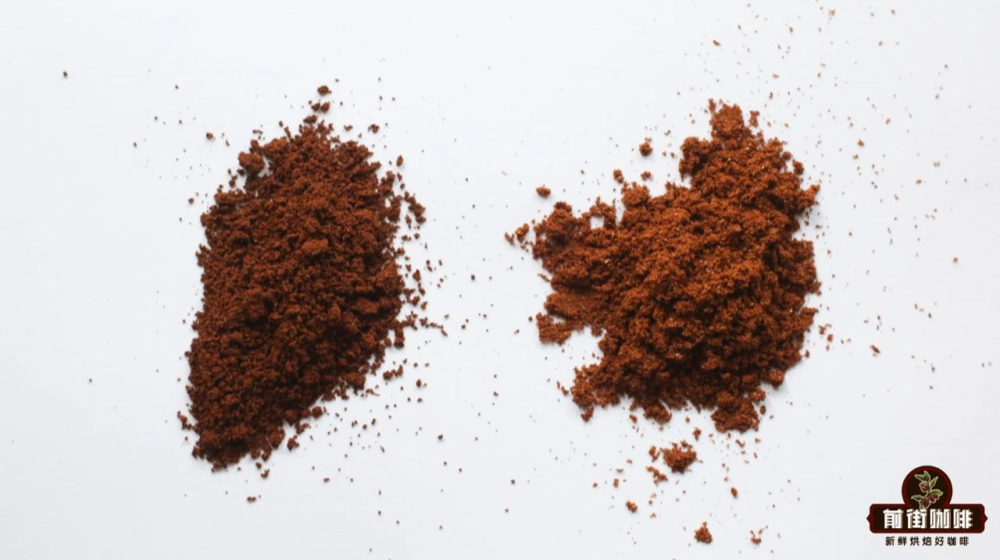
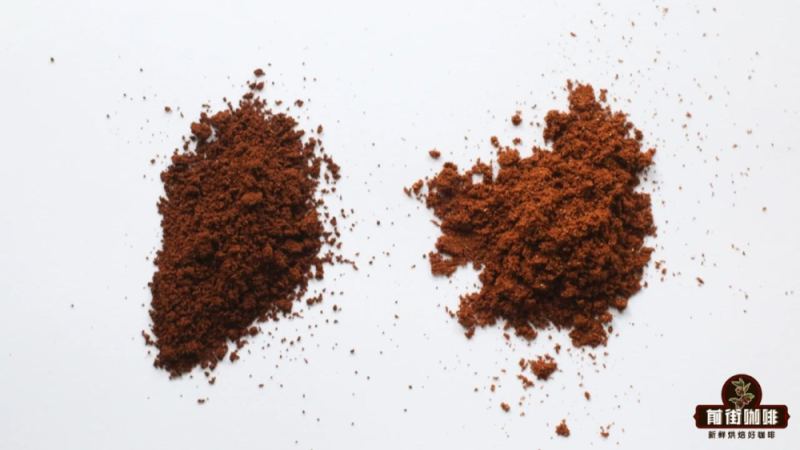
Not only pour-over coffee, but almost all coffee-making methods require grinding coffee beans into powder first. However, different extraction methods have inconsistent requirements for coffee grounds coarseness. For example, a French press uses a coarse grind that can be distinguished by the naked eye, while a Turkish coffee pot requires an extremely fine grind as fine as flour.
At the same gram weight, the finer the grind, the more times the coffee beans are cut, and the total surface area increases accordingly, naturally giving water a larger area of coffee grounds to contact.
The finer the grind, the smaller the particles the coffee grounds are cut into, the shorter the distance from the particle surface to the center, and the shorter the time needed for water to penetrate into the particles to complete extraction, making flavor compounds easier to release.
Many people are used to using granulated sugar as a metaphor for the coarseness of coffee grounds. But such general descriptions make it difficult to accurately judge which grinding level you are actually at. Front Street Coffee chooses to use standard sieves to identify particle coarseness.
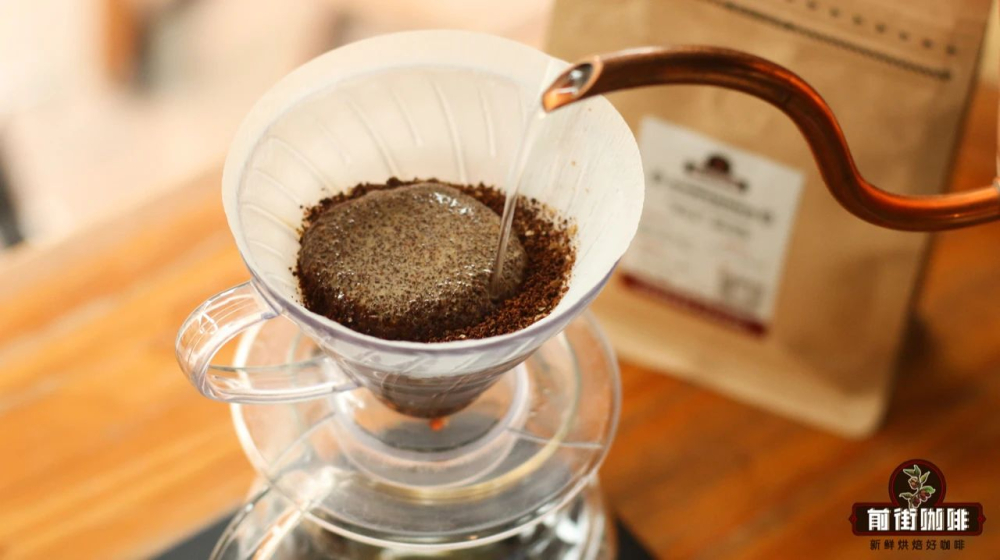
Generally speaking, the particle size used for pour-over coffee is around 600-850 microns. Therefore, Front Street Coffee uses a 0.85mm sieve (i.e., No. 20 standard sieve) for calibration. Typically, light roast pour-over coffee has a 0.85mm sieve pass rate of 80%, while medium-dark roast is 65-70%.
So how should the grind size be defined for extraction methods other than pour-over? Also using the 0.85mm standard sieve as the benchmark, FrontStreet Coffee's grind size coarseness pass rate standards are as follows:
Cold drip > pour-over siphon 80% > moka American drip 75-80% > cupping 70-75% > French press 65-70%
As for extremely fine grinds like Turkish pot and espresso machine, another set of sieves must be used for measurement. Usually, the grind particle size used by espresso machines and Turkish pots is around 250-350 microns, so a 0.3mm sieve can be used for sifting detection.
Choosing a Coffee Grinder
The burr is the most core component of a coffee grinder, and different burrs directly affect the particle size distribution of coffee grounds. There is a type of machine on the market that is marketed as a coffee grinder but actually only has two blades, commonly known as a "blade grinder," which is not within the scope of this article. Currently, common burr types are mainly divided into three: conical, flat, and ghost tooth.
Conical burr: It grinds coffee beans into particles by crushing, so the shape is mainly blocky. It is mostly seen in manual coffee grinders. Due to the "crushing" principle, when coffee beans are crushed and burst, a large amount of dust-like fine powder is produced, and normal particles are also irregular blocky, but overall tend to be more uniform. Conical burr particles are close to blocky, with a longer water absorption path and longer contact time with water, so less soluble substances are released initially, and the concentration is not too high; but during long extraction, the woody part absorbs less water and is less likely to produce off-flavors and astringency, making it suitable for pour-over coffee grinding. It should be noted that the grinding effect gap between high-priced conical burrs and low-priced conical burrs is quite obvious.
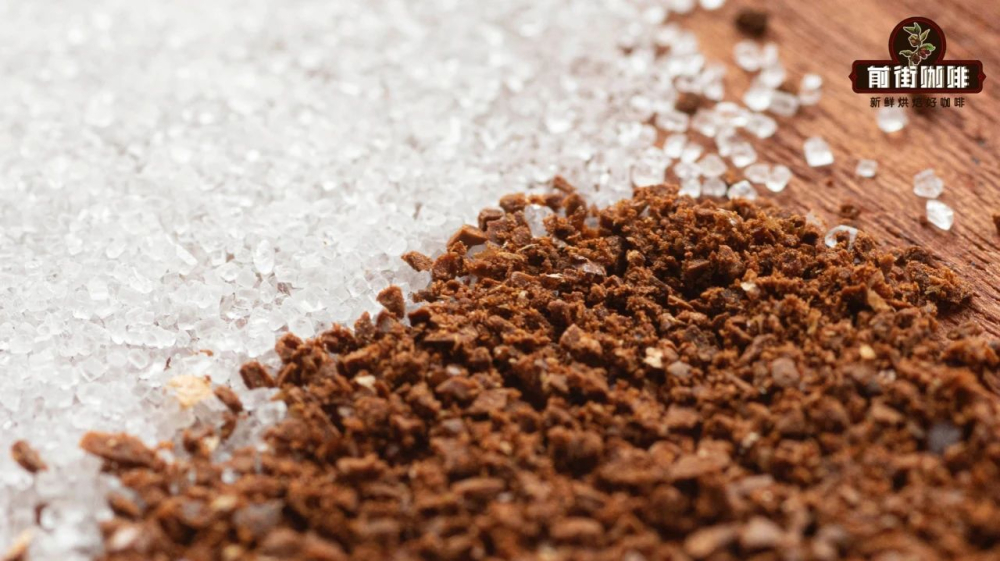
Flat burr: It grinds coffee beans into particles by shaving, with shapes mainly flaky or strip-like. Its structure consists of upper and lower burrs placed parallel, with the bottom burr rotating to push coffee beans into grinding. The weight of the coffee beans above affects the uniformity of entry into the burr, and pushing increases collisions among coffee beans, raising the proportion of fine powder. However, the flaky particles produced by flat burrs have a large cell wall area, which can increase coffee concentration and extraction yield in a short time, and aroma improves quickly. Flaky particles are small in volume, and during long extraction, the woody part does not easily release excessive moisture to produce off-flavors and astringency. Suitable for espresso grinding and pour-over grinding.
Ghost tooth: It grinds coffee beans into particles by milling, with shapes closer to spheres. Because it can grind one coffee bean into several small spherical particles, the edge scraps (fine powder) produced during grinding also increase, but overall the differences between large particles are the smallest. Suitable for pour-over grinding.
The Choice Between Hand Grinder and Electric Grinder
Hand grinders are characterized by convenience and portability; electric grinders save effort and offer high precision. Theoretically, electric grinders have higher upper limits than hand grinders in efficiency, grinding quality, and stability, and are naturally more expensive. If the budget is the same, between a hand grinder and an electric grinder at the same price, give priority to the hand grinder.
For more specialty coffee beans, please add private WeChat FrontStreet Coffee (FrontStreet Coffee), WeChat ID: kaixinguoguo0925
The above content is compiled by CoffeeHunters, a coffee news website.


