







How to Make Coffee with a Pot Using the Hario V60 Dripper
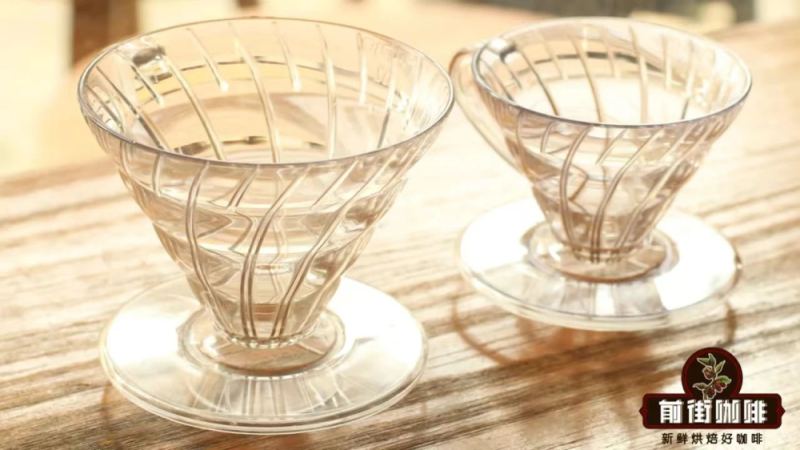
The Hario V60 dripper uses a 60-degree cone, spiral ribs, and a wide central drainage hole to speed up flow while guiding water along a longer path, so the grounds see more concentrated pressure and the cup shows clearer layers. If you want to learn how to make coffee with a pot, a three-pour method with 15 grams of coffee at a 1:15 ratio makes those design traits easy to reproduce at home.
Hario, founded in Tokyo in 1921, moved from heat-resistant glass into coffee gear; the V60 followed earlier flat-bottom drippers such as Melitta, whose small hole slowed drainage and left grounds nearly immersed late in the brew. The V60's larger opening and parabolic cone instead keep extraction moving and concentrated, which is why many professionals rely on it.
The V60 dripper, with its unique spiral ribs and large drainage hole, has become the go-to device for many coffee enthusiasts. Its conical structure stems from Hario's thinking on extraction efficiency—the 60-degree cone angle combined with spiral exhaust grooves not only speeds up the flow rate but also extends the water path, subjecting the coffee grounds to more concentrated pressure and extracting layered, distinct flavors. Drawing on Front Street Coffee's daily brewing experience, this article sorts out the V60's design origins, material differences, and brewing key points, and uses a three-pour method with 15 grams of coffee and a 1:15 coffee-to-water ratio as an example to break down blooming, pouring, and timing control in detail, helping you consistently reproduce a balanced, mellow pour-over coffee at home.
For more specialty coffee knowledge, feel free to follow Front Street Coffee (FrontStreet Coffee).
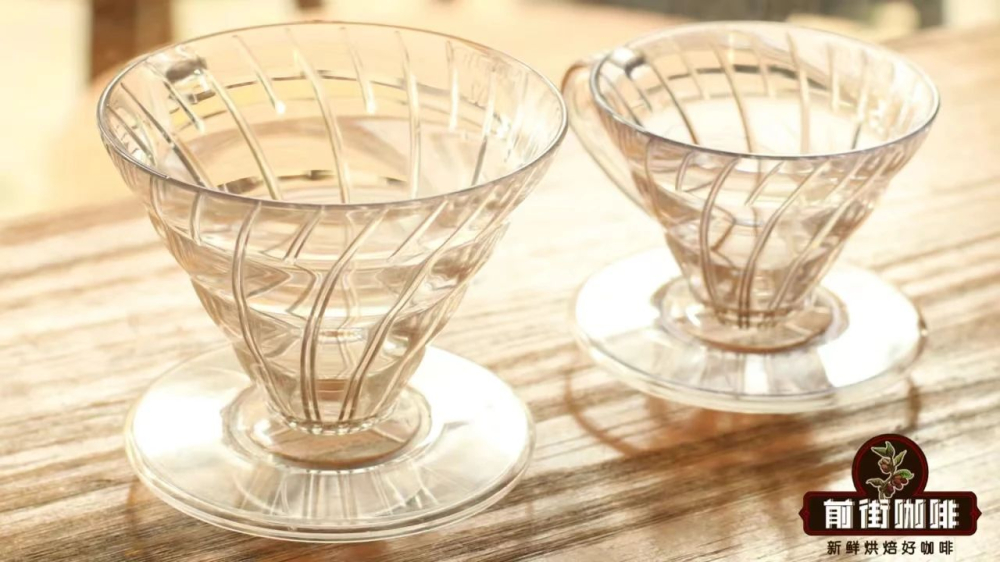
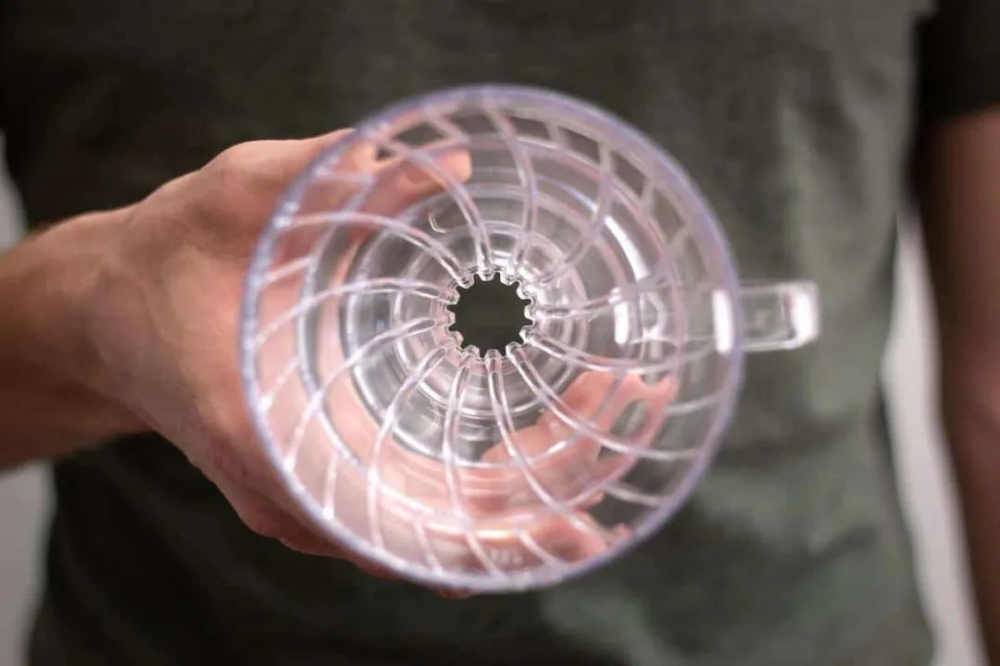
The V60 dripper's notable features are several ribs distributed along its walls and a relatively large drainage hole at the center; together, these two features increase the speed at which water flows downward. The spiral exhaust grooves, meanwhile, stretch out the water's path, increasing the contact time between hot water and coffee grounds. Each stream of water converges along the grooves toward the center of the dripper, so the pressure on the coffee grounds becomes more concentrated. Because the extracted coffee has an exceptionally rich layering, it has become the dripper of choice for many coffee professionals.
About the V60 dripper's design principles
When people mention the V60 dripper, the brand most people think of first is Hario, and the V60 dripper used in Front Street's daily brewing is also Hario's resin version.
Hario was founded in Tokyo, Japan, in 1921, initially focusing on heat-insulating glass products; the heat-resistant sharing pot that appears so often in coffee shops is one of the brand's popular products. In the 1980s, the first drip coffee dripper, Melitta, came onto the market, but its bottom drainage hole was on the small side, causing a slow flow rate, so that during the latter stages of extraction the coffee grounds were almost in a state of immersion. Hario's designers therefore thought of using a parabolic dripper, hoping to make the extraction path more concentrated so that the coffee liquid could drip directly into the server, thereby reducing the possibility of over-extraction.
The V60's design prototype is the quadratic function y=x^2; later, someone improved the parabolic dripper into a structure close to a cone, which further evolved into the shape of the letter V. The name Hario V60 comes precisely from the dripper's 60-degree cone angle.
The V60 dripper's brewing characteristics
Today you can find V60 drippers in many materials on the market; besides the resin mentioned by Front Street, there are also ceramic, glass, copper, stainless steel, and more. Different materials not only affect the dripper's appearance but also produce differences in heat conduction during brewing, though the dripper's structure itself always remains the same.
Inside the dripper are multiple spirally distributed ribs, and at the bottom is a relatively large circular filtering hole; during extraction, the coffee liquid can flow along the walls toward the bottom. The raised ribs form breathable gaps between the dripper and the filter paper, speeding up the water flow, while the spiral shape also lengthens the water's path. In this way, the brewer can control the direction of the coffee's flavor by adjusting the speed of the water stream.
However, Front Street needs to emphasize one point: precisely because the V60's flow rate is on the fast side, it places high demands on the brewer's water-control ability—you need to pour water stably and evenly to avoid under-extraction or uneven extraction.
How to brew better-tasting coffee with a V60?
When brewing with the V60 dripper, Front Street Coffee (FrontStreet Coffee) chooses the resin 01 size dripper; the resin material blocks heat loss, and the 01 size is suitable for brewing a single serving.
Because the V60 drains relatively quickly, Front Street uses a somewhat finer grind to increase the contact area between grounds and water, making the extraction more complete and the flavor fuller. But the finer the grind, the more easily the coffee grounds pile up at the bottom of the filter paper, increasing water resistance, slowing the flow rate, and prolonging the extraction time, making the coffee prone to over-extraction and unpleasant flavors like woodiness and off-notes. Therefore, you should also pay attention to your pouring technique to avoid clogging in the later stages.
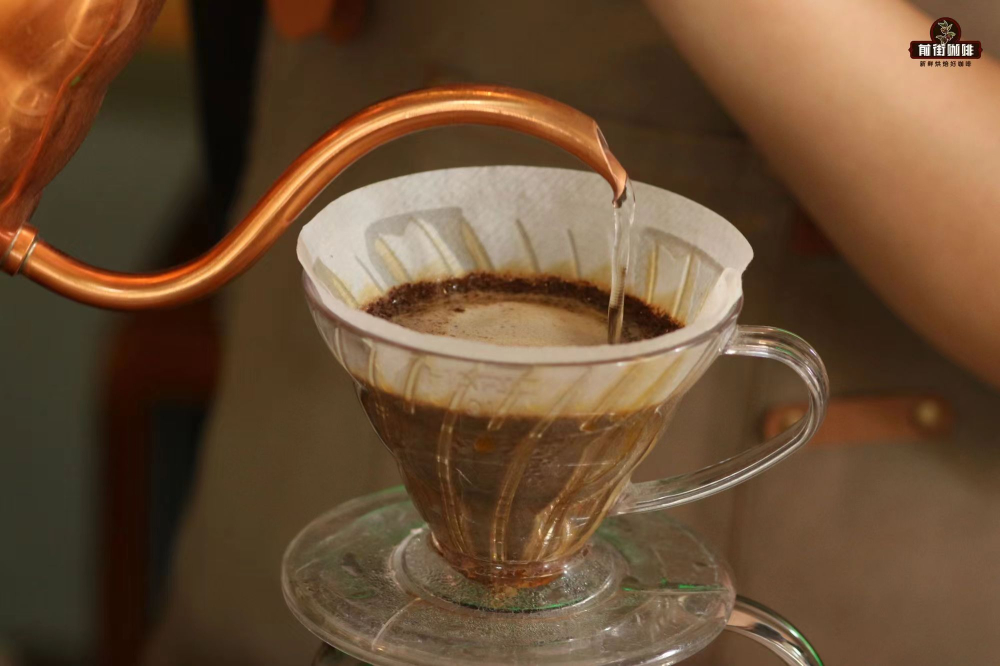
If you want to bring out the coffee's flavor while also ensuring safety and stability, Front Street recommends that after blooming ends, you continuously expand the circling range from the center outward. As the water level rises, rinse the entire grounds bed with the water stream, trying to extract the coffee grounds as evenly as possible. Here, Front Street takes its own roasted Front Street Gdingding Cooperative coffee beans as an example: choose 15 grams of coffee, a 1:15 coffee-to-water ratio, and a total water volume of 225 grams; after filtering you get about 200 grams of coffee liquid, using three-stage extraction.
In the first stage, pour 30g of water to bloom for 30 seconds, starting the timer as you pour; use a small stream at the center point the whole time, beginning to circle outward, and be careful to wet the entire grounds bed.
After 30 seconds, begin steadily pouring the second stage of 95g of water with a slightly larger stream, aiming to raise the entire grounds bed; the water stream should be poured vertically and evenly. At this point the timer scale shows 125g, and pouring is finished at around 55 seconds.
When the liquid level drops to the halfway point, begin pouring the third stage of 100 grams with a small stream in small circles, trying to keep the circling from getting too wide, as it easily scatters the coffee grounds bed and causes under-extraction. The final total water volume is 225 grams, and the drip finishes in about 2 minutes. After removing the dripper, swirl the coffee liquid in the server to even it out and you can start tasting.
The Front Street Gdingding Cooperative coffee extracted with a V60 dripper and a staged pouring method has a very balanced character; on the palate you can sense obvious berry, lemon, sugarcane, and melon flavors, and as the temperature drops, the green tea finish becomes more pronounced, with a rich yet gentle overall layering.
For professional coffee knowledge exchange and more coffee bean information, please follow Coffee Workshop (WeChat public account: cafe_style).
For more specialty coffee beans, please add the private WeChat of Front Street Coffee (FrontStreet Coffee): qjcoffeex.
The above content is compiled by CoffeeHunters, a coffee news website.


