








Where Did Coffee Originate, and How Do Drip Bags Brew It?
Drip bag coffee is a simplified pour-over: pre-ground coffee sealed in a non-woven or cotton paper filter bag with two cardboard ears that hang on a cup rim. Only about 30 percent of a coffee bean's substances can be extracted, so one bag is designed for a single brew. Use water around 92C, bloom briefly, then pour to a 1:15 ratio and discard the bag.
Japan's UCC Ueshima Coffee developed the first drip bag in 2001, patenting and marketing it as one-cup extraction coffee. Because the grounds are already measured and the filter is built in, no grinder or pouring skill is needed. For anyone asking where did coffee originate and how brewing methods evolved, the format shows how extraction principles carry into portable gear.
Drip bag coffee frees specialty coffee from the barriers of equipment and technique, becoming a hand-brewed alternative within reach in busy daily life. This article starts from the origin of drip bag coffee, analyzes its structure, advantages and disadvantages, and answers two frequently asked questions: how many times can one drip bag actually be brewed, and why it cannot be repeatedly brewed—the core being that only about 30% of the substances in coffee beans can be extracted. Then Front Street shares its own brewing tutorial for drip bags, covering details such as water temperature, blooming time, and a 1:15 coffee-to-water ratio, and recommends three drip bag products with distinct flavors: Natural Gesha, Brazil Cerrado, and Yirgacheffe, helping beginners quickly find their favorite choice.
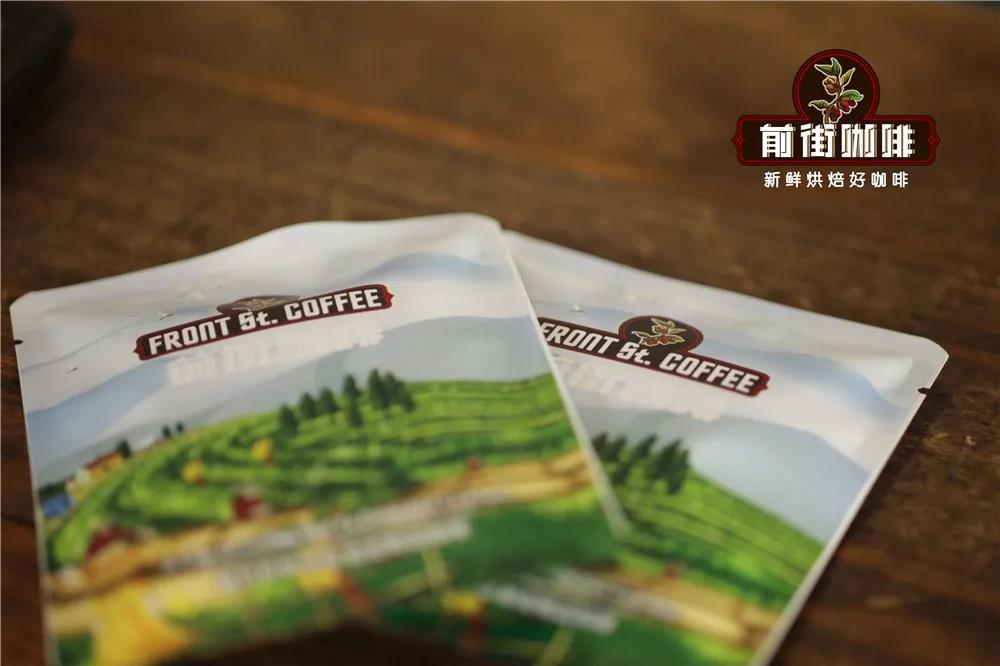
For many people, coffee has long been an indispensable "spiritual recharge" every day. In Front Street's view, drip bag coffee is equivalent to a simplified version of pour-over coffee—its greatest value lies in portability, freeing specialty coffee from dependence on complex equipment. You do not need to study the coarseness of coffee bean grinding, nor do you need to master specialized pouring techniques. Just tear open the filter bag, hang it on the rim of the cup, pour in hot water, and a cup of joy close to the pour-over experience is easily within reach.
The Birth of Drip Bag Coffee: When Did It Originate?
In 2001, Japan's UCC Ueshima Coffee was the first to develop drip bag coffee, applying for a patent and bringing it to market. In Japanese, it is called "one-cup extraction coffee." Its structural principle is: coffee grounds are sealed in a filter bag made of non-woven fabric or cotton paper, with a paper cardboard tab on each side. When opened, it can be placed over a container with a narrower rim. After pouring hot water, lift the filter bag and discard it, and a cup of rich, fragrant black coffee is ready.
Analysis of the Advantages and Disadvantages of Drip Bag Coffee
The structure of a drip bag coffee pack is essentially a filter bag with "ears" on both sides, containing a measured amount of pre-ground coffee. It eliminates the trivial steps of grinding, preparing filter paper and a dripper in fresh pour-over, and brewing can begin as soon as you get it. It is especially suitable for office workers who want to steal a moment of leisure during work breaks. However, every gain comes with a loss. On the other side of convenience, because the coffee is pre-ground and lacks the support of a dripper, its flavor performance is inevitably somewhat inferior to freshly ground pour-over.
Advantages: It can be called the minimalist form of pour-over coffee—the filter bag with "ears" contains a standard portion of ground coffee, skipping steps such as grinding beans and preparing a dripper and filter paper, and it can be brewed directly after opening.
Disadvantages: There is also a cost behind convenience—the coffee grounds are ground in advance, and even with individually sealed packaging, the aroma cannot be preserved for long. Therefore, Front Street only supplies drip bag products within 5 days and reminds everyone that it is best to finish drinking them within 30 days, and it is not recommended to stock up too much at once. In addition, limited by the shape of the filter bag, the coffee bed inside the bag is difficult to spread evenly, and the extraction uniformity is not as good as brewing with a dripper, so the layering of flavor is naturally slightly lacking.
How Many Times Can One Drip Bag Coffee Be Brewed?
Since drip bag coffee is a simplified version of pour-over, the answer is consistent with pour-over: one bag can only be brewed once. During brewing, pay attention to the coffee-to-water ratio. If too much water is added, the coffee will become weak and tasteless. The reason is that the extractable substances in coffee beans account for only about 30% of the bean weight, so no matter how much water is poured, the flavor cannot be made better.
Why Can't Drip Bag Coffee Be Repeatedly Brewed?
Fundamentally, whether pour-over or drip bag, it is essentially only suitable for one brewing. What we usually call "brewing coffee" is in essence extraction: water plays the role of a solvent. When water contacts coffee grounds, the flavor components in the grounds gradually dissolve into the water, and this water eventually becomes what we call coffee.
By weight, about 30% of the substances in coffee beans can dissolve in water, while the remaining 70% or so is fiber tissue that cannot be extracted. Therefore, no matter how many times it is extracted, only that approximately 30% can be utilized—this is the same principle as tea inevitably becoming weaker after many infusions, and coffee cannot escape this rule either.
Front Street Natural Gesha Drip Bag
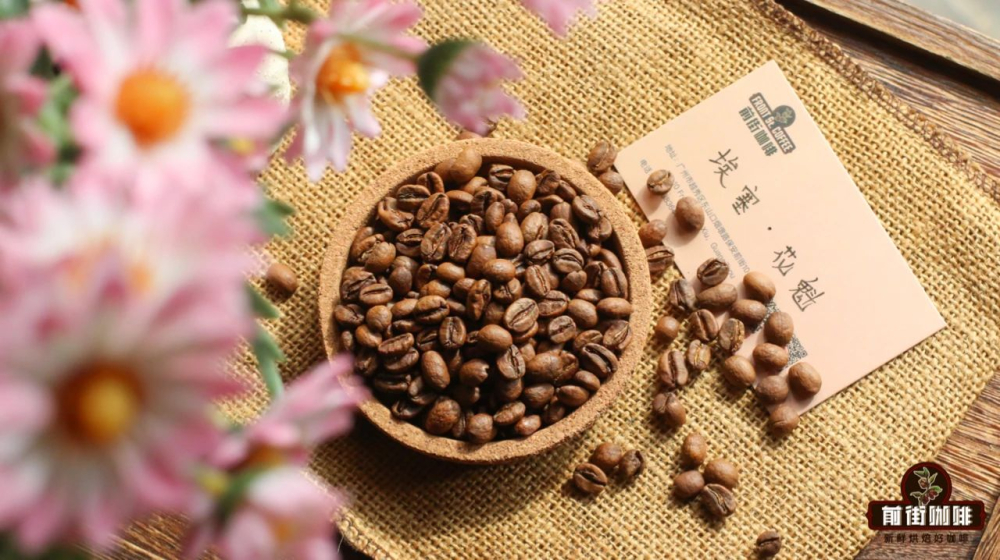
Front Street's Natural Gesha coffee beans have always been highly popular and widely praised. To make brewing coffee more convenient for everyone in daily life, we specially turned it into Natural Gesha drip bags.
Gesha Coffee Beans: From the Sidamo Region
The Sidamo region where Gesha is located is in southern Ethiopia. In the past, Yirgacheffe and Guji were both included within the scope of Sidamo, but with the implementation of the ECX trading system, these two have been separated from Sidamo and become independent. Sidamo beans are full of fruity acidity and have a bold aroma; in terms of aroma expression, they are not even inferior to Yirgacheffe. They are especially suitable for people who pursue rich flavor without wanting too heavy a mouthfeel, achieving a beautiful balance between aroma and taste.
Front Street's Drip Bag Brewing Insights
The primary factor determining the brewing quality of drip bags is water flow speed—too fast or too slow is not ideal, and the key behind this lies in the grinding quality of the grinder. Each small bag of Front Street drip bag coffee is 10 grams, and the grind size has been preset in place. If the grinder is not up to standard and the grinding quality is poor, grinding will inevitably produce too many fines and uneven particles. During brewing, the water flow will become "congested" and slow down, and if the coffee bed is soaked for too long, it is prone to over-extraction, ultimately leading to a muddy taste and lost flavor. Even the highest-quality beans cannot perform at their proper level.
Detailed Brewing Steps
The required materials are quite simple: a short cup, hot water and ice cubes, plus a drip bag coffee pack; if conditions permit, you might also prepare an electronic scale.
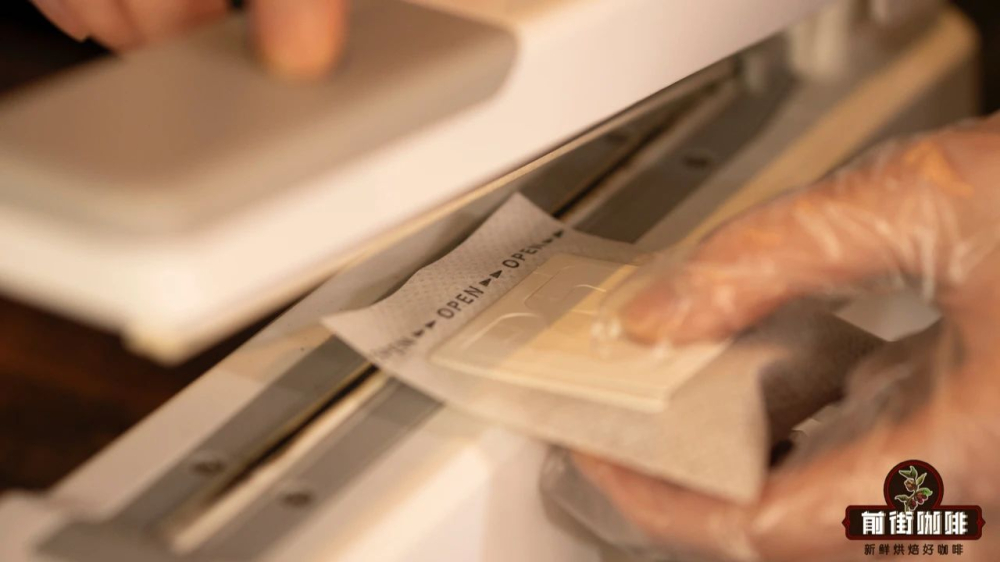
Step 1: Tear open the outer packaging of the drip bag, tear off the seal along the "open" dotted line—the seal is very easy to tear open; then open the two side "ears" and place it steadily on the rim of a short cup. Be careful not to choose a cup with too wide a rim, otherwise the drip bag may not sit stably.
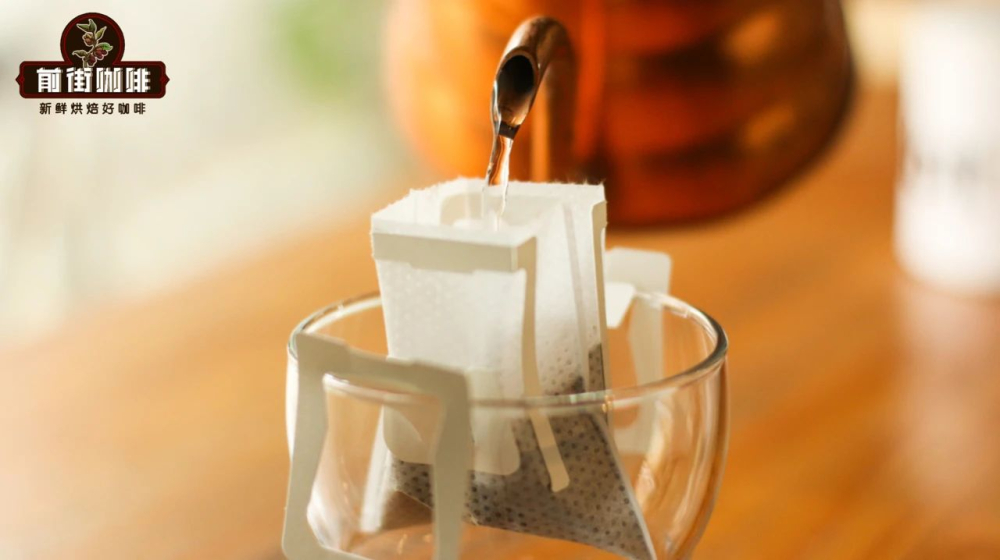
Step 2: Prepare hot water, with the water temperature controlled at around 90°C. First pour in a small amount of hot water to completely saturate the coffee bed, and let it bloom for 20 to 45 seconds. If you do not have a thermometer on hand, you can uncover the boiled water and let it sit for about 2 minutes, and the temperature will roughly drop to between 90-94°C.
Step 3: After a brief bloom, the coffee grounds have already released a very rich aroma. Each bag of Front Street drip bag coffee contains 10 grams of grounds, and at a coffee-to-water ratio of 1:15, pour in a total of about 150 ml of hot water. If you prefer a stronger taste, you can pour in less water; if you prefer a lighter taste, you can pour in a little more. The ratio can be flexibly adjusted according to personal preference.
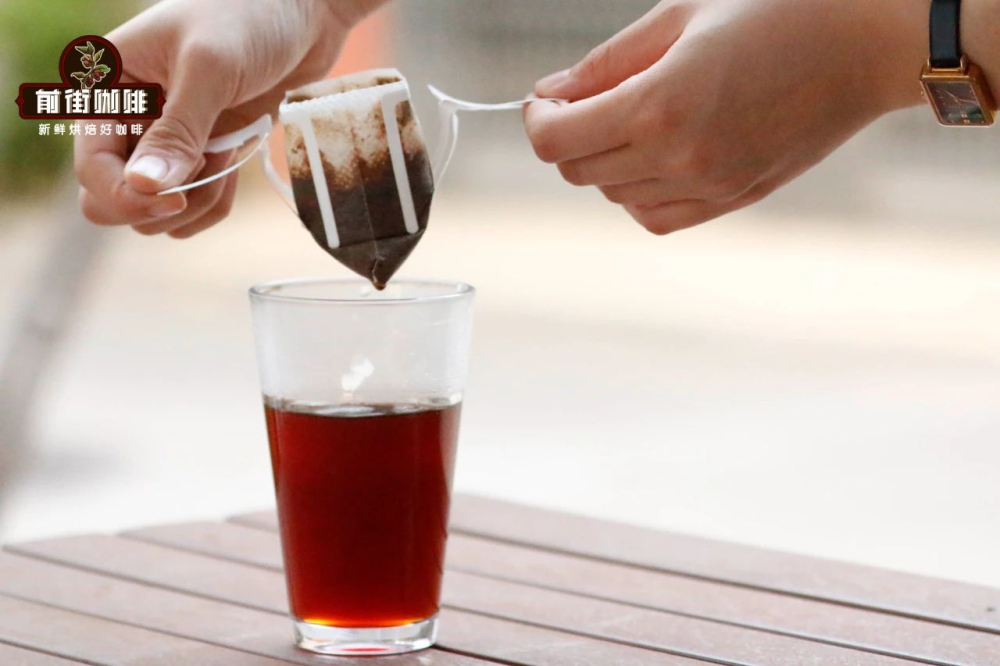
Regarding the pouring technique, many customers have asked Front Street whether segmented pouring is needed. In fact, using a thin stream and pouring in a circular motion all at once up to 150 ml is enough—drip bag coffee is all about convenience and ease, without so many formalities.
How Should Coffee Beginners Choose Drip Bag Coffee?
If you usually prefer a strong mouthfeel, Front Street's Brazil Cerrado drip bag is recommended: rich nutty flavor, with a smooth texture like peanut butter, no acidity, and a full, mellow drink.
If you can accept coffee with acidity, then the highly praised Front Street Yirgacheffe drip bag is worth trying:
This drip bag uses beans from Ethiopia's Yirgacheffe region, presenting bright lemon-like acidity and white floral notes. The acidity is clean and lively, and it is refreshing and pleasant on the palate.
The above content is compiled by CoffeeHunters, a coffee news website.


