







How Do You Taste an Espresso Blend Coffee?
Espresso blend coffee is tasted in three steps: smell, observe, drink. Freshly extracted espresso carries a golden crema on top, formed when 9-bar pressure pushes water through the bed and emulsifies the coffee's natural oils. Aromas usually read as nuts and caramel, with fruity sweet-and-sour notes appearing in lighter roasts.
After smelling, check the crema's color and thickness to judge extraction, then take a sip of ice water before drinking the small serving. Adding water or milk changes the flavor noticeably, softening intensity while rounding the mouthfeel. Blends built for espresso combine origins so the shot holds up both alone and with milk, which is why composition and roast level matter when choosing beans.
Espresso is called the soul of coffee—rich and intense, yet it makes many people hesitate. In fact, as long as you master the correct way to taste it, you can appreciate its charming notes of nuts, caramel, and chocolate. From the perspective of Front Street Coffee, this article introduces the aroma, crema, and mouthfeel characteristics of espresso, explains the three-step tasting method of smelling, observing, and drinking, and analyzes the flavor changes of different drinking methods such as adding water or milk. It also breaks down in detail the origin composition, roasting approach, and extraction performance of two beans—Front Street Italian Specialty Blend and Front Street Italian Commercial Blend—helping coffee lovers choose the right beans and understand espresso.
To learn more about specialty coffee, welcome to follow: Front Street Coffee (Frontsteet Coffee).
Espresso has long been hailed as the soul of coffee. It has a heavy body and concentrated flavor, and beginners often find it hard to adapt to at first, but once you get used to this intensity, you begin to taste its unique appeal. At the same time, Espresso is also a benchmark for measuring coffee quality and a barista's skill.
Since Espresso has so many fans, it naturally has its outstanding qualities. Now let Front Street Coffee (FrontStreet Coffee) guide everyone to get to know Espresso.
Espresso
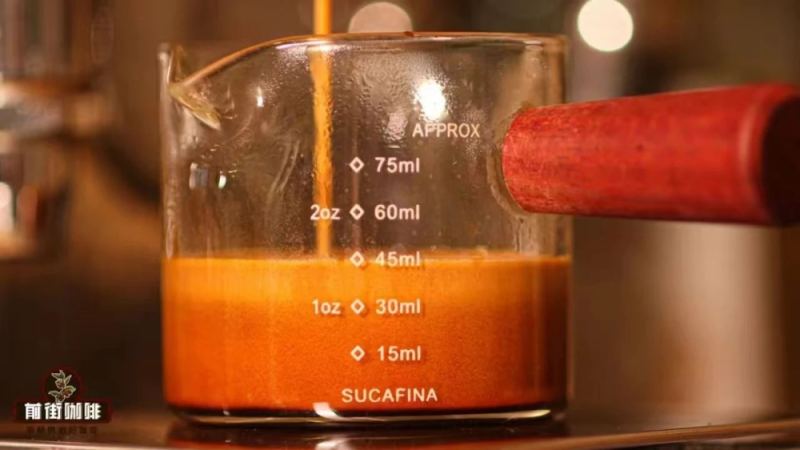
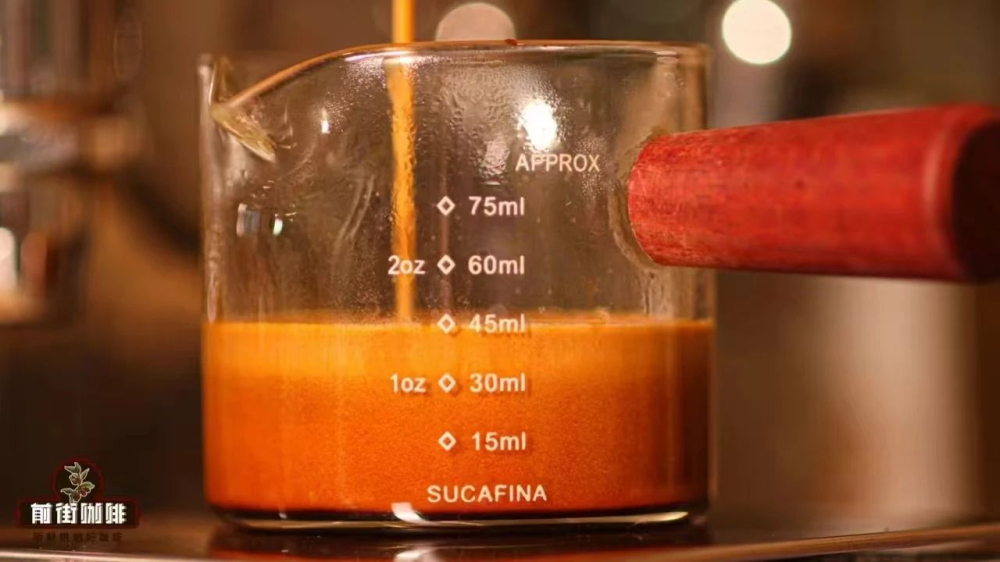
Freshly extracted Espresso is covered with a beautiful golden layer of oil on the surface, usually called crema. The formation of crema is closely related to the 9-bar pressure: after water is heated and pressurized, it passes through the coffee bed and brings out its soluble substances. This process emulsifies the natural fats and oils in coffee. In addition, freshly roasted coffee beans contain carbon dioxide, and when making Espresso these gases dissolve into the coffee under pressure.
How do you taste Espresso?
Smell When you receive a cup of Espresso, the first thing to do is feel its aroma. Usually you can detect notes of nuts and caramel. If the roast level is lighter, you may also smell fruity sweet-and-sour aromas.
Observe After smelling, observe the color and thickness of the crema. Through these two aspects, you can basically judge whether this cup of coffee is made well.
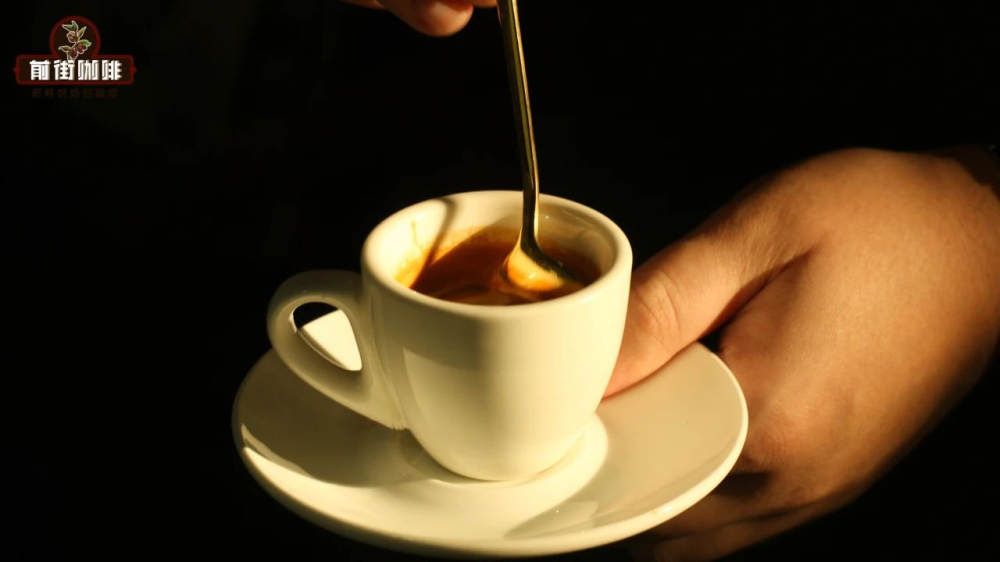
Drink Espresso is a very small serving, usually paired with a glass of ice water. First take a sip of ice water to clean your palate, then drink the espresso in one sip and let it spread across your mouth, experiencing its creamy texture and intense caramel and nutty flavors.
Besides drinking it directly, are there other ways to drink it? Of course. For example, some people cannot accept the stimulating intensity of espresso, so they add a small amount of milk. The coffee then becomes smoother, the bitterness weakens, and the caramel-chocolate character becomes more prominent.
If it still feels too intense, you can also dilute it with an appropriate amount of water, but then it loses Espresso's original flavor personality.
Which Italian-style coffee beans make good Espresso?
Front Street Coffee (FrontStreet Coffee) Italian-style Specialty Blend coffee beans: the goal is to create espresso beans with nutty and cocoa aromas.
Colombia Huila Region Huila is located in southwestern Colombia and is one of the country's main coffee-growing regions. Colombian coffee farms are generally distributed between 1,500 and 1,800 meters above sea level, with varieties mostly Bourbon and Caturra, using washed processing. The beans have relatively high density, uniform screen size, and plump shape (greater thickness from the center to the surface of the bean). Because there are many famous producing areas within the Huila region, the names of various small subregions have gradually spread as brand names. Although local cultivation conditions are excellent, the coffee farms and surrounding processing infrastructure are still not sufficiently developed, and both green bean drying equipment and washed processing facilities need improvement, which is quite regrettable. Huila coffee has a strong taste and heavy body. Front Street Coffee (FrontStreet Coffee) chose Huila coffee as a blend component precisely because of its aromas of nuts, chocolate, and caramel as well as its suitable acidity, making it suitable as the base tone in a blend.
Through Front Street's cupping comparison, Colombian Huila coffee beans have a full and solid mouthfeel, pleasant acidity, rich aroma, moderate acidity, and abundant sweetness that is thought-provoking. Because they are affordable and the beans are relatively small, they are very suitable for blending. Their strong taste, heavier body, nutty, chocolate, and caramel aromas plus appropriate acidity make them a high-grade specialty coffee, suitable both as a single origin and as an espresso blend base.
Brazil Cerrado Region The growing altitude of Brazilian coffee is usually 1,000-1,300 meters, and its density is relatively low. The variety is mainly Bourbon, using semi-dry processing. The moisture content is moderate, the bean texture is softer, and the thickness from the bean surface to the center is relatively thin, so it is not suitable to roast at too high a temperature; otherwise, the temperature of the inner wall of the drum will scorch the bean surface and produce a burnt bitter taste. In order to present nuts, milk chocolate, and good body, and to serve as a blend base, Front Street's roaster chose to drop the beans at medium heat, maintain heat through the dehydration stage, and make slight adjustments as the temperature rises after first crack begins, allowing the caramelization reaction to proceed more fully, then discharge the beans when approaching second crack. Through Front Street's cupping comparison, Brazil Cerrado coffee has a comfortable bittersweet taste and is very smooth on entry; it has a faint grassy aroma with a slight bitterness amid the fresh fragrance; it is sweet and smooth, with a pleasant aftertaste.
After Front Street blending and adjusting the grind size and extraction parameters, the resulting espresso has a soft and slightly sour taste, is lightly sweet, and has a nutty sweet aftertaste. Overall it is not harsh but mild, and the crema is medium.
Front Street Coffee (FrontStreet Coffee) Italian-style Commercial Blend coffee beans: the goal is to create Italian-style coffee beans with nuts and cocoa as the main tone and a mellow mouthfeel.
Robusta Variety Robusta has strong resistance to pests and diseases and high yield. It usually does not have the acidity of Arabica and often carries a hint of woody aroma. Its caffeine content is about 2.2%, higher than Arabica's 1.2%, and its chlorogenic acid content is also higher, so it is quite bitter. It is mostly used for commercial beans and costs less than Arabica. Judging only by bean flavor, coffee made from commercial beans is far inferior to that made from specialty coffee beans, so it is generally used in blends. After blending, it can also make decent coffee and is suitable for making lattes, cappuccinos, and other Italian-style coffees. Front Street Coffee (FrontStreet Coffee) commercial blend coffee beans are used to make Espresso. Because they contain Robusta beans, the crema is richer, the taste is classic, with caramel sweetness, presenting nutty, cocoa-like, and dark chocolate flavors, balanced acidity and sweetness, slightly bittersweet, and a lasting finish.
After Front Street blending and adjusting the grind size and extraction parameters, the resulting espresso has caramel sweetness, prominent nutty, cocoa-like, and dark chocolate flavors, balanced acidity and sweetness, slight bitterness, and a lasting finish.
The above content is compiled by CoffeeHunters, a coffee news website.


