








Should coffee beans go in the fridge or the freezer?
Freezing does slow the loss of coffee aroma, but only when it is done properly. After roasting, aromatic compounds and carbon dioxide steadily escape the beans, and once they are gone the brewed cup turns flat and watery. Sealing, light protection, coolness, and dryness remain the basic rules, and the freezer is an extra step, not a replacement.
Three details decide whether freezing helps or backfires: seal the beans so they do not pick up food odors, prevent condensation and moisture absorption when the bag comes out, and avoid repeated removal and return. Portion the beans before freezing so each batch is used in one go, and remember that buying only what you can drink fresh is the simplest approach.
After coffee is roasted, aromatic compounds continue to escape outward. If you buy more than you can consume within the peak-flavor window, the flavor will suffer greatly. This article starts with conventional storage principles such as sealing, light protection, coolness, and dryness, then focuses on the increasingly popular method of freezing coffee beans: it truly does slow aroma loss, but improper handling can backfire. The article walks through three key details—sealing to prevent odor transfer, condensation and moisture absorption, and avoiding repeated removal and return—and offers practical advice on portioning for storage. Front Street also reminds everyone that coffee is ultimately best enjoyed fresh, and buying only what you need is the worry-free approach.

After a relatively long roast, coffee beans convert the various substances accumulated during cultivation and processing into abundant aromatics, flavors, and carbon dioxide. Once roasting ends, these substances are no longer generated and instead begin to steadily escape outward. Before they fully dissipate, the brewed coffee can present a fairly rich aromatic profile. Beyond getting a caffeine boost, most people drink coffee for the sensory pleasure that these flavors provide.
Sometimes, however, you buy too many beans at once and simply cannot finish them within the optimal flavor window. If left unattended, the beans' aromatics will gradually volatilize away just like the carbon dioxide. By then, the brewed coffee will not only have a weak aroma but also a flat mouthfeel, leaving only the beans' inherent water-soluble taste. For this reason, when the beans we purchase exceed what can be consumed within the peak-flavor window, we try to slow the loss of aromatic compounds.
The most common approach is to use sealing to reduce the beans' contact with oxygen, which can effectively buy time and give the beans a longer flavor window. But sealing alone is not enough—beans are vulnerable not only to oxygen but also to light, high temperatures, and moisture. Therefore, after sealing, you must also place them somewhere dark, cool, and dry.
In recent years, a novel storage method has quietly become popular. Because it is claimed to preserve freshness better than airtight storage at room temperature, many people have rushed to try it. That method is "freezing." Those who haven't tried it are surely curious whether this seemingly unusual approach can truly lock in the aroma.
To put it bluntly, it can. Because the ambient temperature is extremely low, the rate of coffee aroma loss can indeed be reduced. But you should understand that freezing can only slow the pace of aroma loss; it cannot completely stop the process. Second, freezing coffee beans involves more details, and improper handling will backfire. Let's look at what you need to pay attention to when freezing coffee beans!
1. Sealing
The first thing to watch out for when freezing coffee beans is sealing. Most people probably won't buy a dedicated refrigerator just to "preserve" coffee beans (though those with especially generous budgets might), so the fridge will be filled with other things besides the beans.
If sealing is not done properly, not only will it fail to lock in the aroma, but the coffee beans will also absorb the odors of other foods—what is commonly called "fridge smell"—which is a lose-lose situation. So before freezing, be sure to seal them well to prevent odors from getting in.
2. Condensation
No matter what food it is, when moved from an environment of minus ten-plus degrees Celsius to a room-temperature environment of twenty-plus degrees, its originally dry surface will quickly form quite a few small water droplets—and coffee beans are no exception.
Therefore, the moment coffee beans are taken out of the freezer, they should be ground and brewed immediately. This is the way to prevent condensation from making the beans damp and thereby interfering with extraction; alternatively, after taking them out, do not open the package yet—wait until the beans return to room temperature before tearing open the seal, and no condensation water will form.
3. Do not take them out repeatedly
Once coffee beans are taken out of the freezer, it is best not to put them back. Doing so will both worsen moisture absorption and cause the aroma to dissipate faster. Therefore, most people portion the beans before freezing. Seal each portion individually according to the amount needed for one brew, so that each time you take out beans, you won't affect the others.
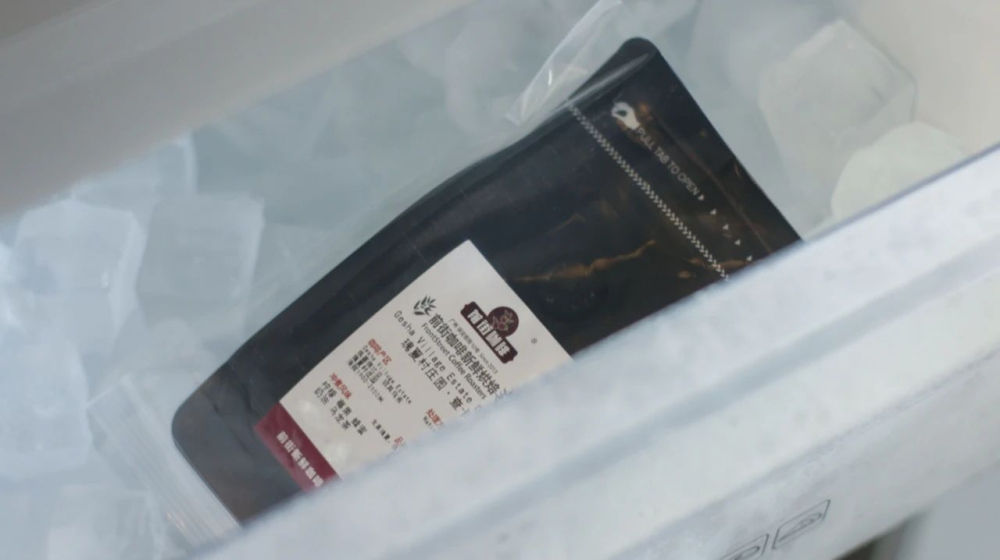
Overall, freezing coffee beans can indeed provide some delay, but correspondingly, there are more precautions to take, and you need to invest more care to safeguard the taste of a cup of coffee. So Front Street still recommends buying only what you need—that way you won't have to worry too much about flavor, and coffee is best enjoyed fresh!
The above content is compiled by CoffeeHunters, a coffee news website.


