







How to make coffee from coffee machine-style drip bags taste good
Drip bag coffee brews a single cup when one 10g bag is steeped in about 150g of water at 90-92°C. Bloom the grounds briefly, then pour in stages rather than all at once. Choose bags near their roast date, since flavor drops noticeably after roughly two months in storage.
Drip bags hold freshly ground coffee sealed after roasting, often with nitrogen preservation and no additives. Unlike instant coffee, they show origin, variety, and processing, so one bag can taste like classic coffee from Ethiopia or Brazil. Serve in a pre-warmed cup and brew only once; a second pour mainly extracts bitterness.
Drip bag coffee combines the rich flavors of pour-over with the convenience of instant coffee, and in recent years it has become the daily first choice for many coffee lovers. But the seemingly simple drip bag, from bean selection, grinding, and packaging to the final brewing, has every step directly affecting the performance in the cup. This article starts from the production process of Front Street drip bag coffee, explains key details such as grinder cleaning and nitrogen preservation in detail, and separately introduces the flavor characteristics of two seasonal drip bags: Brazil semi-washed Red Fruit and Ethiopia natural Sidama Huakui. It then moves into the practical section, using a 10g Front Street drip bag as an example, and gives specific suggestions on water temperature, blooming time, pouring technique, and cup selection, helping you easily brew a cup of drip bag coffee with complete flavor at home.
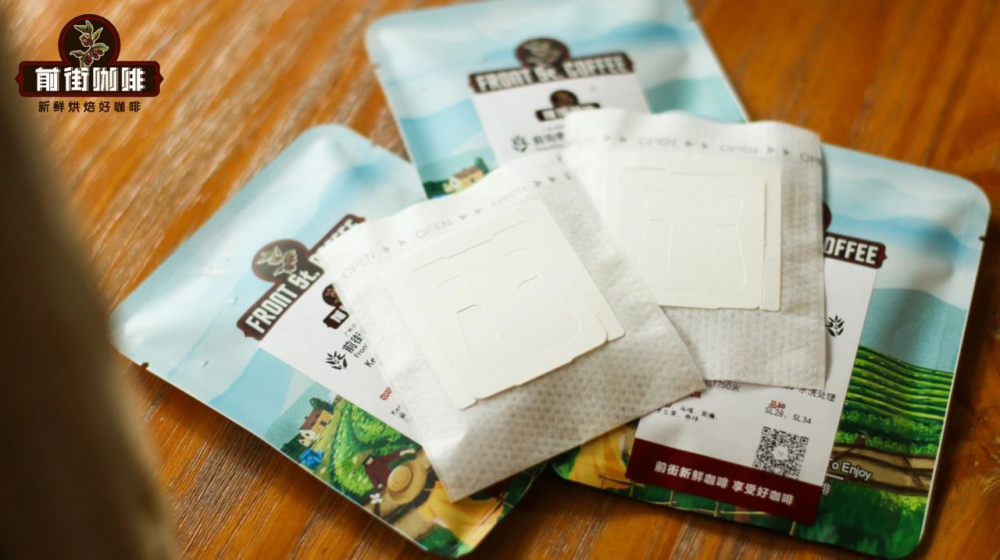
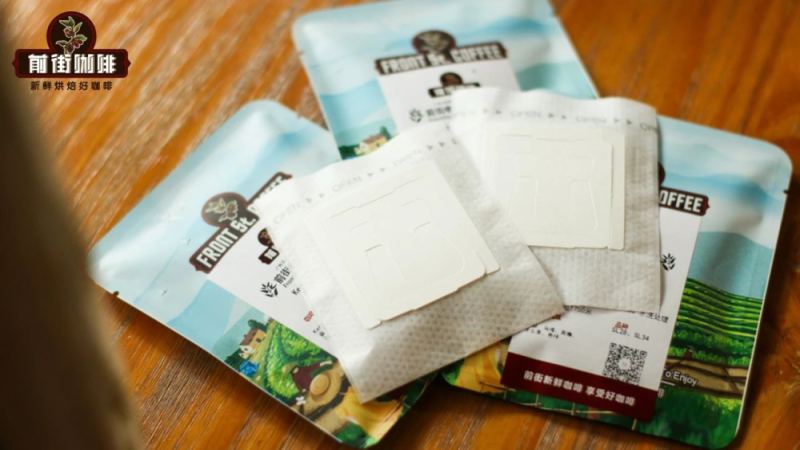
Many coffee lovers are fond of specialty pour-over coffee, but are troubled by the many pieces of equipment and the relatively high barrier to operation. For this reason, Front Street launched a drip bag series, covering flavors from multiple origins, including Sidama, Brazil, and Honduras Sherry. In addition to existing products, if customers want other types of coffee beans made into drip bags, Front Street can also make them on demand. For example, a few days ago a customer drank Front Street PWN Golden Mandheling in the shop and was very satisfied with the taste, but did not want to grind beans at home, so we made it into a drip bag for him on the spot.
How to Choose Drip Bag Coffee?
1. Production date: freshly ground coffee powder has the best freshness. The production process of drip bags is to carefully roast and grind the coffee, then immediately seal it in bags. When purchasing, try to choose ones close to the roast date; after more than two months, the taste will decline noticeably.
2. Completeness of information: coffee bean information should include variety, grind size, origin, roaster, etc.
Advantages of drip bag coffee: 1. Compared with instant coffee, drip bag coffee has a richer flavor and more diverse choices. You can experience coffee from different origins, different processing methods, and different roast levels, and drink more specialty coffees with unique flavors.
2. Drip bag coffee contains no additives such as flavorings or creamer, making it healthier.
3. It is affordable, quick and convenient to brew, easy to carry, and requires no brewing equipment.
Front Street Sidama coffee has always been deeply loved by everyone. To make daily brewing more convenient, this time Front Street Sidama Huakui coffee was made into drip bags. In order to make the most delicious drip bags, Front Street Coffee attaches great importance to the cleaning of the grinder, the grind size, and packaging.
Grinding
The first determining factor in the brewing quality of drip bags is flow rate. Too slow or too fast is no good, and this depends on the grinding of the grinder. If the grinder used is not of a sufficient grade and the grinding quality is poor, a large amount of fines will inevitably be produced during grinding, and the grind will be uneven. During brewing, this will cause “traffic jams,” slowing the flow rate, and if the soaking time is too long, over-extraction will occur. The result is a muddy taste and poor flavor, and no matter how good the beans are, they cannot express their proper flavor.
Grinder Cleaning
What affects coffee flavor is not only the grind size, but also the cleanliness of the grinder. Front Street strictly stipulates that before every session of grinding drip bag coffee, the grinder must be carefully cleaned. Not only that, Front Street also regularly checks the cleaning and clearing condition of the grinder, and supervises the overall grinder cleaning and packaging process.
Automatic Packaging Machine / Nitrogen Filling
Using mechanical automatic packaging has two purposes: first, to improve the sealing effect of the outer packaging; second, to inject nitrogen during packaging to remove oxygen as much as possible, making oxidation less likely to occur and greatly extending the freshness period of the coffee flavor. If it is manually packaged and no nitrogen is injected, the freshness period of the drip bag may be only one month; with automatic packaging and added nitrogen, the shelf life can easily reach one year.
This time Front Street introduces two seasonal drip bag coffees and the long-popular Front Street Honduras Sherry drip bag coffee. Front Street’s current seasonal drip bag coffees include Front Street Ethiopia Natural Sidama drip bags and Front Street Brazil Semi-Washed Red Fruit drip bags.
Front Street Brazil Semi-Washed Red Fruit Drip Bag (obvious sweetness, faint lemon aroma, rich nutty flavor, with a clear dark chocolate note in the finish)
Brazilian coffee beans were introduced from French Guiana (a country in northern South America) in 1720. Brazil was then a Portuguese colony, while many other South American countries were Spanish colonies. Therefore, most countries in South America speak Spanish, while Brazil speaks Portuguese.
In order to introduce coffee beans from Guiana to Brazil (at that time, the outflow of coffee to other countries was strictly prohibited), a Portuguese military officer stationed in Brazil won the heart of the governor’s wife of Guiana and successfully brought coffee seeds into Brazil. Since then, coffee rapidly adapted in Brazil, spreading from the north to São Paulo state in the southeast. By 1845, Brazilian coffee beans already accounted for 45% of the world’s total coffee beans. Currently, Brazil is the world’s largest coffee exporting country.
Front Street Coffee not only includes Brazil in its drip bag series, but Brazilian coffee can also be found in Front Street’s daily drinking bean coffee series. This shows that Brazil, as a coffee-producing country, is an indispensable presence in classic coffee flavors. Front Street daily drinking beans are the “face” among regional coffee beans, because their basic regional flavor is more recognizable, and they are also low-priced, cost-effective coffee beans.
Semi-Washed Processing Method
In the semi-washed processing method, after screening suitable coffee cherries, the skin and pulp and part of the mucilage are removed, and the beans are dried with a small amount of mucilage remaining until the moisture content reaches 12%.
FrontStreet Coffee believes that the semi-washed processing method is actually similar to honey processing. Costa Rica, for example, is famous for honey processing. Honey processing was simply used by Costa Rica to define semi-washing, and Costa Rica has made honey processing even more refined, dividing it into yellow honey, red honey, black honey, and so on. So gradually, the term semi-washed became less famous than honey processing. However, when FrontStreet Coffee cupped Costa Rican honey-processed coffee beans, it found obvious differences from Brazilian semi-washed coffee beans: although both show obvious sweetness, Costa Rica’s sweetness tends toward the sweetness of dried fruit and is relatively light, while Brazil’s sweetness tends toward the sweetness of chocolate and is relatively heavy.
Front Street Natural Ethiopia Sidama Huakui (faint floral aroma, rich berry acidity, with a fermented note)
The Sidama producing region is located in southern Ethiopia. The industry here is mainly agricultural, and the coffee-growing areas are located around the Great Rift Valley. The largest town in Sidama province is Hawassa, an important local coffee export hub. Sidama’s coffee flavors are very diverse because different soil compositions, regional microclimates, and countless native coffee varieties create obvious differences and characteristics in the coffee produced in each town and region. Ethiopian Sidama has a balanced flavor and relatively high sweetness, and its body is also somewhat higher than Yirgacheffe, especially the red-wine-like acidity and sweetness produced during the natural fruit fermentation process.
Natural Processing Method (African Drying Beds)
The coffee cherries are spread directly on cement ground or drying racks to dry, with the purpose of making the coffee dry and easy to preserve. Usually depending on weather changes, the drying time is about 2-4 weeks.
Coffee usually intended for commercial use is placed on cement ground to dry, and the coffee cherries must be constantly and promptly turned so that all sides are heated evenly, which helps drying and also prevents mold caused by the bottom touching the ground for too long. Hand-selected cherries and coffee beans used for specialty coffee are processed by natural drying using African Beds. The coffee cherries are spread on permeable mesh beds to sunbathe, and the thickness of the layer on the racks varies according to local conditions.
How to Brew Drip Bag Coffee
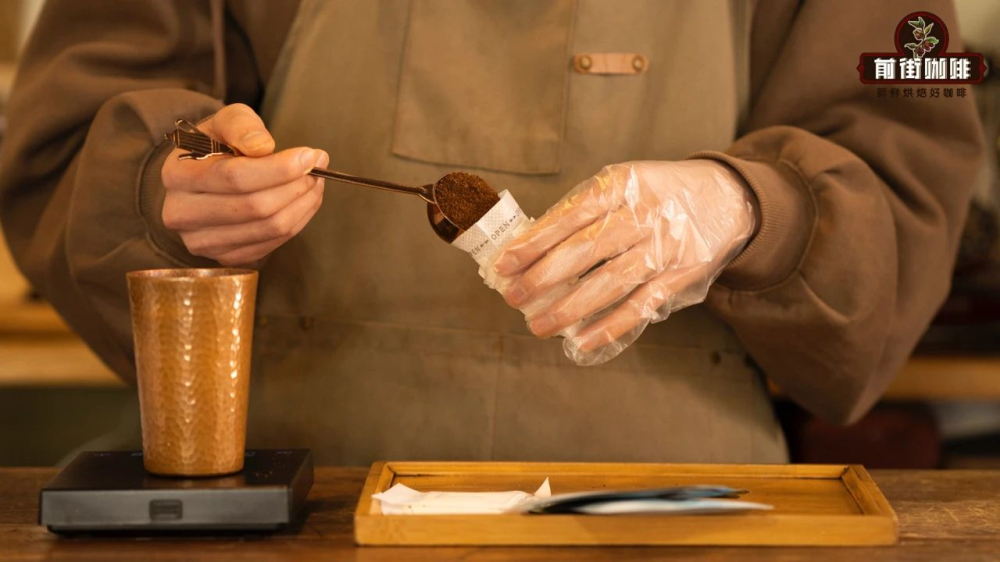
1. Taking Front Street Coffee drip bag coffee as an example, the coffee powder weighs 10g.
2. Tear open the outer packaging bag, take out the drip bag coffee packet inside, tear open the opening of the drip bag, pull open the small ears on both sides, and set it on the cup.
3. When choosing a cup, try to choose one with a rim that is not too wide, otherwise the two ears of the drip bag coffee may not hang securely. The cup used by Front Street Coffee has a rim diameter of about 8-9cm.
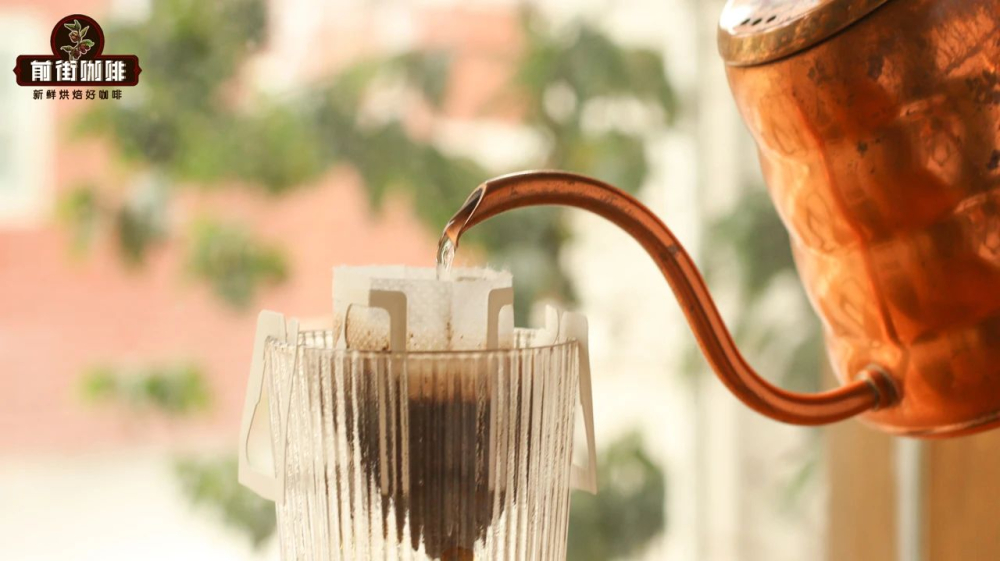
4. The brewing technique for drip bag coffee is actually the same as for pour-over coffee, just not as rigorous as pour-over coffee, but basically water temperature, blooming, and circular pouring are still needed. For reference, Front Street Coffee’s parameters for brewing drip bag coffee are: water temperature 90°C, bloom for about 10s, and the bloom water amount can be the same as the coffee powder.
5. After blooming ends, pour water directly until finished. If you want to be more particular, you can also pour in two stages. The amount of water is determined by the cup chosen. Front Street Coffee chose a 300ml glass cup, pouring in a small circular stream, and stopping when the water reaches the 7th mark of the cup.
After brewing, remove the drip bag. Once brewed, it cannot be used again, because the substances in the coffee powder have already been extracted. If you brew it again, there will be nothing left to extract, and the taste will be very watery. There is no need to feel that brewing only once is wasteful. The drip bags currently sold on the market can basically guarantee fresh grinding, and the price is also very attractive.
The above content is compiled by CoffeeHunters, a coffee news website.


