








Where should a small café source coffee beans for commercial use?
Small cafés generally buy through five channels: local ingredient suppliers, professional coffee bean suppliers, coffee training institutions, online brands, and direct purchases of green beans for self-roasting. Local suppliers are cheapest but weakest on quality, while professional suppliers and roasting operations tend to offer steadier beans and better cost control.
Selection comes down to five dimensions: freshness, quality consistency, cost-effectiveness, variety, and crema performance, since crema supports both appearance and perceived coffee aroma. Practical markers include a one-way exhaust valve on the packaging, a printed roast date, and a stable blend recipe, all of which help an operator judge whether a wholesaler is reliable.
Opening a small coffee shop—the sourcing channels and supplier choices for coffee beans directly determine product quality and operating costs. This article outlines five common coffee bean procurement channels for small coffee shops, including local ingredient suppliers, professional coffee bean suppliers, training institutions, online brands, and buying green beans to roast yourself. It also explains what conditions high-quality commercial coffee beans should meet across five dimensions: freshness, quality consistency, cost-effectiveness, variety, and crema performance. At the same time, drawing on the practical experience of Front Street Coffee, it introduces packaging one-way exhaust valve design, roast date labeling, blend recipe stability, and the cost advantages of commercial blends, providing a reference for coffee shop operators looking for a suitable coffee bean wholesaler.
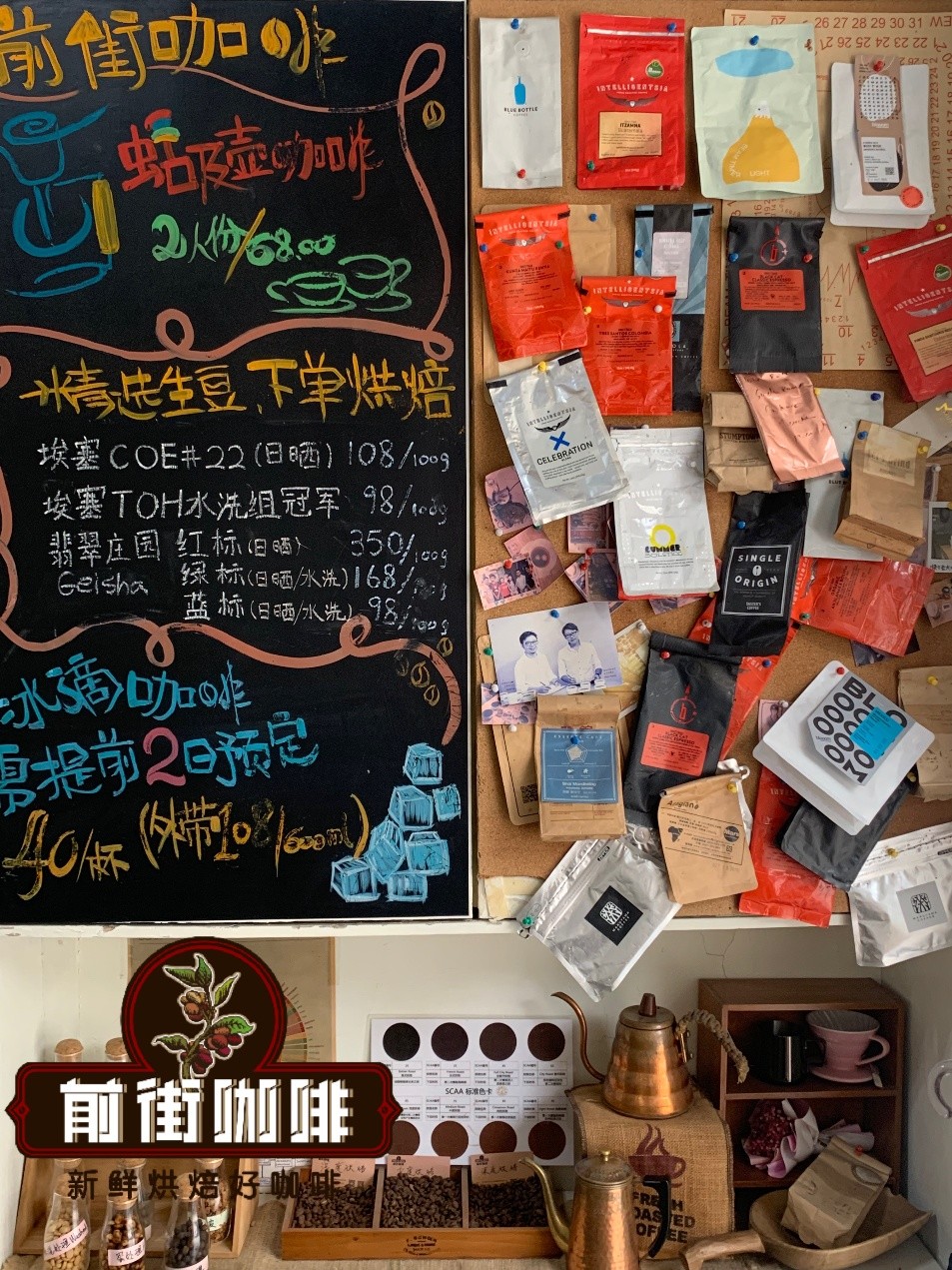
Many friends who are obsessed with specialty coffee are often curious: through what channels do coffee shops actually buy coffee beans, and how do they screen out reliable coffee bean wholesalers? Today, Front Street will take everyone behind the scenes to explore the logic of coffee shops' choices.
The channels through which small coffee shops obtain coffee beans can roughly be grouped into five categories:
1. Local ingredient suppliers. These merchants usually also sell ingredients for milk tea, ice cream, and the like. The overall quality of their coffee beans is not particularly outstanding, but they have a clear price advantage. Some coffee shop operators have revealed that a purchase price of 20 to 30 yuan per jin is very common.
2. Professional coffee bean suppliers. Because a foundation of trust was already established when purchasing equipment earlier, many coffee shop owners continue to cooperate with this type of supplier, and the bean prices they offer are also relatively affordable.
3. Buying through coffee training institutions. Some trainees who open their own shops after completing training often continue to use this channel.
4. Online purchasing. Online platforms offer a very wide range of choices. Currently well-known coffee brands include Uncle Bean Coffee, Mingqian Coffee, M2M, and others.
5. Directly buying green beans and roasting them yourself. Front Street is one of those that takes this approach.
Front Street has always firmly believed that quality is the most fundamental business plan. Opening a coffee shop involves hundreds of decisions, and the most core decisions all revolve around coffee as the main business. Whether the coffee tastes good depends on the coffee beans. Finding coffee beans with excellent flavor starts with choosing the right coffee bean supplier. A suitable supplier can ensure that each order of high-quality beans is delivered on time, thereby meeting customers' needs.
So what counts as high-quality commercial coffee beans? Front Street's standard is five points: fresh, stable, cost-effective, rich in variety, and rich in crema.
If you want the best flavor, be sure to use freshly roasted coffee beans.
Friends who have bought beans from Front Street Coffee should have noticed that the packaging bags on Front Street's shelves all have a small round valve. Why use this kind of bag with a one-way valve? Because freshly roasted coffee beans continue to release carbon dioxide for two weeks after roasting, and the one-way valve structure helps exhaust excess gas. At the same time, the exhaust valve also lets customers smell the coffee aroma outside the package before purchasing. Front Street is confident that after smelling this aroma, everyone will decide to buy.
In addition, observant friends will notice that the back of Front Street Coffee packaging is stamped with a roast date. Usually, Front Street's online store ships within five days after roasting, which means customers receive the beans roughly on the second to eighth day after roasting (except for remote areas). In about 80% of cases, customers receive them on the third to sixth day after roasting, when the coffee beans are at their best.
The stability of coffee bean quality plays a decisive role in the consistency of the final product.
The palate remembers familiar flavors. We often hear conversations like this: Did this shop change chefs? The taste is different from before. The same is true in the coffee industry. Only when the beans are stable can the final product remain stable to a certain extent. For eight years, Front Street has continuously refined coffee roasting. Every coffee bean undergoes cupping by professionals to ensure excellent flavor quality.
Constant quality, always the same. Every coffee bean sold by Front Street is also used in its own offline stores. The recipe for the Specialty Blend has been used for six years, and the Warm Sun Blend, used to elevate positioning, has already been in use for three years.
It must be cost-effective in order to keep costs down.
For those who have just entered the coffee industry, finding the most cost-effective coffee bean supplier is very necessary. A large amount of capital has already been invested in equipment procurement and online promotion in the early stage. Choosing coffee beans with large volume, affordability, and high cost-effectiveness helps reduce material costs and lower market risks. Front Street's coffee beans are quite outstanding in cost-effectiveness, and discount activities are often launched. The 100-gram small-pack everyday beans can even sell for 10 yuan a bag during promotions.
High cost-effectiveness is also one of Front Street's main advantages at present. Take the Warm Sun Blend used in-house as an example: the Sherry single-origin coffee bean sells for 80 yuan per half pound, and Red Cherry for 88 yuan per half pound, while the commercial Warm Sun Blend (Sherry blended with Red Cherry) is priced one yuan lower per half pound than Sherry.
Having a little more variety to choose from is never a bad thing.
People who frequently visit coffee shops will notice that SOE coffee is becoming more and more popular, especially in flavor-focused drinks such as creative coffee. Single-origin beans often give customers more choices, and coffee shops can also earn higher profits as a result. But at present, not many shops serve single-origin coffee, and the in-store options are usually only twenty or thirty kinds. By contrast, Front Street's menu is much richer, with more than fifty choices often dazzling customers.
What is probably most valued in commercial coffee beans is the "crema."
Espresso is usually considered ideal when it extracts golden crema. How is this layer of crema produced? And what factors is it related to?
Front Street believes that this is closely related to the roast level and freshness of the coffee beans.
Espresso crema is mainly composed of carbon dioxide and insoluble oils in the coffee grounds. As is well known, roasted coffee beans accumulate gases such as carbon dioxide inside. When modern semi-automatic espresso machines extract, they generate about 9 bar of pressure to "squeeze" the coffee puck. Because the pressure is so great, water becomes supersaturated with the carbon dioxide in the grounds, and the carbon dioxide cannot be released smoothly, so it directly dissolves into the coffee liquid. During this process, the fats in the coffee are emulsified. These fats wrap around the carbon dioxide and, because they are lighter than water, gradually separate into layers, and the golden crema appears on the surface, looking very attractive.
Finding a suitable coffee supplier is crucial to a coffee shop's growing coffee business. So how do you find a suitable coffee bean wholesaler? Front Street believes you should consider it based on the five elements above and keep trying in order to build a trustworthy business partnership.
Roasting and making coffee each have relatively professional theoretical support. Specialized fields require specialized expertise, and professional work needs professionals to do it. For example, coffee bean roasting requires not only a stable source of green beans, but also cupping ability, a roasting site, experienced roasters and cuppers, and other conditions—none of which a specialty coffee shop or small roasting factory can necessarily possess.
In the past, a saying circulated in China's coffee industry: people who open coffee shops without understanding coffee are everywhere. Nowadays, with consumption upgrading, the expansion of the middle class, and the rise of a new generation, consumers are also constantly growing and maturing. This situation will only become less and less common.
Professional coffee knowledge exchange More coffee bean information Please follow: Front Street Coffee
The above content is compiled by CoffeeHunters, a coffee news website.


