







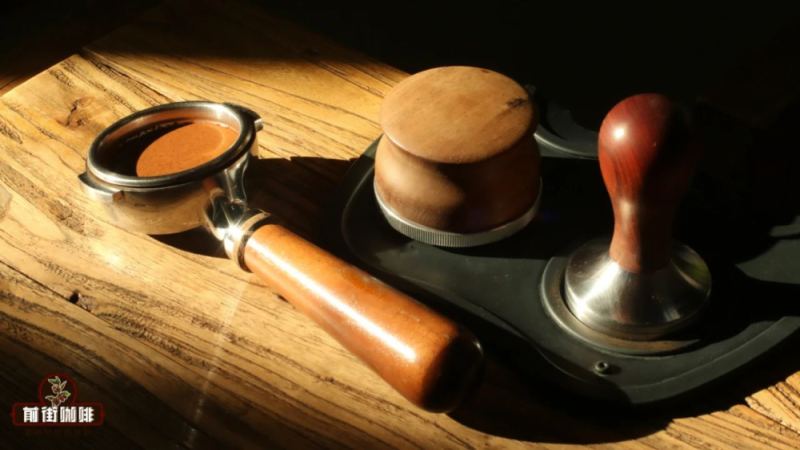
How Leveling and Tamping Work Together for Even Espresso Extraction
A distribution tool levels the coffee bed's surface, but the grounds underneath stay loose. Tamping compresses that loose bed so it can resist the high-pressure water from an espresso machine. Without tamping, water carves channels through the loose grounds, causing uneven extraction. For baristas aiming for consistent shots, knowing how an espresso machine works makes clear why both steps are needed. Front Street explains that even distribution prevents clumps and helps tamping apply force evenly.
To avoid channeling, distribute grounds thoroughly before tamping. Finger distribution often leaves uneven spots, so a leveler helps create a flat surface. When tamping, press straight down with steady vertical force to keep the bed level. A tamper that fits the basket properly reduces tilt. If the surface looks uneven after tamping, a second tamp rarely fixes it and can worsen the problem. Focus on doing the first tamp correctly for reliable results.
Why is it still necessary to tamp after using a distribution tool to level the coffee bed? The two may look equally flat on the surface, but their roles are entirely different. Distribution is about making the coffee grounds evenly distributed in the portafilter basket, while tamping is about compressing the loose coffee bed to withstand the impact of the high-pressure water flow from an espresso machine. If you only distribute without tamping, the water flow can easily carve out new channels, leading to uneven extraction. From Front Street's perspective, this article sorts out the relationship between distribution and tamping, the drawbacks of traditional finger distribution, the advantages of distribution tools, and the key points of applying vertical force during tamping and choosing a tamper. Finally, it answers the question of whether a second tamp can fix an uneven surface after tamping.
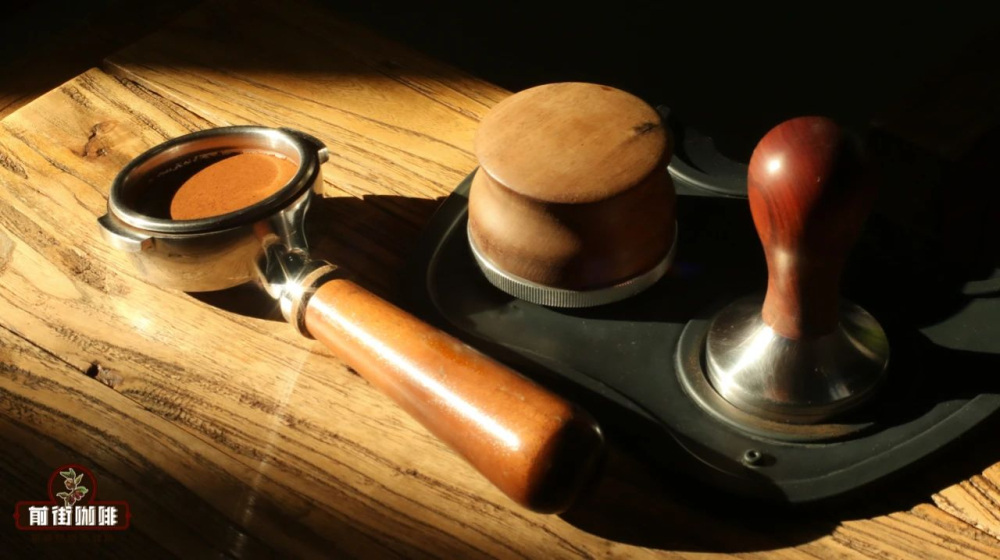
Some people ask: "Since the distribution tool has already leveled the surface of the coffee bed, why tamp again? Doesn't it already look flat?" Although after both distribution and tamping the surface of the coffee bed appears flat, these two actions each carry completely different tasks. Below, Front Street will walk everyone through the connection between "distribution" and "tamping" and their respective roles.
The Relationship Between "Distribution" and "Tamping"
Indeed, with the help of a distribution tool, the surface of the coffee bed in the portafilter basket becomes very flat, but the interior of the coffee bed remains a loose structure. Espresso machines use pressure extraction, and the water flow rushes against the coffee bed. If the coffee bed is not compressed, the impact of the water flow will create channeling within the coffee bed, ultimately leading to uneven coffee extraction.
The purpose of distribution is to make the coffee grounds evenly distributed in the portafilter basket, thereby reducing the occurrence of channeling. The purpose of tamping is to compress the coffee grounds—already evenly distributed but still loose—into a firmer state so that they can withstand the impact of the water flow and avoid creating more channeling. There is an old saying, "If the upper beam is not straight, the lower beam will be crooked." The relationship between these two steps is roughly "if distribution is uneven, tamping will surely be crooked."
"Distribution" Must Not Be Done Sloppily
Coffee grounds used for extracting espresso are usually ground very fine. Once they encounter static electricity or a high-humidity environment, they easily clump. If these clumps are not effectively broken up and evenly distributed, subsequent tamping may result in part of the coffee bed being dense and part being loose. During extraction, the water flow will naturally favor the loose areas due to inertia, causing the coffee grounds in the loose areas to be over-extracted while the coffee grounds in the dense areas are under-extracted, ultimately producing a cup of unevenly extracted espresso.
The traditional distribution method is to pour the coffee grounds into the portafilter basket and then use your fingers and the web between your thumb and index finger to sweep the coffee grounds back and forth, letting them fall into the gaps as much as possible and ensuring they are evenly distributed in every corner of the portafilter basket. It should be noted that finger distribution requires your hands to be clean and completely dry, and your fingers must remain level while sweeping, without applying pressure to the coffee bed. This distribution method easily leads to uneven distribution, and its effect on breaking up clumps is not ideal, so baristas need repeated practice.
Compared with traditional distribution methods, distribution tools are more consistent. Regardless of the type of distribution tool, it can make each distribution more even, offering higher efficiency and more stable quality in output, and it is also more hygienic.
When "Tamping," the Arm Must Be Vertical
In addition to compressing the coffee bed, tamping is even more importantly about leveling the surface of the coffee bed. If the surface of the coffee bed is uneven, the thickness of the coffee bed will become uneven. During extraction, the water flow habitually flows toward the lower areas, ultimately causing the thick coffee bed to be under-extracted and the thin coffee bed to be over-extracted. Therefore, to achieve balanced tamping, you need to choose a tamper of the appropriate size when tamping and keep your arm applying force vertically downward during tamping.
A tamper is like a seal, able to compress the coffee bed in a level state. When choosing a tamper, you must choose one that matches the diameter of the portafilter basket. If it is too large, of course it cannot be used; if it is too small, a ring of coffee grounds will not be compressed, ultimately causing uneven extraction.
Before tamping, first place the portafilter basket level, grip the handle end of the tamper with your palm, turn the web between your thumb and index finger downward, and hold the base end of the tamper with your thumb and index finger. When tamping, form a straight line perpendicular to the horizontal plane from your elbow, forearm, tamper, to the portafilter basket, apply force vertically downward, and compress the coffee grounds in one go. When tamping, there is no need to use excessive force; just ensure the coffee grounds are evenly compressed. This is because no matter how much force you use when tamping, by the time the force reaches the bottom of the puck it is almost no longer bearing force, and as long as the tamping is balanced, the final extraction result under 9 bar pressure will be the same.
If an imbalance in height occurs after tamping, can a second tamp be performed?
If you find that the surface of the coffee bed is uneven after tamping, Front Street recommends breaking up the puck, reloading the basket, distributing, and then tamping again. If you directly perform a second tamp to correct it, it will cause the coffee bed to split and create channeling.
The above content is compiled by CoffeeHunters, a coffee news website.


