







Coffee Knowledge: Espresso Channeling and Puck Perforation
Channeling shows up as a flow rate that keeps climbing during extraction, a thin body, and a pale crema. After the shot, the puck top is not flat and carries small holes where high-pressure water broke through the coffee bed. Water then gushes through those gaps instead of contacting the grounds evenly, so the cup tastes weak.
A bottomless portafilter is the most direct way to catch it: normal extraction runs steady with an orderly crema transition from dark to light, while perforation brings faster flow, sometimes two jets aimed at the holes. Three main causes are uneven distribution, an insufficient dose, and a clogged dispersion screen. Basic coffee knowledge like this helps stabilize daily output.
When extracting espresso, the flow rate alternates between fast and slow, the coffee tastes thin, and the crema is pale in color. These common troubles often point to the same problem—channeling caused by puck perforation. This article starts from the symptoms, explains in detail how to identify perforation with the help of a bottomless portafilter, and breaks down the three main causes one by one: uneven distribution, insufficient dose, and a clogged dispersion screen. It also offers targeted solutions to help you stabilize extraction quality in your daily output.
For more specialty coffee knowledge, please follow the WeChat public account: Front Street Coffee (FrontStreet Coffee)
During espresso preparation, uncontrolled flow rate is one of the most frequent issues, showing up as faster and faster extraction, ultimately producing a coffee with a thin body and a noticeably pale crema on the surface. Behind this is usually a pierced puck.
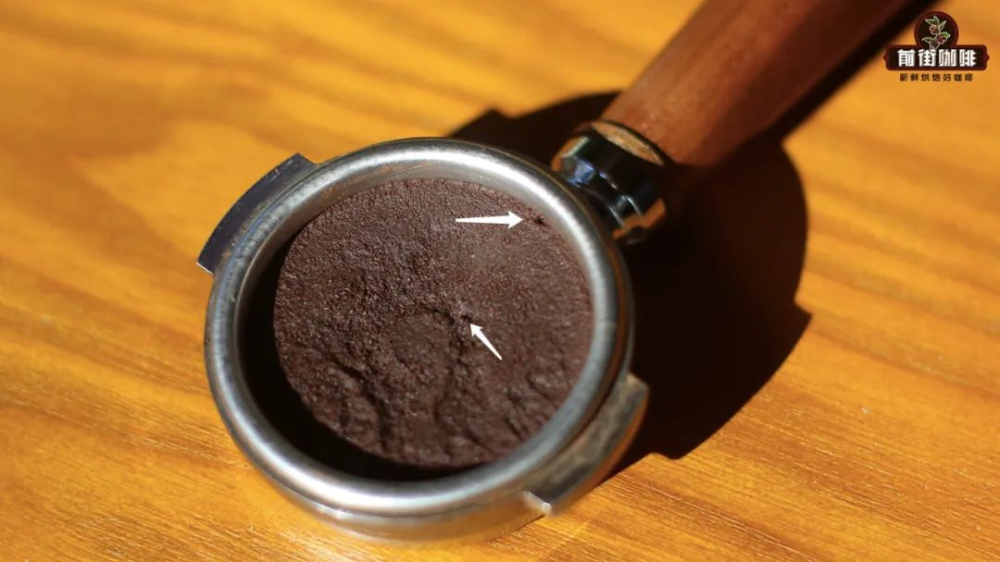
After extraction, remove the portafilter. If you observe the top of the puck, you will find it is not flat, with several tiny holes scattered across it, roughly as shown below⬇️
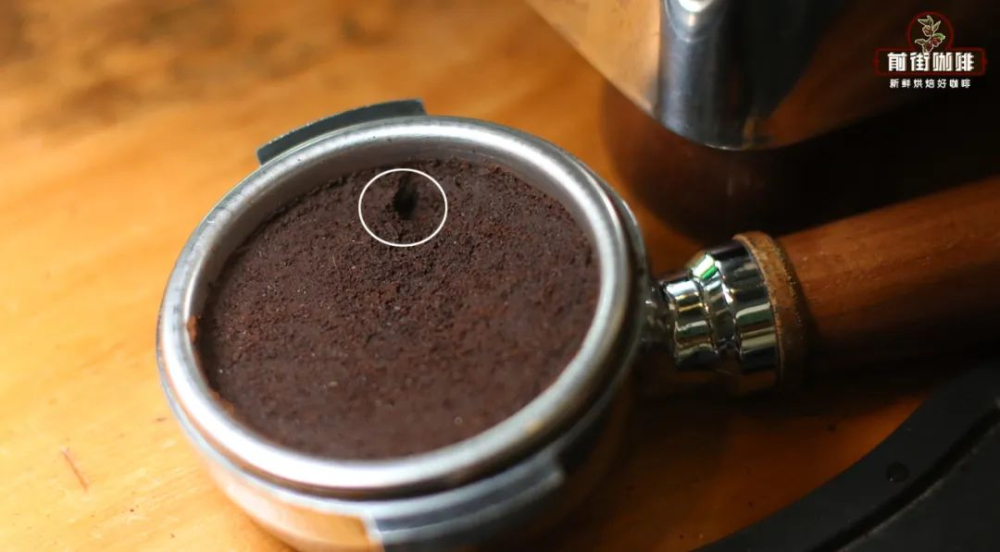
When the situation is worse, it looks like this⬇️
These holes are formed when high-pressure water breaks through the coffee bed during extraction. Once the holes appear, the puck no longer blocks the water flow evenly, and a large amount of hot water preferentially gushes out through these gaps, so the flow rate naturally speeds up. At the same time, the water flowing out through the holes does not fully contact the coffee grounds to complete extraction, so the liquid in the cup tastes weak and the crema color becomes lighter. The industry calls this phenomenon "channeling."
How to detect perforation?
A bottomless portafilter is the most intuitive tool for catching perforation. Let's first compare the difference between normal extraction and perforation.
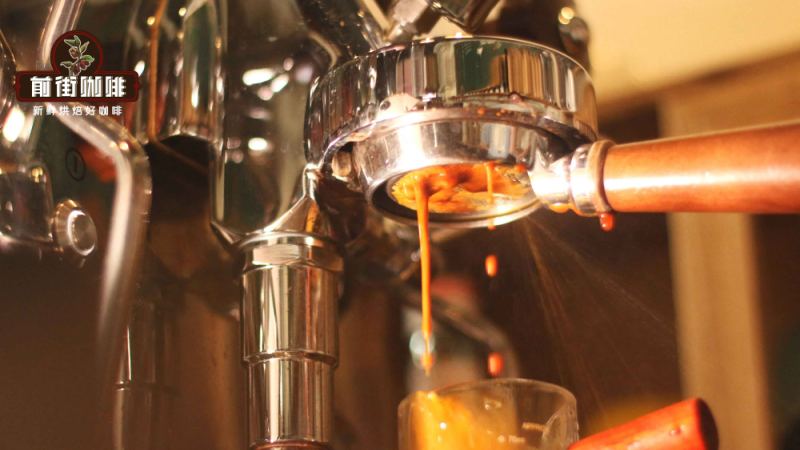
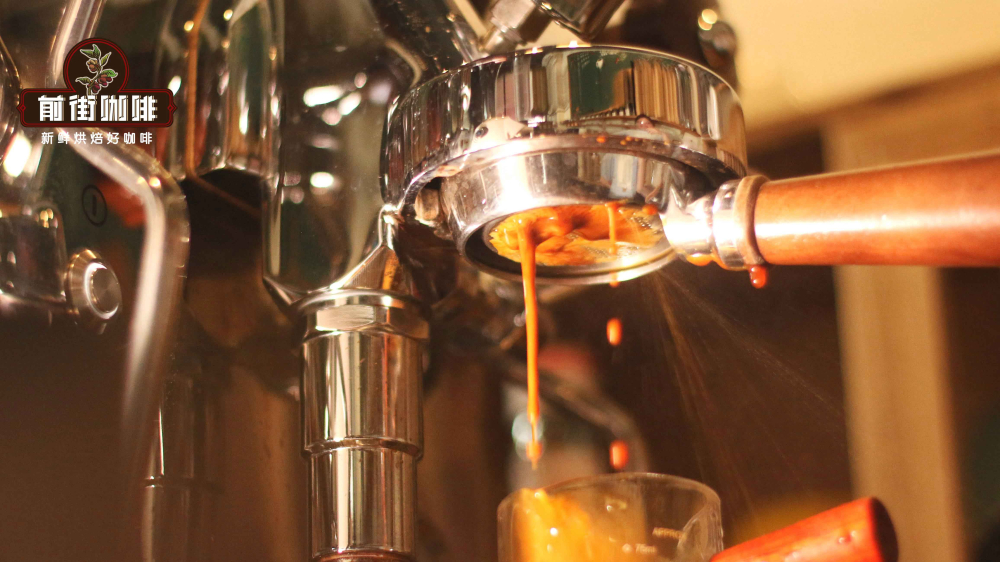
Under normal conditions, the flow rate and crema distribution of the coffee liquid look like this: the overall flow is steady, with no obvious alternating fast and slow, and the crema color transitions in an orderly way from dark to light.
When perforation occurs, the coffee liquid flow is faster and keeps climbing, and you may even see two jets. The jet points correspond exactly to the perforation locations, where the flow rate is significantly higher than the surrounding areas, and the crema color is also lighter than in other areas.
The main causes of perforation can be summarized as three: uneven distribution, too small a dose, and overly concentrated water output.
First, let's look at the distribution step. Problems often arise from poor handling when catching the grounds, or from trying to even out the grounds by tapping the portafilter after dosing, which only makes the coffee bed denser the more you tap. A relatively easy way to achieve even distribution is: after catching the grounds, pile the coffee into a small mound that is high in the middle and low around the edges, then place the distribution tool vertically above the basket and rotate it several times. If this distribution step is done well, when tamping you only need to make sure it is level.
Next, consider the case of insufficient dose. A small dose means there is a large gap between the dispersion screen and the puck. During extraction, the surface coffee grounds are easily churned up by the water flow, the surface resistance becomes inconsistent, and perforation follows. Some enthusiasts, to avoid this risk, choose to increase the dose or switch to a smaller-capacity basket.
Finally, there is the issue of the dispersion screen. The dispersion screen's job is to break up a strong high-pressure water column into an even flow. But if the dispersion screen is clogged by coffee residue sucked back up, the water flow distribution becomes unbalanced, and during extraction the pressure on one side is too high, which may directly pierce the coffee bed. This situation is not hard to judge: normally the dispersion screen disperses the water into 4 to 5 streams, but if abnormal it converges into a single stream. In that case, remove the dispersion screen and clean it.
The above content is compiled by CoffeeHunters, a coffee news website.


