







What Grind Size Should a Drip Coffee Machine Use?
Drip coffee needs a medium grind. Grind size is the main variable shaping flavor, yet no universal standard defines coarse or fine. The practical reference is cupping grind, measured by how much passes through a No. 20 standard sieve. Arranged from coarse to fine, the usual order runs French press, pour-over, cold brew drip, then espresso.
Bean density and roast level shift particle size at the same grinder setting, so an EK43s dial number is a starting point, not a fixed rule. An espresso machine works differently, forcing water through a compact puck under pressure, which is why it demands a much finer grind. Adjust the dial and check the cup rather than trusting the number alone.
Grind size is the key variable that determines the direction of coffee flavor, but there has never been a unified standard for how coarse is coarse and how fine is fine. This article uses the industry-recognized cupping grind as a baseline, and with the help of the passing rate through a No. 20 standard sieve, quantifies the grind requirements for French press, pour-over, cold brew drip, and even espresso machines one by one, and also provides the corresponding dial reference for the EK43s grinder. The article also specifically reminds readers that differences in coffee bean density and roast level will cause the same dial setting to produce different particle sizes, and finally gives Front Street Coffee's espresso extraction recipe as a debugging example to help enthusiasts turn grinding from an experience-based judgment into a reproducible data-driven operation.
To learn more about specialty coffee, welcome to follow our WeChat public account: Front Street Coffee (FrontStreet Coffee)
No matter which brewing device is chosen, coffee beans must first be ground, because the crushed particles allow flavor substances to be released into the water more quickly. However, not all soluble substances in coffee are pleasant. If you want to extract as much of the good flavor as possible while suppressing the release of undesirable flavors, you must keep the extraction level within an appropriate range, and particle size is the core factor affecting this.
Because different devices have different extraction principles, their requirements for grind fineness also differ.
Pour-over, French press, espresso machine, and cold brew drip are the most common methods we encounter in daily life. Their extraction logic differs, so their grind sizes also differ. Arranged from coarse to fine, it is roughly [French press > pour-over coffee > cold brew drip > espresso machine].
But the problem is that although we know which method should use a coarse grind and which should use a fine grind, we cannot say clearly how coarse coarse should be or how fine fine should be, let alone know what should serve as the reference for this "relatively coarse" and "relatively fine."
A reliable reference baseline
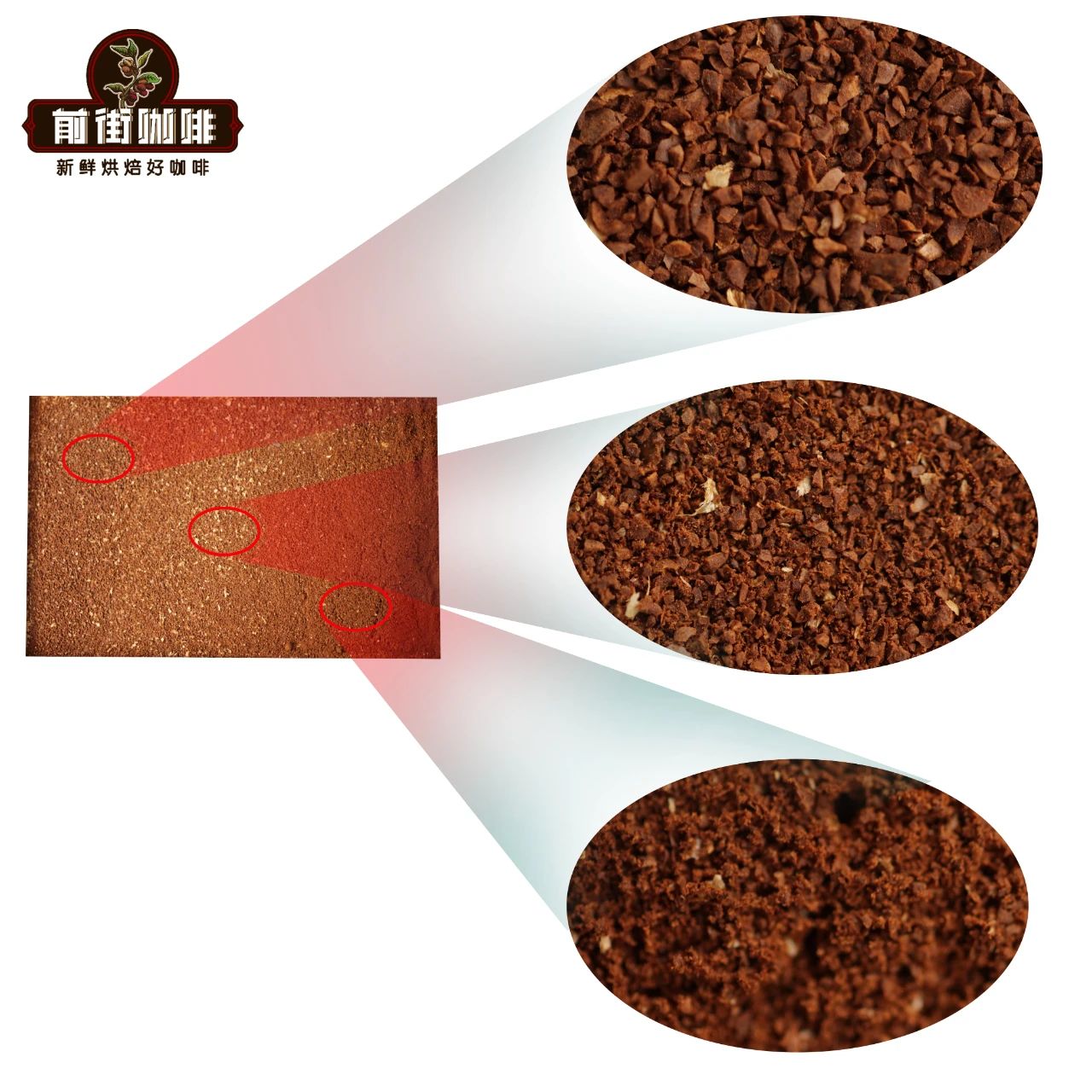
Although brewing standards vary widely, there is one recognized standard in the coffee world: cupping. Cupping was originally used to evaluate green bean quality, and its extraction approach is also worth learning from. The grind required for cupping is a 70% to 75% passing rate through a No. 20 sieve, which corresponds to dial 10.5 on the electric grinder EK43s.
[Popular science: The aperture of the No. 20 Chinese standard sieve is 0.85 mm. It is a tool used for particle size classification and testing. As long as it meets factory standards, the sieve results are reliable. Calibrating coffee grind is also very simple: pour the ground coffee powder into the sieve, cover it, shake it back and forth horizontally until no more particles fall through, then weigh the weight of the powder that passed through the sieve. For example, take 20 grams of coffee powder; if 15.2 grams pass through the sieve, the passing rate is 76%. The higher the passing rate, the finer the grind.]
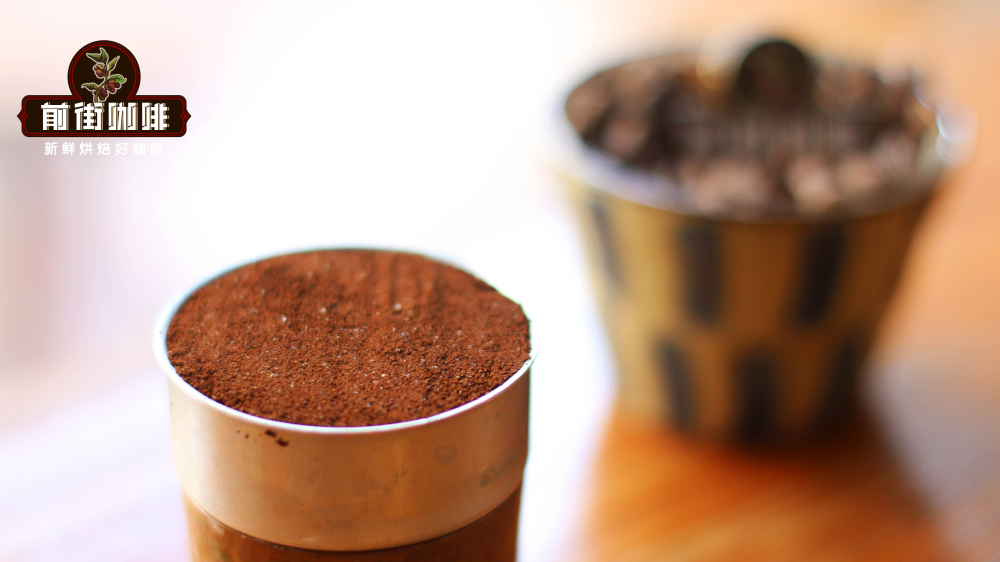
Since cupping can use a standard sieve to calibrate and lock in grind size, the corresponding grind sizes for the various brewing devices used daily can likewise be clearly listed with data.
French press (68% to 75% passing rate through a No. 20 sieve)
The extraction method of the French press is very close to cupping, as both are mainly immersion-based, so the grind size is highly consistent with cupping. In addition, choosing relatively coarse particles has a practical reason: the French press relies on a metal filter, and the mesh gaps are visible to the naked eye, so coarser powder can complete filtration more smoothly. Beans of different roast levels should also be treated differently: medium-light roast can use a relatively fine grind (72% to 75% passing rate, corresponding to EK43s dial 10.5), while medium-dark roast can be ground coarser (68% to 71% passing rate, corresponding to EK43s dial 11).
Pour-over coffee (70% to 80% passing rate through a No. 20 sieve)
Pour-over is a drip extraction method. Unlike immersion, its brewing time is shorter, usually falling between 1 minute 30 seconds and 2 minutes 30 seconds. If the time is too long, it easily brings out undesirable flavors. For this reason, pour-over requires a finer grind than cupping in order to fully express the coffee flavor within the limited time. Roast level also affects the choice: medium-light roast is suitable for a relatively fine grind (75% to 80% passing rate, corresponding to EK43s dial 10), while medium-dark roast is suitable for a relatively coarse grind (70% to 75% passing rate, corresponding to EK43s dial 10.5).
Cold brew drip coffee (80% to 85% passing rate through a No. 20 sieve)
Cold brew and drip coffee use cold water throughout. Cold water has weak penetration, and extraction efficiency is very low, so the coffee needs to be ground finer. But it must be emphasized here that fine does not mean the finer the better: grinding too fine will make cold brew coffee cloudy and also increase the difficulty of filtration; when used for drip coffee, it easily causes water accumulation in the coffee bed, preventing water from flowing through smoothly. Therefore, an 80% to 85% passing rate through a No. 20 sieve is a relatively suitable range. If you want it strong, use 85%; if you want it refreshing, use 80%.
Note: Because coffee bean density and roast level differ, even if two beans with greatly different densities are ground on the same grinder at the same dial setting, the resulting particle size may not be the same. For example, when grinding Front Street Yirgacheffe coffee beans, EK-43s dial 10 corresponds to a sieve passing rate of 80%; while when grinding Front Street Colombia Sidra, also using dial 10, the sieve passing rate is only 75%. So once you feel the grind size is wrong, it is best to use the same bean consistently to confirm the grind setting.
Espresso machine
The grind size required by an espresso machine is extremely fine, and using a sieve to sift it is not realistic. Judging espresso grind mainly relies on extraction testing. Coffee shops must dial in espresso every day before opening, and a large part of that work is adjusting the grind. Espresso machines are extremely sensitive to powder fineness; sometimes a difference of only 0.1 dial mark can cause noticeable changes in extraction time and flavor.
Therefore, to determine the grind size for an espresso machine, you first need a stable espresso extraction recipe. Taking Front Street as an example, Front Street's espresso extraction recipe is 20 grams of coffee powder extracting 40 grams of coffee liquid within 28 seconds (with a tolerance of plus or minus 1). First lock in this recipe, then adjust the grind size to achieve it, and afterward decide whether other parameters still need fine-tuning based on the flavor tasted.
The above content is compiled by CoffeeHunters, a coffee news website.


