







How does pouring direction change flow in a V60 coffee pot?
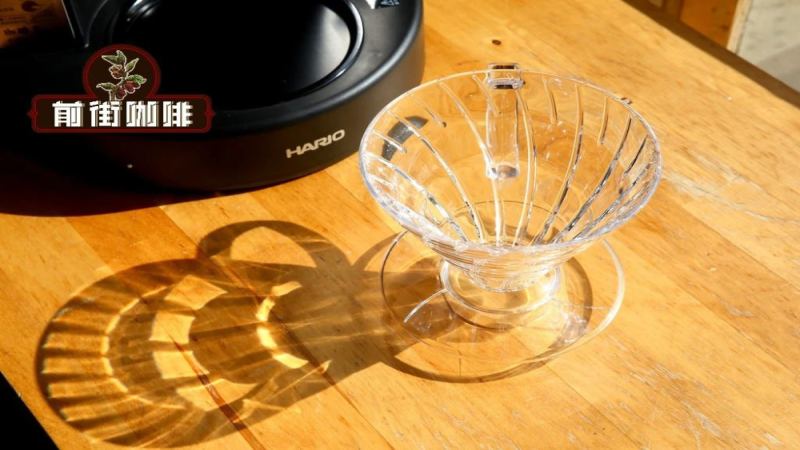
The Hario V60 uses a 60-degree cone, a wide drainage hole and spiral ribs that run from the bottom to the rim. The ribs hold the filter paper away from the wall for airflow and guide water downward, so clockwise and counterclockwise pouring produce different flow rates and different flavor layers in the cup.
The cone shape piles the coffee grounds higher, thickening the bed and adding layered expression, while the fast drain keeps the brew from stalling. A steady three-stage pour gives a repeatable result: bloom, then two equal pours, keeping the stream consistent so the spiral geometry, not guesswork, controls how the coffee particles are extracted.
Among the dazzling array of pour-over drippers, the Hario V60 stands out with its unique conical structure and spiral rib design, becoming the top choice for many coffee enthusiasts. How do its 60-degree cone angle, large drainage hole, and spiral guiding grooves affect the coffee's extraction layers and taste performance? What differences in flow rate and flavor arise from clockwise versus counterclockwise pouring? Based on Front Street Coffee's hands-on experience, this article provides an in-depth analysis of the V60's design ingenuity and shares a stable and reliable three-stage brewing method to help you fully unleash the potential of this classic dripper.
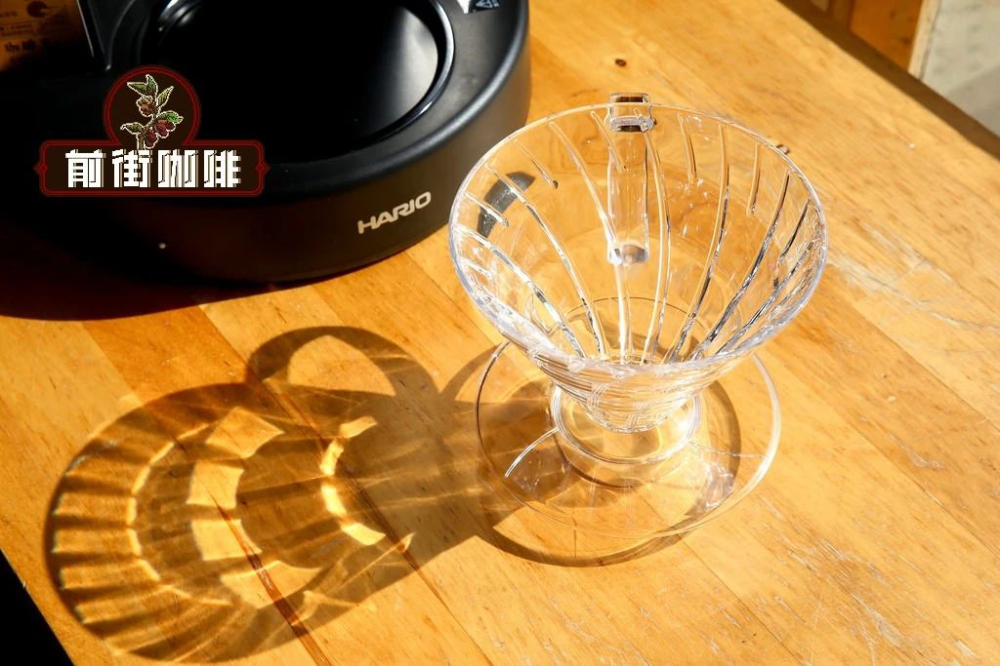
Among the many types of pour-over drippers, the one with a commanding lead in sales is undoubtedly the V60 by Hario. This dripper has a relatively wide bottom opening and a very fast drainage speed. The conical body allows the coffee grounds to naturally pile up higher, increasing the thickness of the coffee bed and thereby giving the coffee a richer layered expression. The spiral ribs on the inner wall guide the water downward in a spiral path, improving extraction efficiency. Combined, these characteristics mean coffee brewed with the V60 often has a full body and clear layers.
Structural Features of the V60 Dripper
The Hario V60 gets its name directly from its 60-degree cone angle—simple and clear. This angle design makes the coffee grounds converge toward the bottom of the dripper, and the poured water also gathers toward the center, ensuring ample contact time between water and coffee grounds so that flavor compounds can be fully released.
The ribs on the inner wall of the V60 are arranged in a spiral form, winding from the bottom all the way to the rim, serving to guide the flow and prop open a gap between the filter paper and the dripper wall, enhancing airflow during brewing. Besides lengthening the contact time between coffee grounds and water, the spiral ridges also allow the water to gather along the spiral texture toward the center of the dripper as the water level gradually drops, using the gravity of the falling water to press the coffee bed and thereby producing a more pronounced sense of layers. Brewers can therefore regulate the direction of the coffee's flavor by changing the speed of the pouring stream.
The ribs of the V60 rotate clockwise. When the pouring direction is also clockwise, the water flows more smoothly along the grooves; conversely, if pouring counterclockwise, the flow rate will slow somewhat. Because the V60 drains relatively quickly, it places high demands on the brewer's water-control ability, requiring stable and even pouring; otherwise, under-extraction or uneven extraction can easily occur.
The Design Philosophy of the V60 Dripper
When it comes to the V60 dripper, the brand most people first think of is Hario. The V60 dripper used in Front Street's daily service is the Hario resin version.
Hario was founded in 1921 and is headquartered in Tokyo, Japan. Its early business focused on heat-insulating glass products; the heat-resistant sharing pots commonly seen in coffee shops are among Hario's popular products. In the 1980s, the first drip-type coffee dripper, Melitta, was introduced. Its bottom drainage hole was relatively small, the flow rate was slow, and during the latter stage of extraction the coffee grounds were almost in a soaking state. Hario's designers thus conceived the idea of using a parabolic dripper, hoping to make the extraction path more concentrated so that the coffee liquid could drip directly into the server, thereby reducing the risk of over-extraction.
The design prototype of the V60 comes from the quadratic function y=x^2. Later, someone further improved the parabolic dripper into a shape close to a cone, which eventually evolved into the shape of the letter V.
How to Brew Coffee with the V60?
When Front Street Coffee (FrontStreet Coffee) brews with the V60 dripper, it chooses the resin 01 size dripper. The resin material blocks heat loss, and the 01 size is suitable for a single-serving brew amount.
Given that the V60 drains relatively quickly, Front Street uses a somewhat finer grind to increase the contact area between grounds and water, allowing for fuller extraction and a richer flavor. However, the finer the grind, the more easily the coffee grounds deposit at the bottom of the filter paper, increasing water resistance, slowing the flow rate, and prolonging the extraction time, which makes the coffee prone to over-extraction and unpleasant flavors such as woody and off notes. Therefore, extra attention must be paid to the pouring technique to avoid clogging in the later stage.
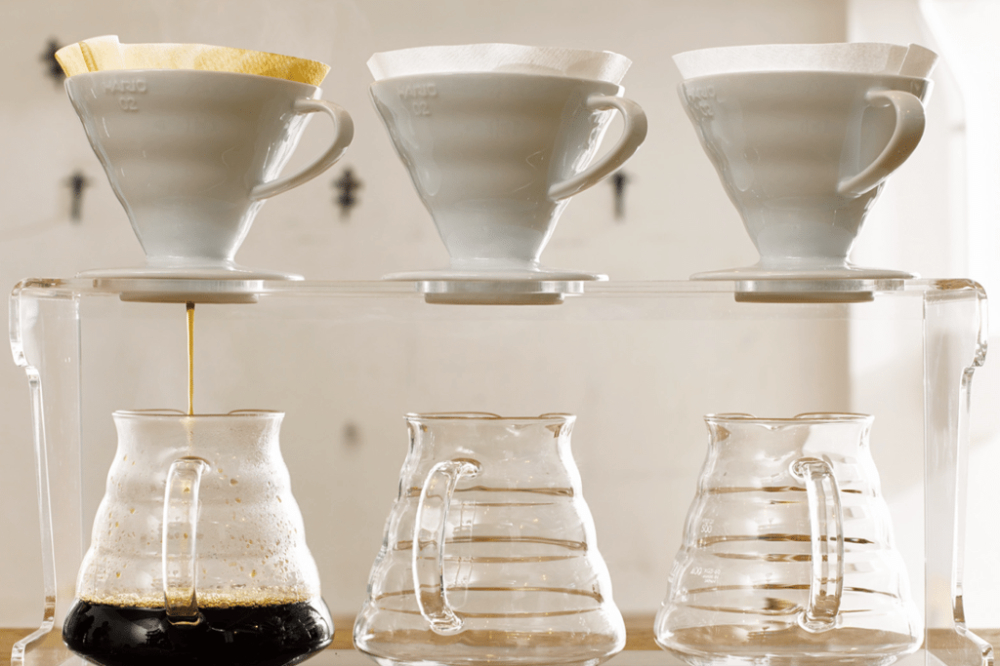
To brew flavorful coffee while ensuring stability, Front Street recommends that after blooming is complete, start from the center and gradually expand the circling range outward. As the water level rises, rinse the entire coffee bed with the stream so that the coffee grounds are extracted as evenly as possible. Here, Front Street takes its own roasted Cooperative Giddingding coffee beans as an example: 15 grams of coffee, a 1:15 coffee-to-water ratio, a total pour of 225 grams, yielding about 200 grams of coffee liquid after filtration, using three-stage extraction.
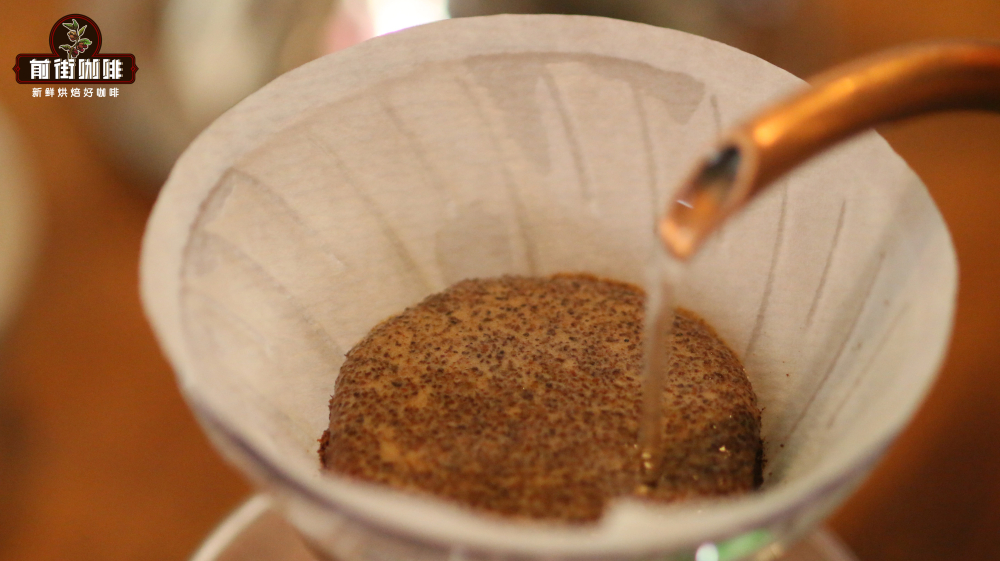
In the first stage, pour 30g of water to bloom for 30 seconds, starting the timer as you pour. Use a small stream throughout, pouring from the center point and circling outward, making sure to wet the entire coffee bed.
After 30 seconds, pour the second stage of 95g of water with a slightly larger but steady stream, with the aim of lifting the entire coffee bed. The stream should be poured vertically and evenly. At this point the scale shows 125g, and the pour is finished at around 55 seconds.
When the liquid level drops to the halfway point, begin the third stage by pouring 100 grams with a small stream in a small circle. Try to keep the circling amplitude from being too large, otherwise it is easy to disrupt the coffee bed and cause under-extraction. The final total pour is 225 grams, and the drip finishes at about 2 minutes. After removing the dripper, swirl the coffee liquid in the server to even it out and it is ready to taste.
For professional coffee knowledge exchange and more coffee bean information, please follow Coffee Workshop (WeChat public account: cafe_style)
For more specialty coffee beans, please add the private WeChat of Front Street Coffee (FrontStreet Coffee): qjcoffeex
The above content is compiled by CoffeeHunters, a coffee news website.


