







Which beans and grind suit a refined coffee brewed in a French press?
A French press works with a coarse grind and a bean that tastes clean, because the metal mesh lets fine particles and oils pass into the cup. The press needs no gooseneck kettle, server, dripper or filter paper, yet it can still produce a refined coffee when dose, water temperature and steep time are kept consistent.
Huakui beans serve as the example here, with their origin background, name history and flavor profile described alongside specific water temperature, coffee dose, coffee-to-water ratio and grind settings. The article also contrasts pour-over and French press grind sizes, explaining why the press favors a coarser setting and how that reduces bitterness and sharp acidity.
The French press is simple to operate and requires no complicated equipment, making it the first choice for many coffee lovers who want to recreate great flavors at home. But if you want to brew a clean-tasting cup with it, bean selection and grind size are both crucial. From the perspective of Front Street Coffee, this article first reviews the history and structural principles of the French press, then uses Huakui coffee beans as an example to introduce their producing region background, the origin of the name, and flavor characteristics, and provides specific water temperature, coffee dose, coffee-to-water ratio, and grinding parameters. The article also compares the grind size differences between pour-over and French press, explaining why the French press is better suited to a coarser grind, helping readers avoid the common problems of bitterness and over-acidity.
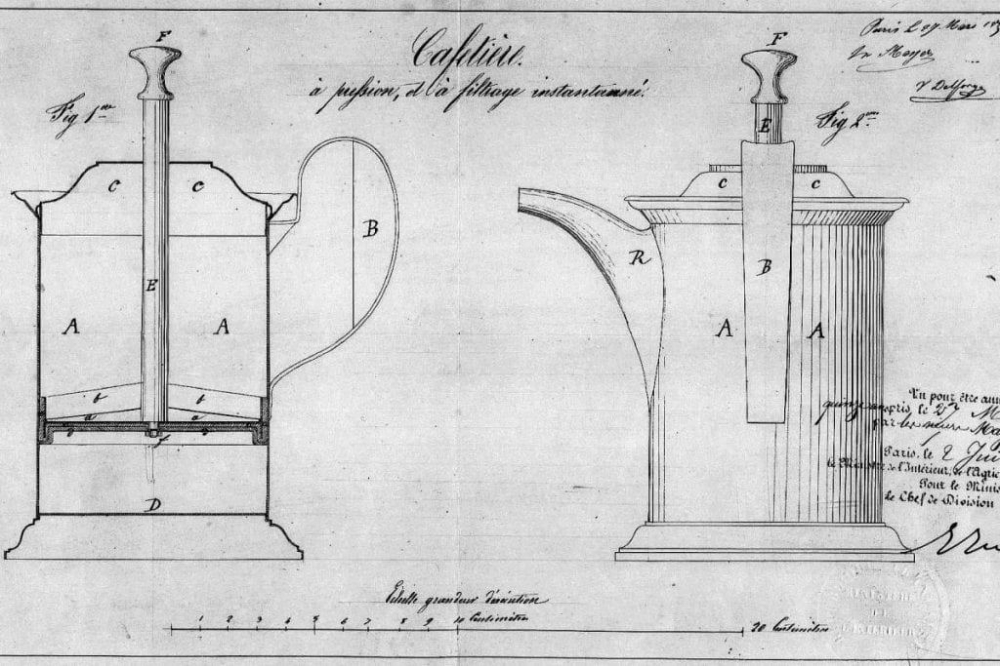
\n\nFor more specialty coffee knowledge, please follow: Front Street Coffee (Frontsteet Coffee)\n\nThese days, people who enjoy refined coffee and want to make a standard pour-over at home often need to have a full set of equipment ready: a gooseneck kettle, a server, a dripper, filter paper, a thermometer, and more. When in use, it is quite a production; when idle, it takes up space. Is it really impossible to enjoy a refined cup of coffee without a complete pour-over setup? If you posed this question to a barista at Front Street Coffee (FrontStreet Coffee), they would probably immediately pull out the dusty French press from the corner.\n\nThe French press, also called the press pot, is known in English as the French Press and is one of the most effortless and convenient coffee brewing methods. This pot actually appeared very early. Around the 1850s, a craftsman and a merchant jointly obtained a patent for a "piston-filter coffee device": a metal canister connected to a movable rod, with holes at the bottom of the rod and a layer of flannel clamped above and below. By manually pressing the rod to the bottom, the coffee grounds were isolated at the base of the pot, yielding a relatively clean cup of coffee.\n\n
\n\nAfter continuous technical improvements, it was not until the late 1920s that a company in Milan, Italy, registered a patent for a modified version of the French press, and the French press familiar to the public today gradually took shape. After that, the French press became more widely known.\n\nHowever, in the past, the French press was mainly used not for brewing coffee but for making tea. Usually, the filter mesh used for tea is coarser, while the one used for coffee is finer. If you love drinking coffee but cannot spare the time, or do not have an expensive coffee machine at home, the French press is a very good choice.\n\nBecause coffee brewed with a French press has a heavier body and fuller flavor. Front Street will use Huakui coffee beans as an example to explain how to brew a delicious cup of coffee with a French press. As usual, Front Street will first introduce the background information of this coffee bean.\n\nHuakui coffee beans come from the Buku Abel processing station in the Hambela sub-region of the Guji region in Ethiopia and are sun-dried. In 2017, the Ethiopian company DW sent sun-dried coffee beans from the Buku Abel processing station to that year's TOH competition, and with a rich strawberry-cream flavor, they won the championship in the sun-dried group of the TOH Ethiopia region. A Beijing green bean merchant introduced the same lot of champion coffee beans into China. Because the rich strawberry-cream flavor was so outstanding, it was believed that as long as post-harvest processing continued to improve, it had the chance to become the next explosively popular coffee bean, so with high hopes it was named "Huakui," meaning "chief of a hundred flowers."
\n\nIn the same year, at the China regional competition of the World Brewers Cup, almost the entire field was using Geisha variety coffee beans, yet contestant Li Jianfei took second place with the same lot of Huakui coffee beans. When people asked, they discovered it was Huakui coffee beans from Ethiopia, and Huakui coffee beans became famous because of this.\n\nHuakui coffee beans are named in the style of "Huakui X.0," increasing with the year: Huakui 2.0 in 2018, Huakui 3.0 in 2019, Huakui 4.0 in 2020, and Huakui 5.0 in 2021. The arrival of 2022 means Huakui 6.0 is about to appear. Front Street Coffee (FrontStreet Coffee) has already immediately reserved the lot, and it is believed that before long, everyone will be able to see Huakui Coffee 6.0 on Front Street Coffee's (FrontStreet Coffee) bean list.\n\nToday, on Front Street Coffee's (FrontStreet Coffee) bean list of nearly fifty coffee beans, there are Huakui 5.0 and small-bean Huakui coffee beans. Front Street once discovered small-particle Huakui coffee beans among the Huakui coffee beans of 2018 and 2019. Through comparison, Front Street found that these small-particle Huakui coffee beans are precisely the main source of Huakui coffee's aroma. In 2020, DW processed the small-particle Huakui coffee beans separately, giving rise to the brand Small-Bean Huakui.\n\n
\n\nFront Street compared Huakui 5.0 coffee beans and small-bean Huakui coffee beans through cupping and found that the flavor of small-bean Huakui coffee is closer to the strawberry-cream flavor of the 2017 sun-dried champion lot, while the flavor of Huakui 5.0 leans more toward the citrus and berry notes and tea-like quality of the Guji region.\n\nBecause your own hands are ultimately not a barista's hands, even if the Huakui coffee you drink in a café is delicious, you still cannot brew that flavor at home. Compared with complicated pouring and brewing, everyone turned their attention to the simplest brewing method: using a French press to brew Huakui coffee beans.\n\n
\n\nBut then the problem follows: how should you brew it to avoid Huakui coffee being both bitter and astringent, and how can you get a delicious cup of Huakui coffee?\n\nFront Street Coffee (FrontStreet Coffee) French Press Brewing Tutorial\n\nBrewing equipment: French press\n\nWater temperature: 90°C\n\nCoffee dose: 15 grams\n\nCoffee-to-water ratio: 1:15\n\nGrind size: 70% passing through China standard No. 20 sieve\n\nFirst, pour an appropriate amount of hot water into the French press to fully preheat it, then pour the hot water out.\n\nAdd 15 grams of coffee grounds to the French press, then pour in 225 grams of 90°C hot water.\n\nPull the plunger to the highest position and put on the lid, then steep for 4 minutes.\n\nAfter 4 minutes, gently and slowly press the plunger down to one quarter of the French press, pour out the coffee liquid, and you can enjoy a cup of coffee.\n\n
\n\nBrewed according to the above parameters and steps, the Huakui coffee brewed by Front Street has a mixed-berry aroma right on the first sip, with an obvious composite berry juice-like quality and a creamy mouthfeel, full and rich overall.\n\nHuakui coffee beans are medium-light roasted beans. After the coffee flavor compounds come into contact with hot water, the rate at which the flavor compounds are extracted is slower, so Front Street recommends using a higher water temperature to accelerate the extraction of flavor compounds.\n\nWhen producing coffee, Front Street generally uses a three-stage pouring method with a dripper for extraction. Because the poured hot water comes into contact with the coffee grounds in a relatively short time and finally drips down into the server, Front Street generally uses a grind size of 80% passing through China standard No. 20 sieve when brewing Huakui coffee, which is a bit finer than the grind used for a French press.\n\n
\n\nBut brewing coffee with a French press is ultimately a process of steeping in relatively high-temperature hot water for a longer time. To avoid over-extraction and the emergence of bitterness, Front Street recommends using a coarser grind size, with 70% passing through China standard No. 20 sieve. A coarser grind size means the coffee particles are larger, reducing the overall contact area with hot water. If the grind is too fine, over-extraction is easy; if the grind is coarser, under-extraction is easy, resulting in a taste as bland as water and the appearance of over-acidity.
The above content is compiled by CoffeeHunters, a coffee news website.


